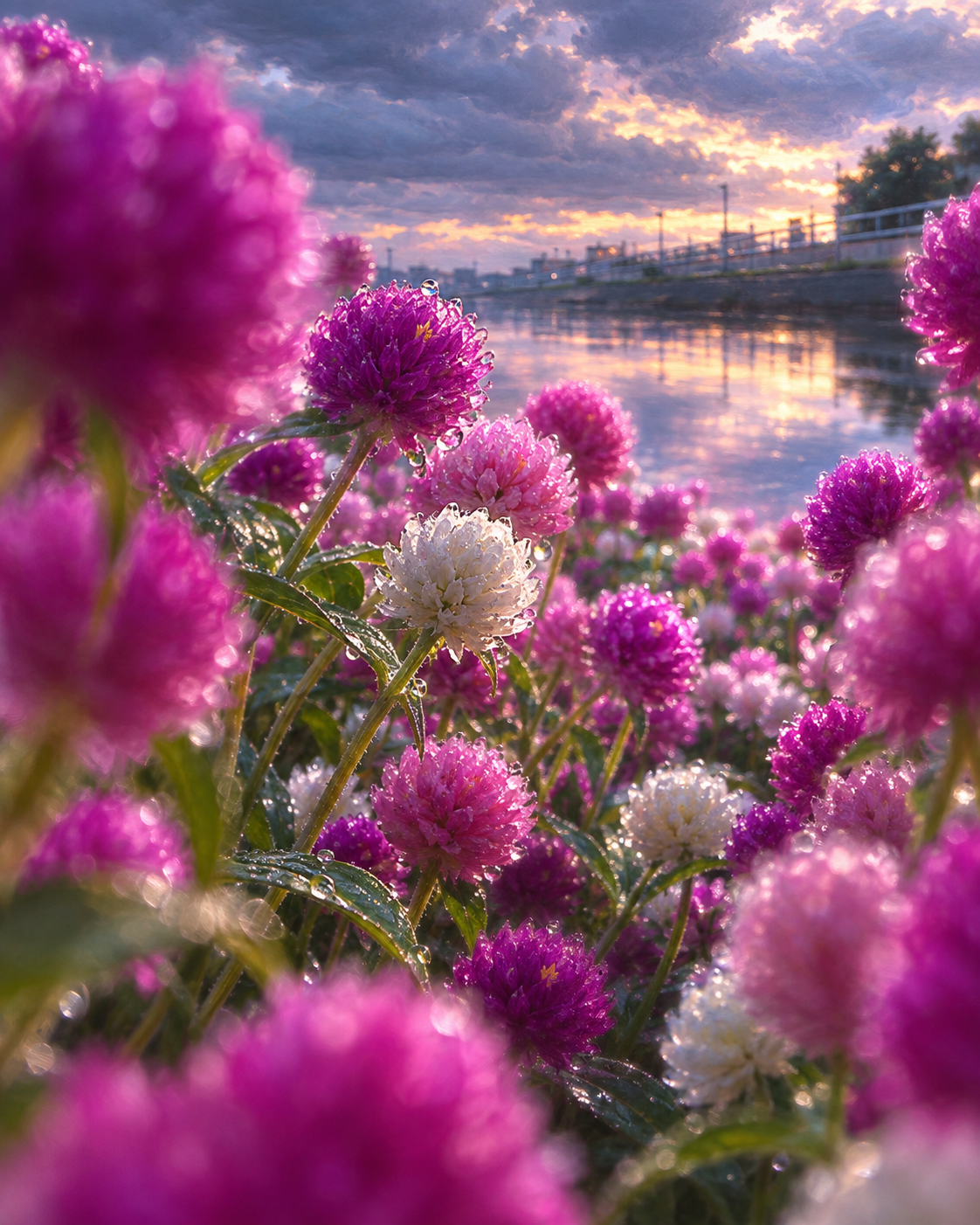
The Morning Crimson Wishes Met White Prayers
Critique
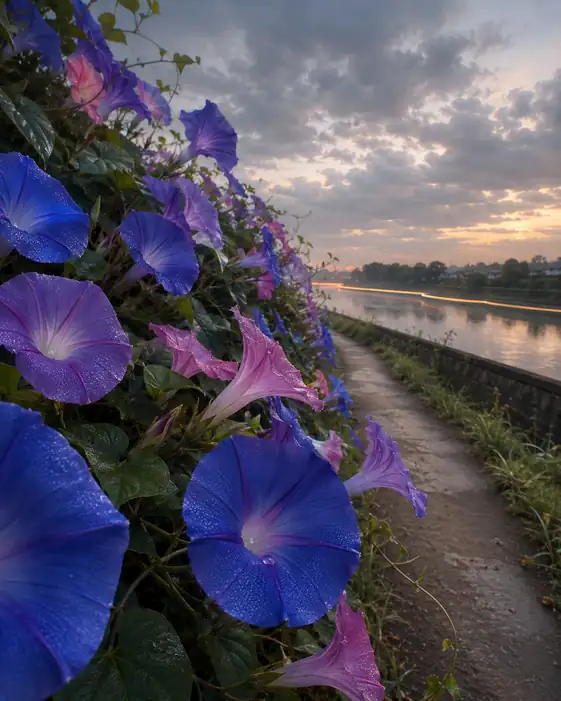
Introduction This painting places dew-covered magenta, pink, and white blossoms along the edge of an urban canal at sunset. Blurred flowers press in from the sides, while a cluster opens toward reflective water and a rail-lined opposite bank. Description A purple flower near upper left of center and a white bloom below it form the pair. Pink heads rise around them on angled stems, and water beads along leaves, bracts, and joints. Magenta masses occupy the left, lower, and right edges. Behind the plants, the canal reflects peach light and blue-violet clouds. A concrete embankment, metal railing, poles, trees, and low buildings extend toward the distance. Analysis The peripheral blur creates a soft enclosure around the sharp central flowers and funnels attention toward the canal. Leaning stems supply intersecting diagonals, countered by the embankment's horizontal recession. Backlight turns droplets into rings and outlines the flower scales, while the water repeats the sky's warm opening as a luminous strip. Magenta dominates the foreground, yet white blossoms, green foliage, and cool cloud reflections distribute contrast across successive planes. Interpretation and Evaluation The flowers occupy a transitional strip between managed roadway infrastructure and moving water. Their abundance suggests that a small residual edge can support a concentrated natural presence. Depiction differentiates compact bracts, clear droplets, flexible stems, glossy leaves, smooth reflection, concrete, and metal with assured technique. The deliberate use of blur evokes bodily proximity, and the vivid floral field against an ordinary canal gives the scene an original urban-garden character. Conclusion What first appears to be a close flower study gradually becomes an account of an inhabited boundary, where plants, moisture, canal, railing, buildings, and evening sky overlap within a narrow corridor.
Same Subcategory
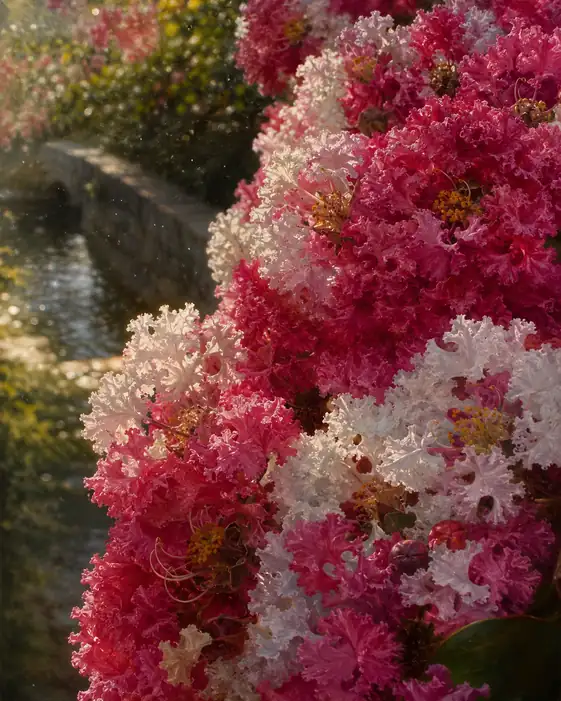 Crape Myrtle Blossoms by the Stone Bridge
Similar Artworks
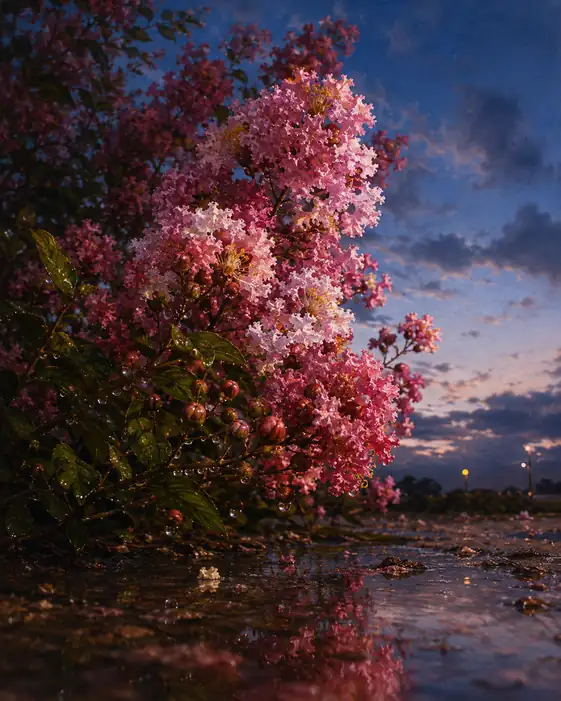 Crape Myrtle Reflected in the Twilight Puddle
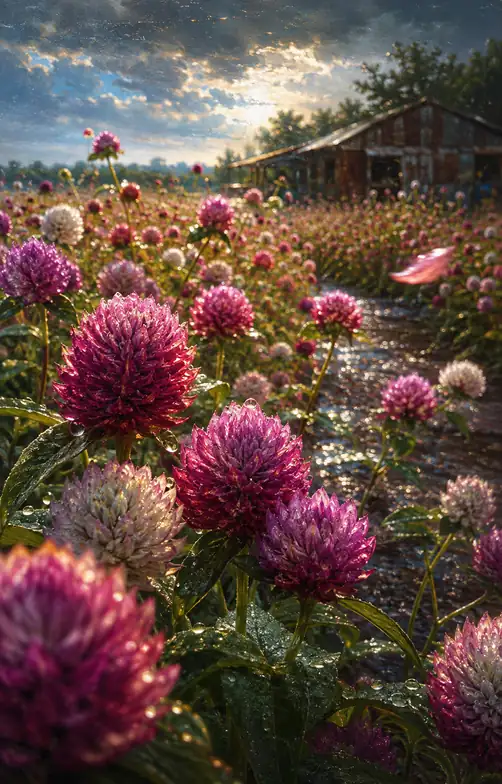 Globe Amaranth after Rain by the Old Barn
 Morning Glories along the River Walk
 Evening Glory by the Sunlit Coast
 Floating Petal over the Rain-Wet Lilies
 Morning Dew upon Globe Amaranth and Terraced Hills
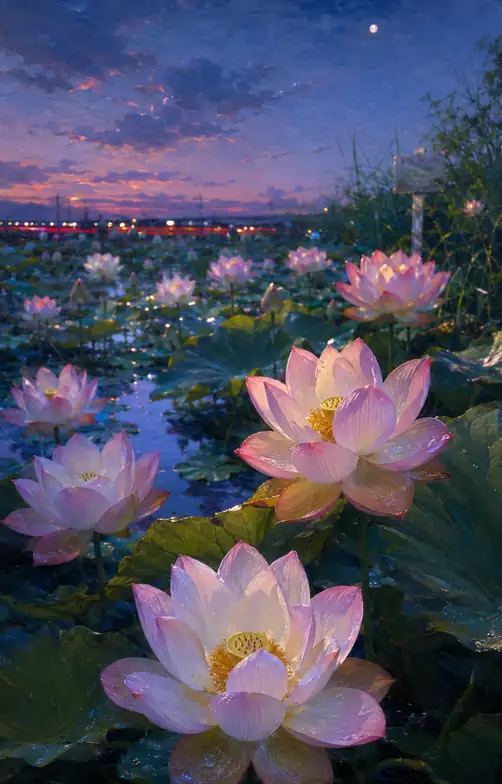 Petals between the Moon and the City Glow
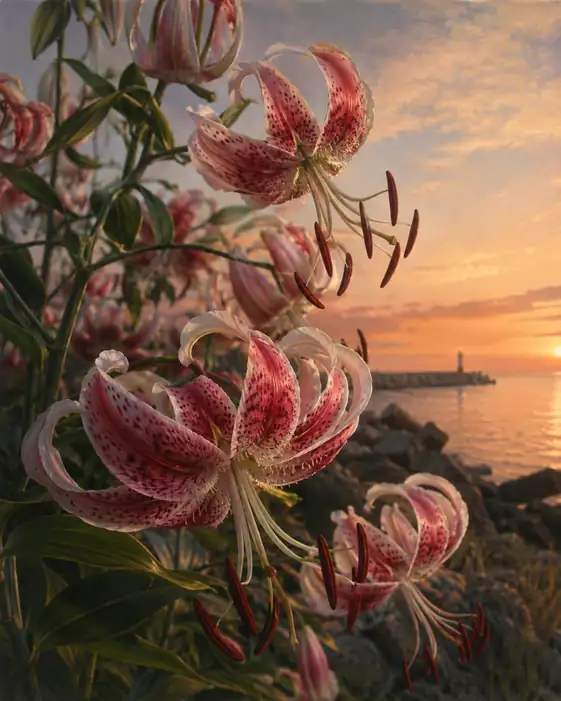 Showy Lilies on the Sunlit Coastal Rocks
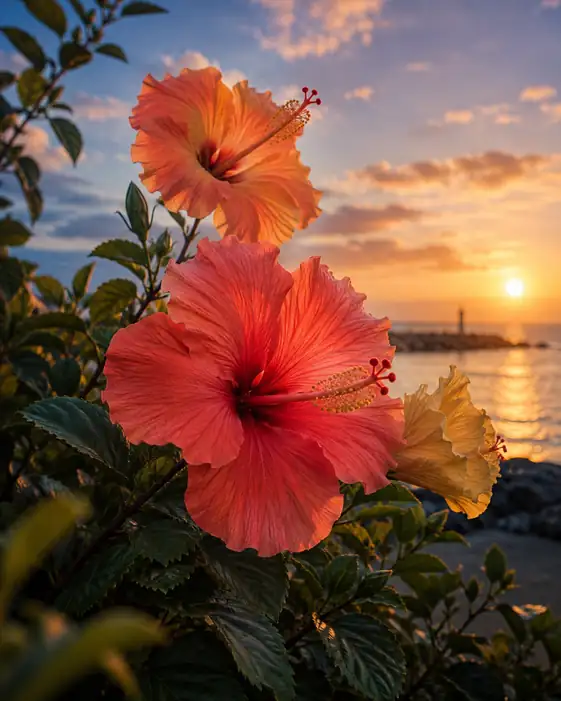 Hibiscus Glowing against the Sunset Harbor
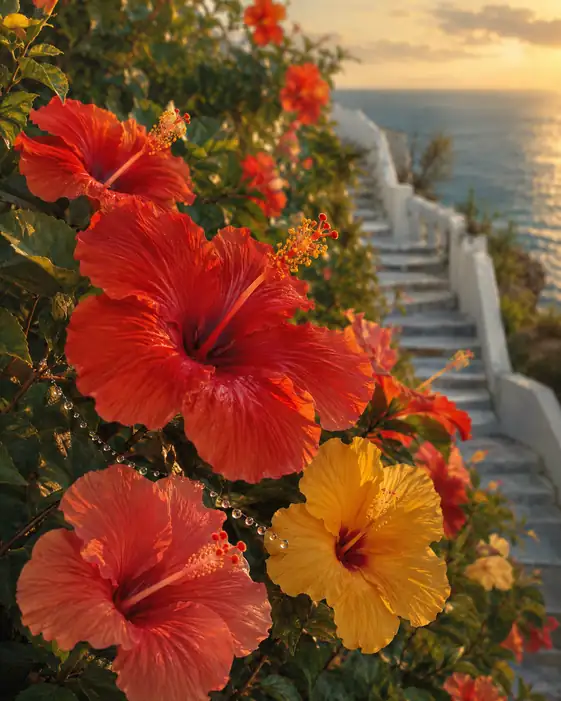 Hibiscus along the Coastal Stairway at Sunset