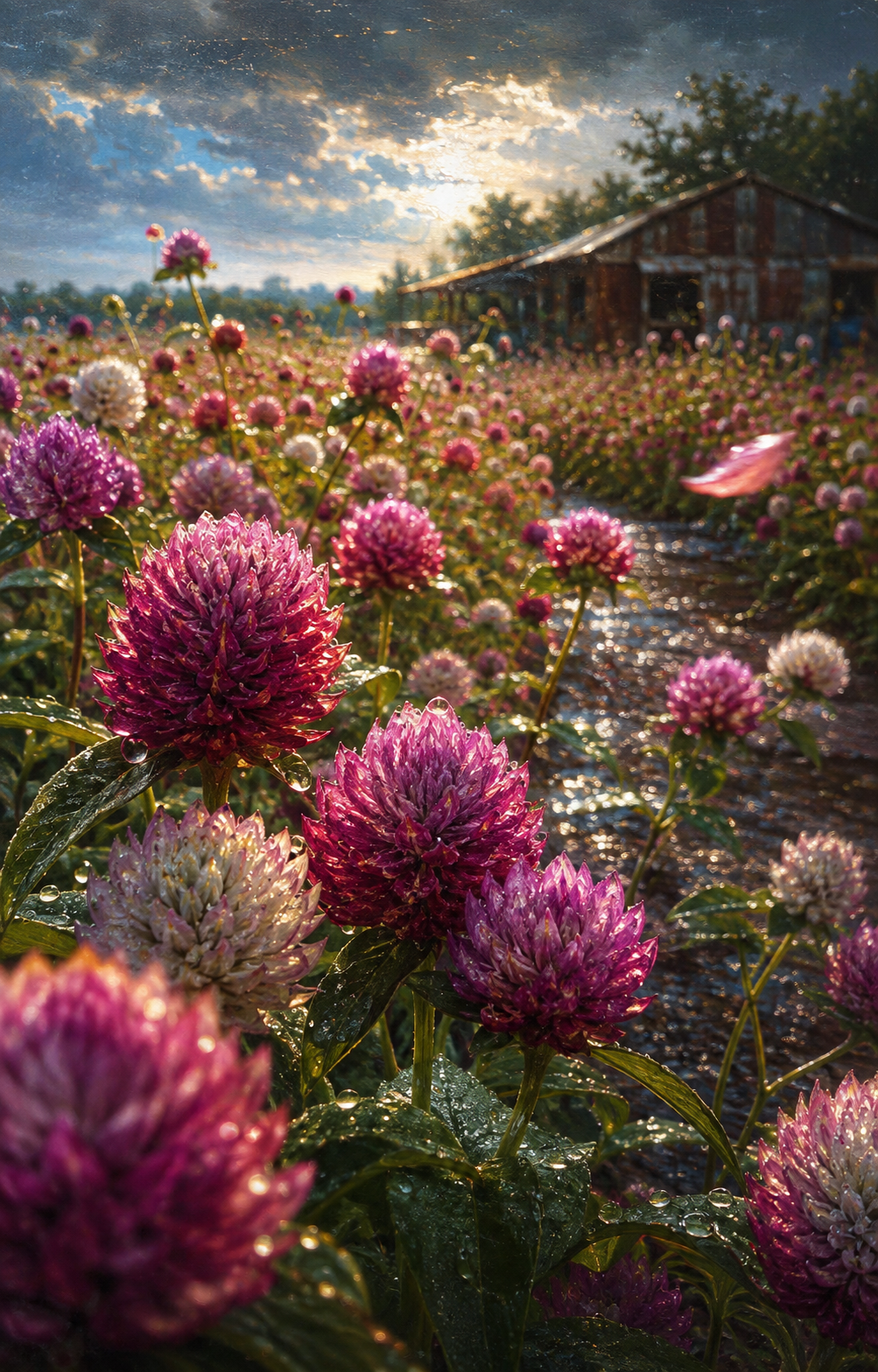
Globe Amaranth after Rain by the Old Barn
Critique
Introduction This painting places a wet field of magenta and white clover-like blossoms before a weathered farm shed. Cone-shaped flower heads fill the foreground and middle distance, while a watercourse leads toward the building beneath a clouded sky. Description Three purple flower heads form the sharpest foreground group, accompanied by a cream bloom and glossy leaves covered with droplets. Smaller pink and white flowers spread across the field on thin stems. At right, a shallow channel reflects broken points of light as it curves toward a long rust-colored shed with an open dark doorway. A detached pink petal crosses the midair space near the building. Analysis The foreground blossoms establish a rising diagonal from lower center to upper left, countered by the channel's recession toward upper right. The shed's roofline stabilizes these crossing movements and supplies a broad geometric mass. Backlight turns droplets, petal tips, and wet soil into scattered highlights, while the flower interiors retain saturated violet shadow. Selective focus separates sharply layered bracts from softer field repetition, dark timber, trees, and luminous cloud. Interpretation and Evaluation The damp field and utilitarian shed suggest a site where flowering growth and daily agricultural work coexist. The airborne petal introduces a brief, vulnerable motion between plants and shelter. Depiction is especially convincing in the contrast between pointed flower scales, smooth droplets, broad leaves, muddy water, oxidized boards, and vaporous sky. Strong magenta-green opposition is moderated by cream and brown, and the low path-centered viewpoint gives the subject originality. Conclusion What first appears to be a colorful field study gradually becomes an account of a cultivated place after moisture, where flowers, drainage, shed, moving air, and returning sunlight form an interdependent environment.
Same Subcategory
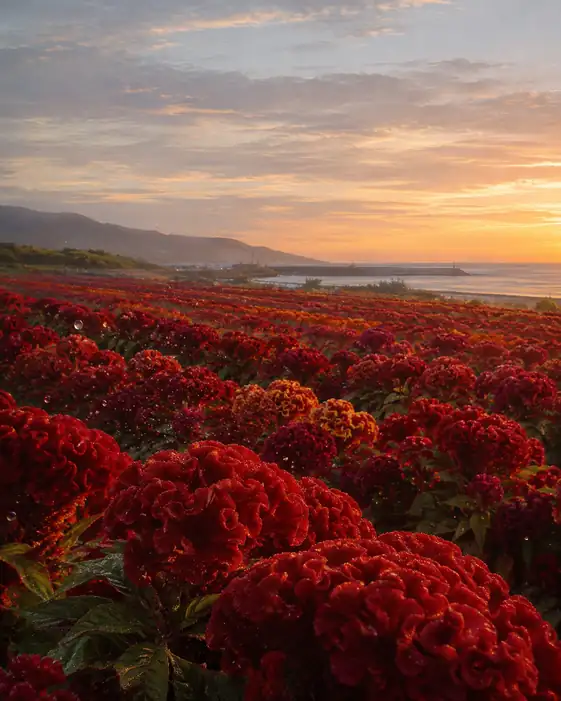 Crimson Slopes of Cockscomb at Sunset
Similar Artworks
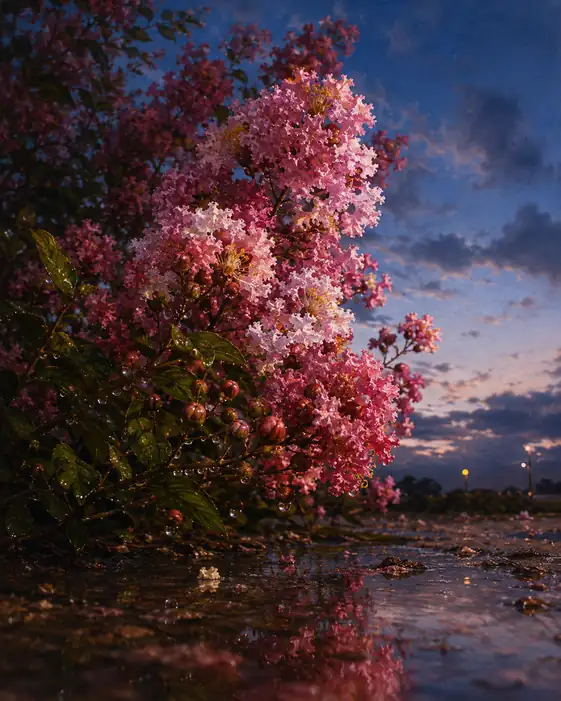 Crape Myrtle Reflected in the Twilight Puddle
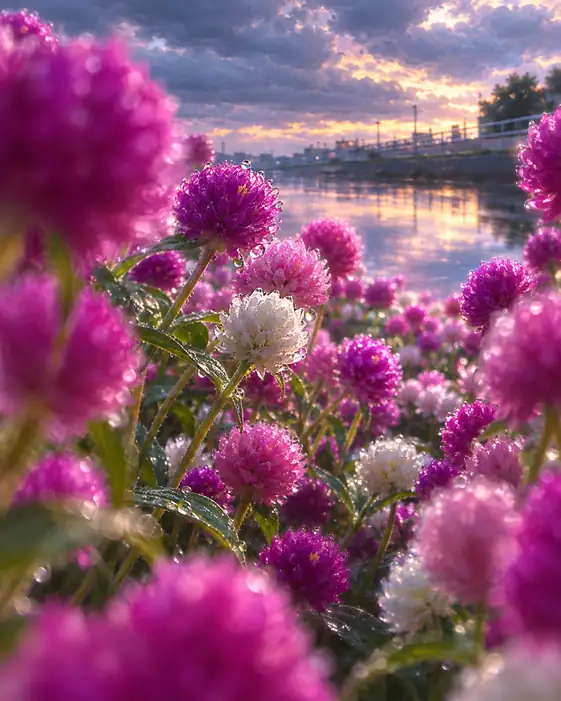 The Morning Crimson Wishes Met White Prayers
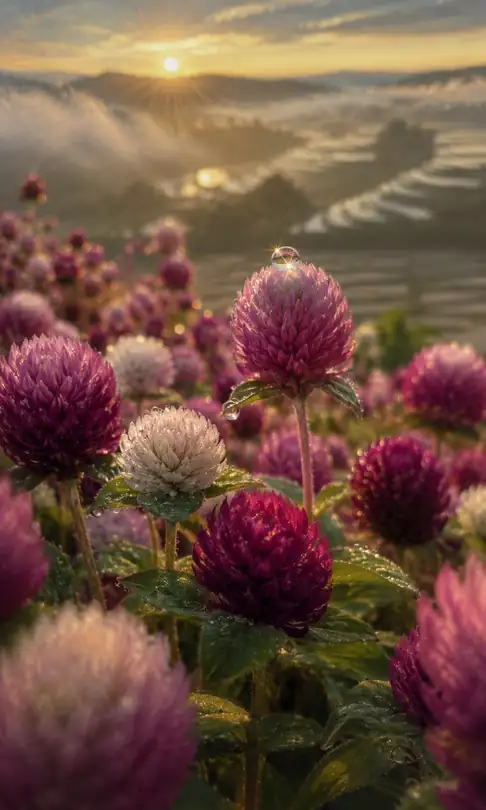 Morning Dew upon Globe Amaranth and Terraced Hills
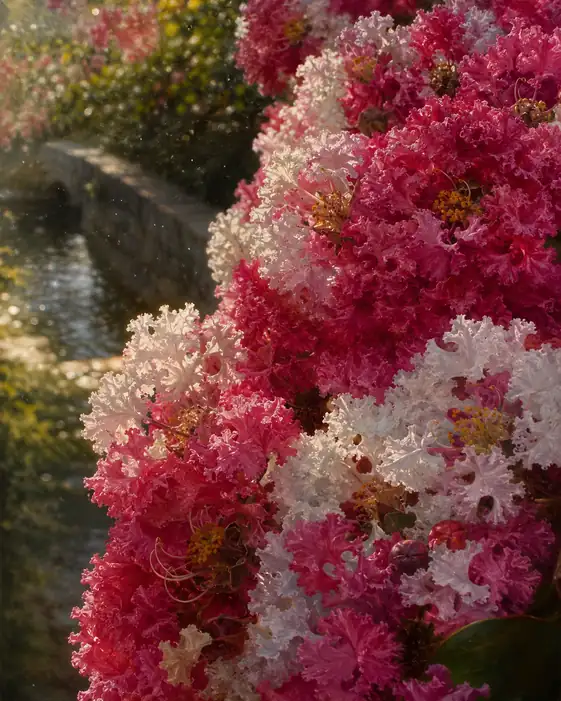 Crape Myrtle Blossoms by the Stone Bridge
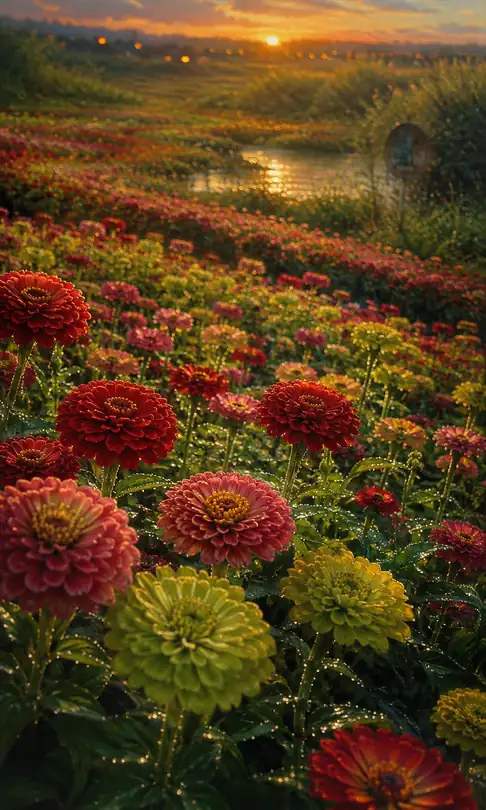 Sunset Glow across the Zinnia Meadow
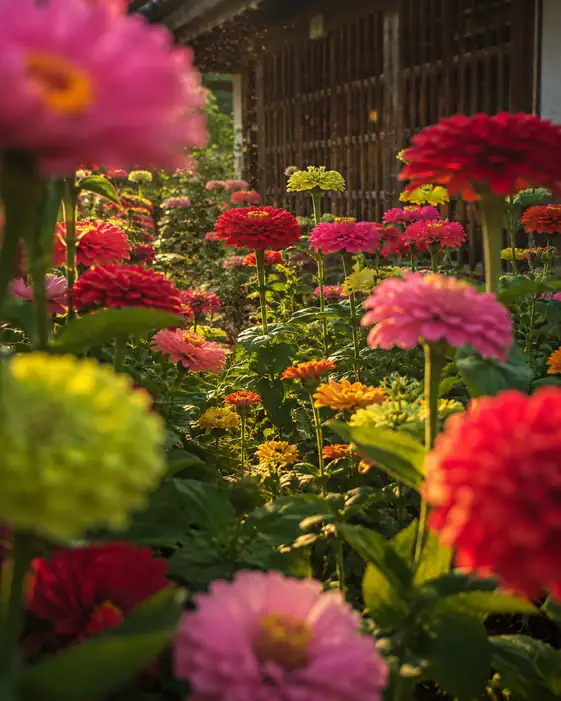 Zinnias before the Lattice Doors at Sunset
 Evening Glory by the Sunlit Coast
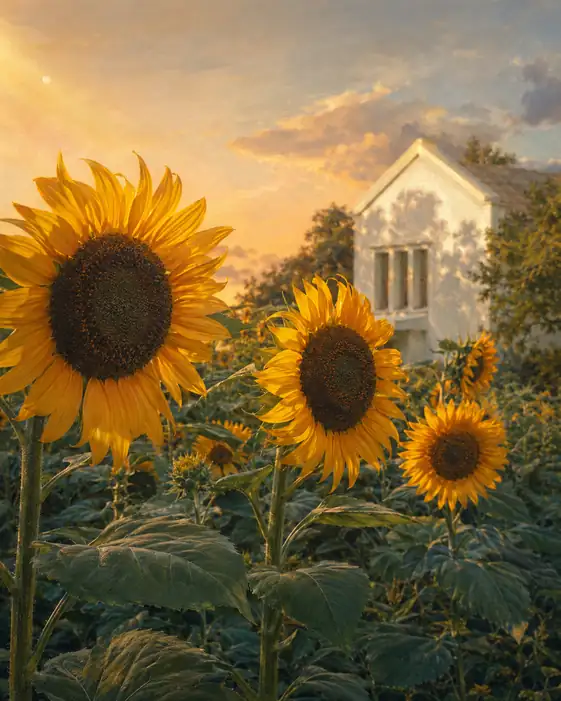 Sunflowers and the White Cottage at Sunset
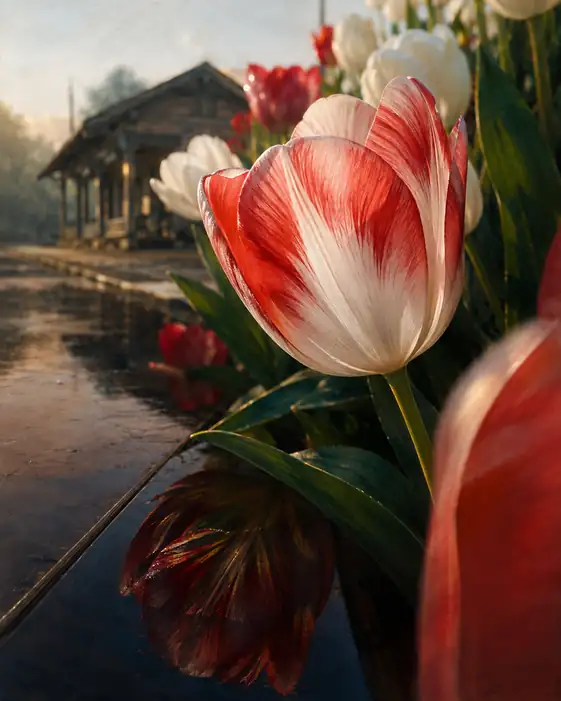 Tulips on Rainy Station Platform
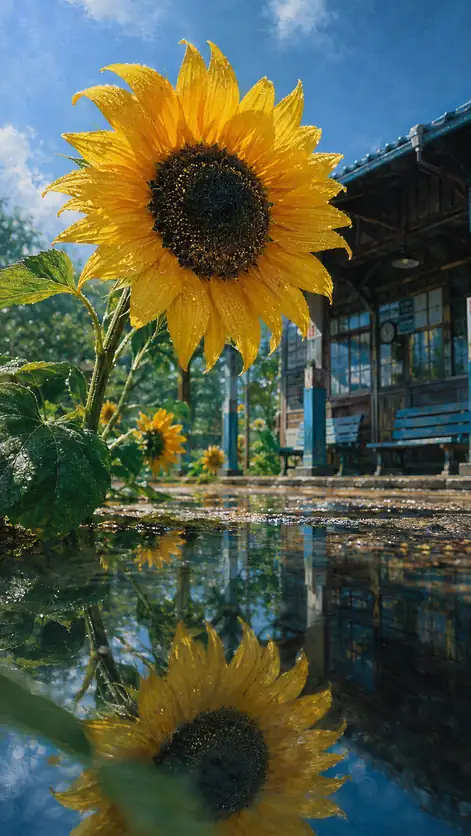 Sunlit Track and the Blooming Mirror