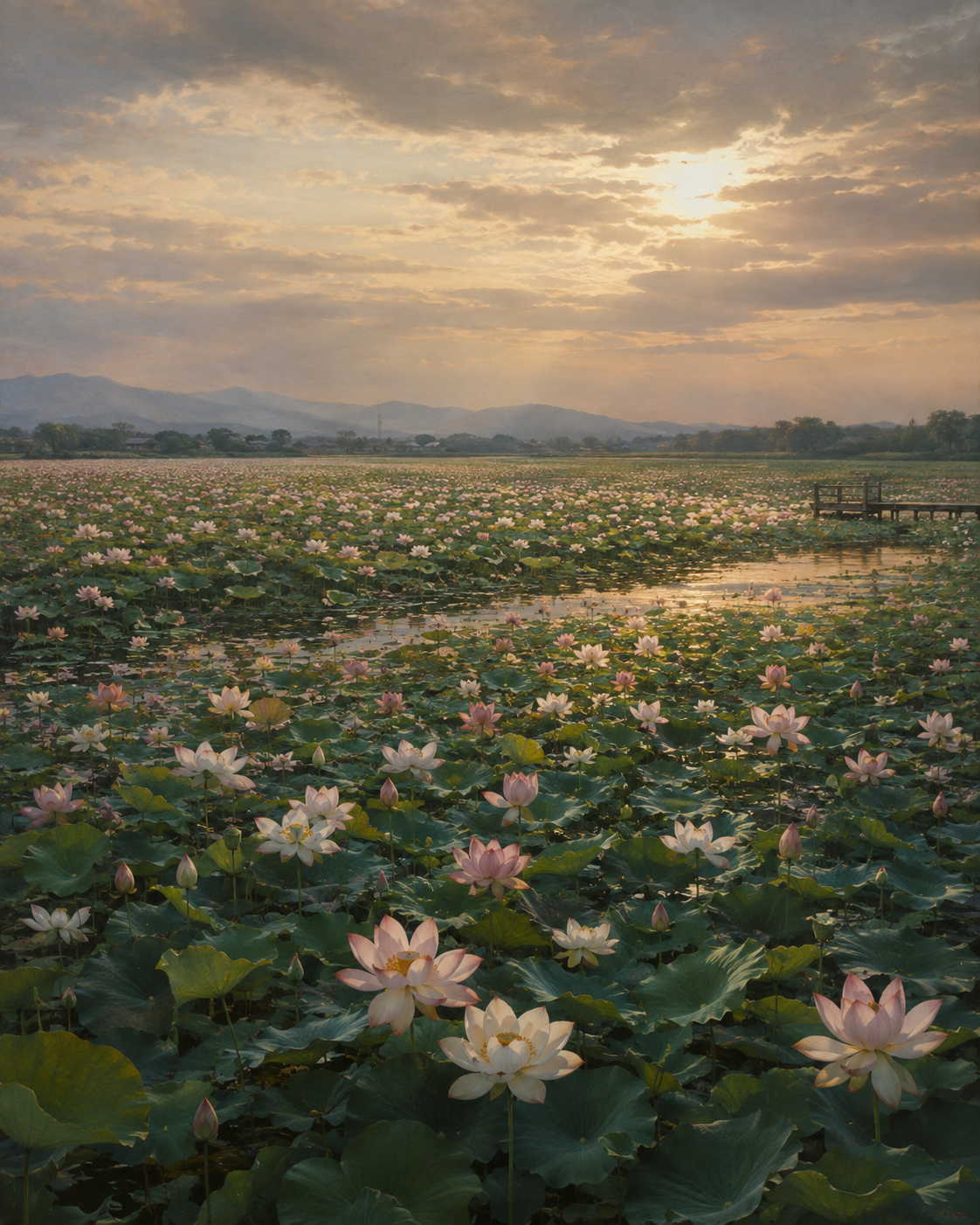
Sunset Radiance over the Vast Lotus Marsh
Critique
Introduction This painting surveys a lotus wetland beneath a clouded sky. White and pink blossoms rise among dark leaves in the foreground, then multiply toward low mountains on the horizon. Description Several pale flowers stand along the lower edge, accompanied by upright buds and overlapping circular leaves. The pond extends as a densely patterned green surface sprinkled with distant pink points. Near center-right, open water reflects a break of warm light in the clouds. A pier projects from the right bank, while trees, scattered structures, and blue-gray ridges form a thin boundary below the sky. Analysis The horizon is placed low, allowing the layered clouds and descending light to balance the dense vegetation. Foreground blossoms establish distinct vertical accents; their repetition and reduction in size carry the eye outward. The channel curves toward the pier and produces a luminous interval among the leaves. Cool green and blue dominate the lower plane, while cream and muted gold connect flowers, sky, and reflection. Atmospheric softening separates the mountains from the sharper nearest leaves. Interpretation and Evaluation The vast repetition of lotus forms suggests seasonal abundance at an environmental scale rather than the display of a single specimen. The pier introduces human access but remains small, preserving the wetland's visual predominance. Depiction is convincing in its transitions between folded petals, broad leaves, broken water, distant trees, and layered clouds. The restrained palette and the decision to treat light as a spatial pathway give the expansive composition clarity and distinction. Conclusion What first seems to be an unbroken floral field gradually reveals a navigable landscape, where channels, reflected light, a modest platform, distant settlement, and mountains establish multiple degrees of human and natural presence.
Same Subcategory
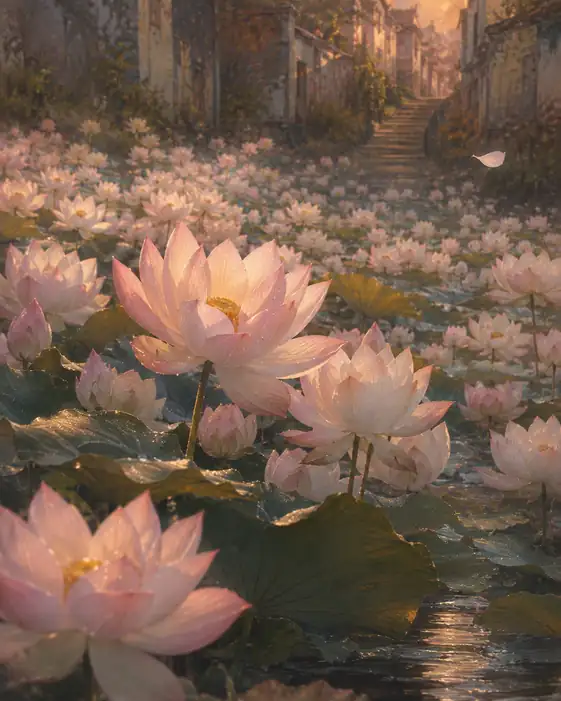 Lotus River through the Ancient Village
Similar Artworks
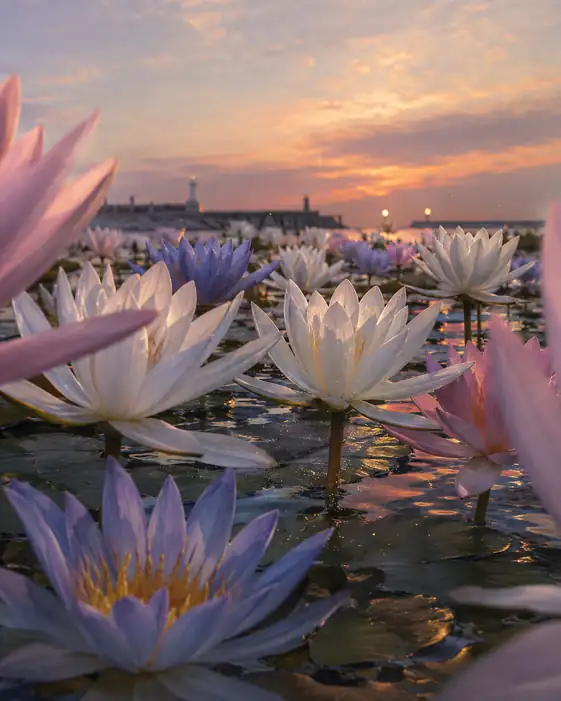 Lilies of the Twilight Harbor
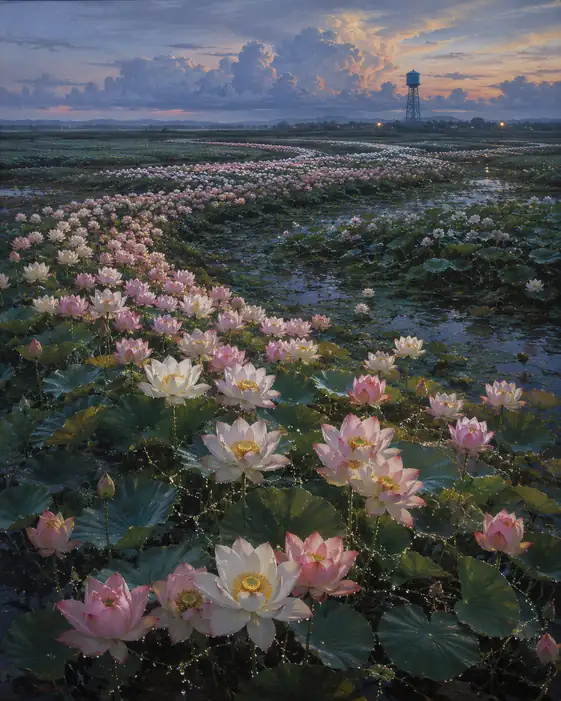 River of Lotus Blooms under the Sunset Cloud
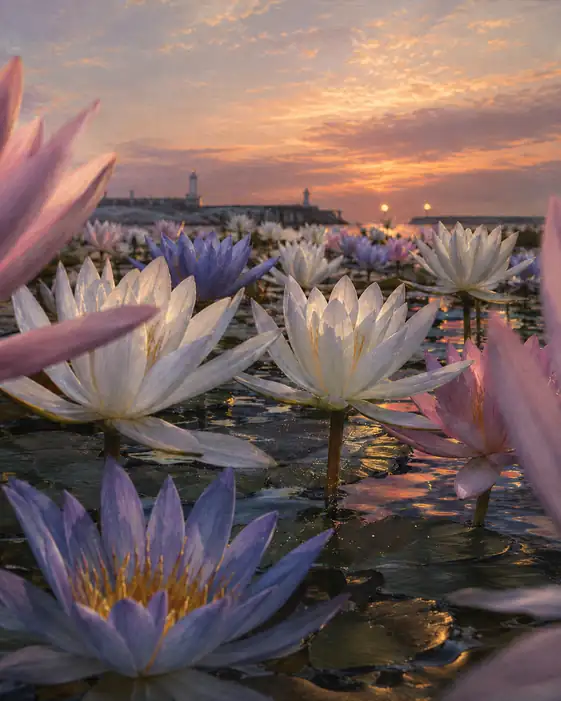 Water Lilies under the Sunset Harbor
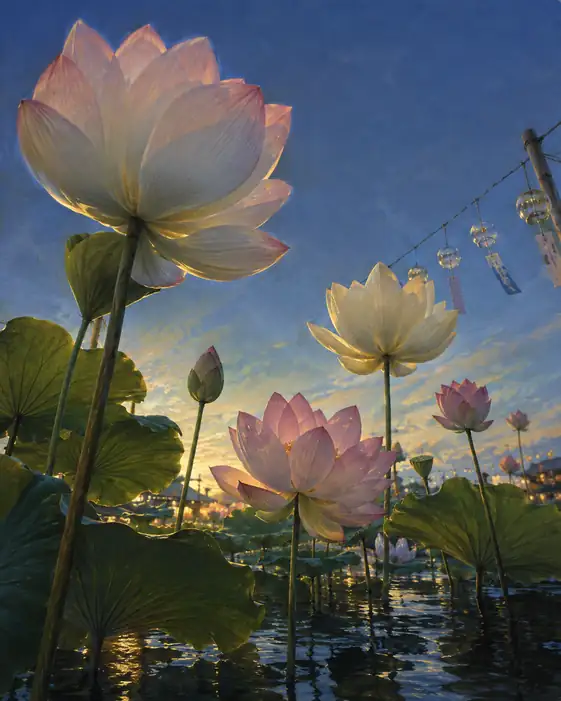 Lotus Blooms and Wind Chimes at Twilight
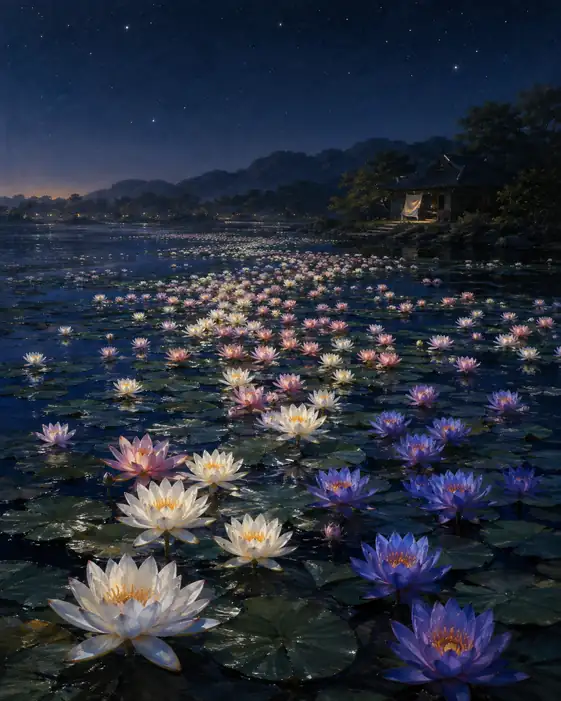 Moonlight Haven and the River of Lilies
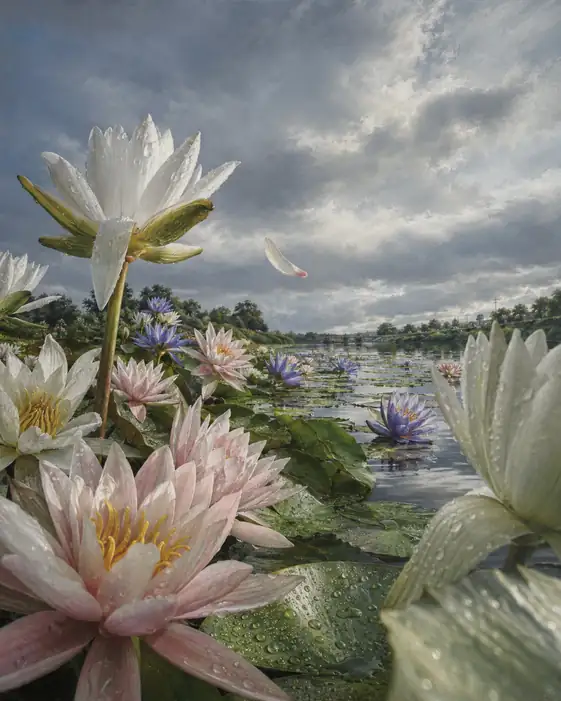 Floating Petal over the Rain-Wet Lilies
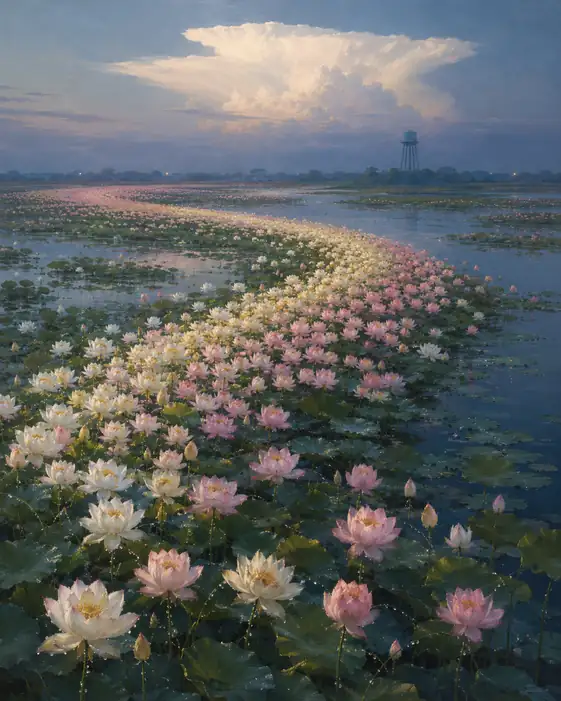 River of Lotus Blooms under the Anvil Cloud
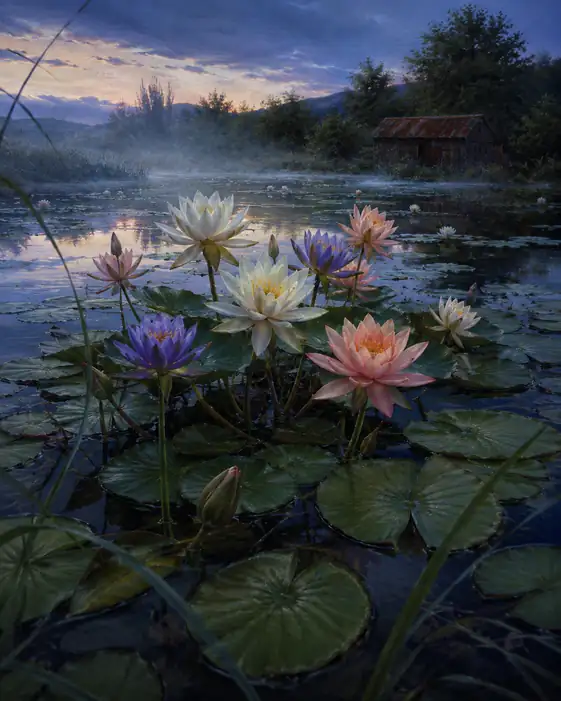 Water Lilies by the Misty Boathouse
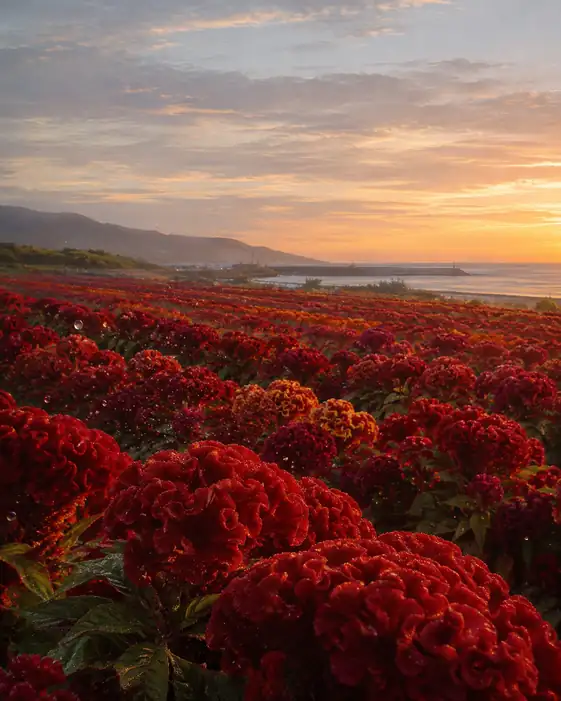 Crimson Slopes of Cockscomb at Sunset
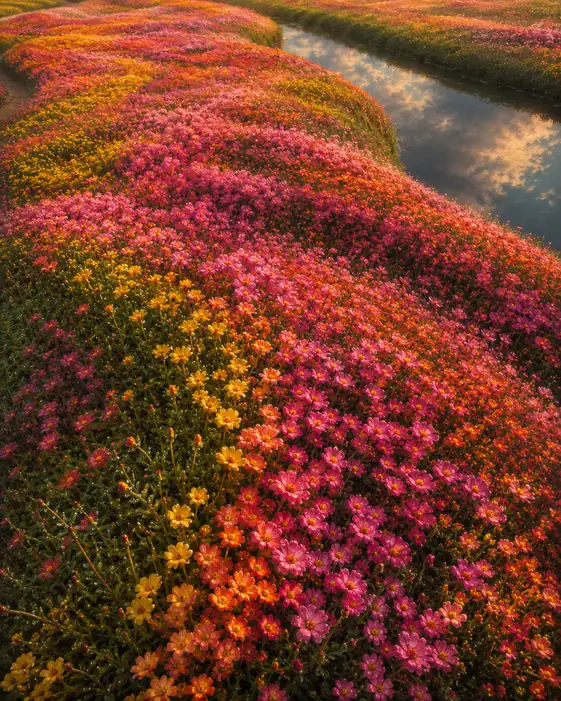 Woven Petals along the Sunset Stream