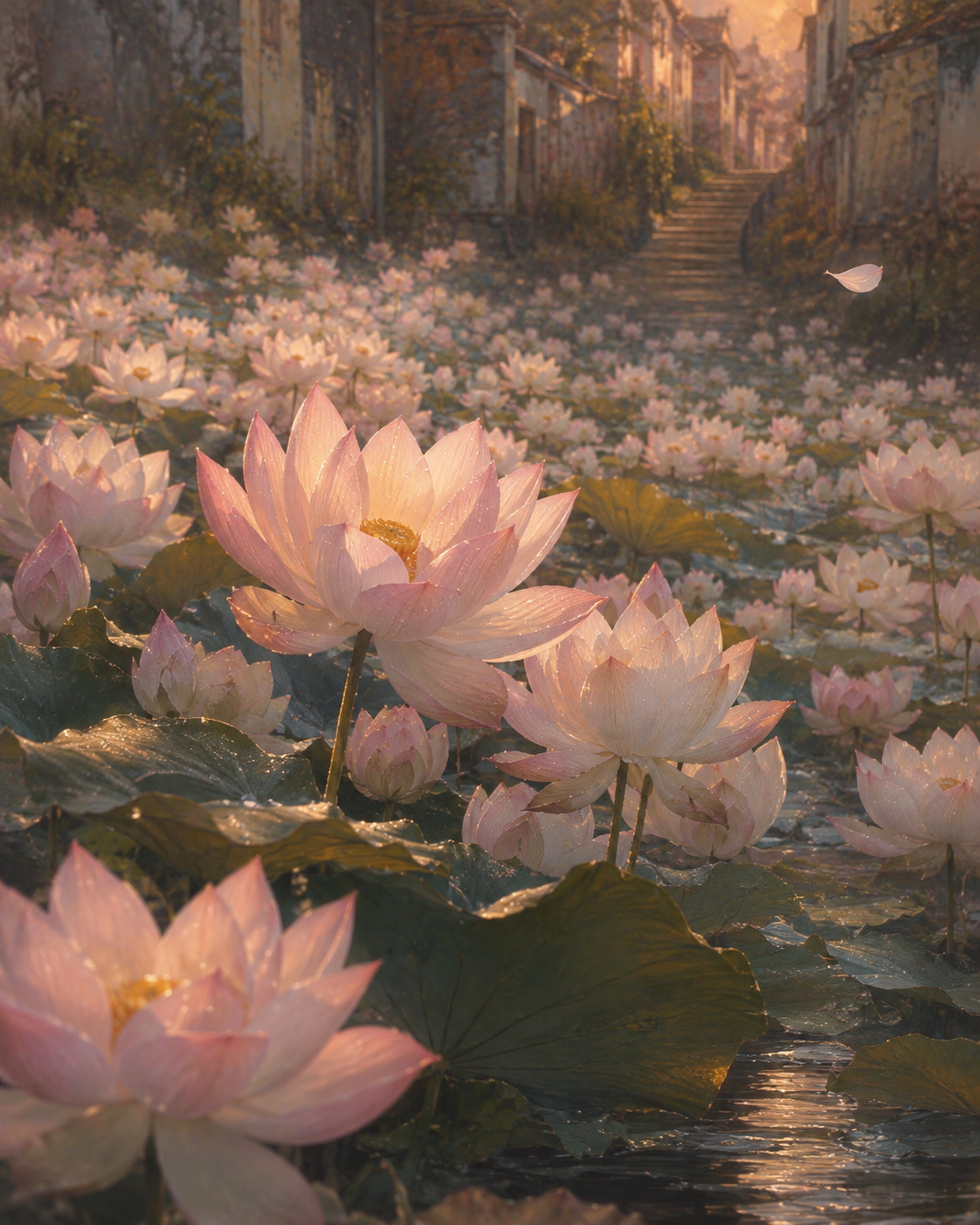
Lotus River through the Ancient Village
Critique
Introduction This painting places an expansive lotus pond directly before a narrow stone-built settlement. Pale blossoms fill the foreground and middle distance, while a staircase climbs between weathered walls toward warm evening light. Description A large pink lotus slightly left of center rises above droplets and dark, folded leaves. A paler blossom stands to its right, surrounded by buds and many smaller flowers that diminish toward the buildings. At the upper center, shallow steps ascend through a tight lane lined with rough masonry and scattered vines. A single detached petal drifts at right, catching light against the shaded wall. Analysis The main flower establishes the nearest focal point, and the repeated pale heads form a broad current toward the central staircase. This recession joins the pond's horizontal spread to the lane's upward movement. Low backlight passes through ribbed petals, touches wet leaves, and turns the airborne petal into a precise accent. Sharp foreground droplets and veins gradually soften into clustered flowers, stone textures, and hazy facades, giving the narrow format considerable depth. Interpretation and Evaluation The lotus growth appears to cross the expected boundary between pond and street, suggesting a settlement shaped by close coexistence with water. The rising steps offer a stable human route, while the loose petal introduces fragile, uncontrolled motion. Depiction distinguishes translucent petals, waxy leaves, shallow reflections, crumbly stone, and climbing vegetation with technical assurance. Restrained pink, green, and amber color unifies the scene, and the fusion of pond and alley gives it originality. Conclusion What first appears to be a luxuriant lotus display gradually becomes a meditation on passage, showing blossoms, water, stairs, walls, and drifting air as connected parts of one lived environment.
Same Subcategory
Similar Artworks
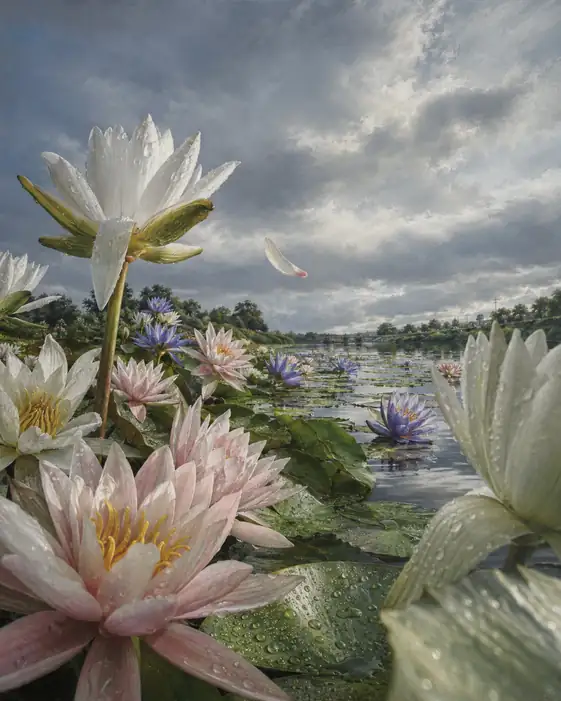 Floating Petal over the Rain-Wet Lilies
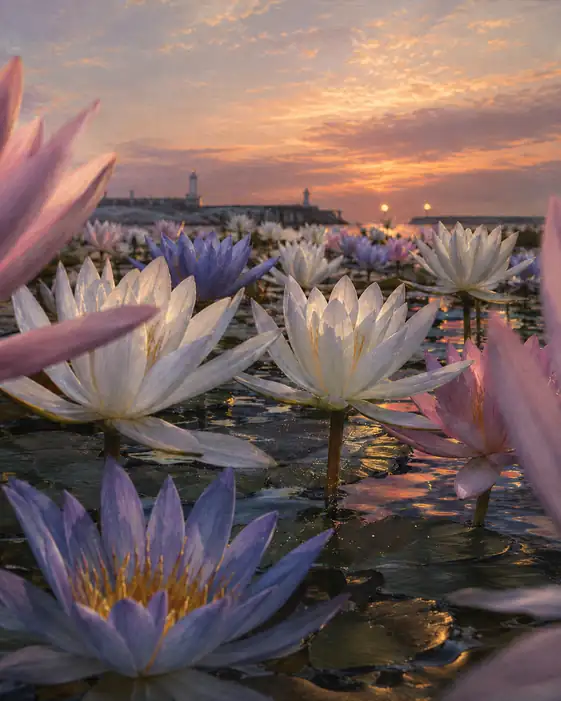 Water Lilies under the Sunset Harbor
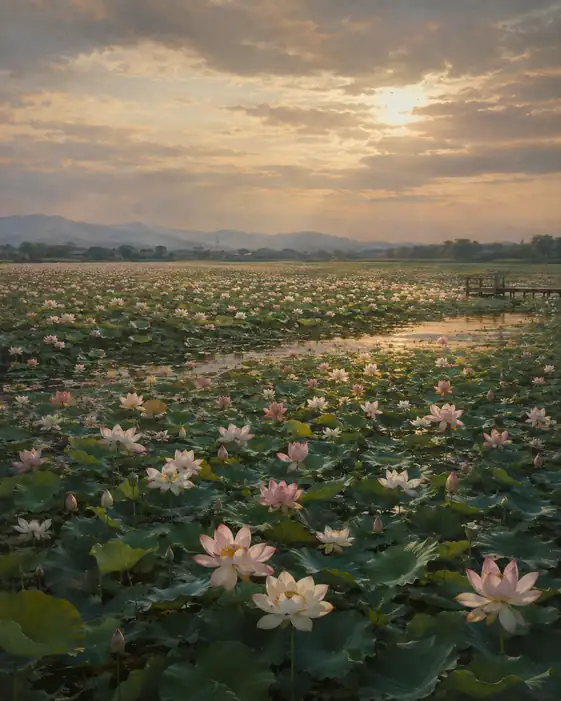 Sunset Radiance over the Vast Lotus Marsh
 Lotus Blooms and Wind Chimes at Twilight
 Path of Morning Mist and Petals
 Morning Radiance over the Lily Pavilion
 The Morning Crimson Wishes Met White Prayers
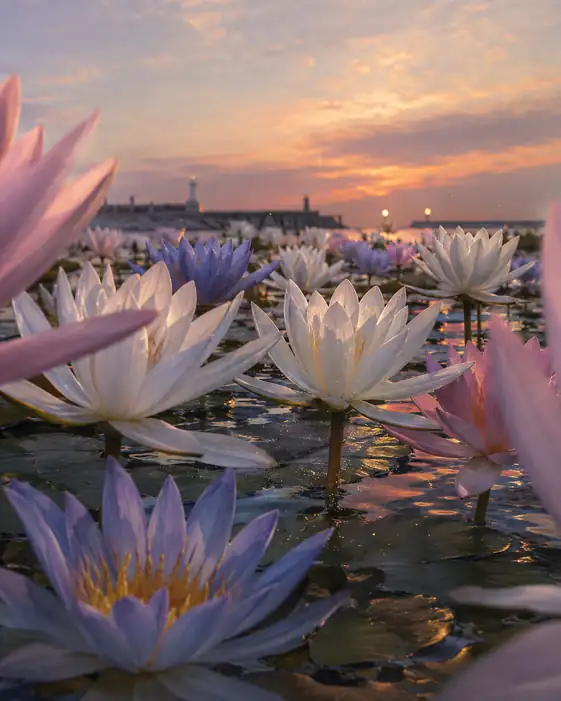 Lilies of the Twilight Harbor
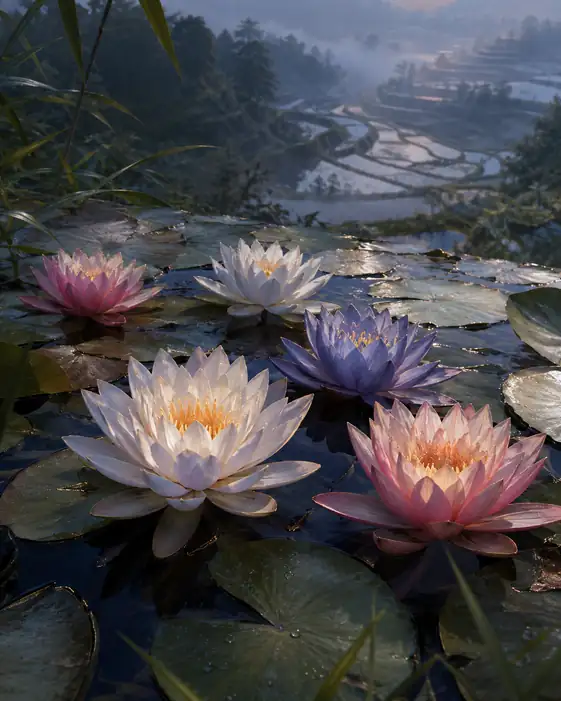 Water Lilies overlooking the Terraced Valley
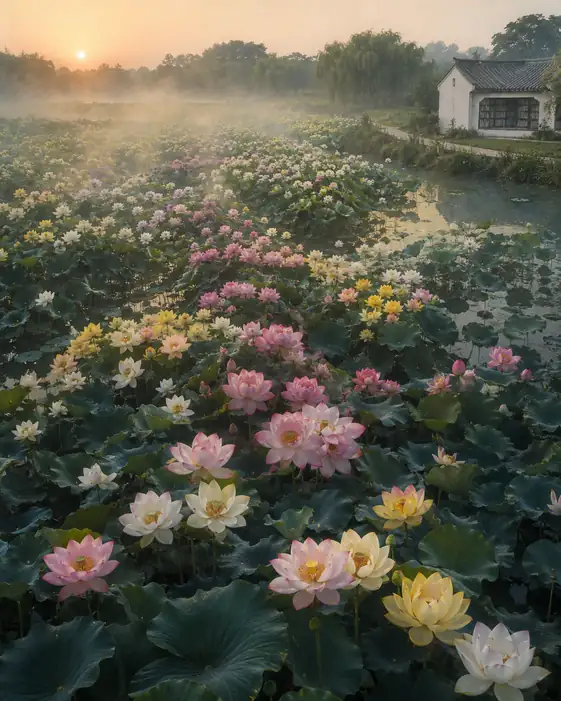 Morning Mist upon the Lotus Waters