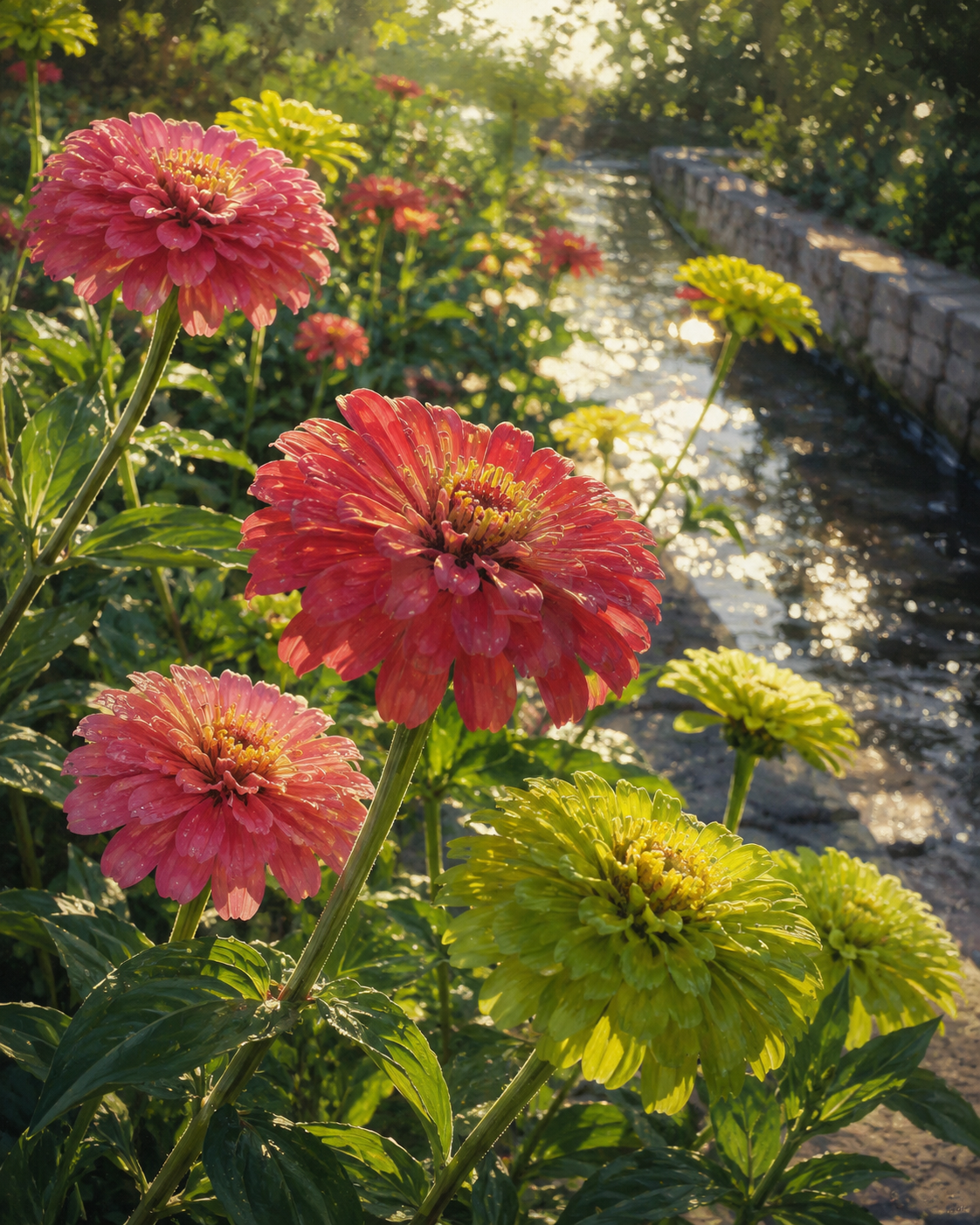
Zinnias by the Sunlit Stone Canal
Critique
Introduction This painting arranges a group of zinnias beside a narrow, sunlit channel. Pink, red, and yellow-green blossoms occupy the foreground, while water and a stone wall recede toward the upper center. Description A coral-red bloom near the center is the largest and most frontal form. Pink flowers rise at upper left and lower left, while rounded green heads cluster along the right side. Droplets cling to layered petals and serrated leaves. Behind them, the channel bends gently away beside a low masonry wall; patches of white-gold reflection alternate with dark, shallow water under overhanging foliage. Analysis The main stems lean inward and form a loose fan, directing attention from the lower edge toward the central flower. Beyond it, the channel creates a second diagonal that carries the eye into depth. Warm backlight makes petal tips translucent and traces leaf margins, while the green flowers remain luminous against darker foliage. Sharp foreground textures gradually give way to softened stones, ripples, and trees, establishing distance through controlled focus. Interpretation and Evaluation The waterway functions as more than background: its continuous movement contrasts with the flowers' upright stillness and implies the garden's dependence on water. The depiction distinguishes tender petals, firm stems, wet leaves, rough stone, and shifting reflection with considerable precision. Coral and lime hues create a lively color opposition, moderated by deep green shadow. The elevated close viewpoint and curving channel give the familiar floral subject an individual spatial structure. Conclusion What first reads as a cluster of bright blossoms gradually becomes a study of circulation, showing how water, sunlight, stone, and cultivated growth are joined within a small garden passage.
Same Subcategory
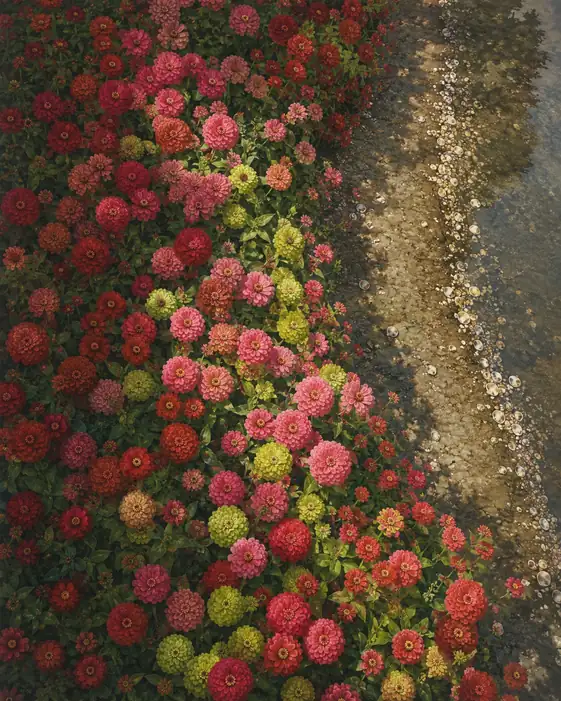 Zinnias along the Pebble Shore
Similar Artworks
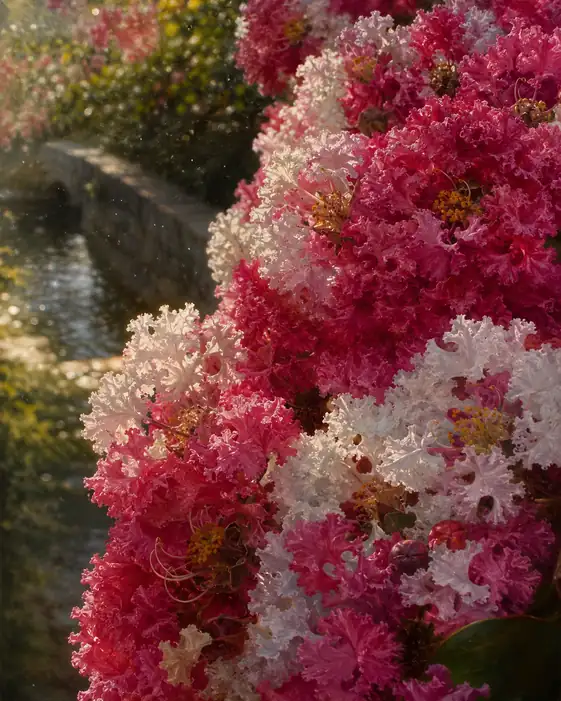 Crape Myrtle Blossoms by the Stone Bridge
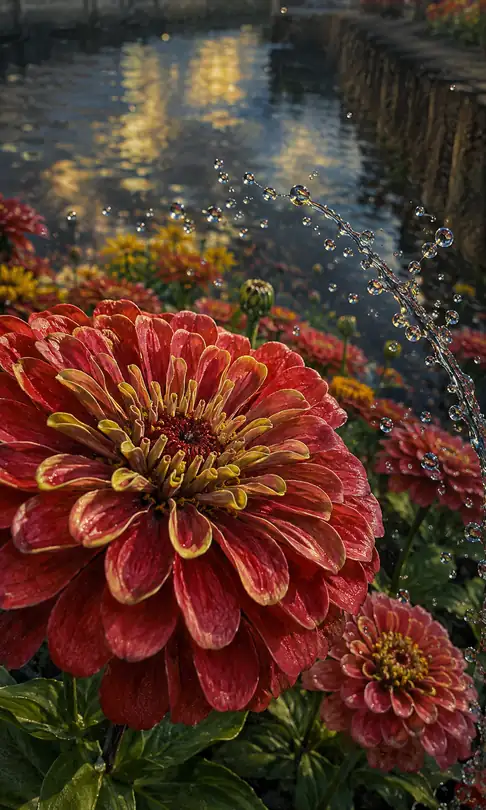 Scarlet Zinnia and the Arc of Droplets
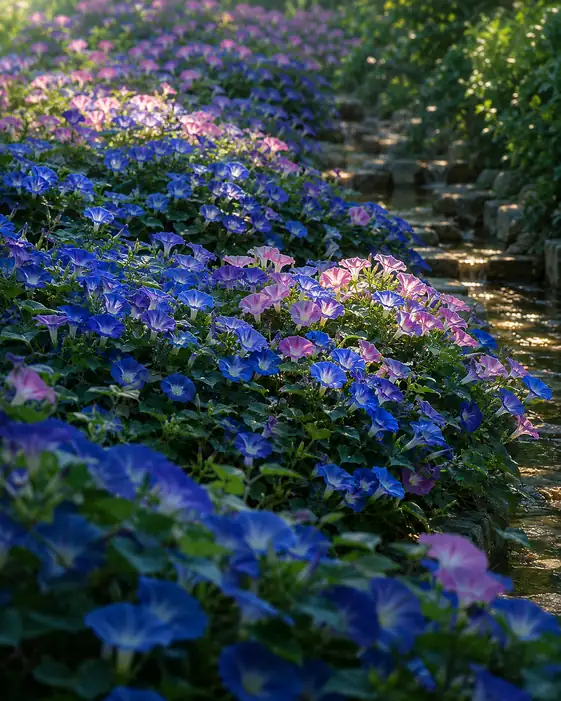 Flow of Azure Blooms in Morning Sun
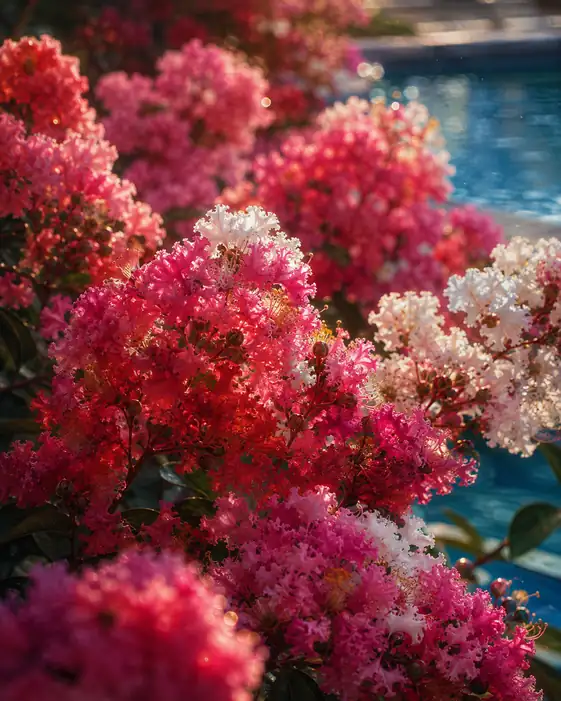 Crape Myrtle by the Sparkling Pool
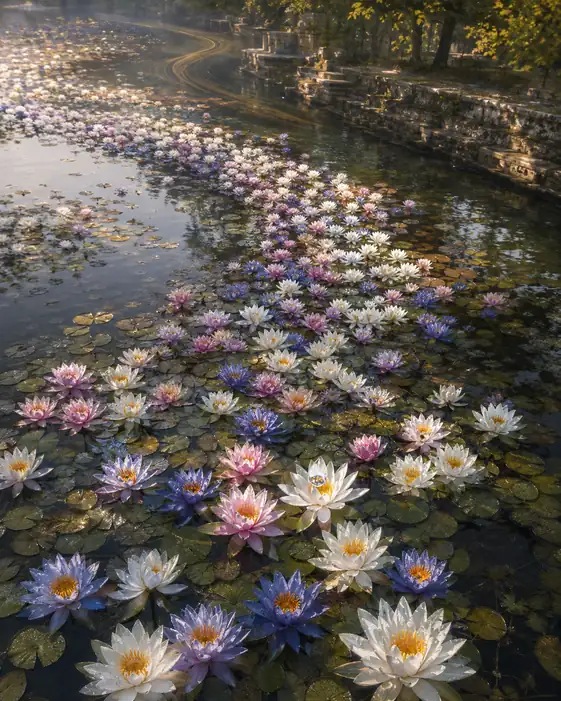 Winding Path of Water Lilies along the Canal
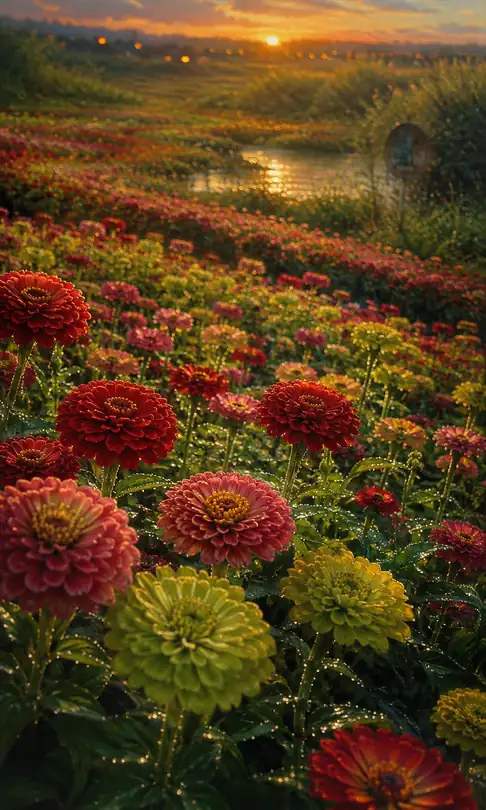 Sunset Glow across the Zinnia Meadow
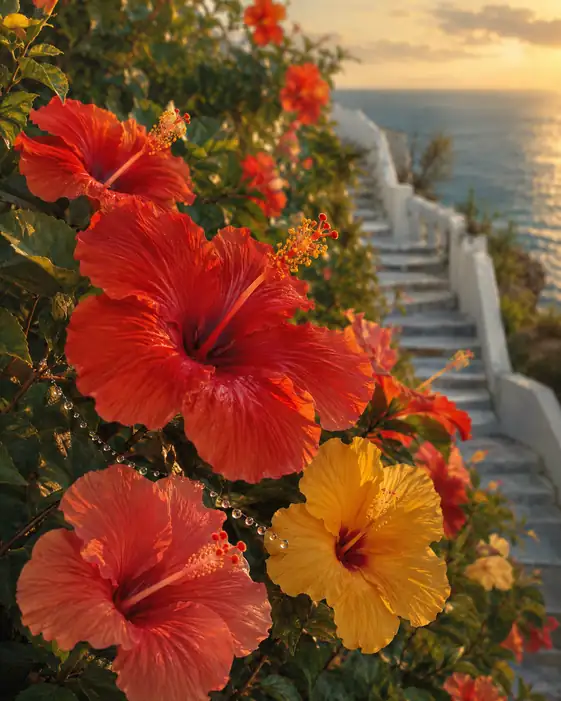 Hibiscus along the Coastal Stairway at Sunset
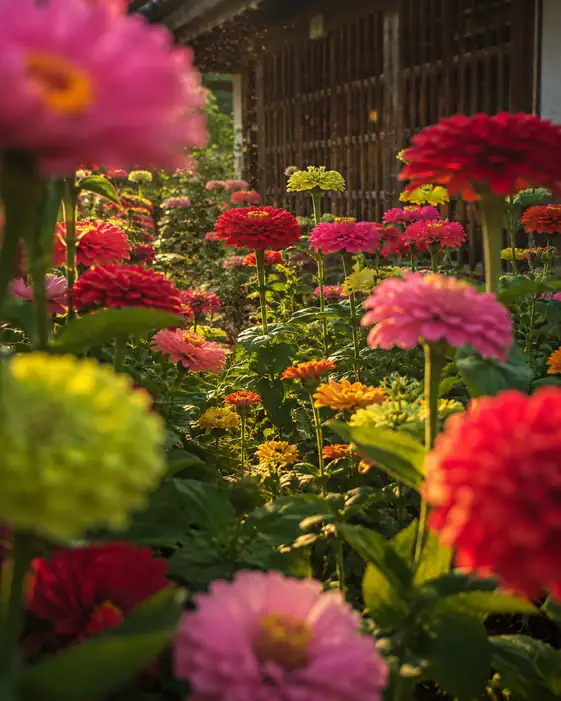 Zinnias before the Lattice Doors at Sunset
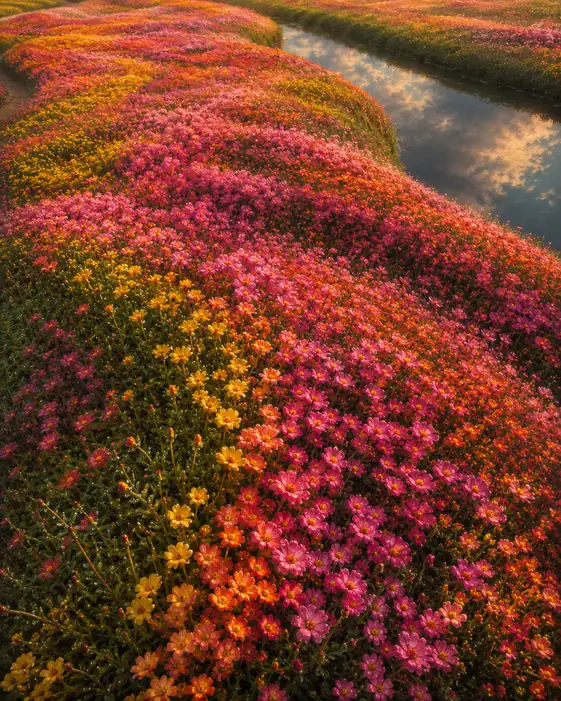 Woven Petals along the Sunset Stream
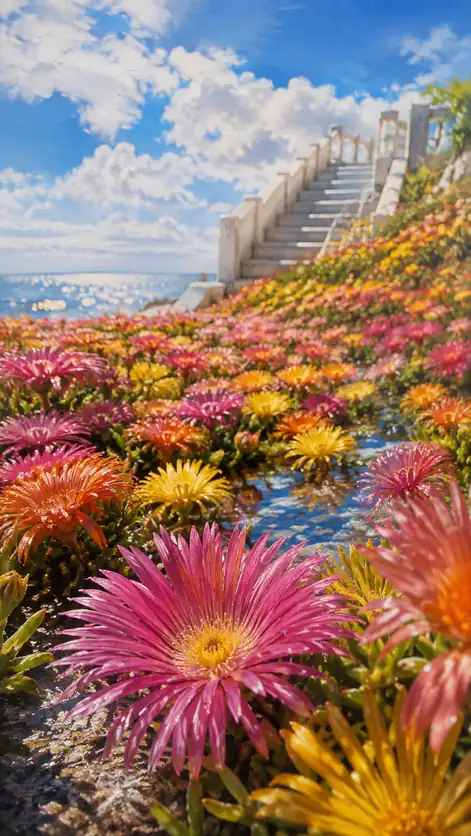 Coastal Stairway and Livingstone Daisies