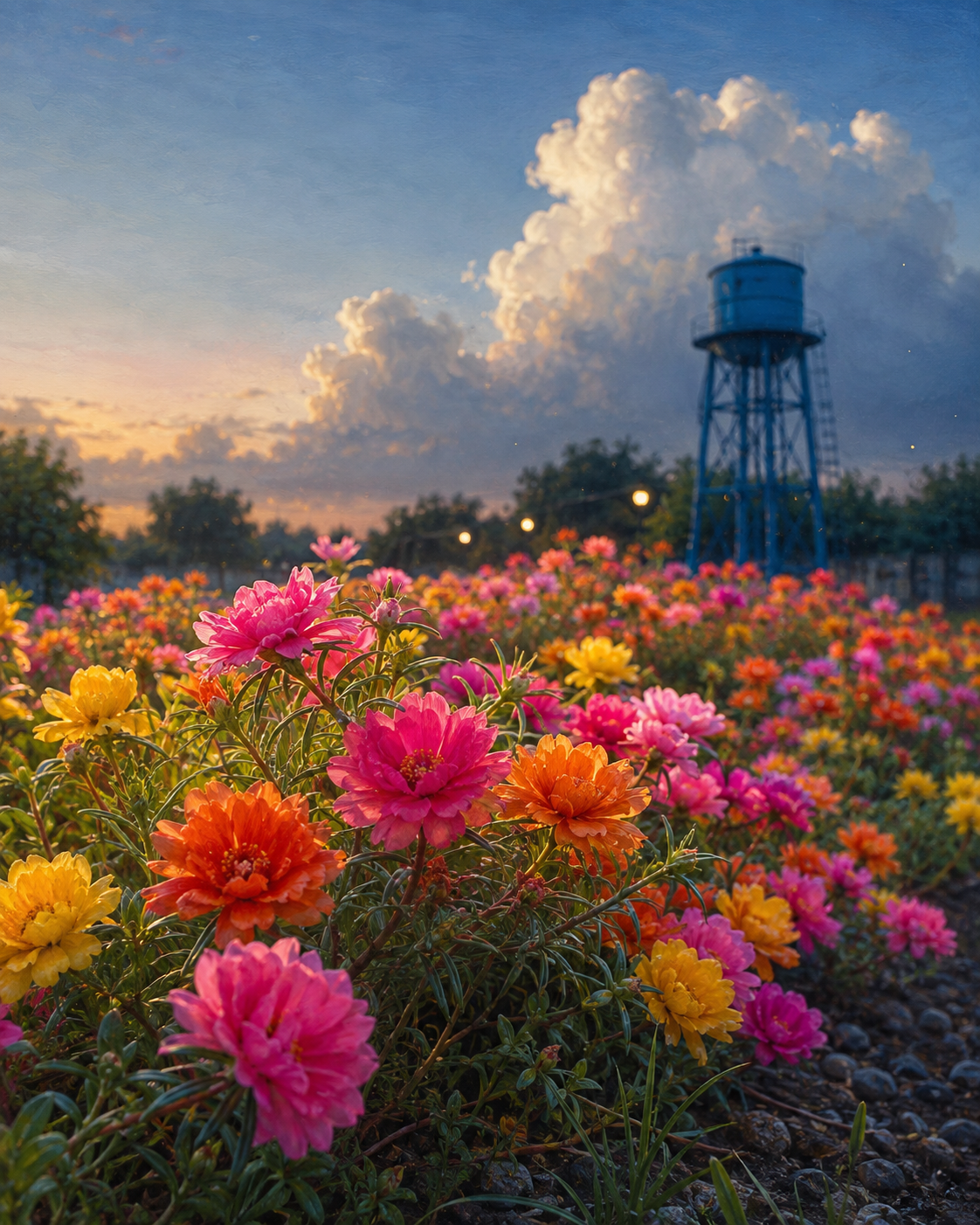
Rose Moss under the Water Tower and Cloud
Critique
Introduction This painting sets pink, orange, and yellow flowers before a blue water tower and evening cloud. Three scales—blossom, structure, and weather system—turn a roadside view into a study of growth, utility, and atmosphere. Description Large double-petaled flowers fill the lower foreground among narrow leaves and reddish stems. Pink blooms dominate, mixed with orange and yellow heads, buds, gravel, and low weeds. Rows of smaller flowers recede toward a dark tree line. At right, a cylindrical blue tank stands on four metal legs with cross-bracing and a ladder. A massive cream-gray cumulus rises behind it. Small round streetlights glow across the middle distance; the left horizon remains peach. Analysis The flower bed forms a low diagonal field, while the tower supplies a strong vertical counterweight. Its thin framework remains partly visible against dark trees, but the solid tank overlaps the luminous cloud. Focus sharpens the nearest flowers and softens distance, giving depth to repeated color. Warm side light catches layered petals and cloud edges; blue shadow joins tower and sky. Saturated pink, orange, and yellow are balanced by deep green and broad cool blue. Interpretation and Evaluation Flowers and water tower represent different supports for settlement: one enriches surroundings, the other stores a resource. The cloud adds a natural reservoir, extending held water beyond engineering. The composition coordinates these meanings clearly. Persuasive scale, controlled dusk color, floral texture, and correspondence among blossom, tank, and cloud are effective. Conclusion At first the glowing flowers dominate as a colorful field, but closer viewing establishes an exchange between cultivated ground, elevated tank, and moisture-filled sky. The work transforms an ordinary edge of town into a balanced image of beauty, provision, and changing weather.
Same Subcategory
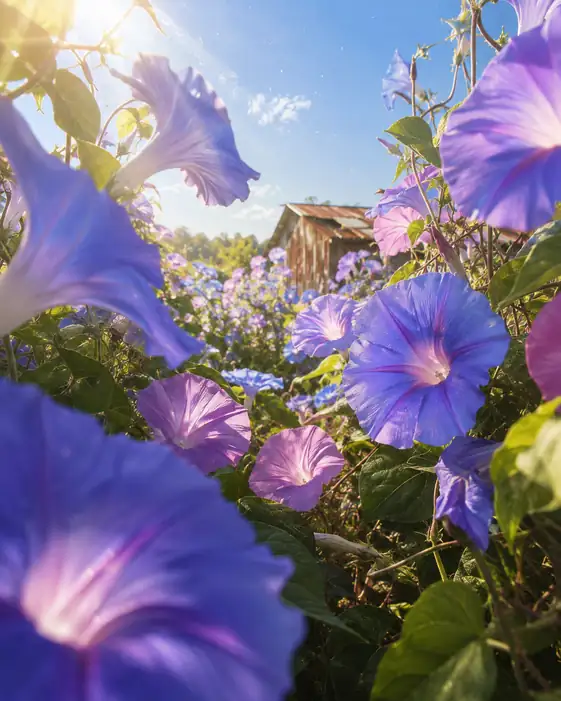 Morning Glories around the Old Shed
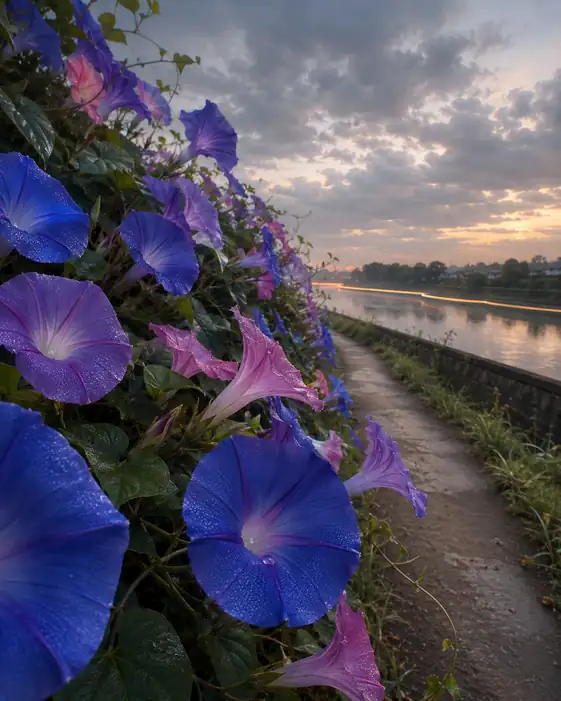 Morning Glories along the River Walk
Similar Artworks
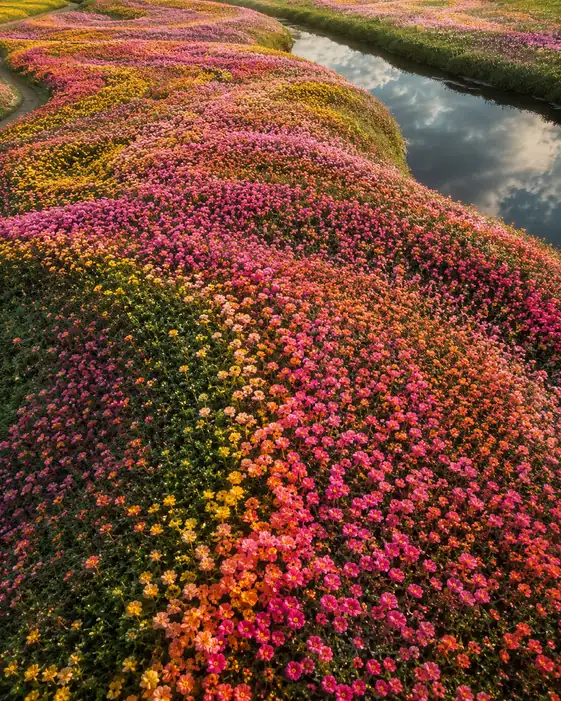 Sunset Waves of Portulaca Blooms
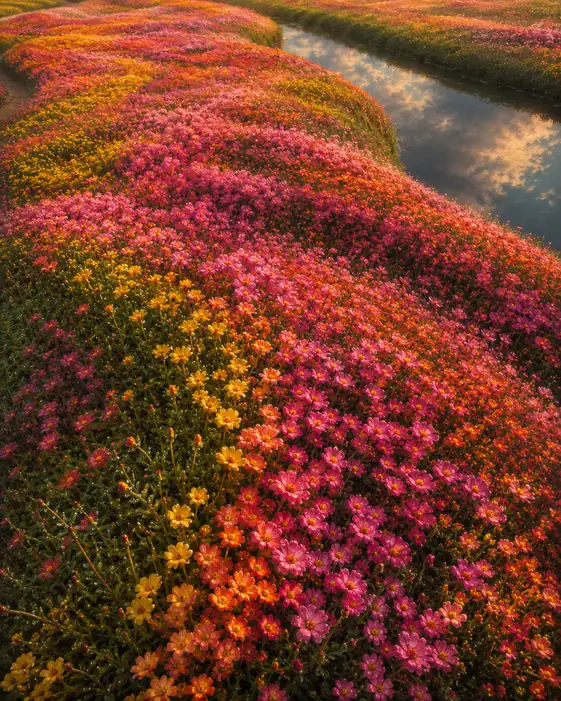 Woven Petals along the Sunset Stream
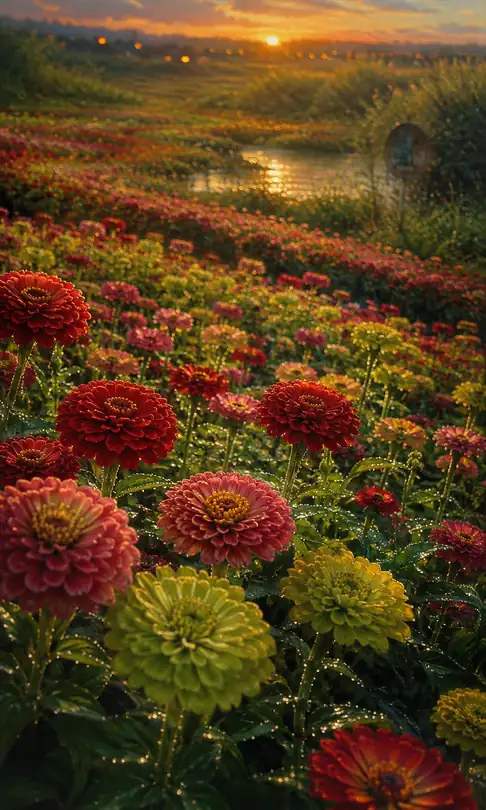 Sunset Glow across the Zinnia Meadow
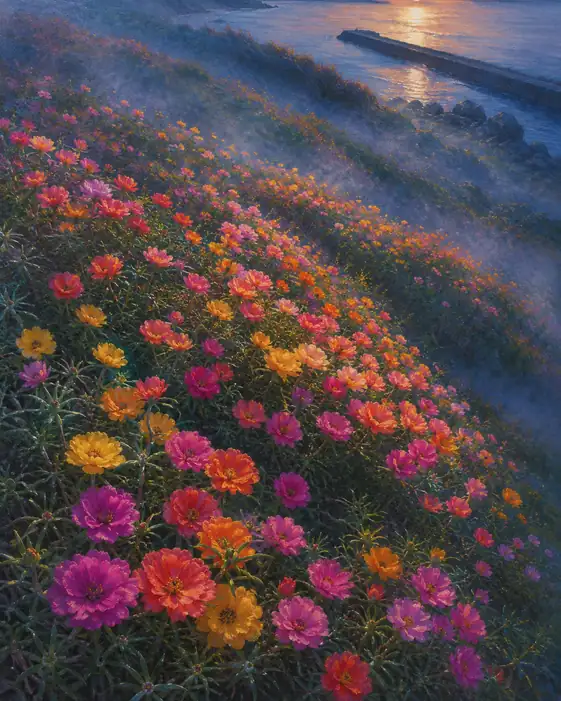 Coastal Slopes of Rose Moss and Evening Mist
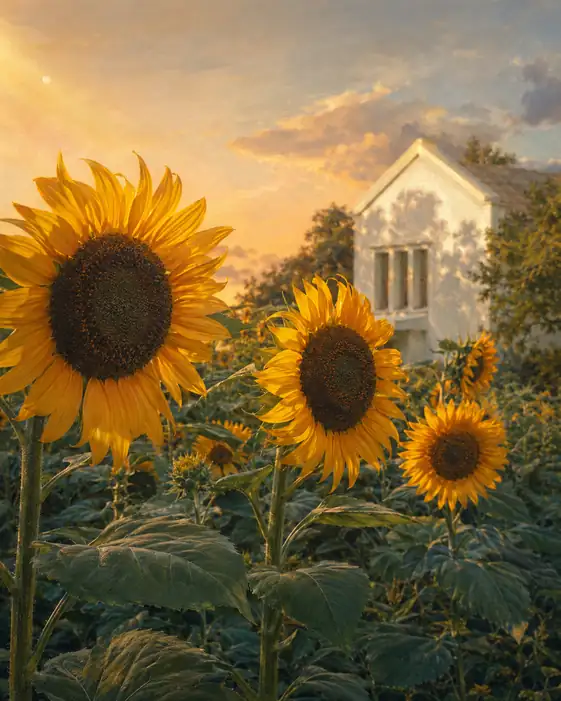 Sunflowers and the White Cottage at Sunset
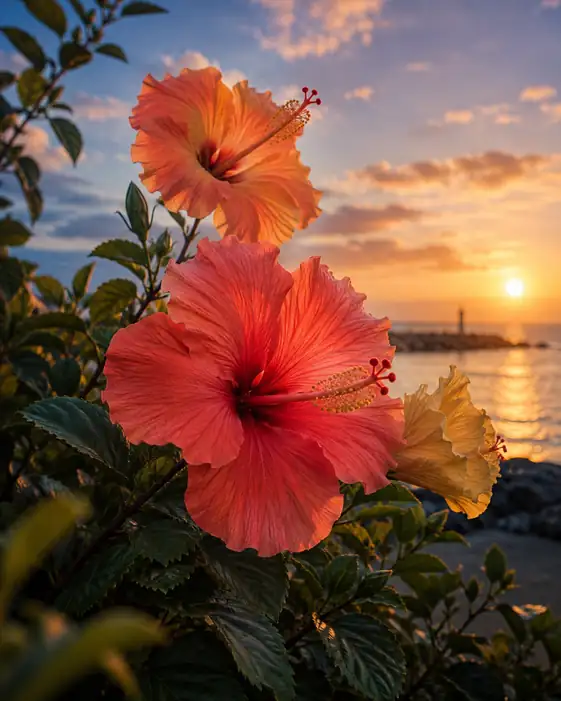 Hibiscus Glowing against the Sunset Harbor
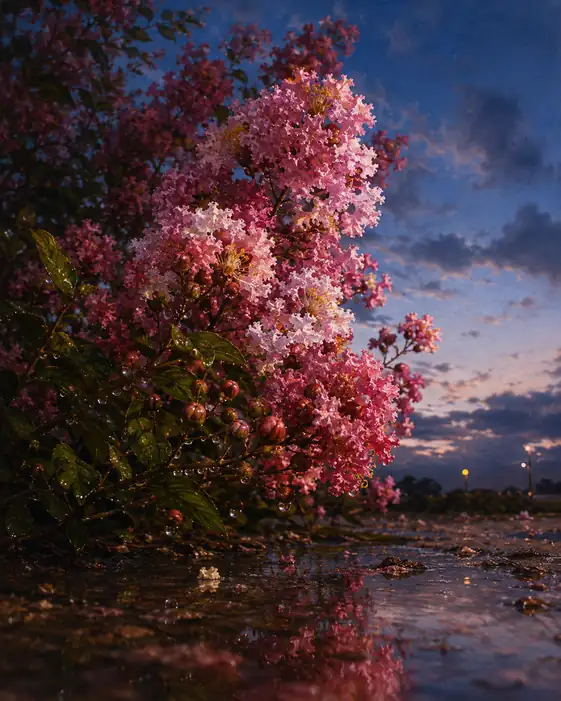 Crape Myrtle Reflected in the Twilight Puddle
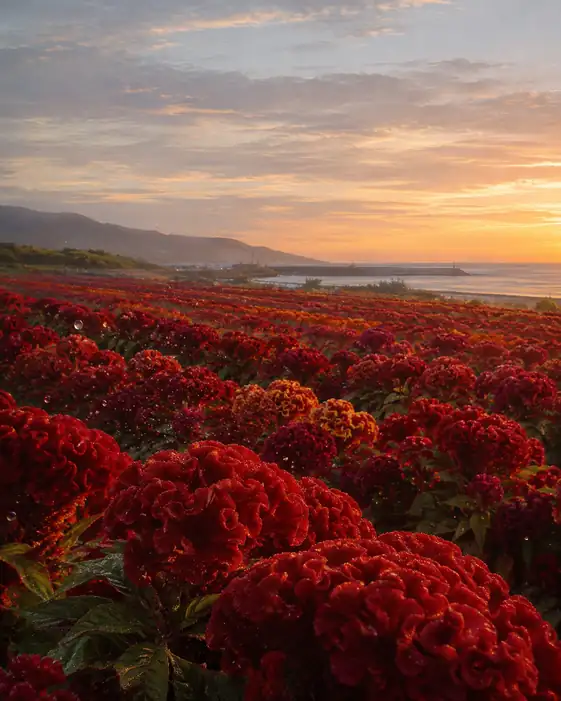 Crimson Slopes of Cockscomb at Sunset
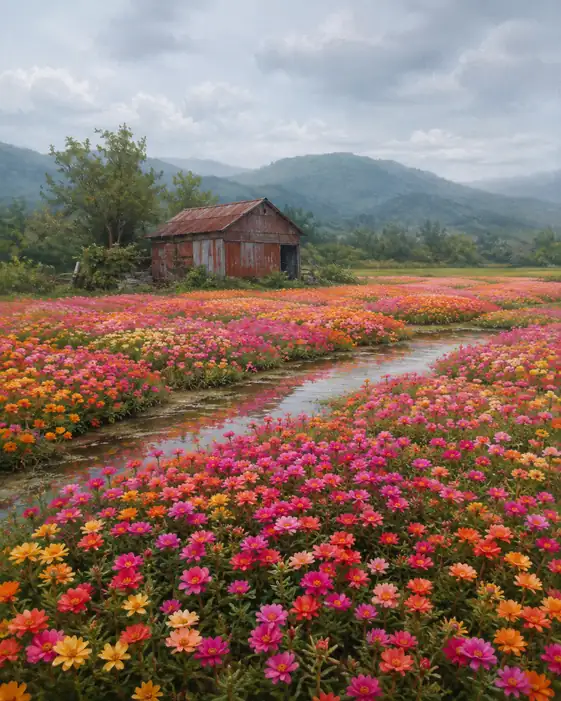 Stream through the Portulaca Meadow
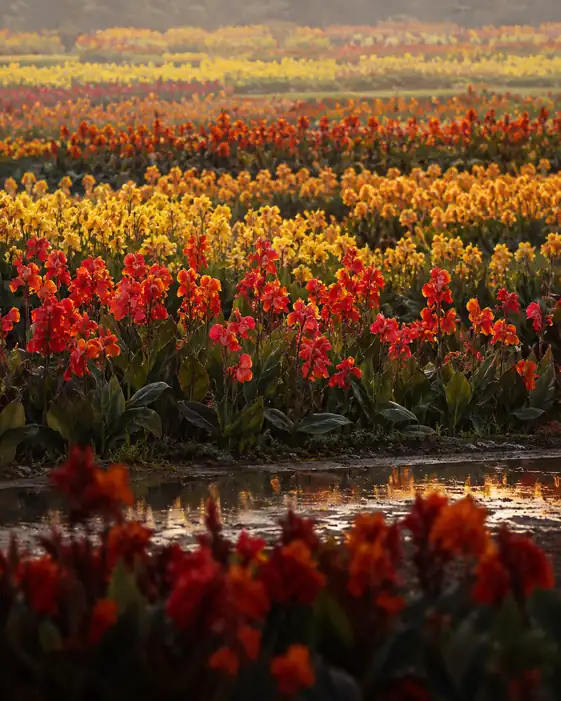 Golden Bands across the Canna Field