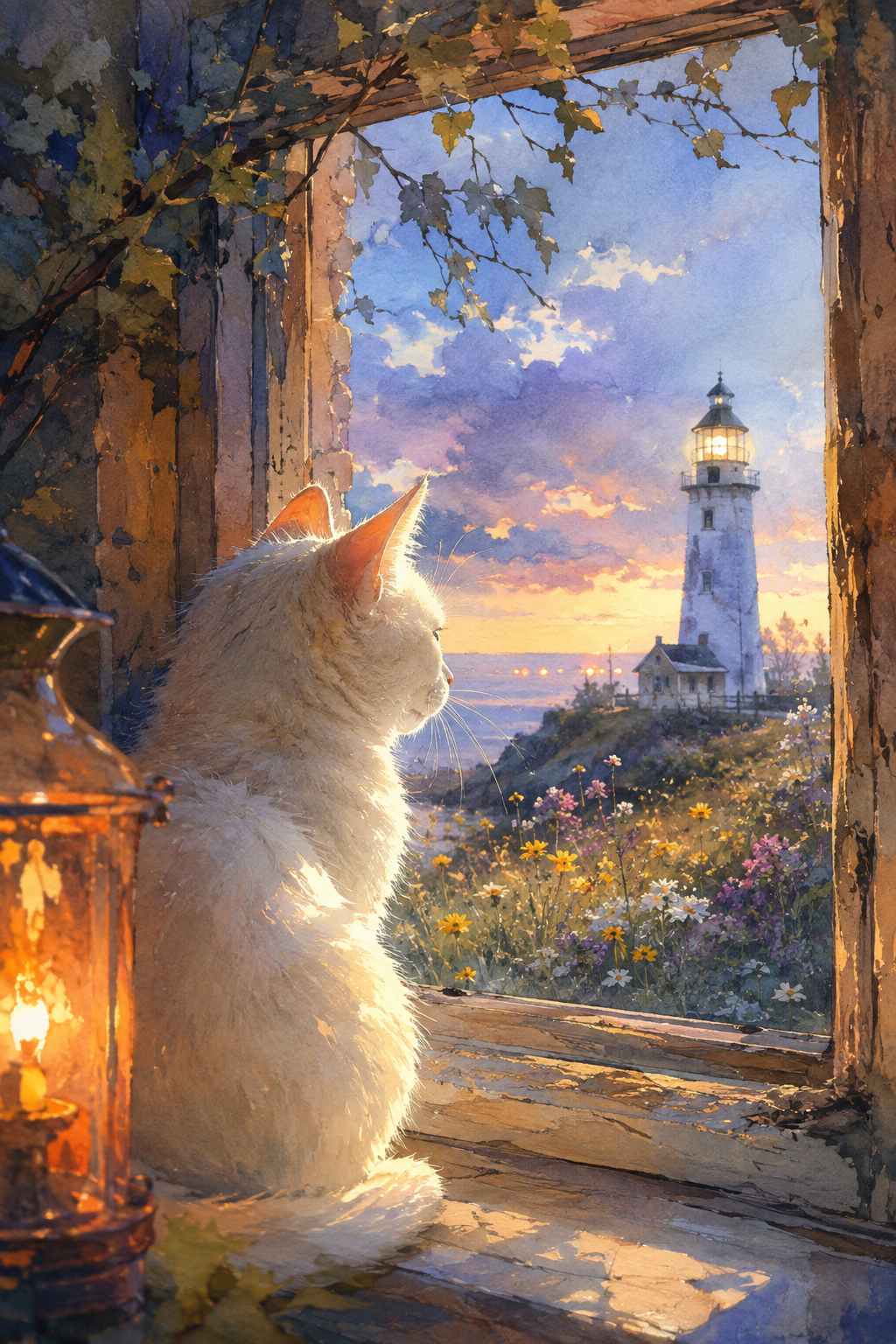
The White Cat and the Distant Lighthouse
Critique
Introduction This watercolor-like painting places a white cat at an old window overlooking a flowered coast and lighthouse at sunset. Enclosed interior and expansive view turn animal observation into a meditation on shelter, distance, and attention. Description The seated cat fills the left foreground in profile, facing right toward the tower. A glowing metal lantern stands at lower left. Weathered wooden jambs and a vine-covered lintel frame blue sky, violet clouds, orange horizon, sea, and a white lighthouse on a rocky rise. Yellow, pink, purple, and white flowers spread below the window. Warm backlight outlines the cat's ears, whiskers, chest, and tail. Analysis The window forms a dark rectangle around the luminous landscape, while the cat and lighthouse create paired forms at different depths. The animal's gaze supplies a diagonal connection between them. Lantern light warms the interior from below; sunset rims the cat from behind and illuminates the distant lantern room. Rough brown strokes describe wood and metal, soft pale strokes build fur, and transparent washes open sky and sea. Orange accents balance broad blue and violet passages. Interpretation and Evaluation The cat occupies safety yet looks toward a structure of guidance, making curiosity the link between domestic and distant worlds. Two lights reinforce this relation: the lantern offers warmth, while the lighthouse promises orientation. The framing remains clear but active, and material contrasts are persuasive. Controlled complementary color, sensitive edges, economical space, and the parallel between watcher and beacon are effective. Conclusion At first the white cat appears the sole subject, but closer viewing reveals exchange among animal, lantern, and lighthouse. Illuminated fur becomes a threshold between interior warmth and coastal air, allowing stillness to suggest sustained looking.
Same Subcategory
 Morning Magic Begins at the Window
Similar Artworks
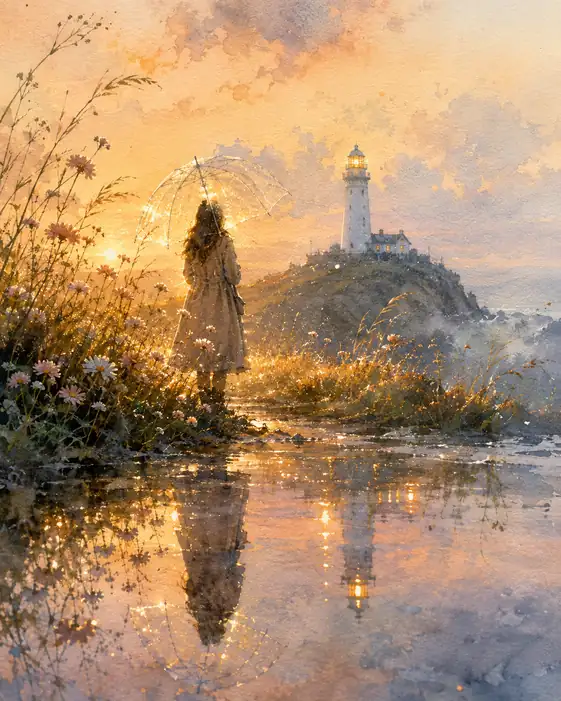 Golden Reflection toward the Lighthouse
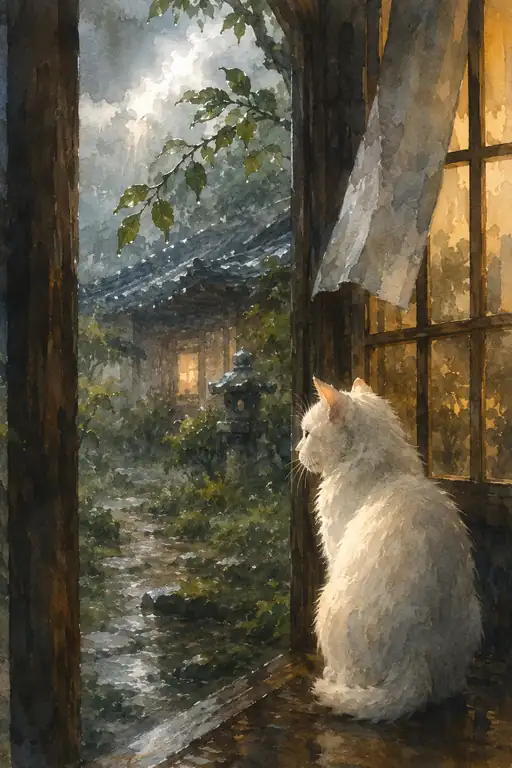 Warmth Nestled in the Sound of Rain
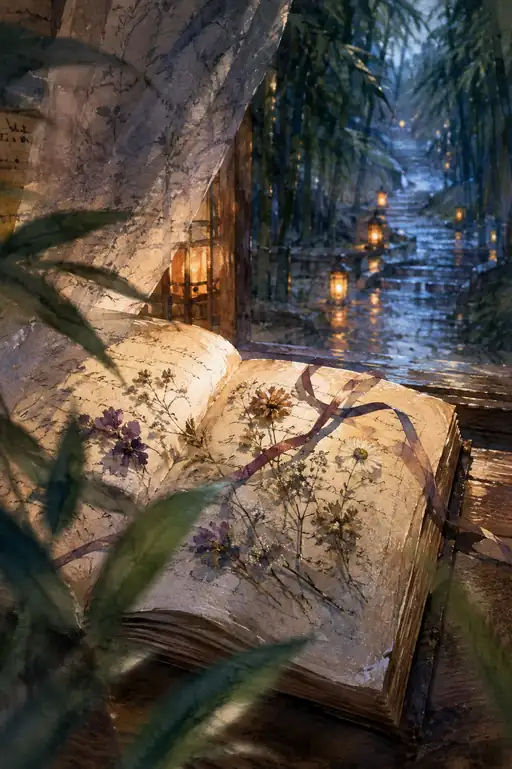 Pressed Petals and the Lantern Path
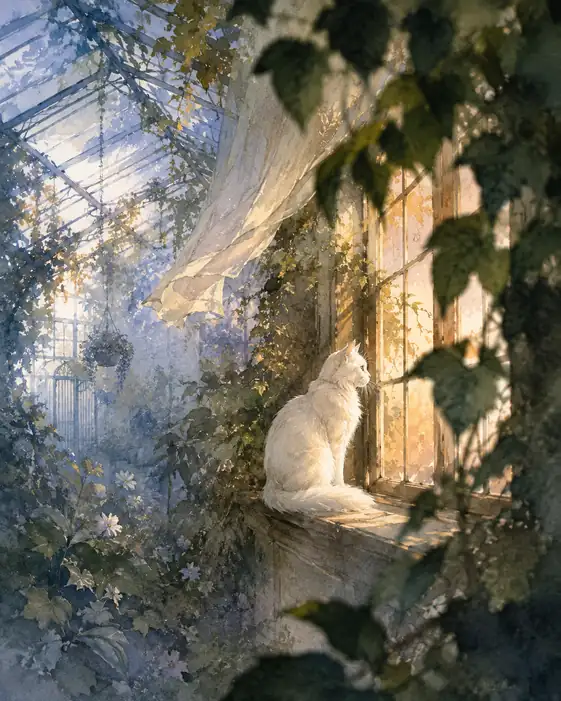 The White Cat Watches Morning Enter the Glasshouse
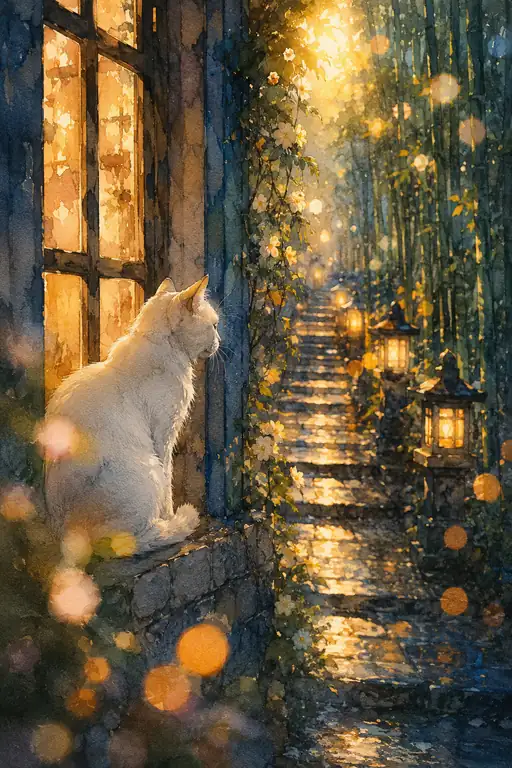 Silent Gaze Beyond the Bamboo Lanterns
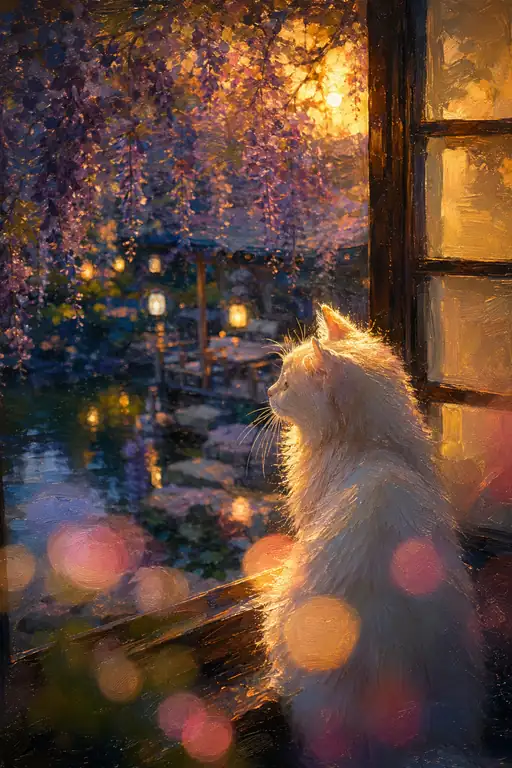 The White Cat Waits for Wisteria Twilight
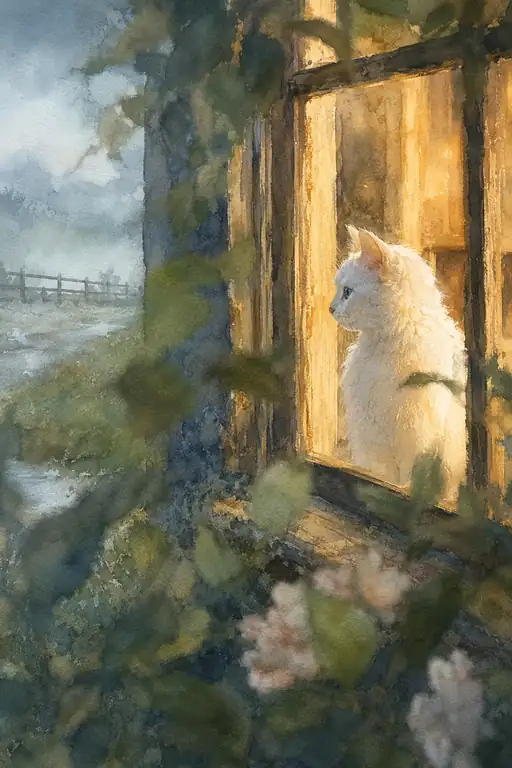 The Cozy Watcher of the Misty Rain
 Lilies of the Twilight Harbor
 Autumn Chime by the Window of Crimson Leaves
 Blue Shutter Curiosity on a Starlit Night