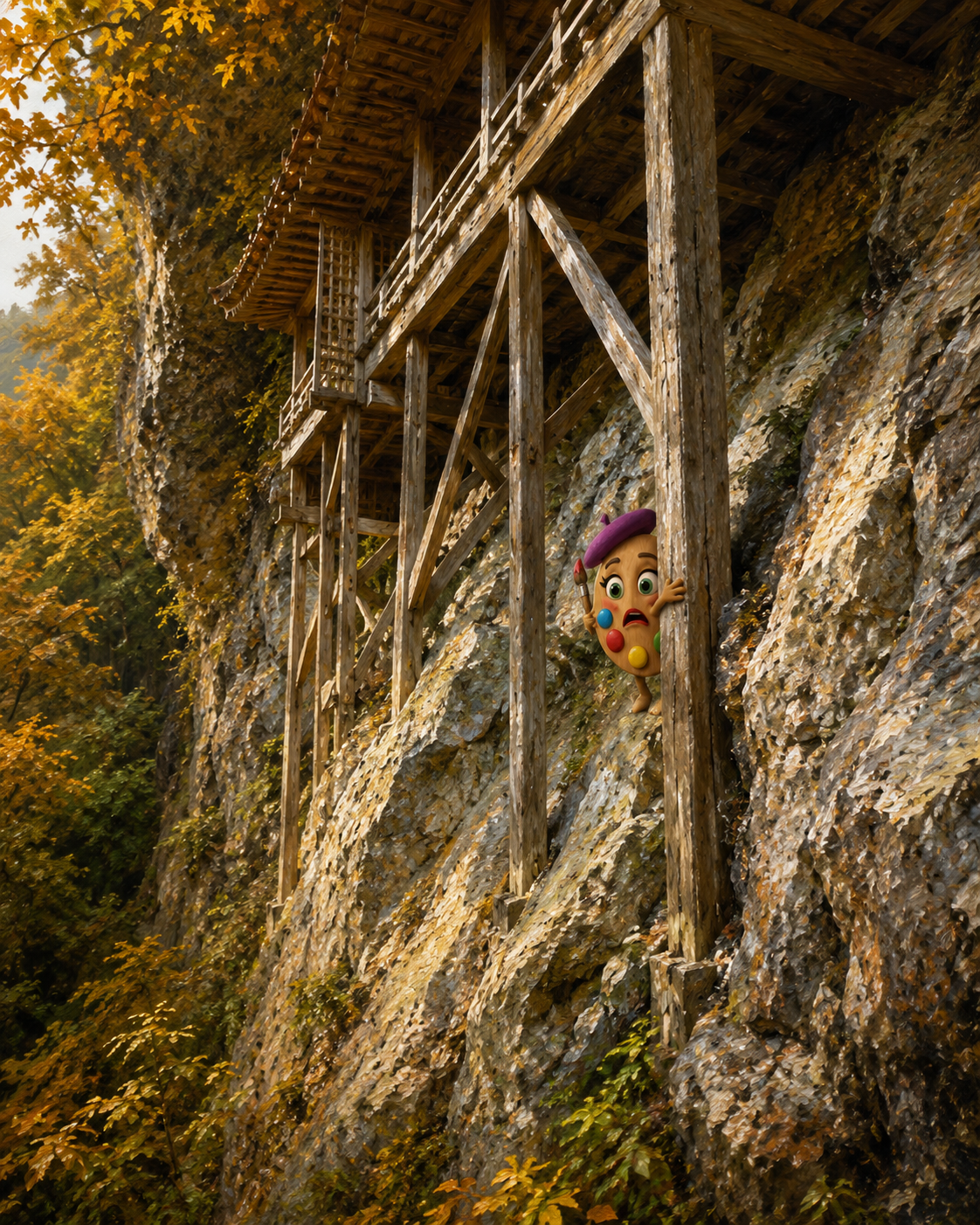
Clinging to the Cliffside Pillar
Critique
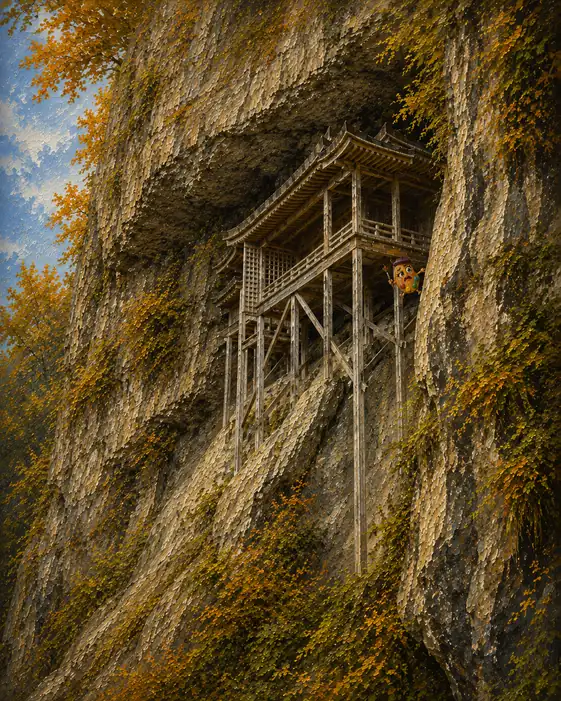
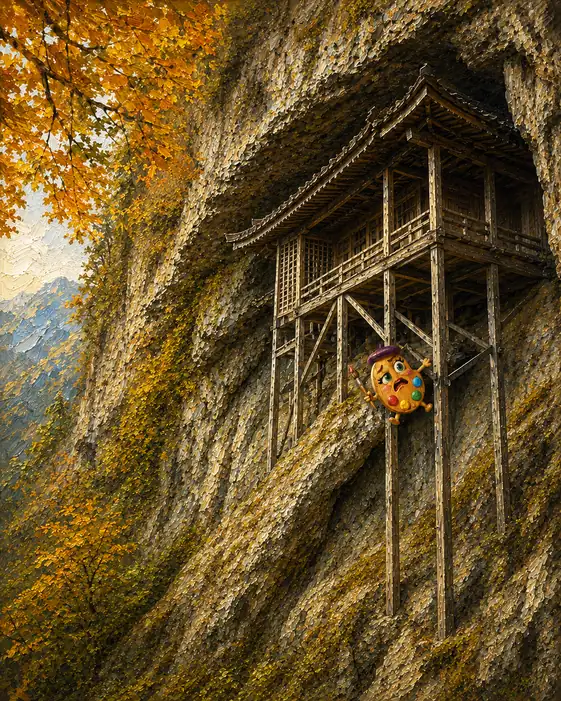
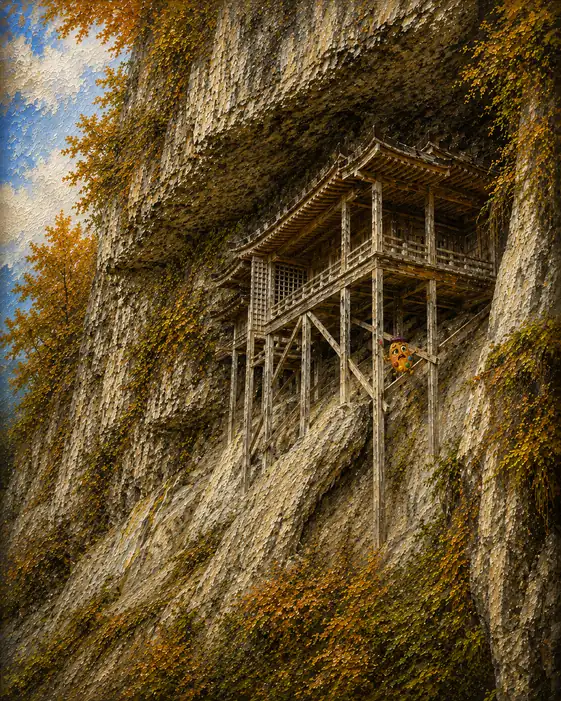
Introduction A frightened palette character hides among cliff-pavilion supports, making creative anxiety, scale, and structural dependence immediately legible. Description The view looks upward beneath a weathered wooden pavilion fixed to a steep gray rock face. Long columns and diagonal braces descend from balconies and layered eaves. Golden autumn foliage fills the left and lower distance. Near the right center, a small anthropomorphic painter's palette peeks from behind a vertical post. It wears a purple beret, carries bright paint dabs on its body, and grips the timber with wide green eyes and an open worried mouth. Analysis The pavilion's repeated posts create a dense vertical rhythm and enormous scale. The character's rounded tan body and saturated primary colors contrast sharply with linear weathered wood and mottled stone. Its position behind a post makes the same structural member both architectural support and theatrical hiding place. Strong upward perspective increases vertigo, while warm sunlight unifies timber, rock, and foliage. The figure occupies a small but high-contrast focal area, redirecting attention from engineering to emotional response. Interpretation and Evaluation The palette personifies the viewer's apprehension before the dangerous height. As an emblem of art-making, it may also embody creative fear: color and imagination enter a structure already built through discipline and risk. Hiding does not remove it from the scene; contact with the post makes dependence explicit. The humorous expression humanizes grandeur without destroying it, because the cliff and supports retain physical authority. Conclusion Architectural awe collides with comic vulnerability. The character gives scale a face, while the pavilion gives anxiety context. Playfulness acknowledges that wonder includes fear and the need for support.
Same Subcategory
 Hibiscus Summit above the Terraced Valleys
Similar Artworks
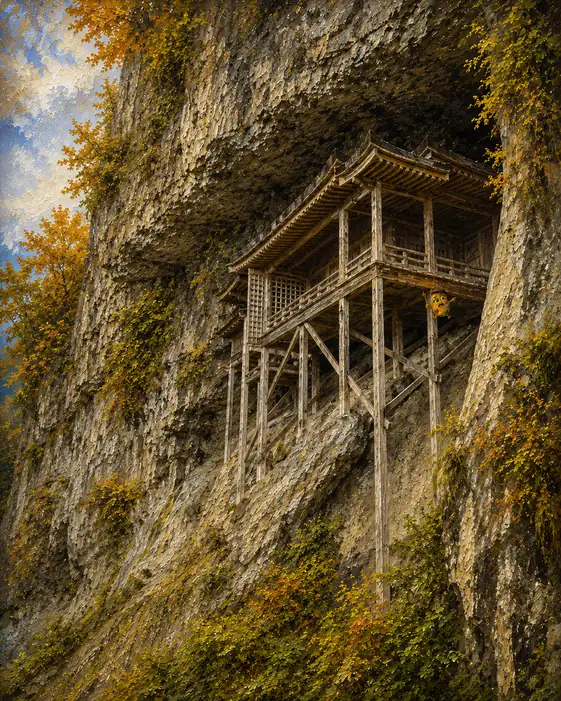 Little Watcher in the Cliff Alcove
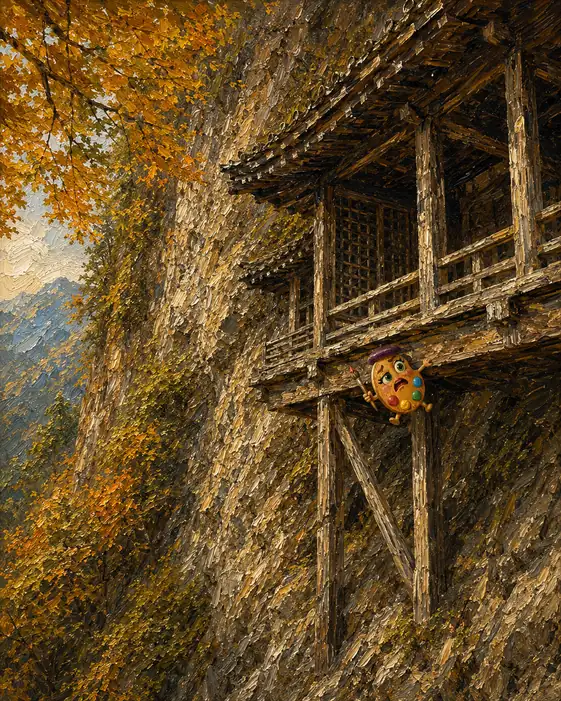 Under the Eaves of the Precipice
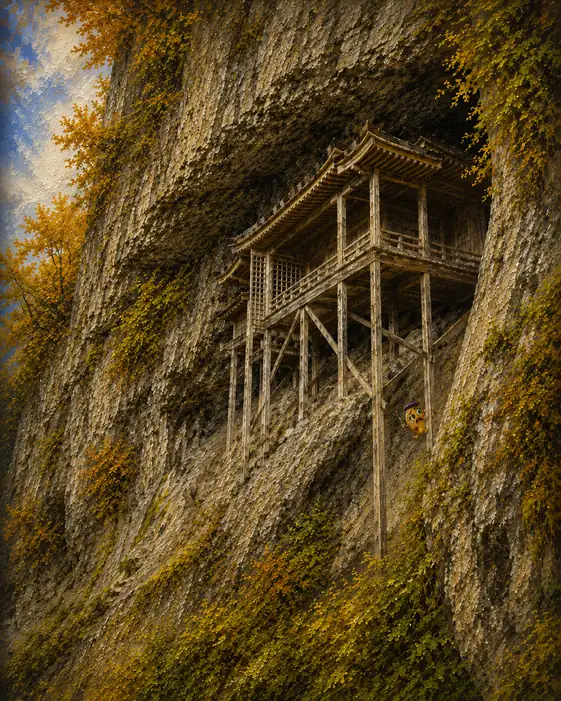 Clinging beside the Tall Pillar
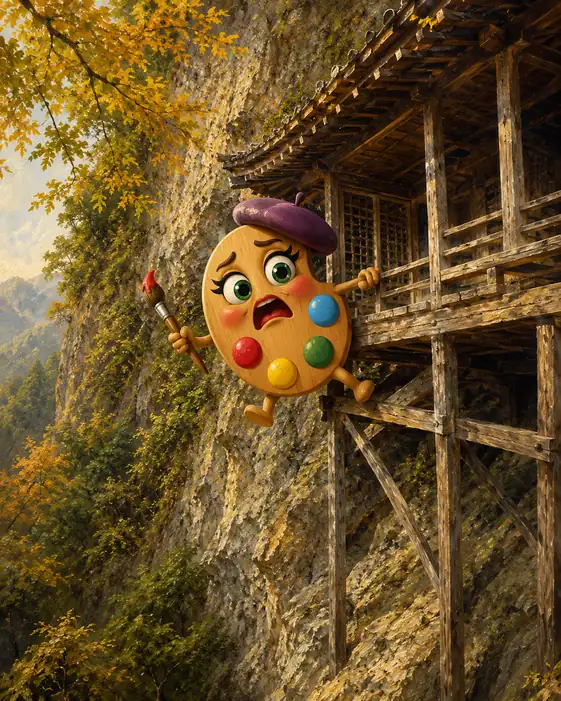 Hanging by a Thread at the Cliff Temple
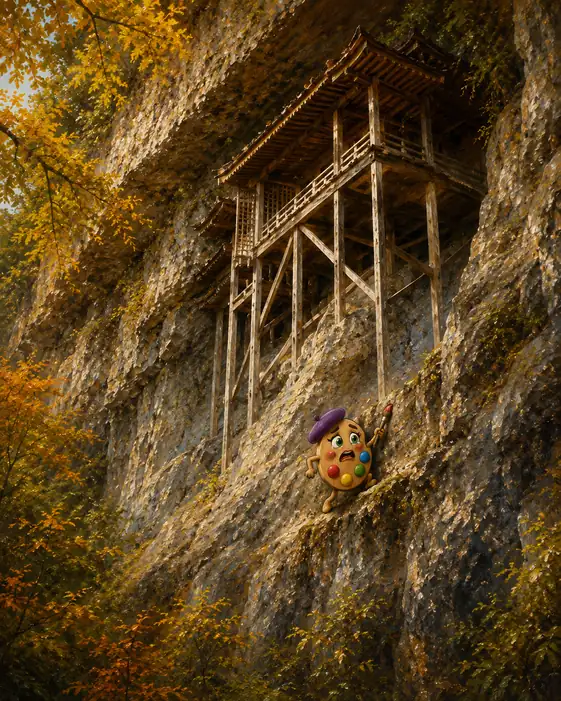 Perilous Ascent with a Paintbrush
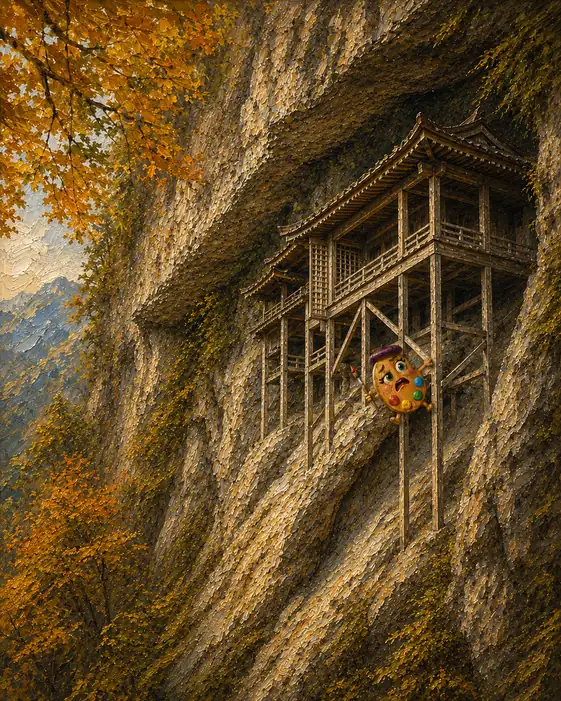 Reaching for the Support Beam
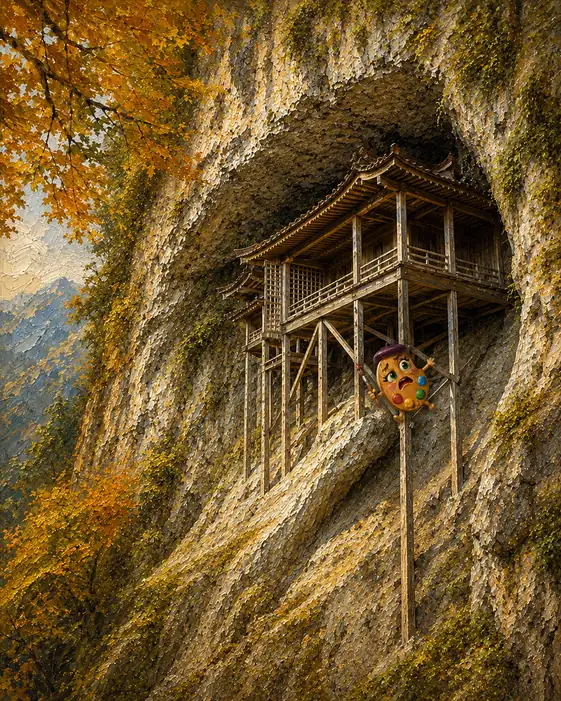 Balancing on the Tallest Stilt
 Trapped in the Cliff Crevice
 Grasping the Diagonal Brace
 Perilous Balance on the Timber Frame