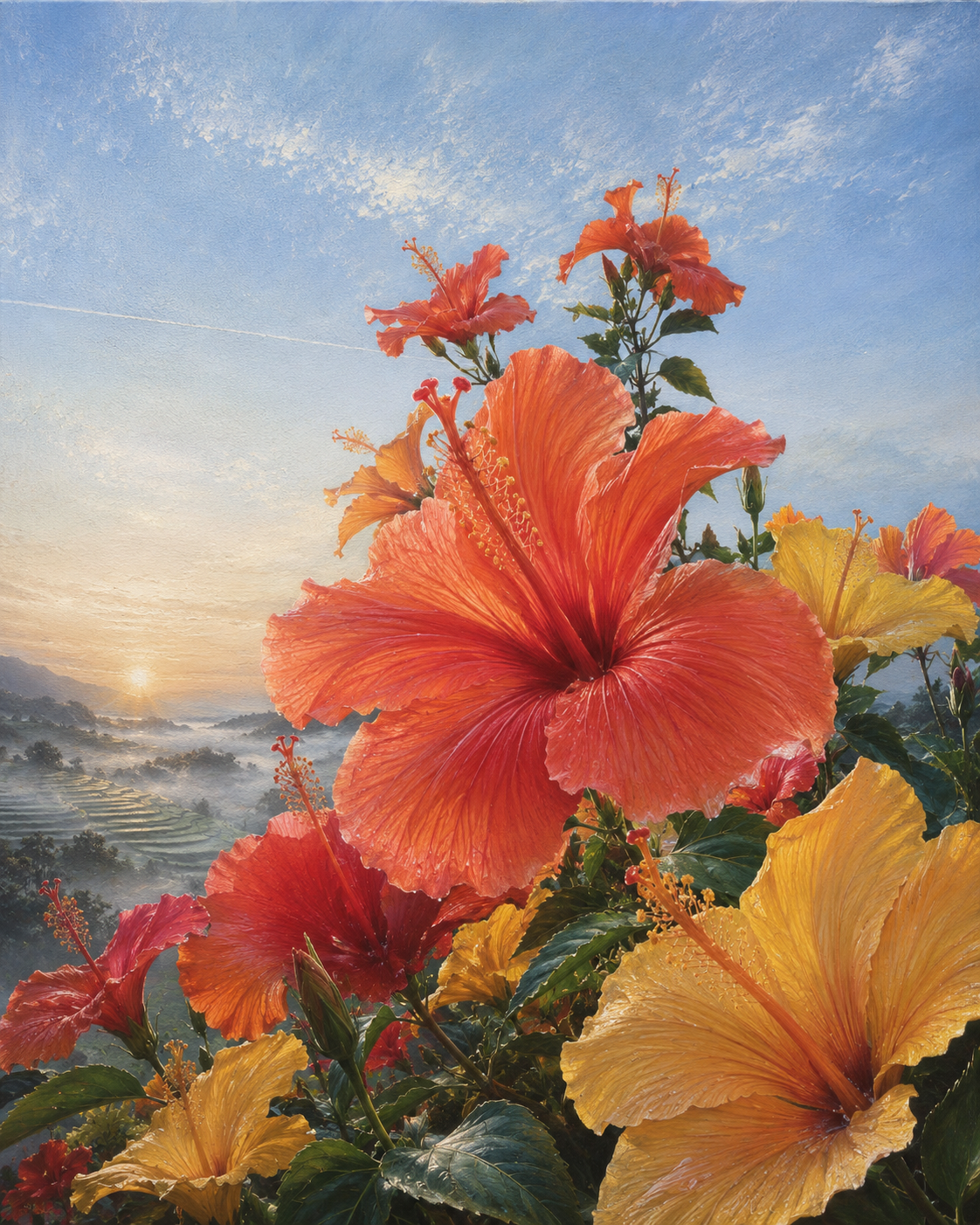
Hibiscus Summit above the Terraced Valleys
Critique
Introduction Red and yellow hibiscus overlooks misty sunrise terraces, joining tropical vitality, agricultural pattern, and atmospheric distance. Description A huge coral-red blossom dominates the center, surrounded by large golden-yellow and smaller red flowers. Long staminal columns project outward above glossy green leaves, buds, and droplets. The plants rise from the right slope and frame the lower half. At left, terraced fields descend through a valley filled with pale mist. The low sun glows near the mountain horizon under a light blue sky marked by feathery clouds and a thin white contrail. Analysis The central flower creates a powerful radial focus, while terraces supply repeated horizontal curves into depth. Red and yellow blooms form a warm mass against cool sky, green leaves, and gray mist. Their petal veins echo the fine bands of cultivated fields. Low-angle light makes droplets and edges sparkle, linking near flowers with distant haze. The contrail offers a restrained straight line against organic clouds and foliage. Overlapping flower sizes establish ascent along the hillside. Interpretation and Evaluation Both flowers and terraces are cultivated forms, though one appears exuberantly organic and the other geometrically ordered. Their pairing reveals different expressions of sustained care. Mist partly hides the fields, preventing the overview from becoming possessive or fully legible. The sunrise suggests renewal, while open flowers, buds, and droplets record distinct moments within it. The distant contrail expands local agricultural life toward broader networks of movement. Conclusion The painting makes abundance relational rather than merely decorative. Flower, field, weather, and travel line share the morning without losing distinct scales. Its strongest effect is to let one bloom feel immense while the valley beyond remains immeasurably larger.
Same Subcategory
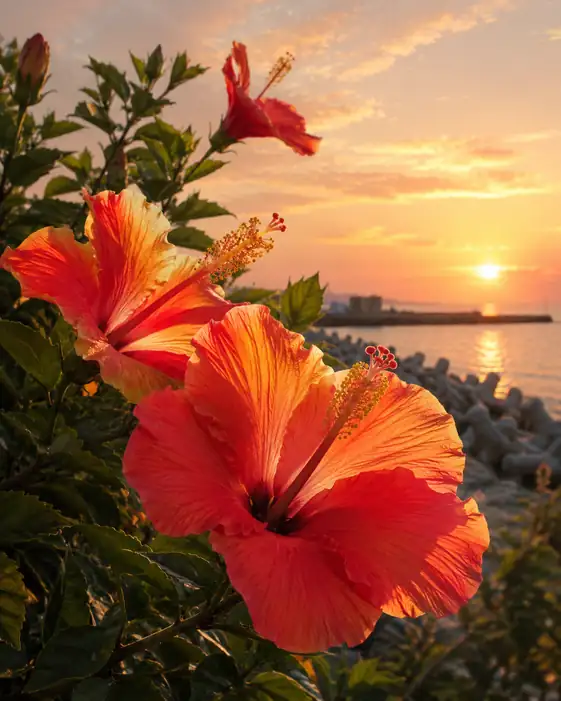 Sunset Radiance on Coastal Hibiscus
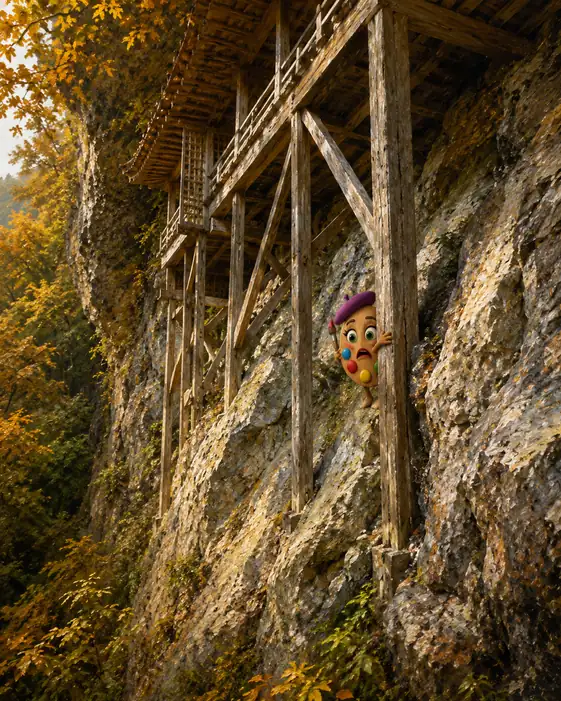 Clinging to the Cliffside Pillar
Similar Artworks
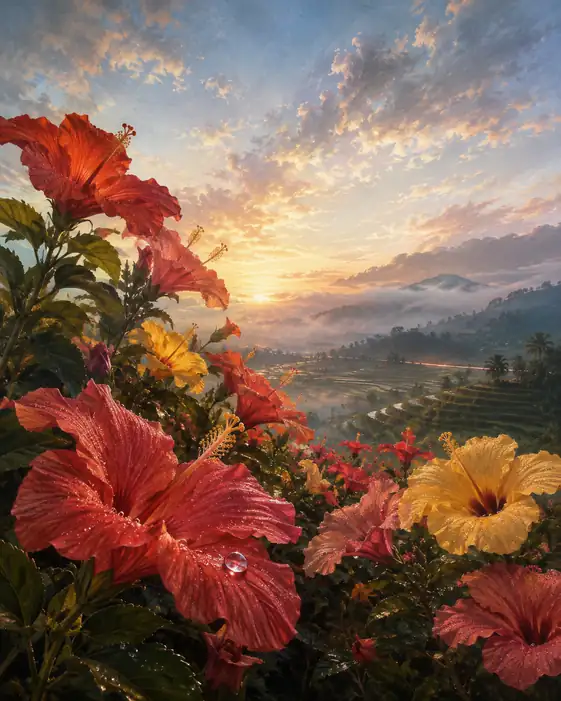 Morning Dew on Hibiscus above the Terraced Valleys
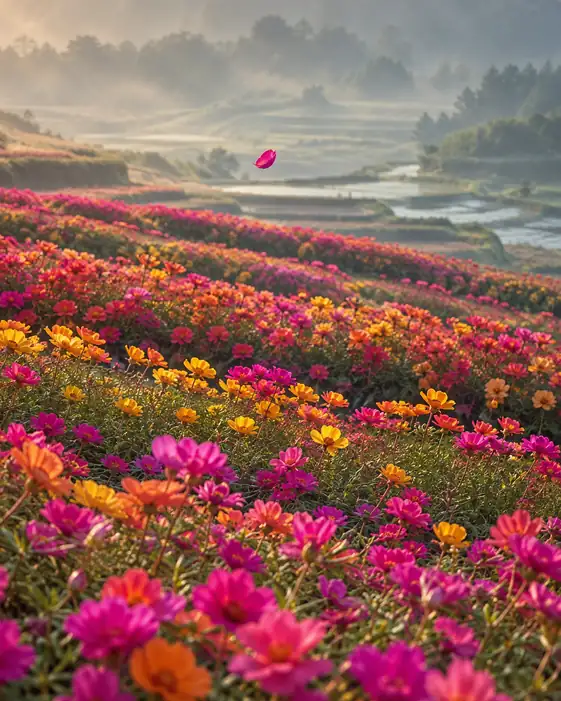 Floating Petal above the Terraced Garden
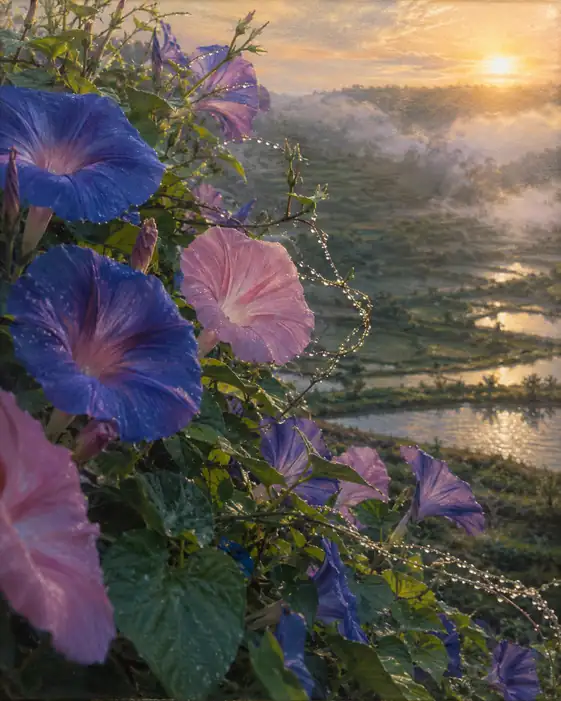 Morning Dew across the Terraced Valley
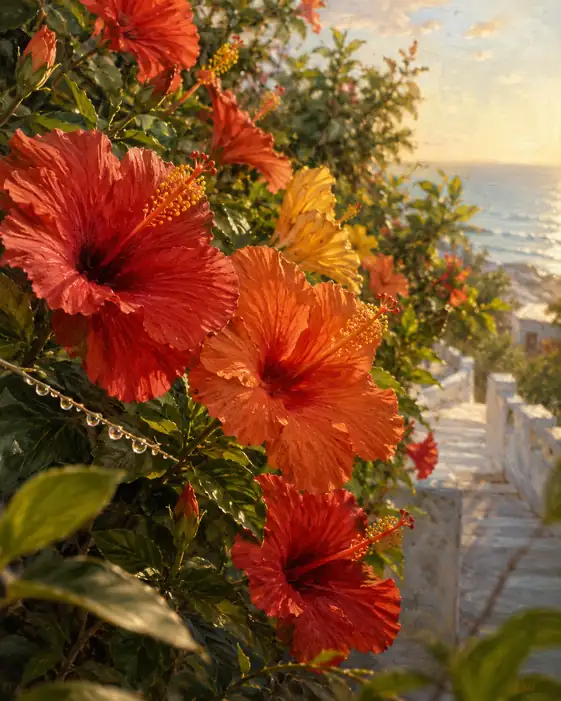 The South Wind Blooms on the Stairway of Light
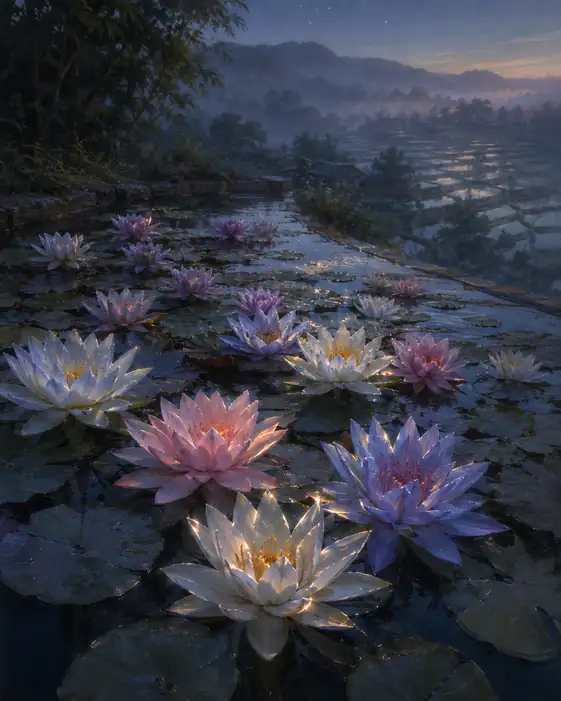 Terraces of Morning Mist and Floating Petals
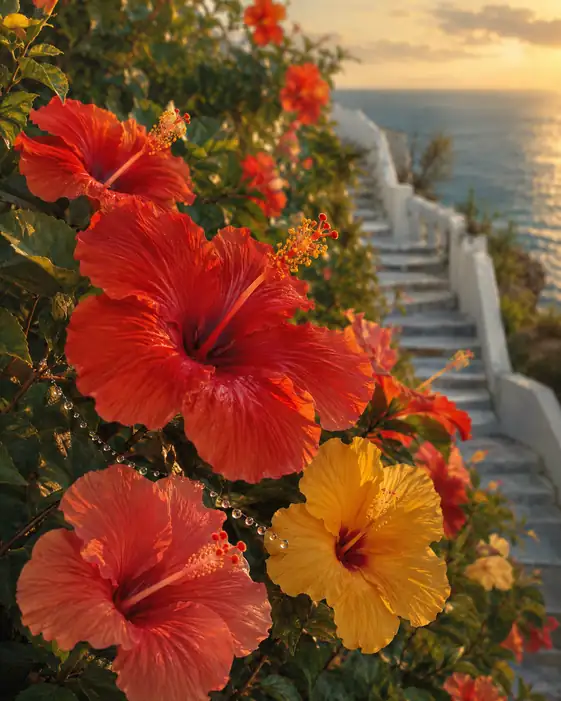 Hibiscus along the Coastal Stairway at Sunset
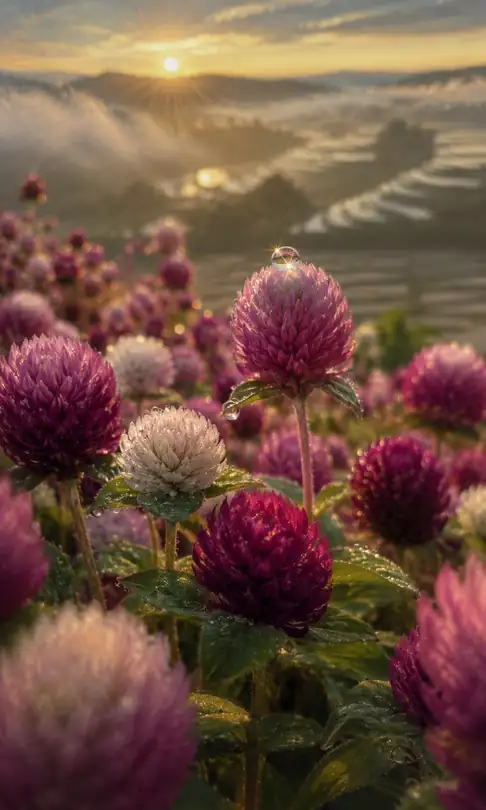 Morning Dew upon Globe Amaranth and Terraced Hills
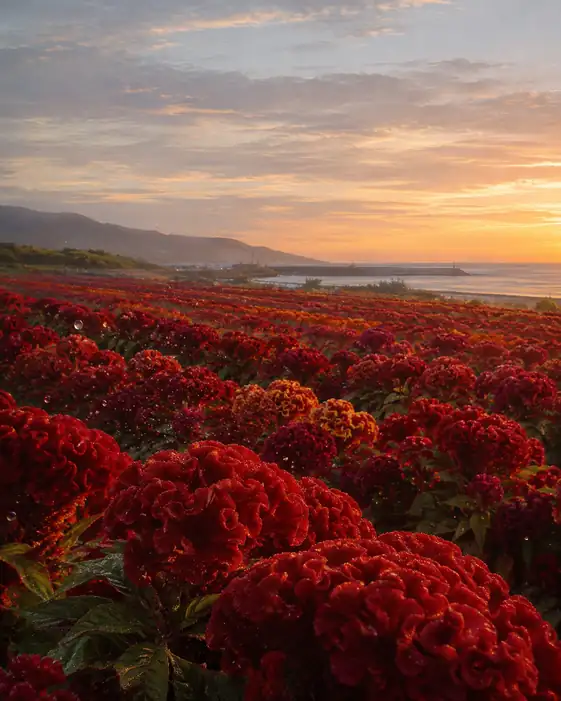 Crimson Slopes of Cockscomb at Sunset
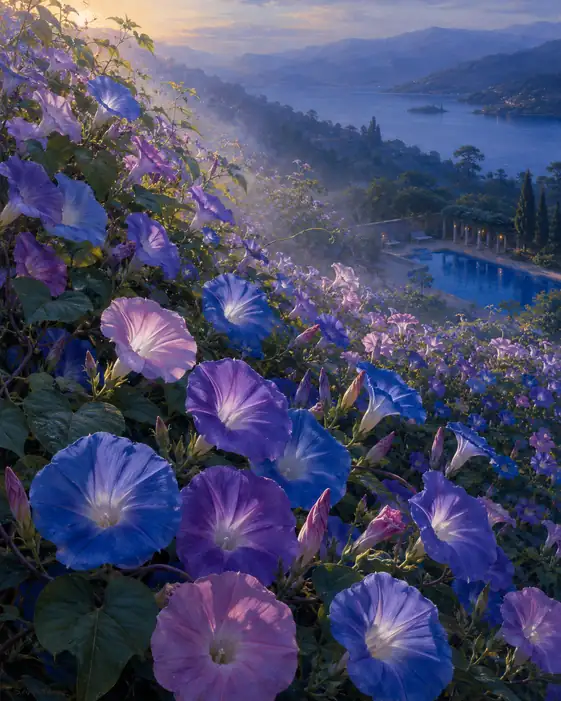 Morning Glories above the Sunlit Coast
 Dahlia Slopes beneath the Morning Clouds