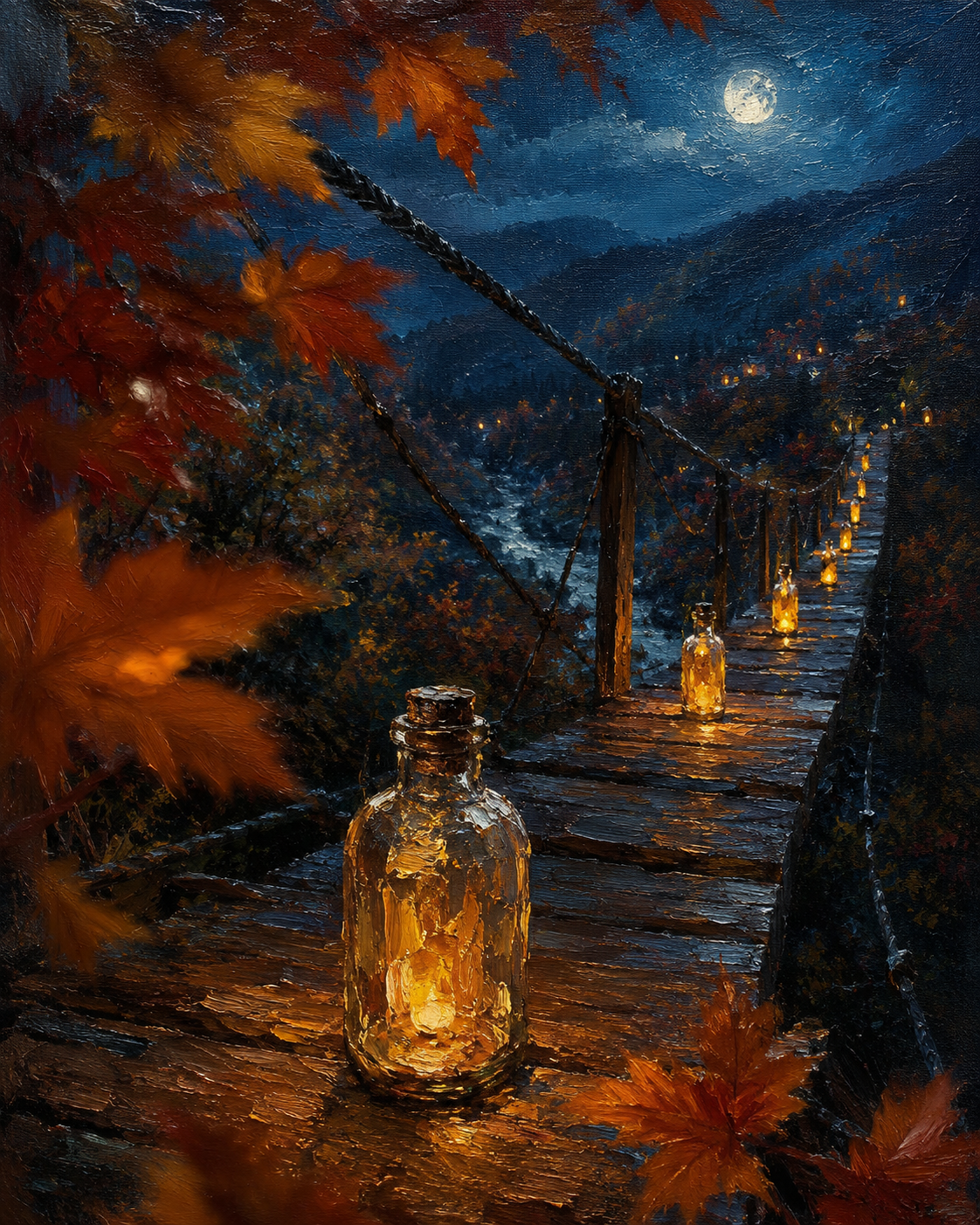
Amber Lanterns on the Moonlit Bridge
Critique
Introduction Glowing bottles mark a wet suspension bridge beneath the moon. Repeated light converts a perilous crossing into a measured journey through autumn darkness. Description A large stoppered glass bottle sits on the nearest wooden plank, holding a small amber flame. Similar bottles recede along the bridge at regular intervals toward the upper right. Wet boards reflect their light, and black ropes converge around the path. Orange maple leaves frame the left and lower edges. A foaming stream runs through the valley below, while forested mountains rise under a deep blue sky and full moon. Scattered lamps dot the distant slope. Analysis One-point perspective makes the bridge a forceful diagonal into depth. The foreground bottle establishes the motif at tactile scale; shrinking repetitions measure distance more clearly than the dark structure alone. Amber reflections oppose the surrounding blue night, while red leaves mediate with warmer earth tones. Thick painterly strokes give boards, glass, water, and sky different surfaces. Cables form triangles that stabilize the composition and echo mountain slopes. Interpretation and Evaluation Each bottle provides only local illumination, but the sequence makes the entire route navigable. Guidance is therefore cumulative and communal rather than heroic. Glass protects fragile flame without hiding it, an image of vulnerability supported by care. The moon offers universal light, yet the practical path still depends on small human provisions. Falling leaves and rushing water intensify change around the deliberately spaced lamps. Conclusion The painting turns repetition into reassurance. Danger remains visible in wet boards, height, and darkness, but no section is wholly abandoned. Its strongest idea is that a difficult crossing can be made possible by modest lights left for whoever comes next.
Same Subcategory
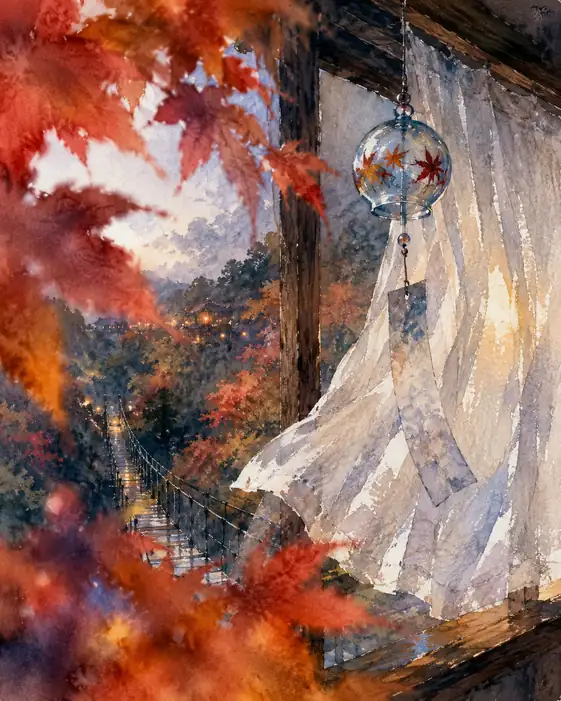 Autumn Chime by the Window of Crimson Leaves
 Crown of Petals on the Mountain Span
Similar Artworks
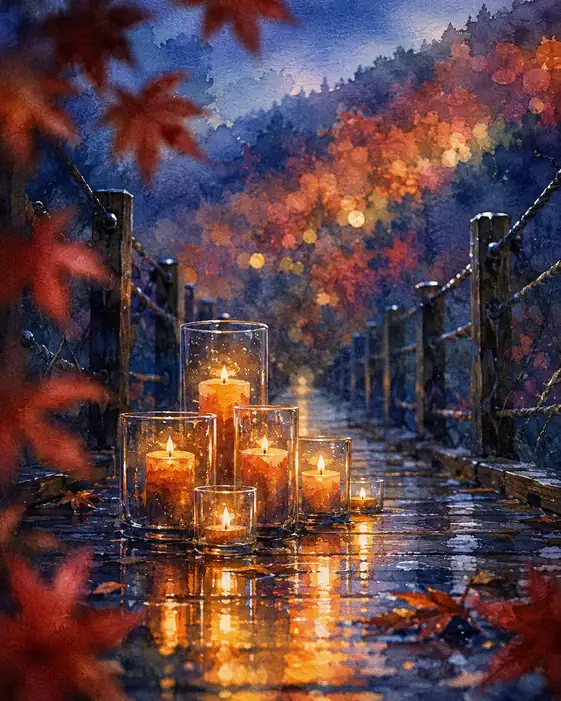 Candles of Refuge on the Rain-Wet Span
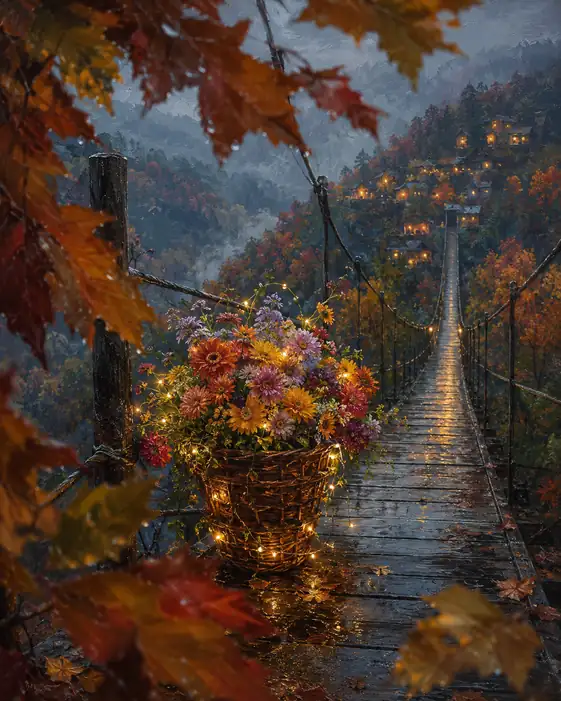 Lantern Basket over the Autumn Gorge
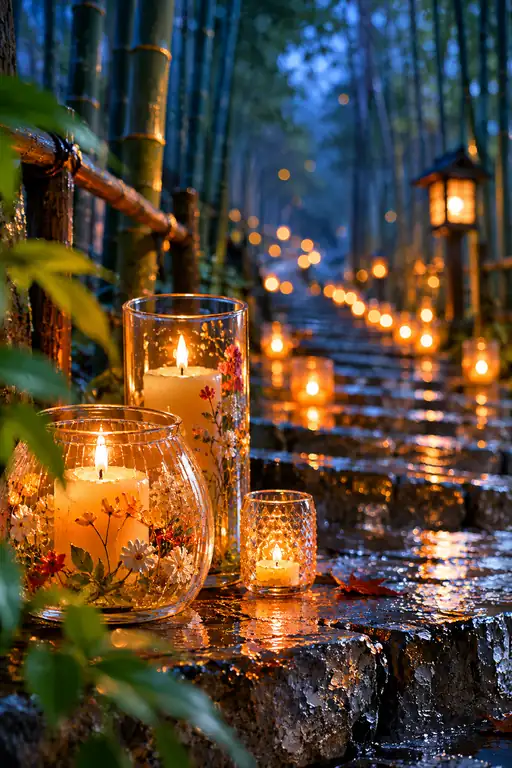 Path of Enshrined Flames
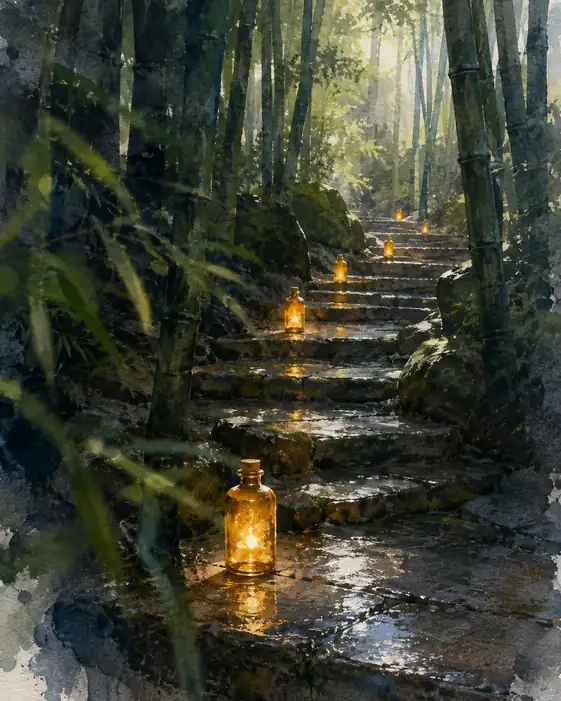 Guiding Lights in the Bamboo Mist
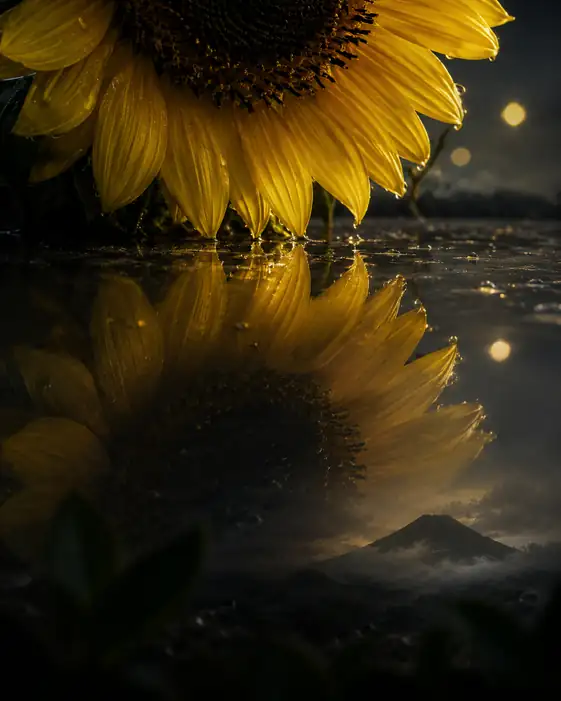 Moonlit Petals Above the Dark Waters
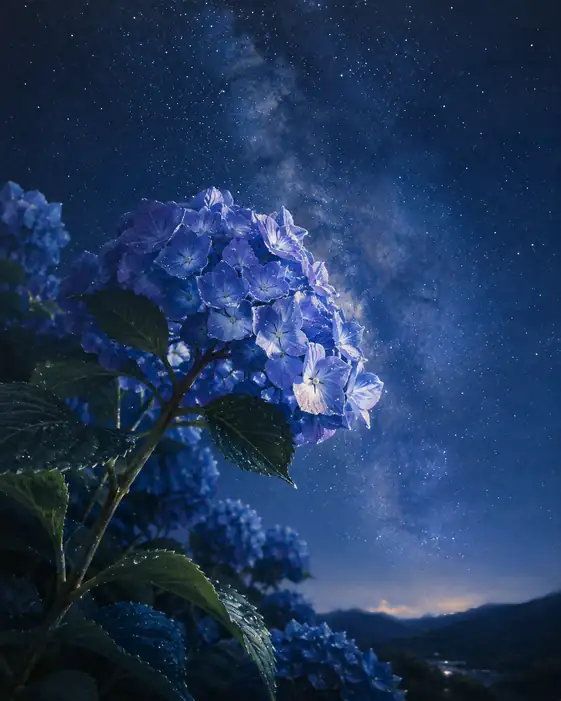 Nocturne of Stars and Azure Petals
 Crimson Reflection and the Floating Lantern
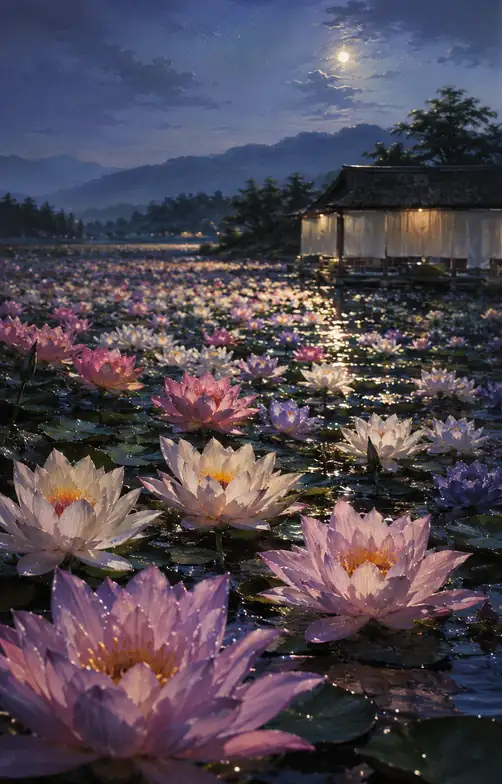 Moonlight Pavilion on the Lily Waters
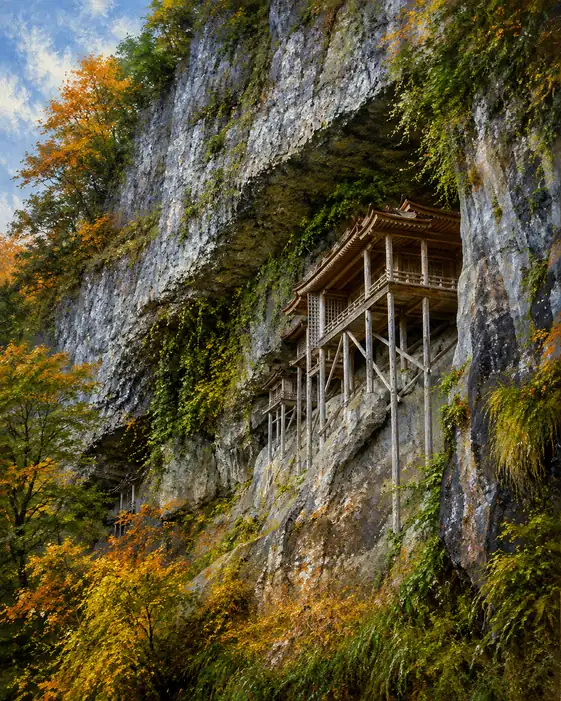 Tiered Havens Along the Stone Wall
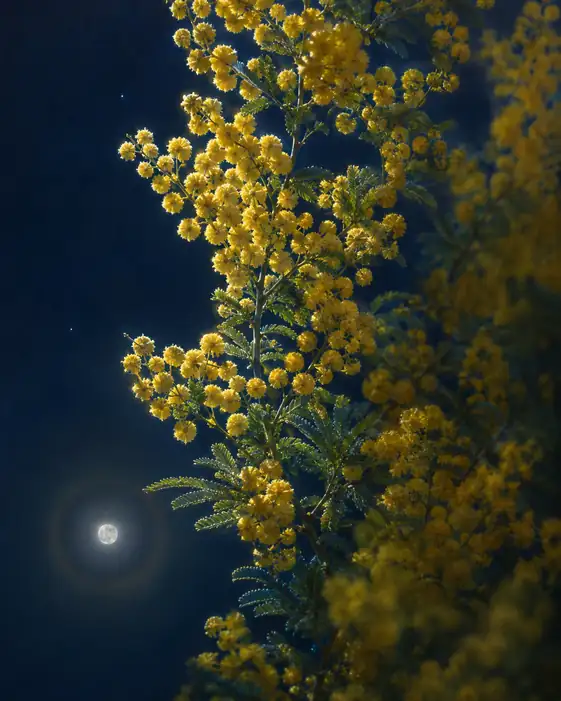 Moonlit Mimosa on a Silent Night