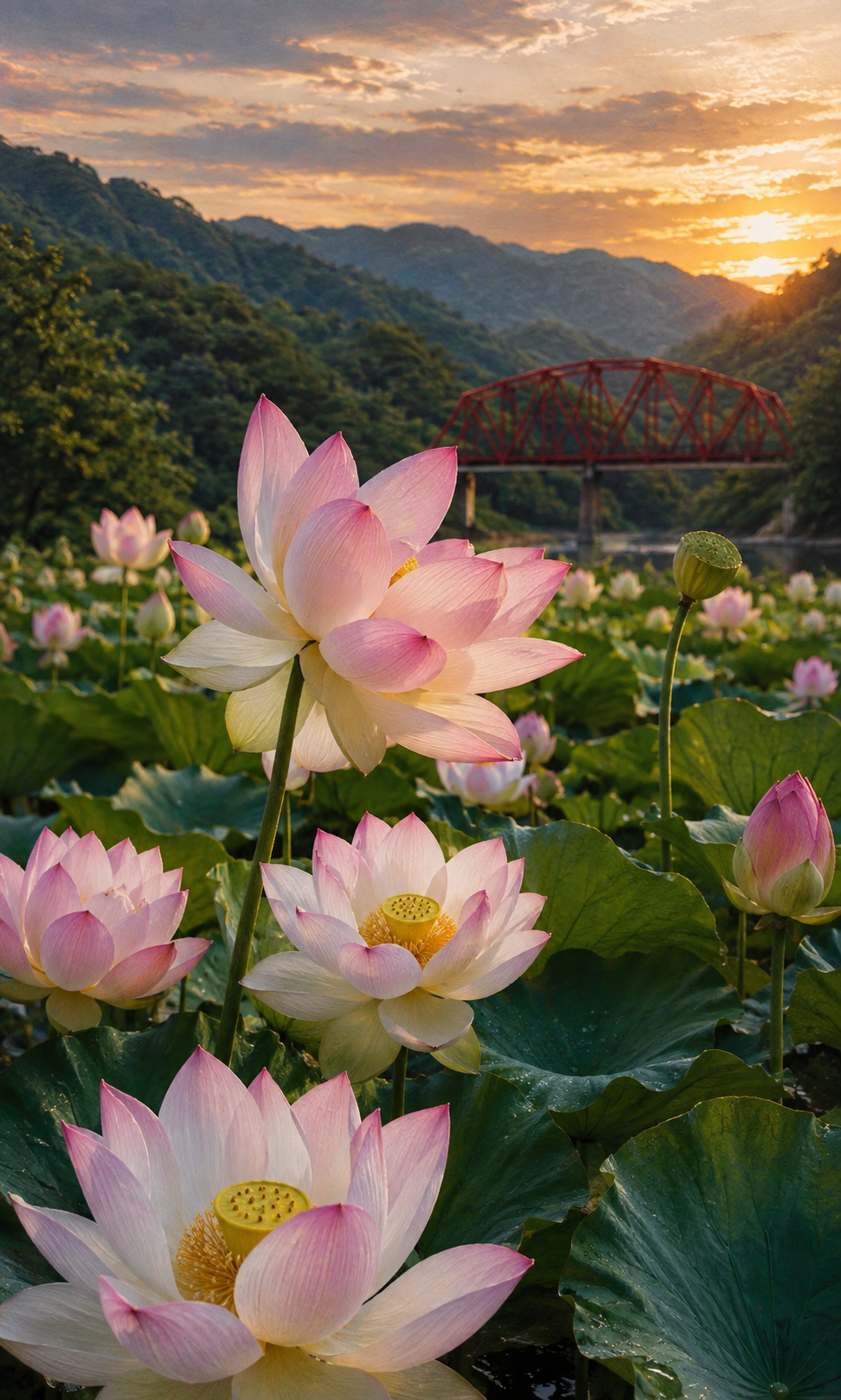
Blooms Beneath the Scarlet Bridge
Critique
Introduction Pink lotuses fill a mountain valley beneath a red bridge and setting sun, joining organic bloom, industrial passage, and geological enclosure. Description Several large pale pink lotuses and broad green leaves occupy the foreground, with buds and smaller flowers extending across the pond. A red truss bridge spans the middle distance from wooded slope to slope. Behind it, layered dark mountains form a deep valley. At upper right, the low sun breaks through orange-gray clouds and casts warm light across petals and foliage. A tall lotus seed head stands beside the main flower, sharply silhouetted against the bridge. Analysis The largest flower establishes a vertical axis left of center, while the bridge supplies a strong horizontal counterstructure. Triangular steel braces echo mountain peaks and the pointed petals, creating formal kinship among unlike materials. Pink and cream flowers glow against dense greens; the bridge's red gathers the sunset's orange into a constructed line. Receding mountain layers create depth, while the low viewpoint grants the lotuses monumentality. The seed head introduces a darker circular accent among open forms. Interpretation and Evaluation The bridge does not spoil an ideal natural scene; it represents connection through terrain that would otherwise divide. Lotus growth below and engineered passage above are distinct responses to the valley's conditions. Open blossoms, buds, and seed head place beginning, fullness, and aftermath together. The sinking sun adds another cycle, making transition the shared language of plant, infrastructure, and day. Conclusion The work finds harmony without erasing difference. Petal, truss, mountain, and cloud follow distinct material logics yet answer common shapes and light. The bridge measures human desire to cross a landscape rich with renewal.
Same Subcategory
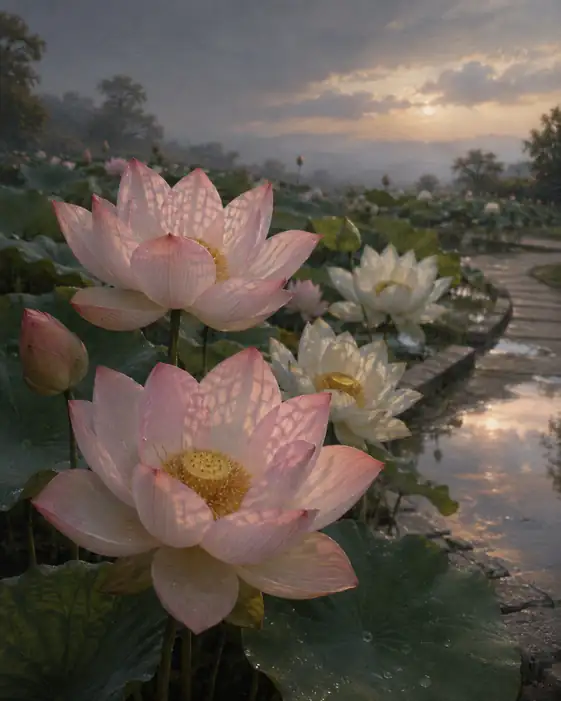 Path of Morning Mist and Petals
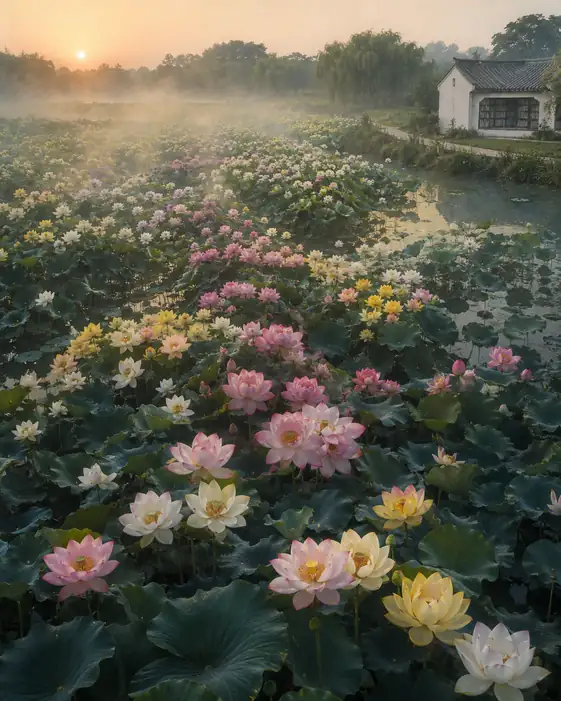 Morning Mist upon the Lotus Waters
Similar Artworks
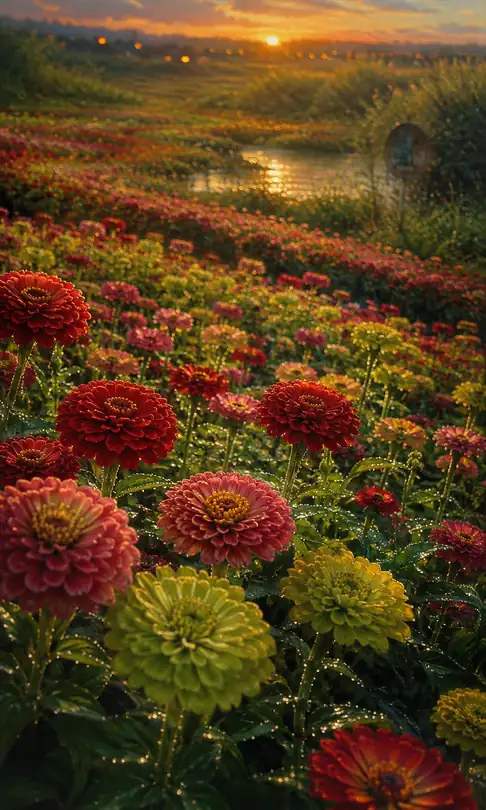 Sunset Glow across the Zinnia Meadow
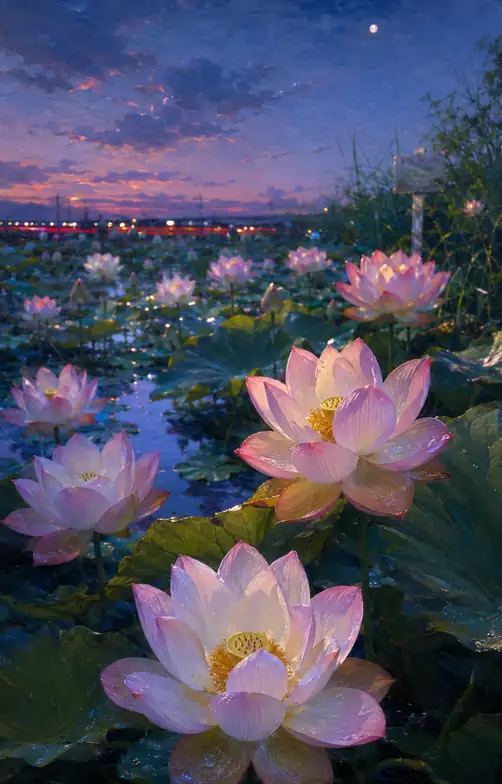 Petals between the Moon and the City Glow
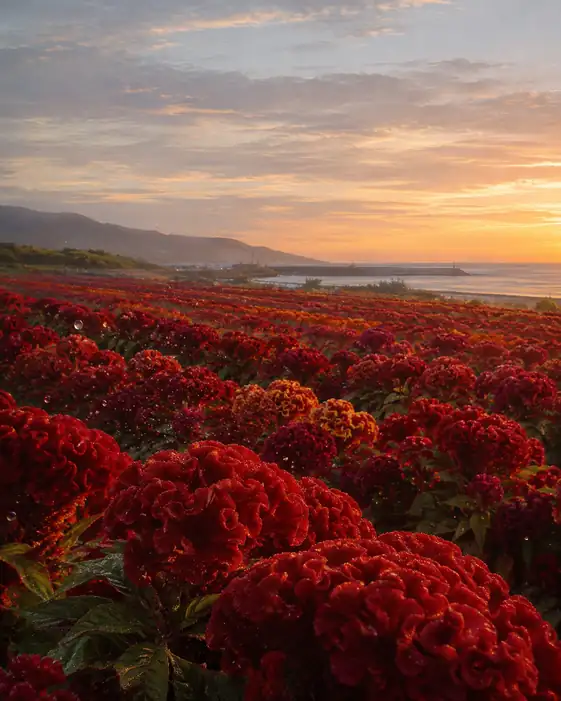 Crimson Slopes of Cockscomb at Sunset
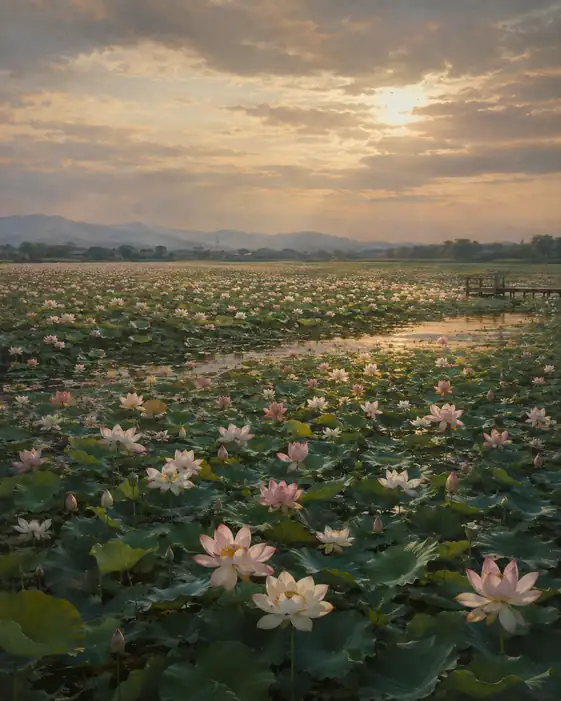 Sunset Radiance over the Vast Lotus Marsh
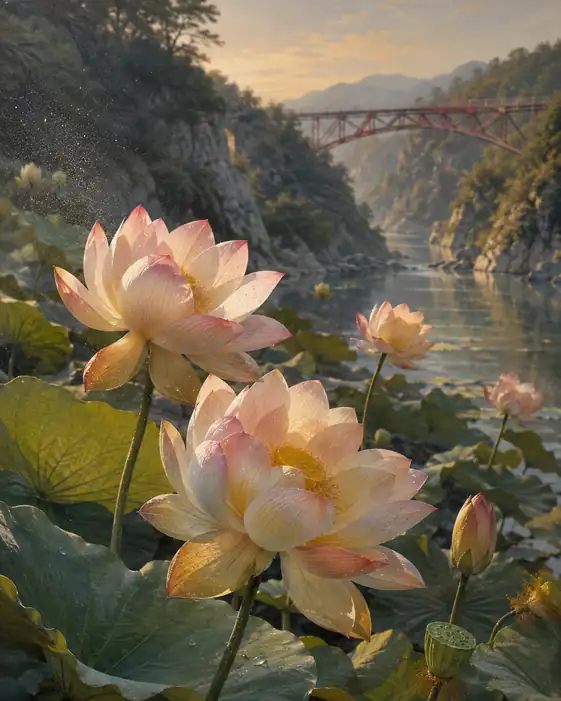 Lotus Blooms in the Gorge of the Red Bridge
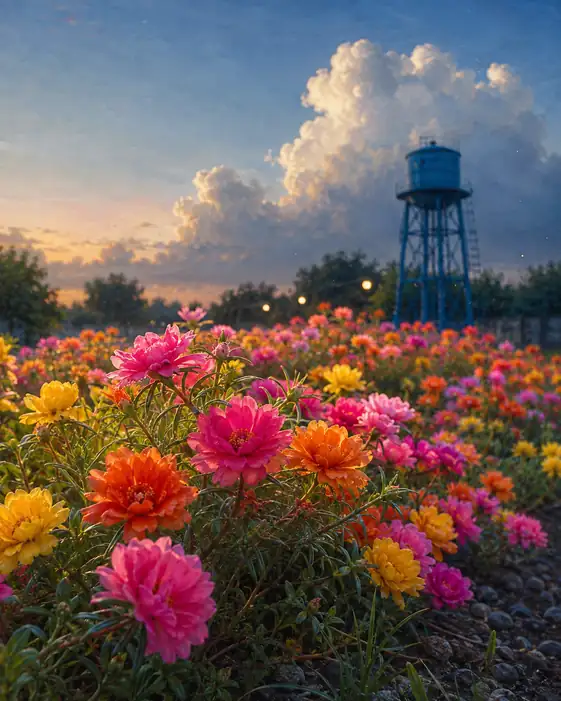 Rose Moss under the Water Tower and Cloud
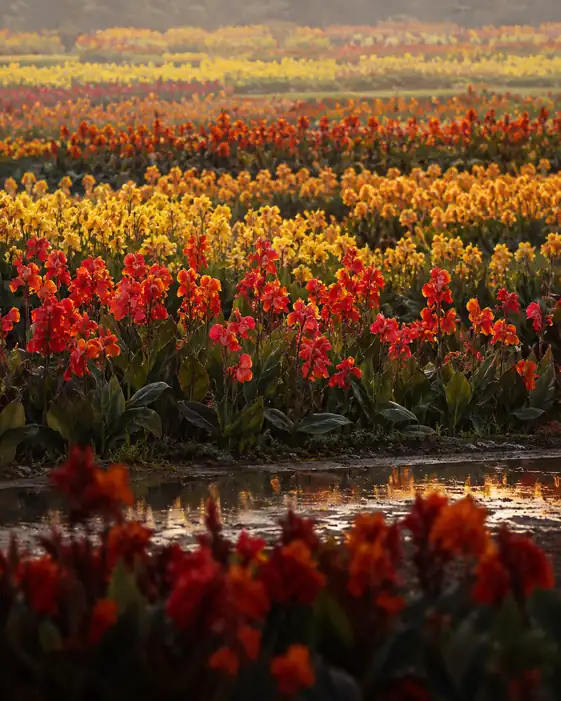 Golden Bands across the Canna Field
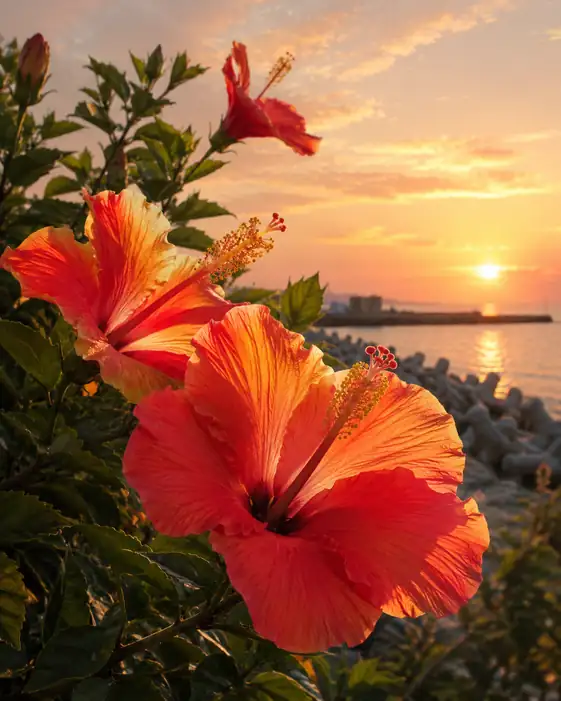 Sunset Radiance on Coastal Hibiscus
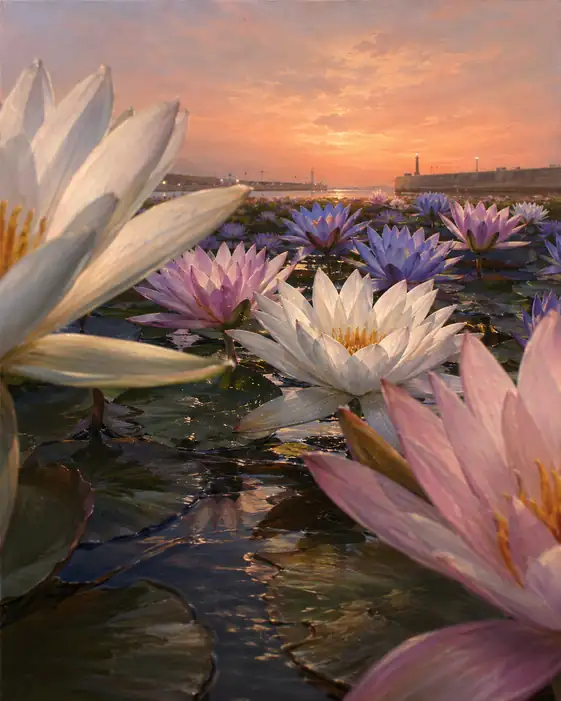 Water Lilies under the Harbor Sunset
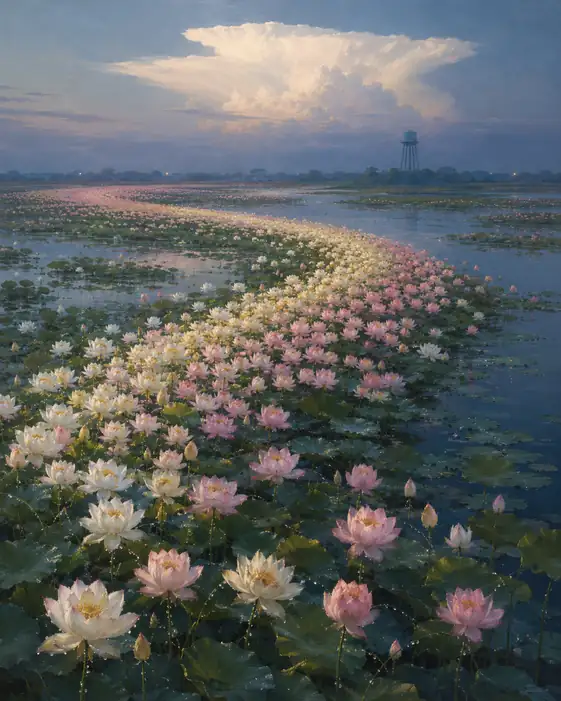 River of Lotus Blooms under the Anvil Cloud