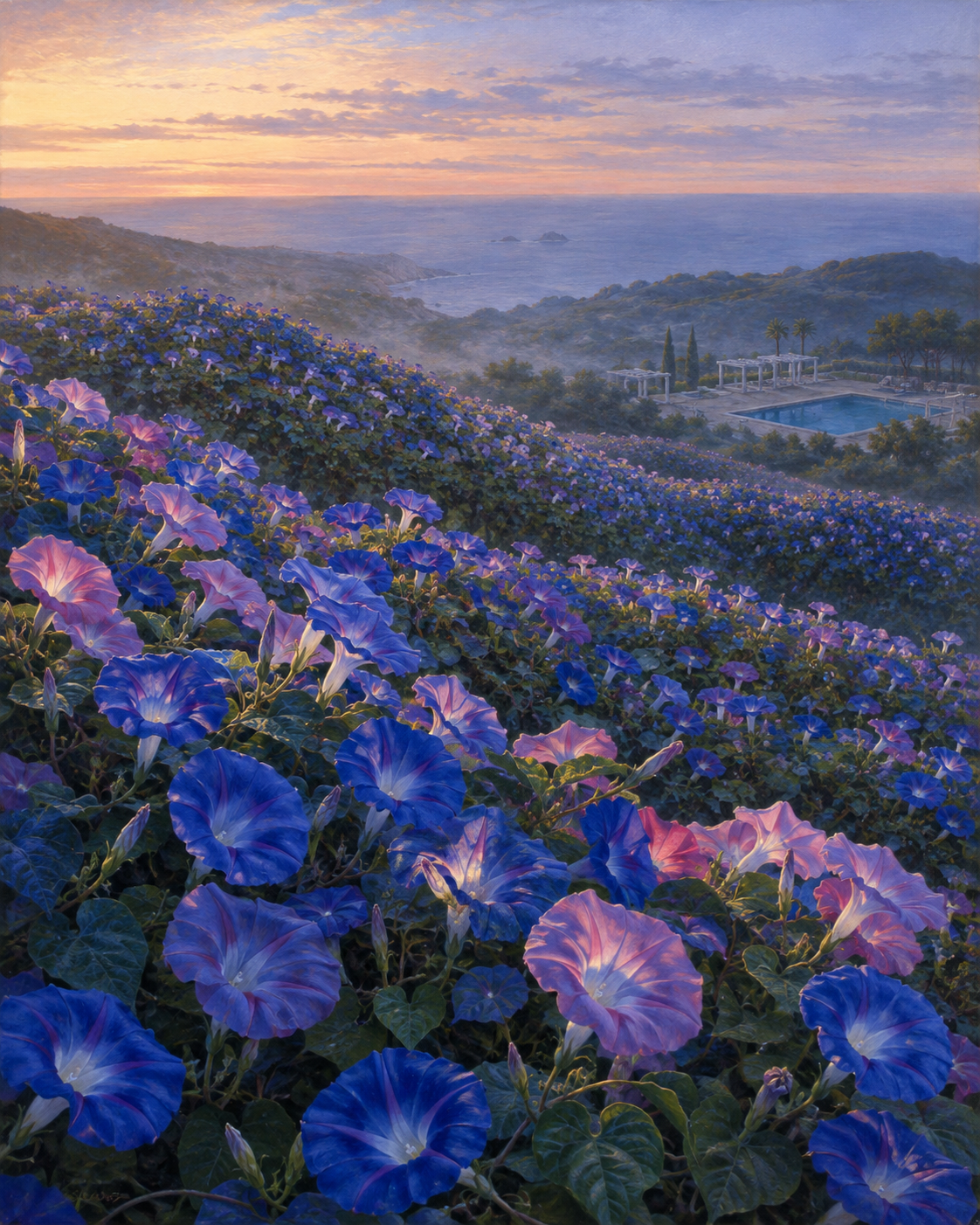
Cascade of Azure Blooms to the Sea
Critique
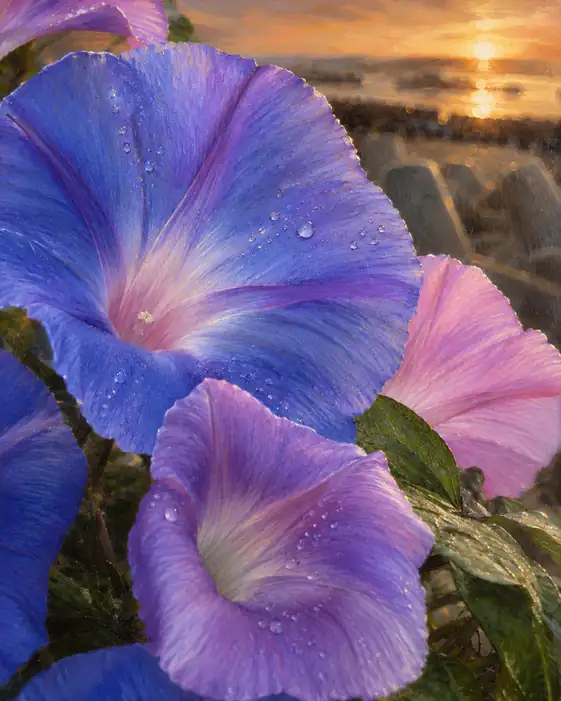
Introduction Morning glories pour across a coastal hillside at dawn. Their saturated beauty and a geometric garden create a layered reflection on abundance and cultivation. Description Large blue, violet, and pink trumpet flowers occupy the foreground and descend in broad bands across rolling slopes. Their dark heart-shaped leaves form dense textured ground. Beyond them, a rectangular blue pool, white pergolas, paths, palms, and cypress-like trees sit on a lower terrace at right. Rocky hills curve around a small cove, while two islets punctuate the calm sea. A peach and lavender sky brightens toward the left horizon. Analysis Successive floral bands establish strong diagonals that carry the eye from near blossoms toward the pool and ocean. Overlapping scale changes create exceptional depth. Cool blues unify flowers, water, and sky; pink petals echo the dawn, while white structures provide crisp accents. The organic density of vines contrasts with the terrace's rectilinear order. Atmospheric haze softens distant hills and sea, making the sharply modeled foreground feel immediate. The pool acts as a small constructed counterpart to the vast ocean. Interpretation and Evaluation The flowers' brief daily opening meets the immense, seemingly enduring horizon, connecting personal time with geological and maritime scales. Cultivated terraces suggest privilege and design, yet vines dominate the view and flow beyond architectural boundaries. The paired waters invite comparison: one is contained for human use, the other cannot be possessed. Neither is rejected; the work allows care, pleasure, and wild expansion to coexist. Conclusion Continuity rather than spectacle creates grandeur. Color carries the viewer from flower to sea, making every scale participate in dawn. Cultivation appears as one temporary pattern within a larger living landscape.
Same Subcategory
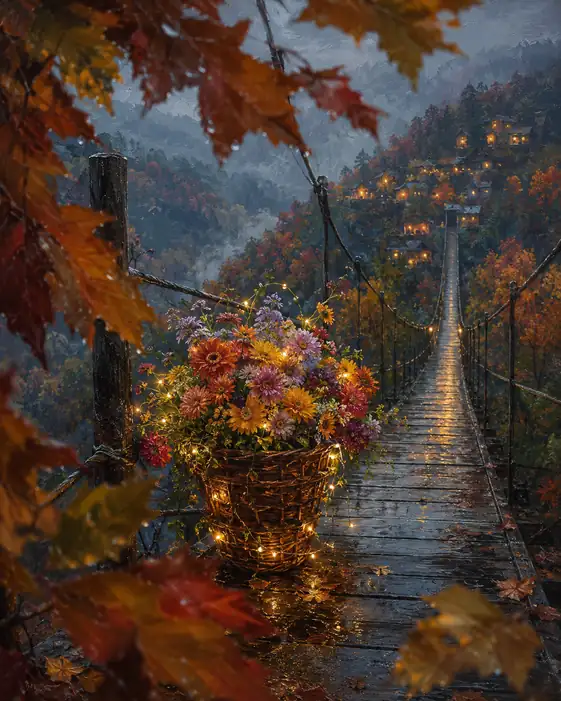 Lantern Basket over the Autumn Gorge
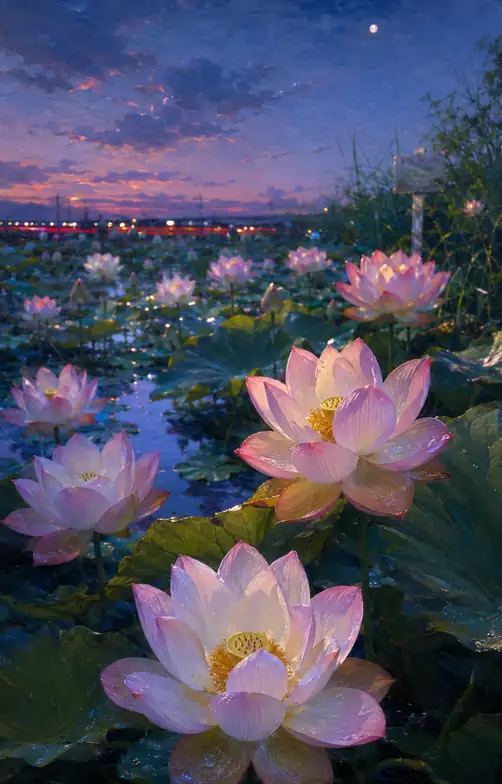 Petals between the Moon and the City Glow
Similar Artworks
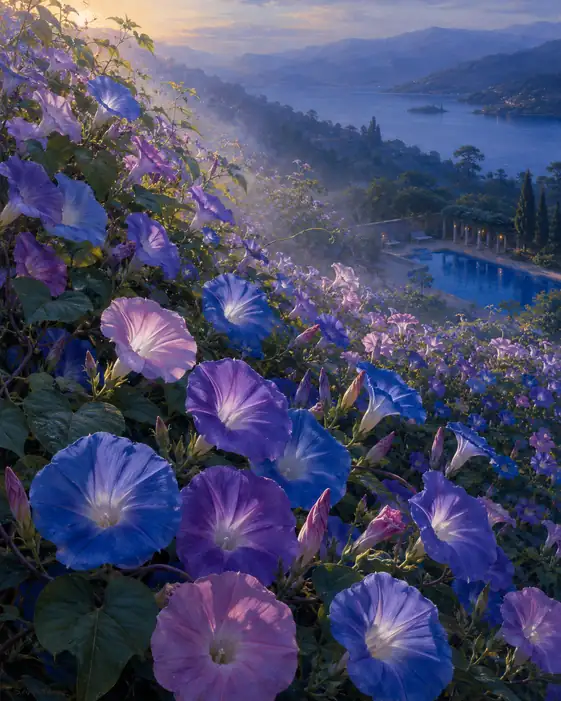 Morning Glories above the Sunlit Coast
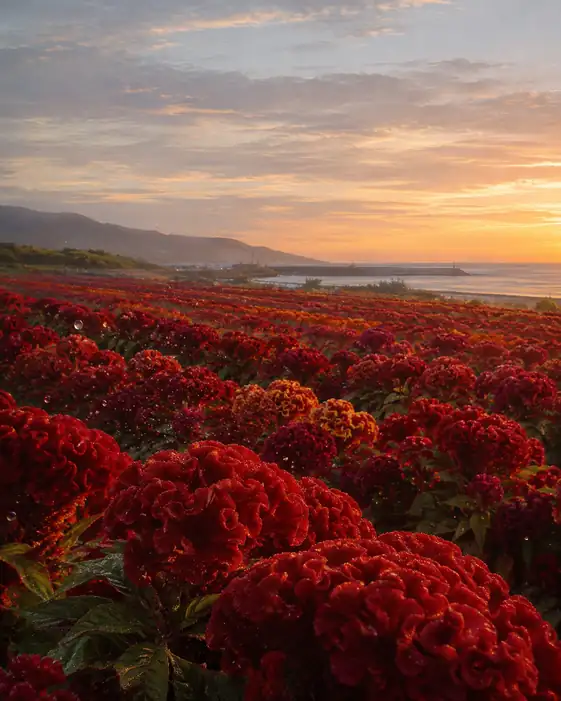 Crimson Slopes of Cockscomb at Sunset
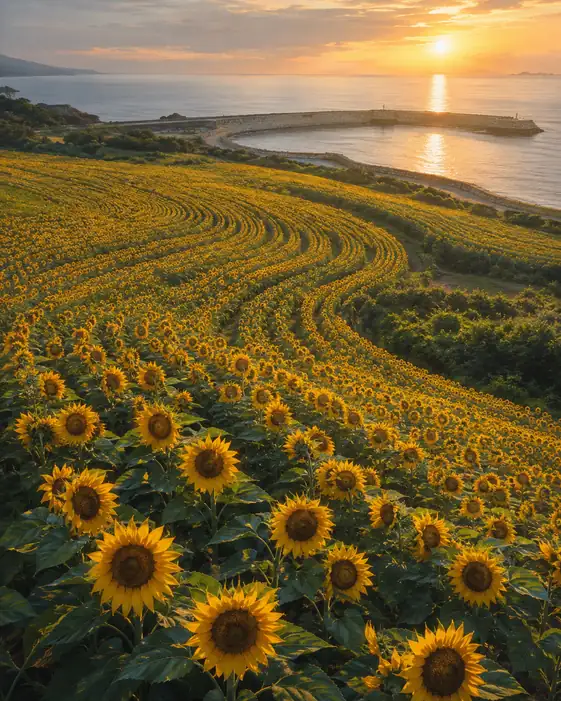 Golden Arcs across the Coastal Slopes
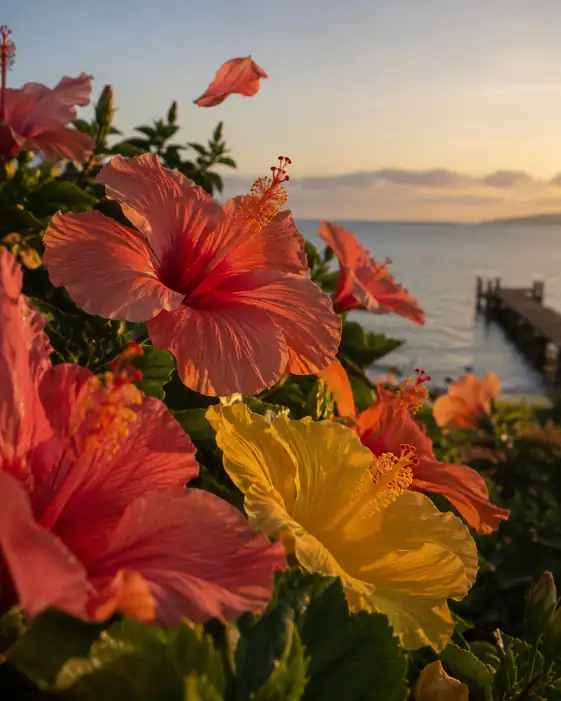 Sunset Breeze and Coastal Hibiscus
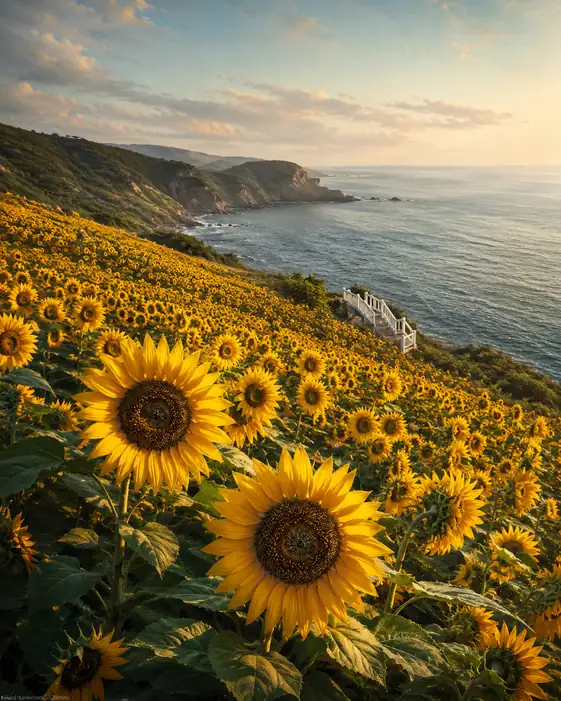 Sunflowers Cascading to the Coastal Horizon
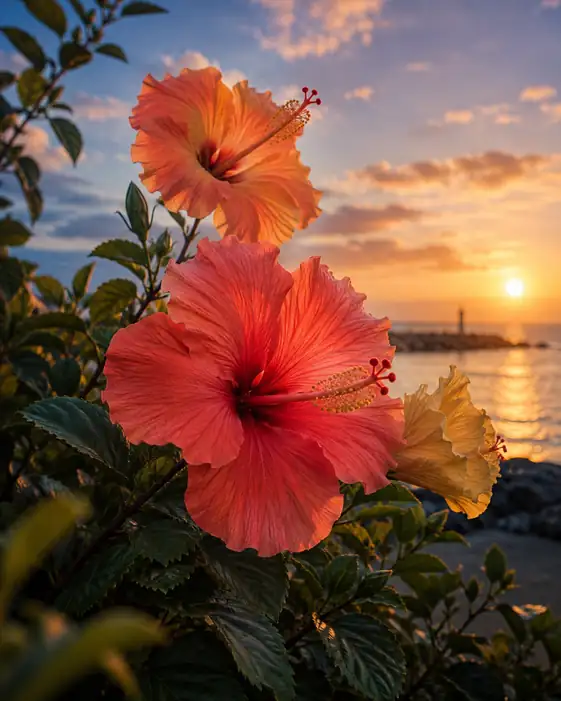 Hibiscus Glowing against the Sunset Harbor
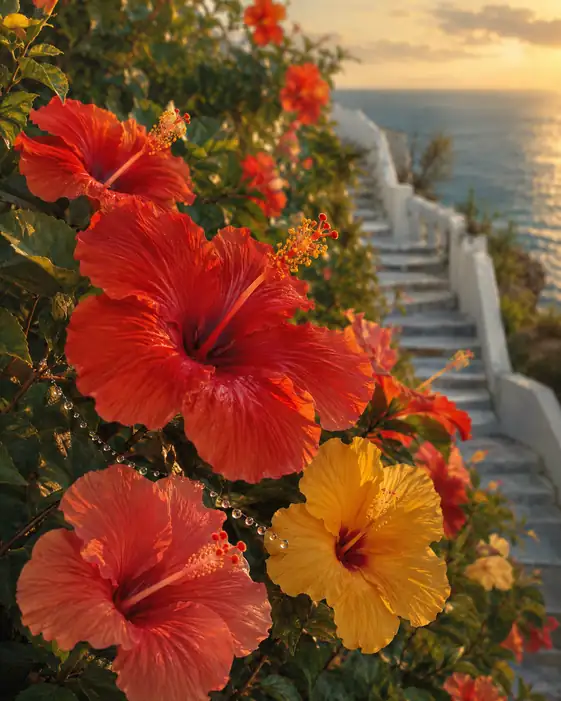 Hibiscus along the Coastal Stairway at Sunset
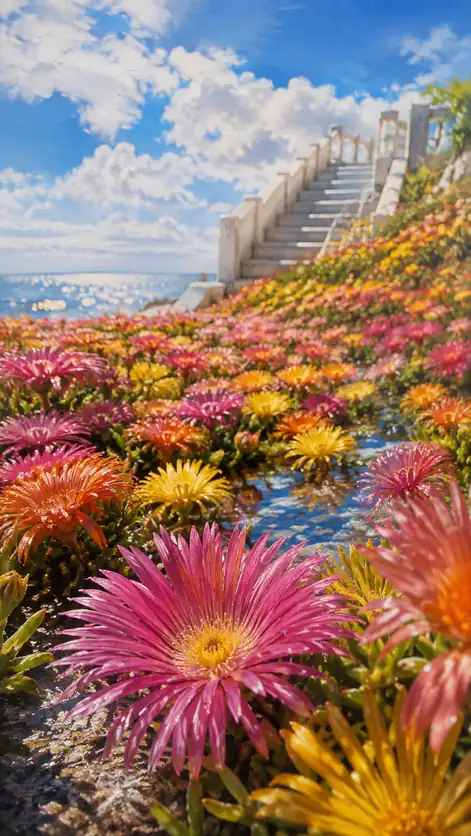 Coastal Stairway and Livingstone Daisies
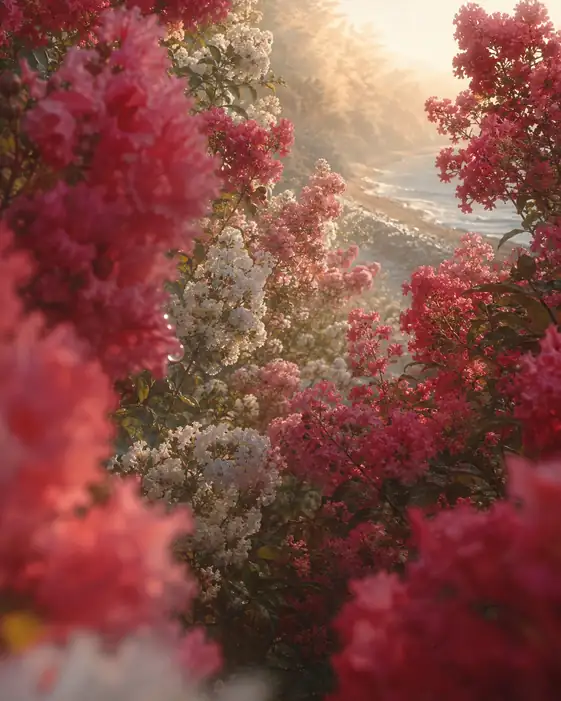 Crape Myrtle along the Sunlit Coastline
 Evening Glory by the Sunlit Coast