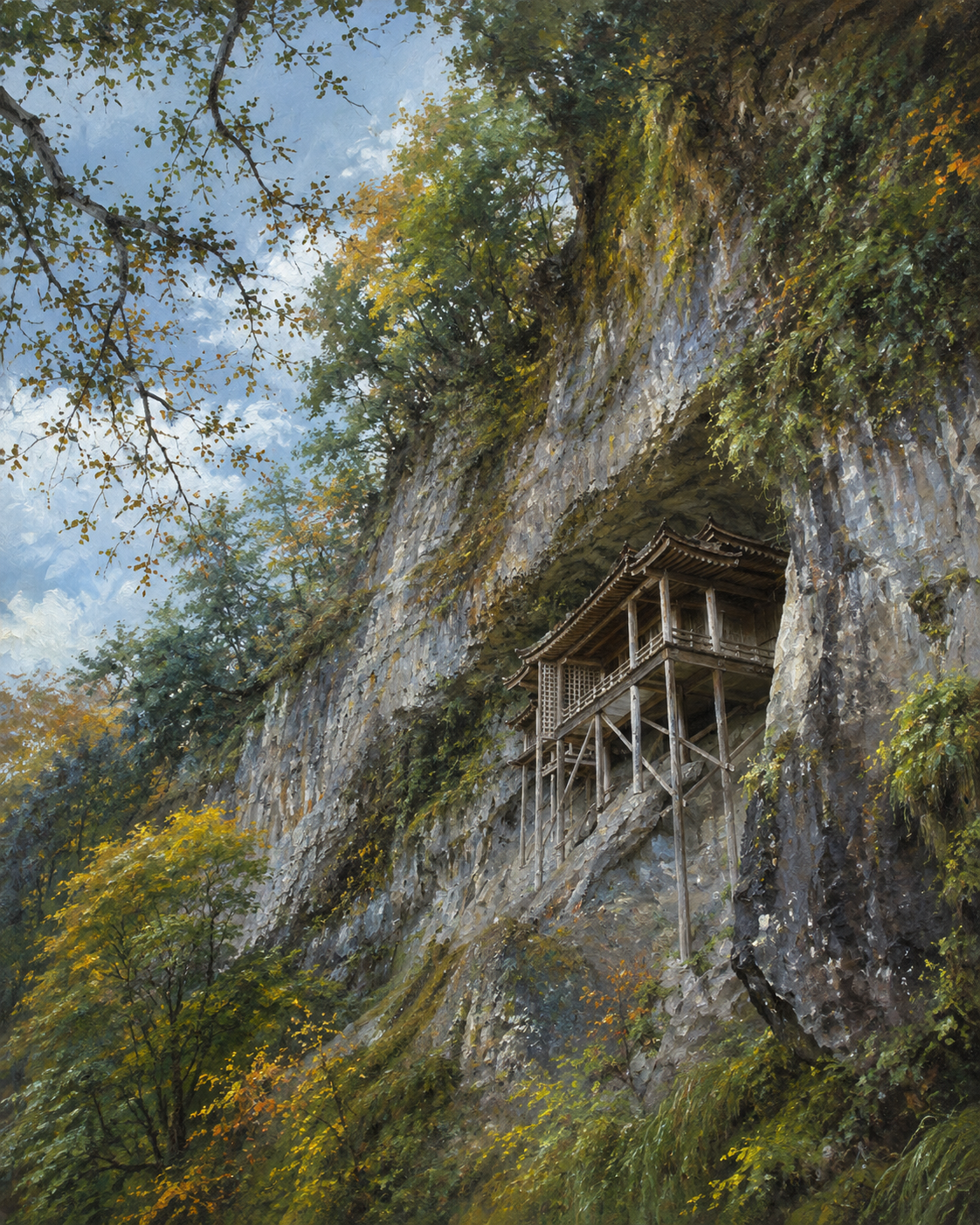
Discovery at the Edge of the Sky
Critique
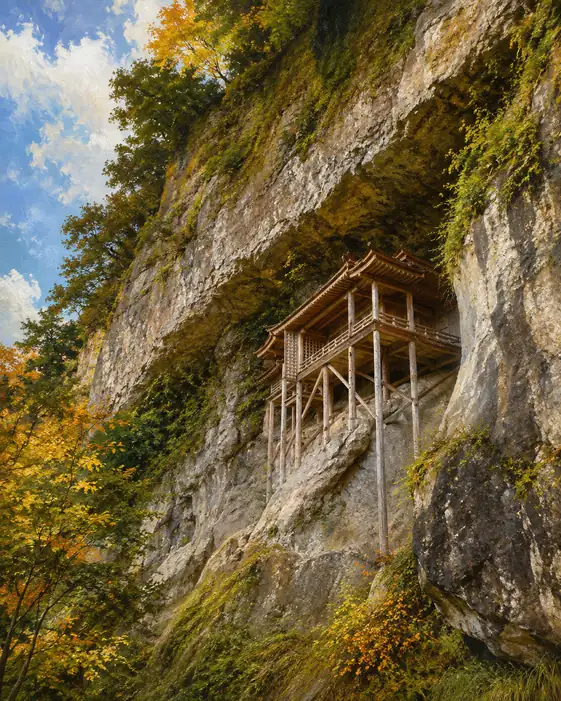
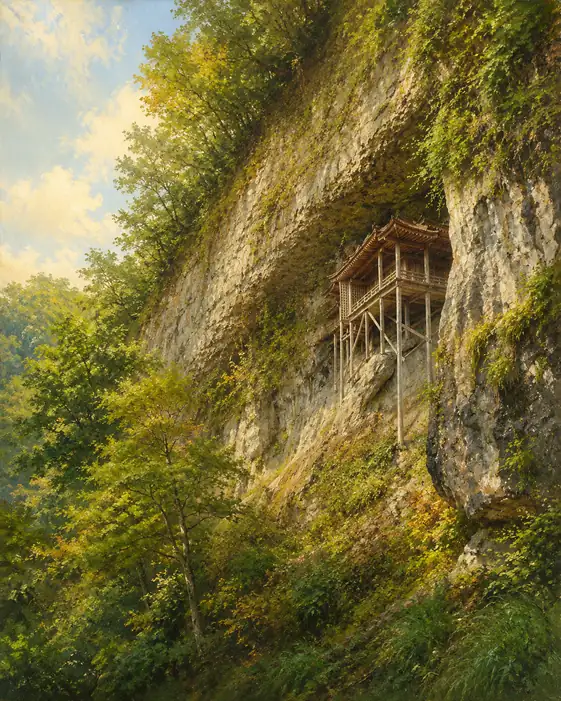
Introduction This upward view stages a cliff pavilion between open sky and towering stone, where possibility meets geological pressure. Description The gray cliff rises steeply along the right and curves overhead into a broad recess. A compact two-story wooden pavilion occupies the right center, supported by long posts on the sloping face. Autumn trees in green, yellow, and touches of orange gather below and crown the rock. At left, pale blue sky with broken white clouds opens behind thin overhanging branches. Dark vegetation and shadow frame the upper right. Analysis The composition divides into a luminous atmosphere at left and dense mineral field at right. Their boundary climbs diagonally toward the pavilion. Horizontal balconies and layered roofs pause the cliff's vertical thrust. Fine branches balance slender supports, linking natural and constructed line. Brushlike facets differentiate soft cloud, fractured stone, and clustered foliage. Interpretation and Evaluation The pavilion mediates between enclosure and release. Its rocky canopy offers refuge, but its balcony faces the open sky, making contemplation an outward act rather than withdrawal. Long visible posts remind viewers that spiritual elevation depends on material labor and exact placement. Seasonal trees soften the cliff without making it harmless. The small displaced structure leaves the world priority while careful adaptation gives human presence significance. Conclusion The painting sustains awe without sacrificing calm. Sky provides breath, stone supplies gravity, and the pavilion holds their tension in a precise wooden interval. By allowing branches, braces, and cliff edges to echo one another, the work presents dwelling as attentive participation in a larger order rather than a claim of possession.
Same Subcategory
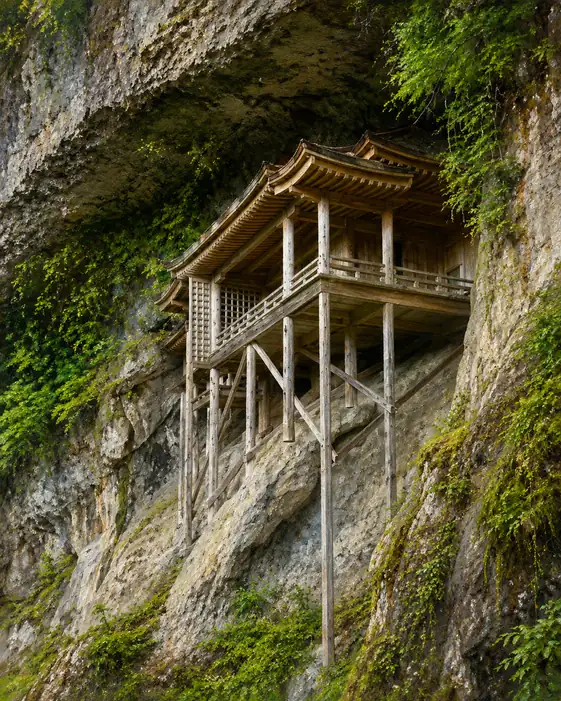 The Craft of Sustained Balance
Similar Artworks
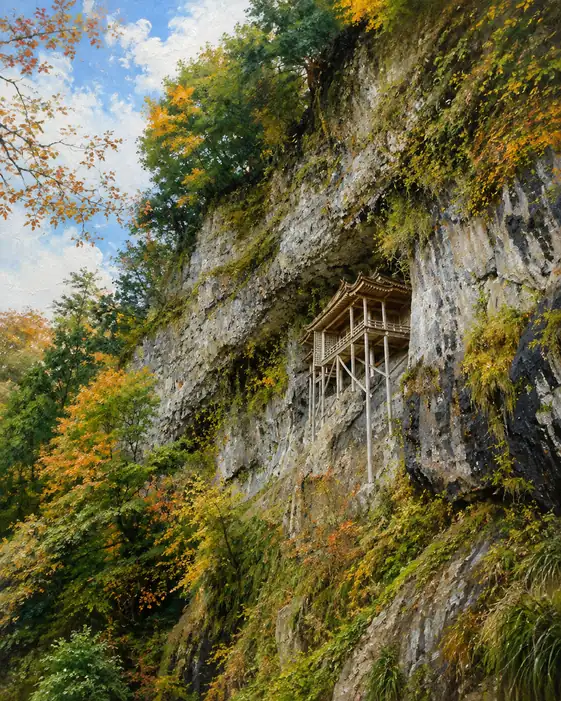 Haven upon the Precipice
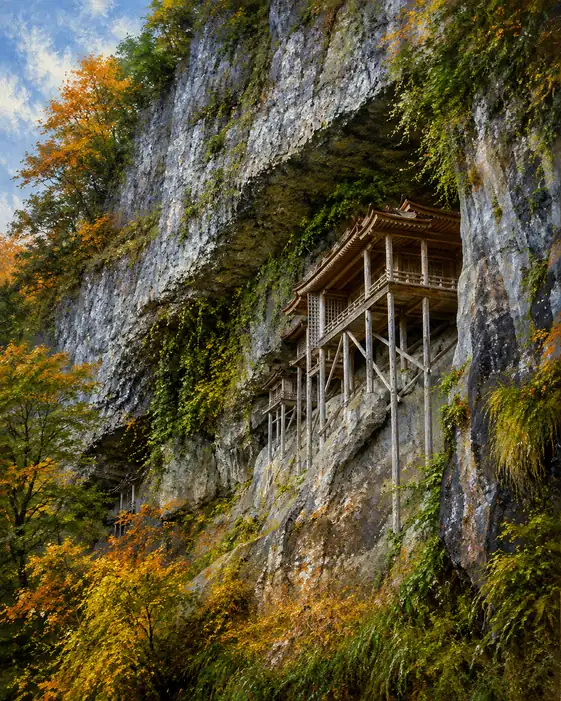 Tiered Havens Along the Stone Wall
 Perch between Earth and Sky
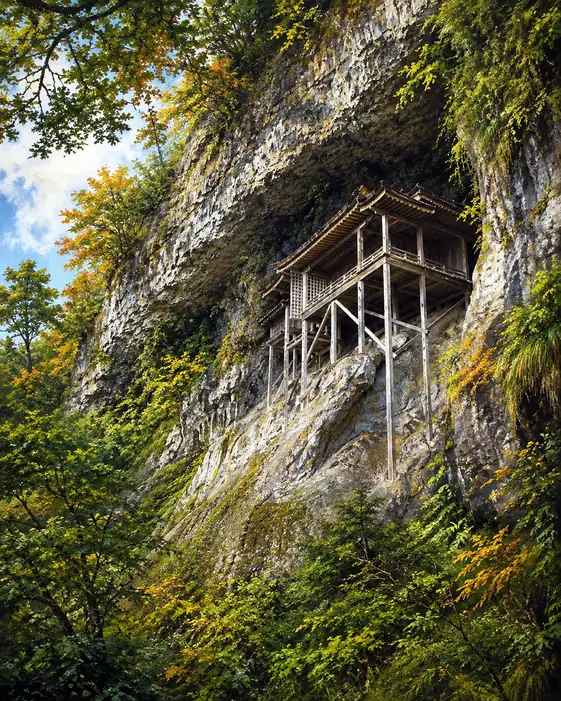 Suspended Order in the Mountain Crest
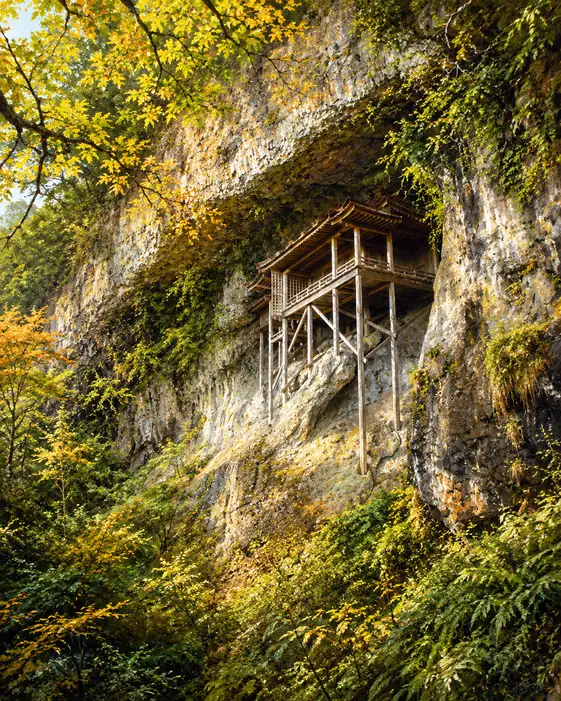 Golden Embrace of the Cliffside Sanctuary
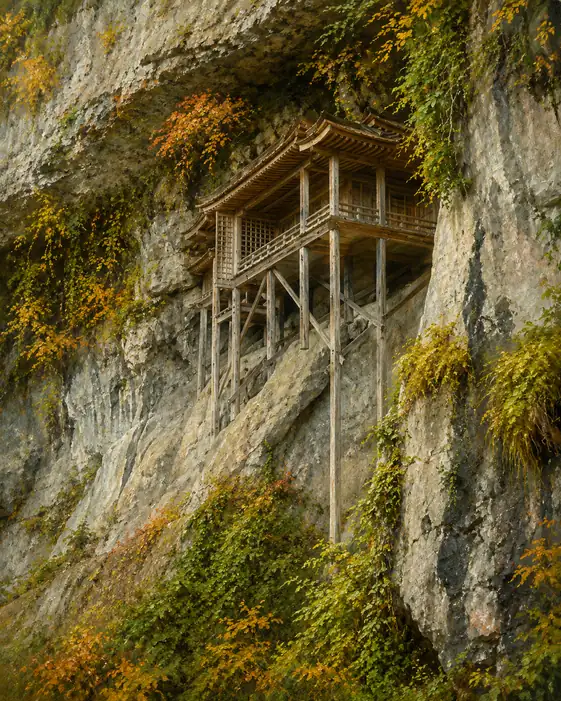 Pillars of Faith in the Stone Shadow
 Morning Radiance on the Hermitage
 Golden Realm of Suspended Sanctuaries
 Stairway Clothed in Autumn Gold
 Shrines within the Ancient Canopy