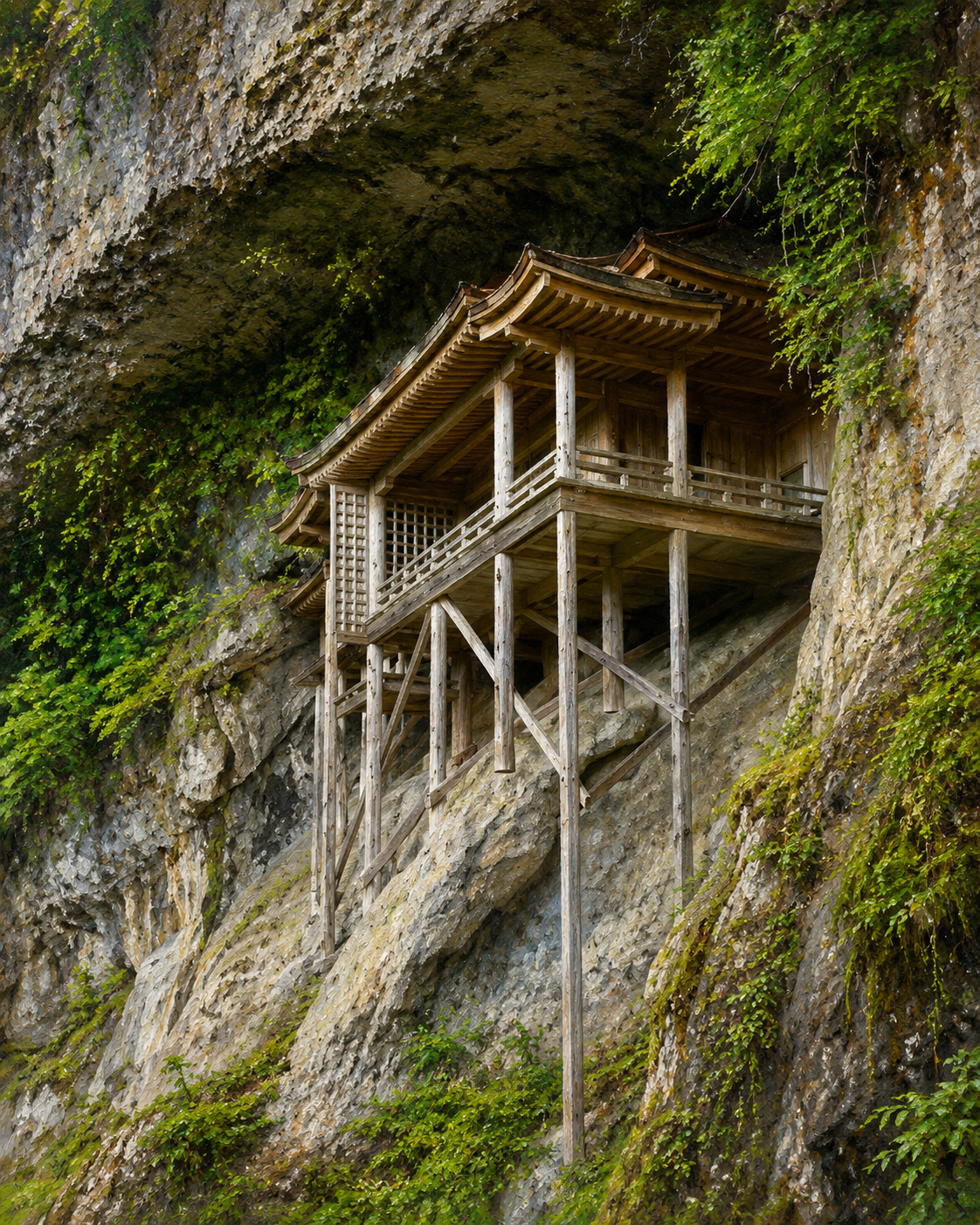
The Craft of Sustained Balance
Critique
Introduction Moving close to the cliff pavilion, this work makes construction the spectacle. Its parts become an anatomy of endurance beneath stone. Description A weathered wooden pavilion fills the upper center, wedged into a rocky recess. Two upturned roofs overlap above a balcony with simple railings and a latticed side wall. Numerous pale posts descend along the steep gray slope, reinforced by diagonal braces; one exceptionally long support reaches almost to the lower edge. Dark stone arches overhead, and bright green vines, moss, and ferns gather across the cliff. Analysis Tight vertical framing concentrates attention on load, contact, and scale. Repeated columns descend rhythmically, while crossed braces form stable triangles against unstable rock diagonals. Curved roofs and layered rafters create a dense horizontal crown. The longest post acts as a plumb line measuring the alarming drop below the floor. Interpretation and Evaluation Because every support remains visible, the pavilion does not pretend to float. Its survival is represented as accumulated acts of calculation, repair, and trust. The cave-like overhang offers shelter but also presses downward, making protection and threat inseparable. The absence of sky intensifies intimacy: viewers confront the specific junction where human craft negotiates with stone. The image values ingenuity without presenting mastery, since dependence is as prominent as achievement. Conclusion This close study succeeds through structural clarity and restrained drama. It transforms engineering into an ethical image of support: endurance requires many distinct members sharing weight. The pavilion's beauty lies not in escaping its harsh site, but in openly displaying the relationships that allow it to remain there.
Same Subcategory
Similar Artworks
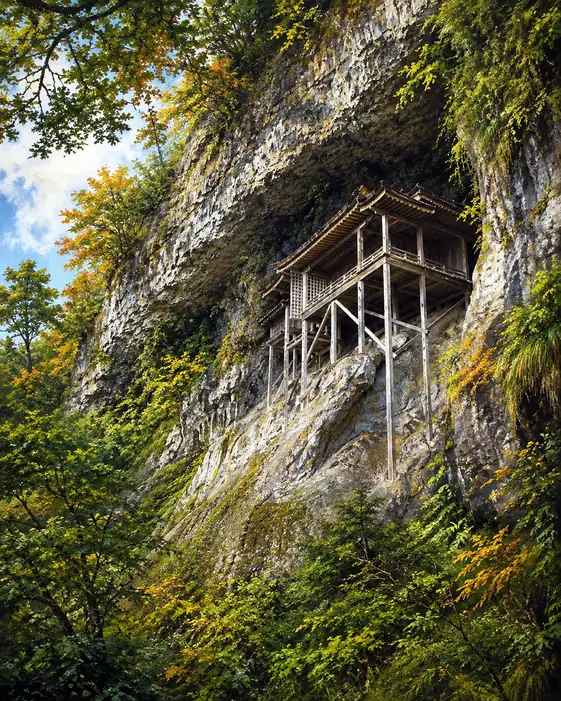 Suspended Order in the Mountain Crest
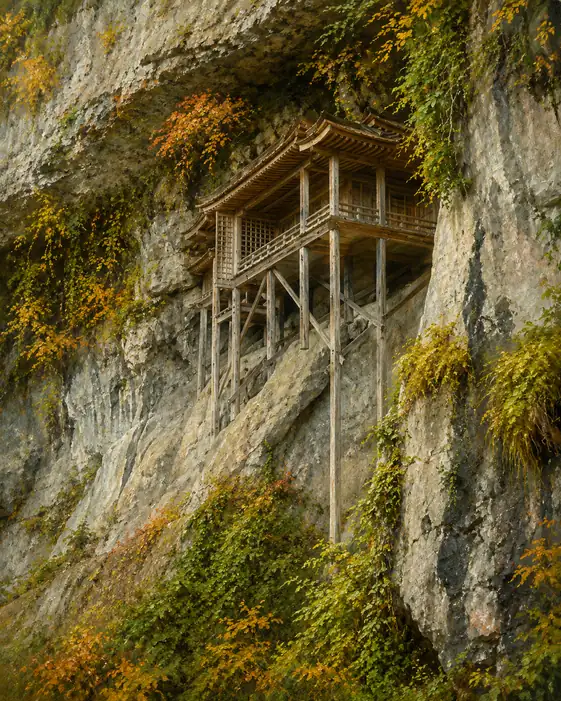 Pillars of Faith in the Stone Shadow
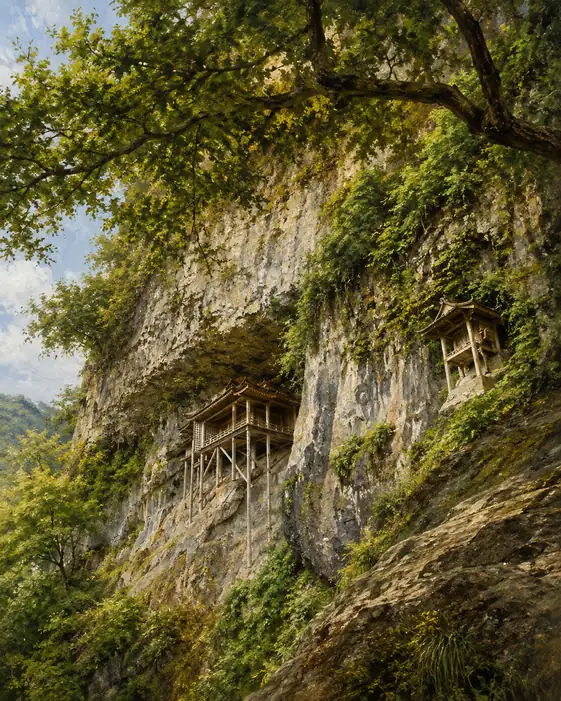 Shrines within the Ancient Canopy
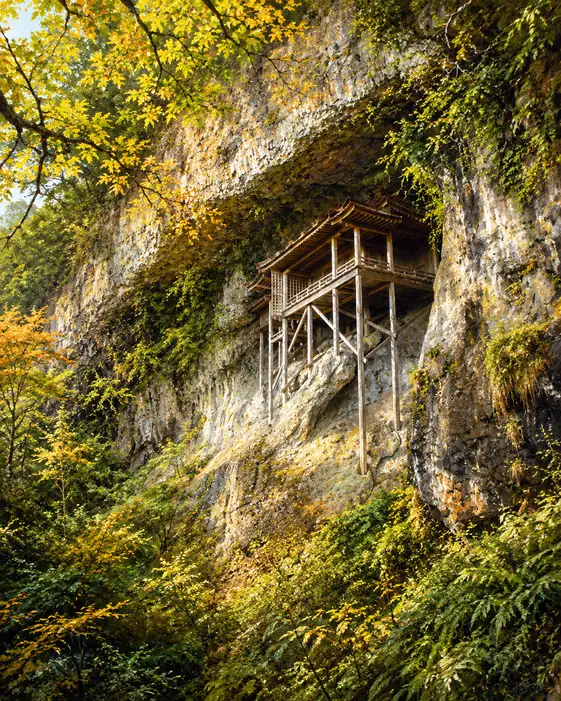 Golden Embrace of the Cliffside Sanctuary
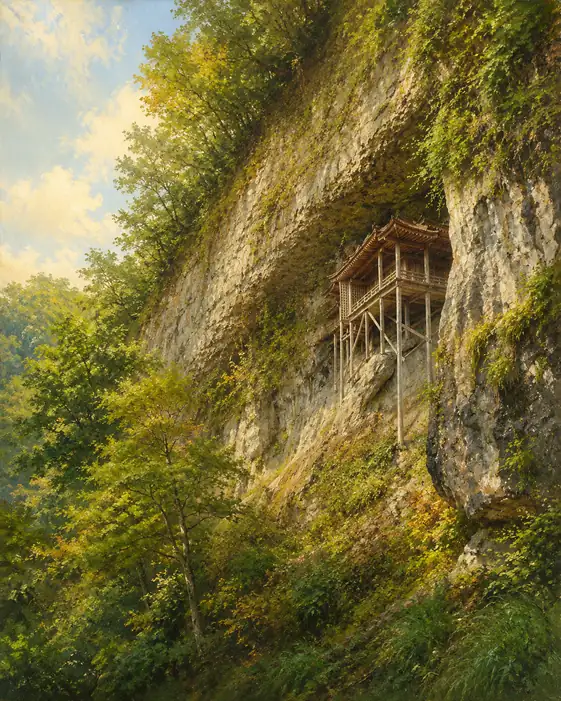 Morning Radiance on the Hermitage
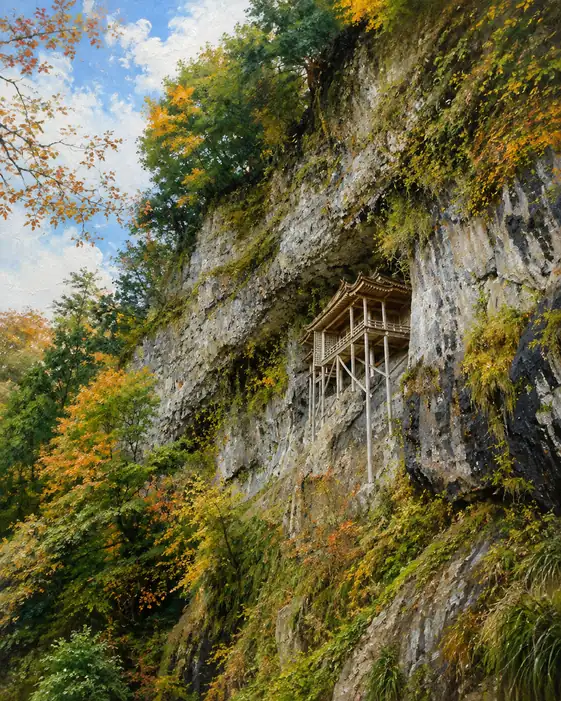 Haven upon the Precipice
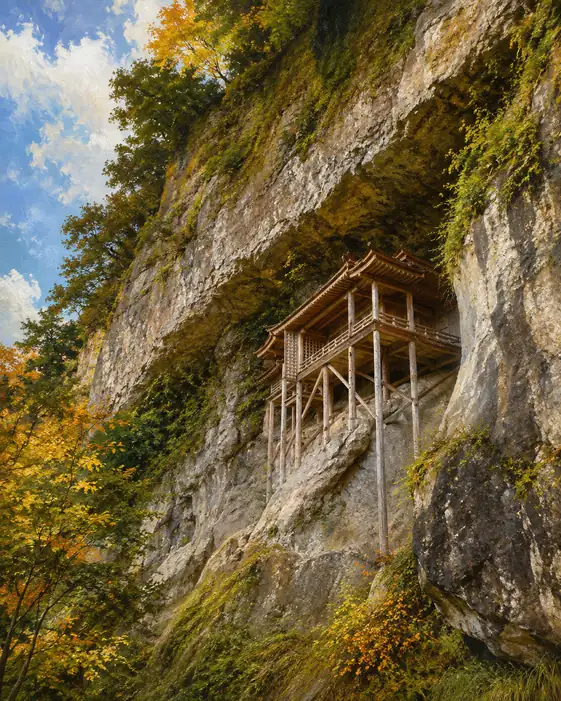 Perch between Earth and Sky
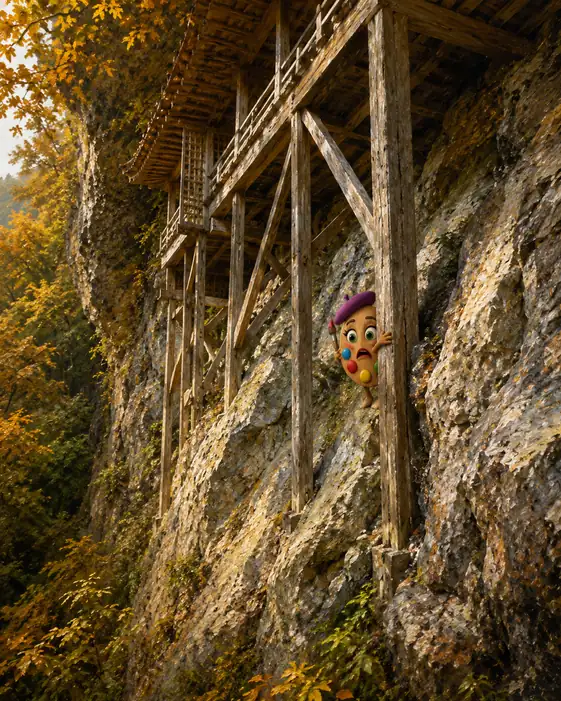 Clinging to the Cliffside Pillar
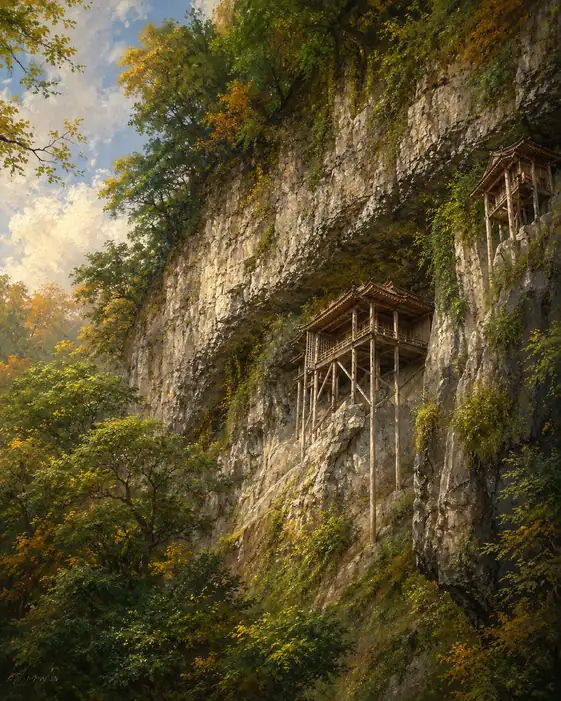 Golden Realm of Suspended Sanctuaries
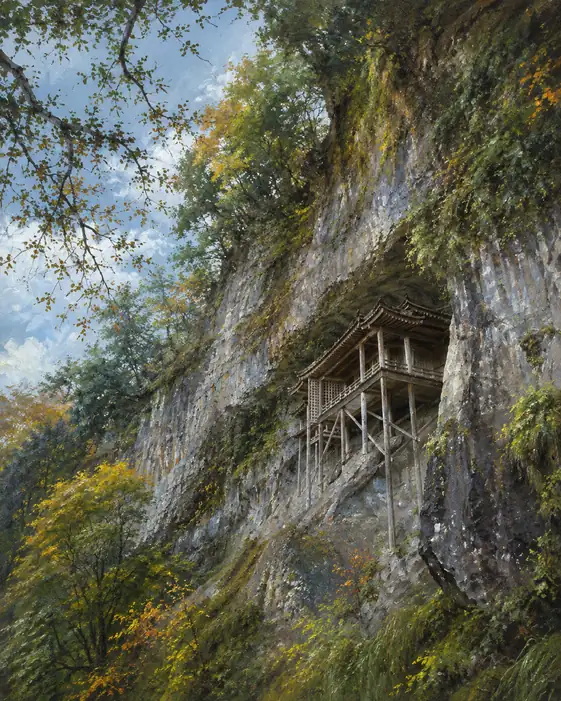 Discovery at the Edge of the Sky