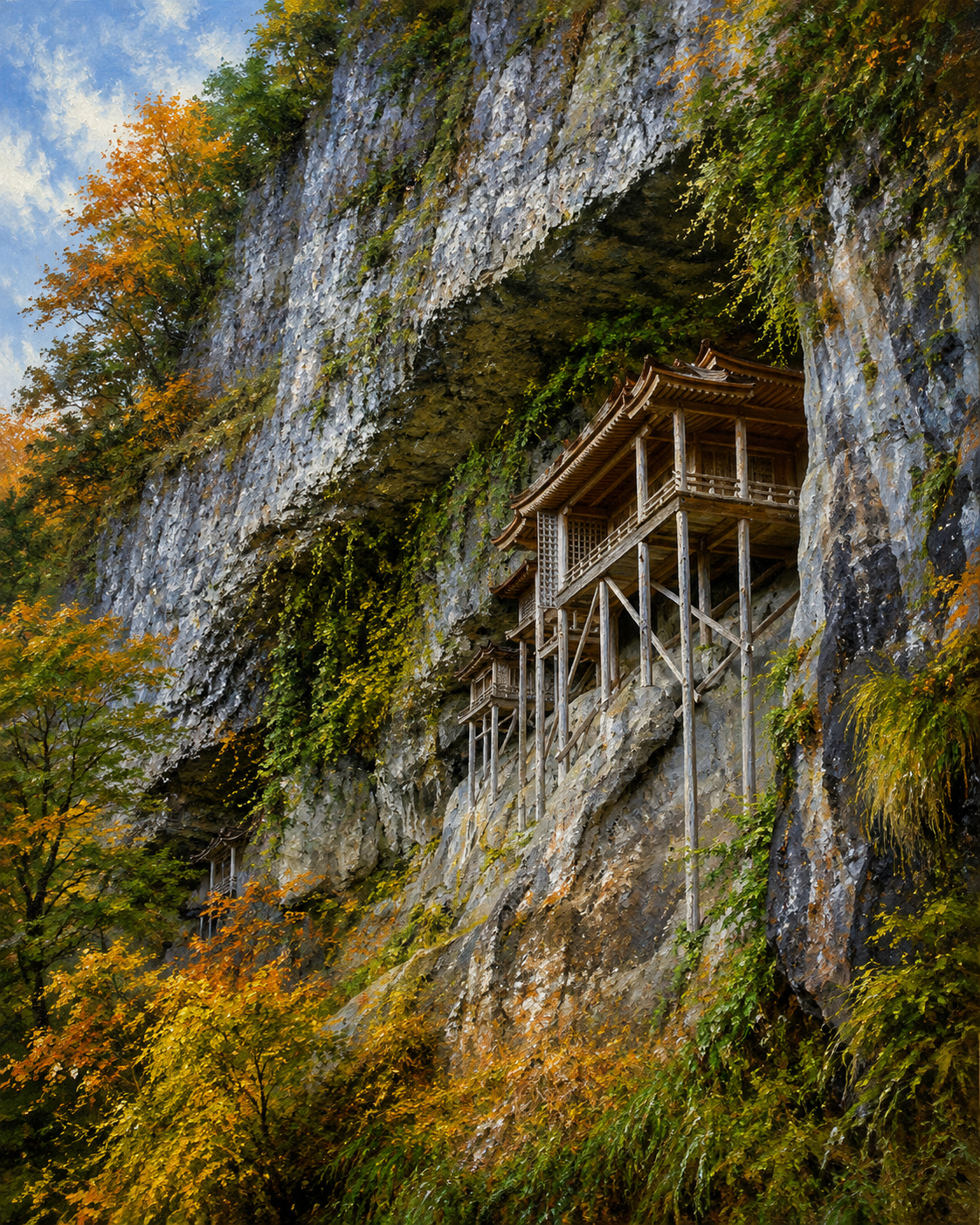
Tiered Havens Along the Stone Wall
Critique
Introduction This panoramic view reveals several wooden pavilions distributed along a vast cool-gray cliff. The architecture reads as a sustained chain of occupation rather than a single isolated miracle, emphasizing continuity across hazardous space. Description The main multi-level hall stands in a recess at upper right-center, supported by long posts and diagonal braces. Smaller structures appear farther left along the rock face. A great pale-gray cliff fills most of the frame, marked by dark fissures, green vines, moss, and orange foliage. Autumn forest rises from the lower left, and blue sky with white clouds opens narrowly at the upper-left edge. Analysis The cliff's sweeping diagonal carries the eye from forest toward the principal hall. Repeated buildings form a staggered rhythm along this rise. Their thin timber grids contrast with the rock's broad mottled planes. Cool gray and blue dominate, allowing orange leaves and warm brown roofs to serve as measured accents. The largest hall is detailed, while smaller ones diminish through distance, producing scale without relying on visible people. Vegetation threads across both geology and construction. Interpretation and Evaluation Multiple pavilions imply a route, institution, or tradition extended over time. Each structure occupies a separate niche yet repeats a shared architectural language, suggesting continuity without uniformity. The cliff may signify an obstacle, but it also supplies sheltering recesses and foundations. Human adaptation depends on reading those opportunities. Autumn growth reveals that the site is never static, even when stone and ritual appear enduring. Conclusion The painting presents inhabitation as a distributed, patient achievement. No building masters the cliff; together they form a modest constellation across it. The cool spacious view allows risk, persistence, and collective memory to coexist.
Same Subcategory
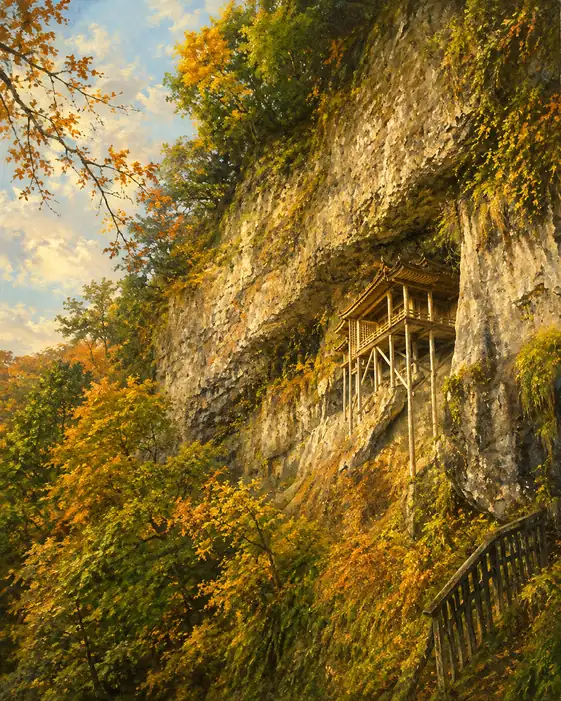 Stairway Clothed in Autumn Gold
Similar Artworks
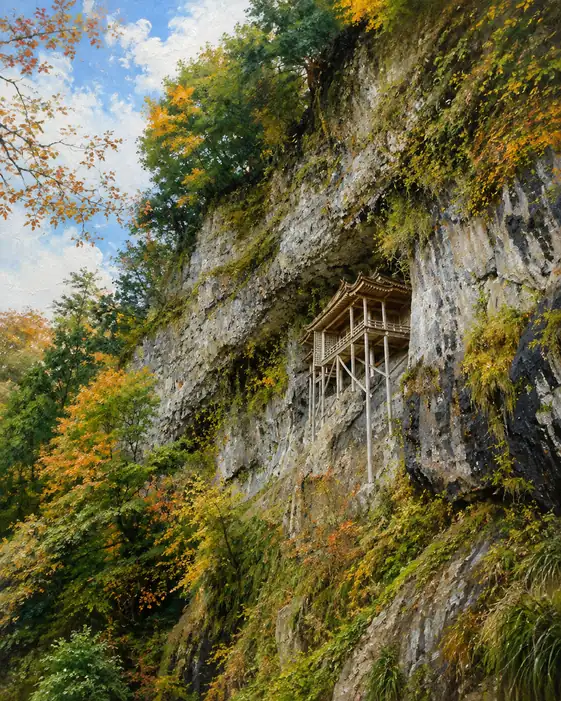 Haven upon the Precipice
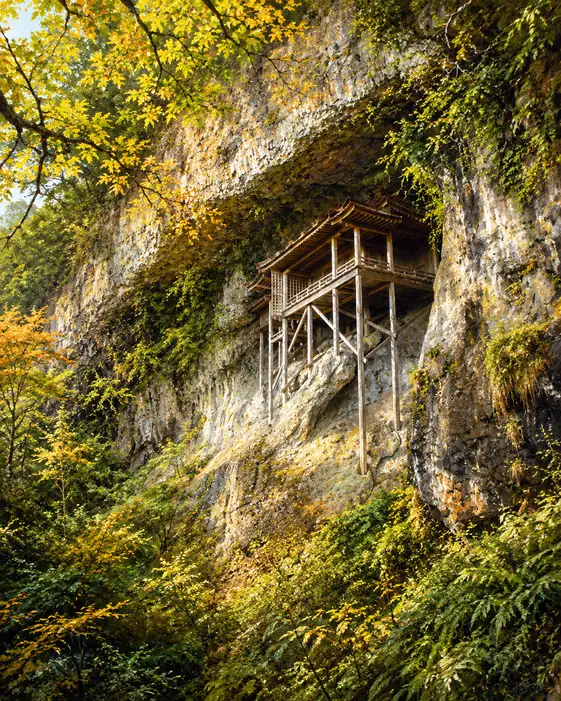 Golden Embrace of the Cliffside Sanctuary
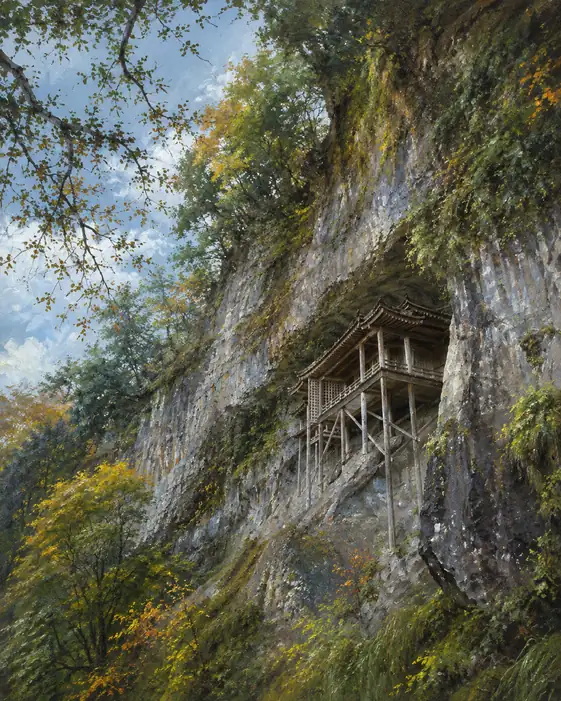 Discovery at the Edge of the Sky
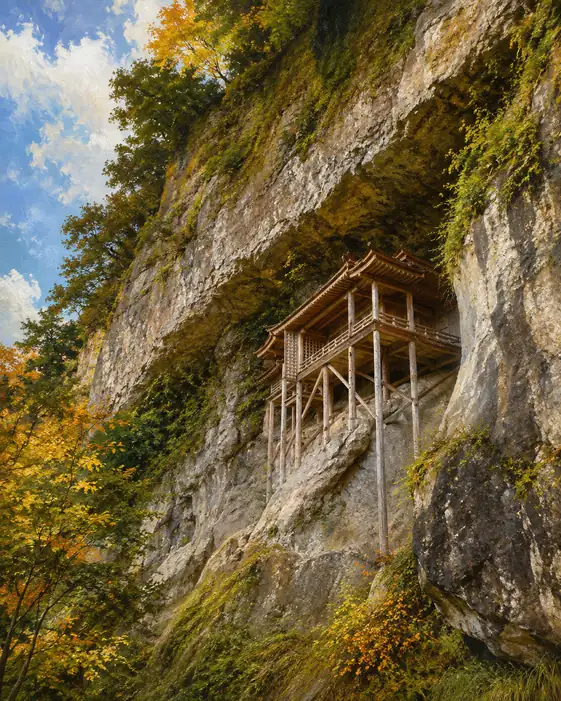 Perch between Earth and Sky
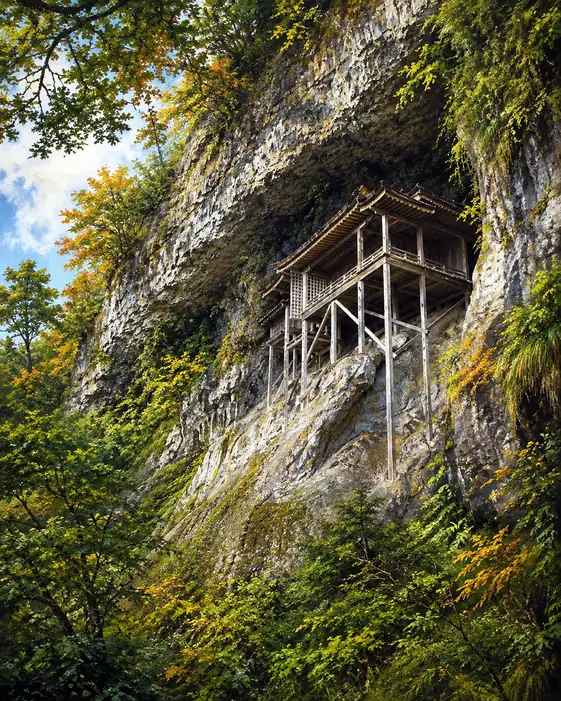 Suspended Order in the Mountain Crest
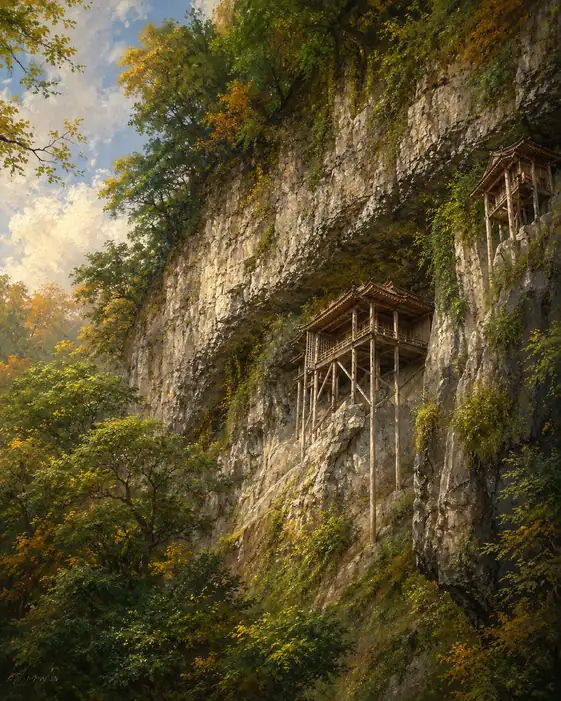 Golden Realm of Suspended Sanctuaries
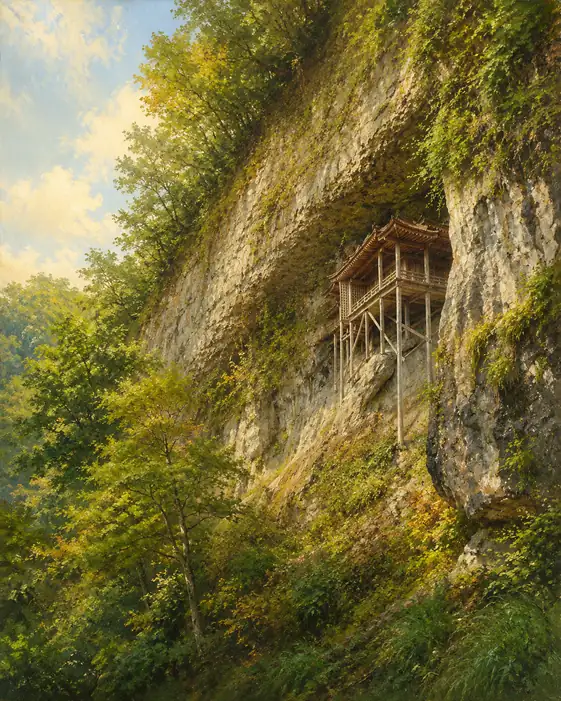 Morning Radiance on the Hermitage
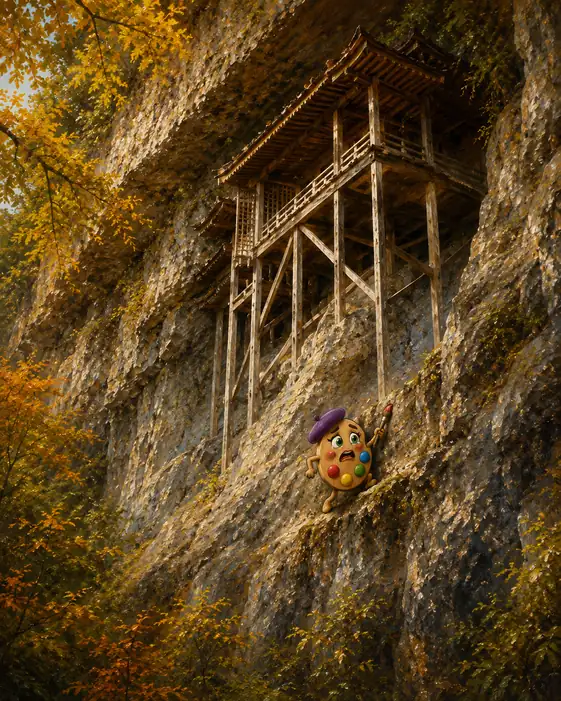 Perilous Ascent with a Paintbrush
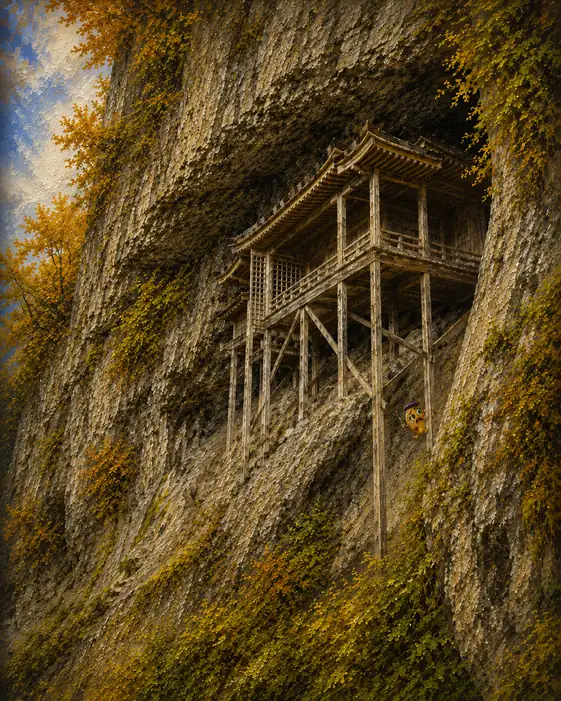 Clinging beside the Tall Pillar
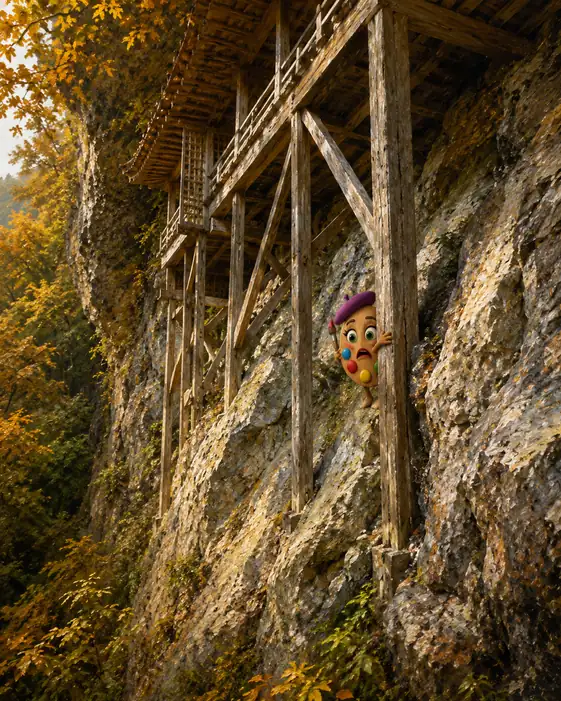 Clinging to the Cliffside Pillar