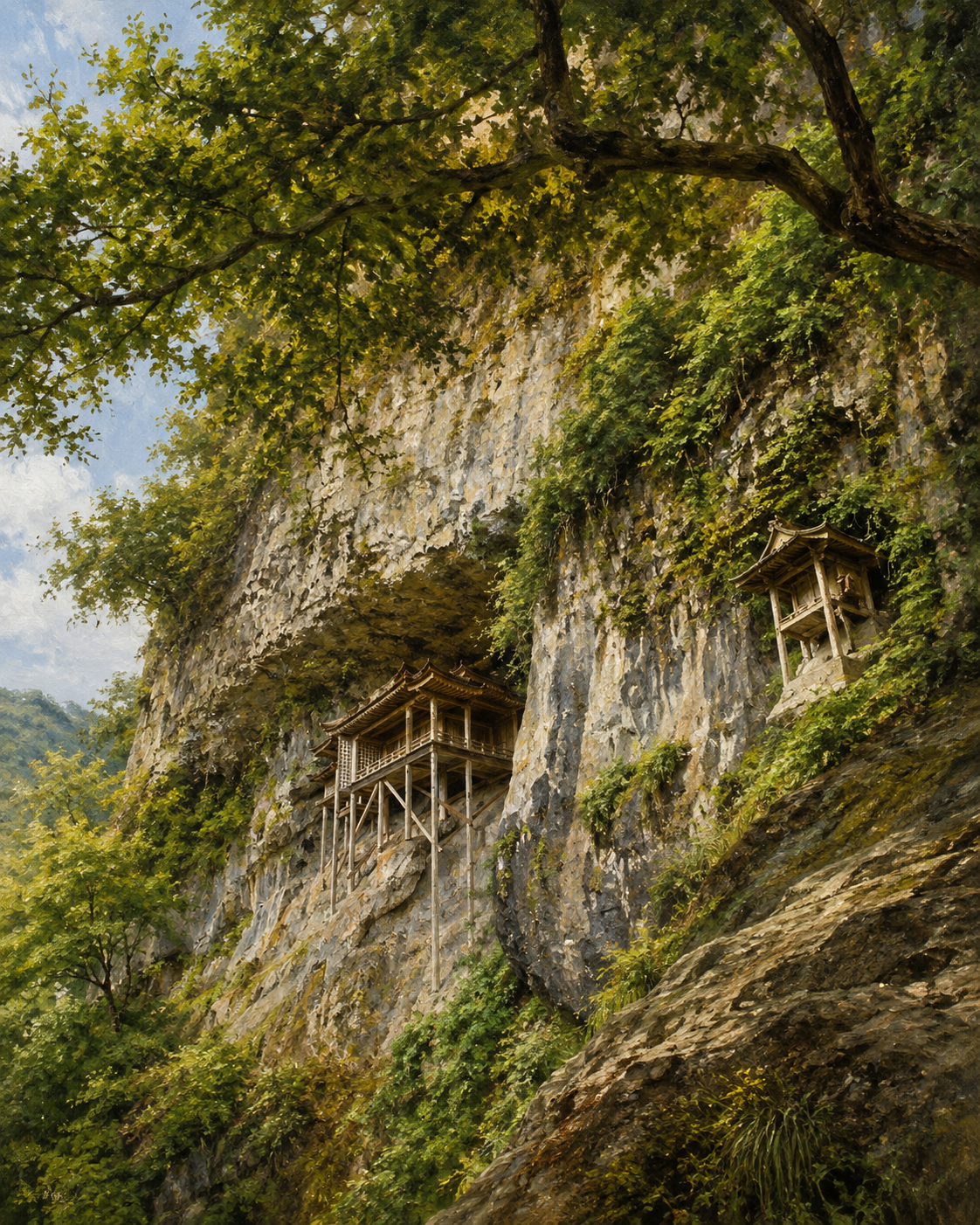
Shrines within the Ancient Canopy
Critique
Introduction This wider landscape reveals a principal cliff temple and a smaller shrine separated across the rock face. Their distribution changes solitary endurance into sacred footholds within living geology. Description A massive gray-green cliff occupies the center and right beneath a canopy of broad tree branches. The main multi-level wooden pavilion stands in a large recess near center-left on long posts. A smaller roofed structure appears higher at right, with another partial building low at far left. Dense green foliage covers ledges and the lower slope, while a narrow patch of blue sky and distant hills opens at left. Analysis The overhead branch frames the cliff with a dark organic arch. Multiple pavilions create a diagonal sequence across the rock rather than one isolated focal point. Their repeated roofs and posts establish visual kinship despite differing scales. Rock's mottled vertical plane contrasts with foliage's clustered softness and timber's precise grids. The broader viewpoint makes architecture smaller, emphasizing spatial relationships over individual detail. A sloping rock in the lower right pushes the eye upward toward the shrines. Interpretation and Evaluation The scattered buildings suggest stages, stations, or a community extended across difficult terrain. Sacred space is not confined to one monumental center but distributed through repeated acts of placement. The huge tree canopy forms a natural shelter above the human shelters, while exposed posts retain vulnerability. Distance between structures can signify solitude, yet visual repetition establishes connection. The cliff becomes inhabited without appearing conquered. Conclusion The work expands architectural wonder into an ecology of dwelling. Rock, tree, and pavilion form overlapping systems of support. Its wide view makes human presence modest but persistent, marked by several carefully maintained points of attention.
Same Subcategory
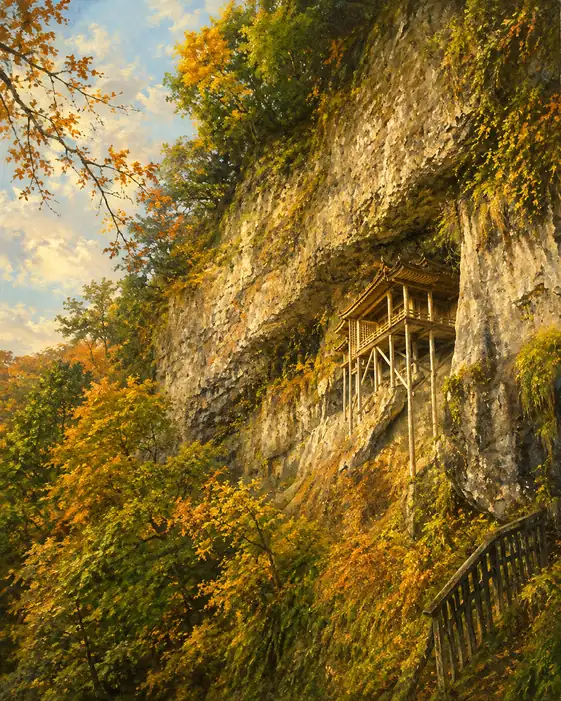 Stairway Clothed in Autumn Gold
Similar Artworks
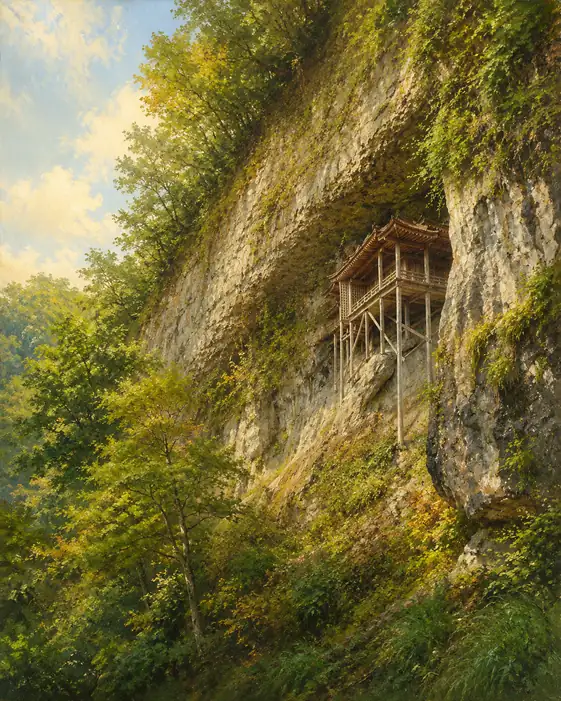 Morning Radiance on the Hermitage
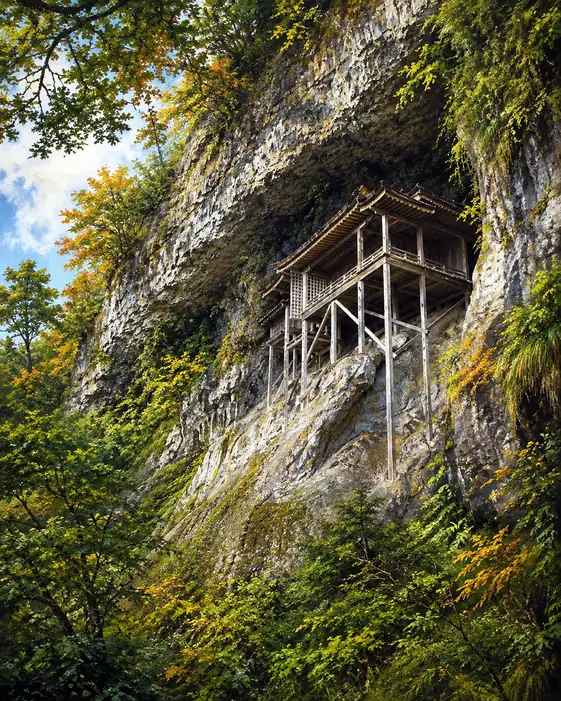 Suspended Order in the Mountain Crest
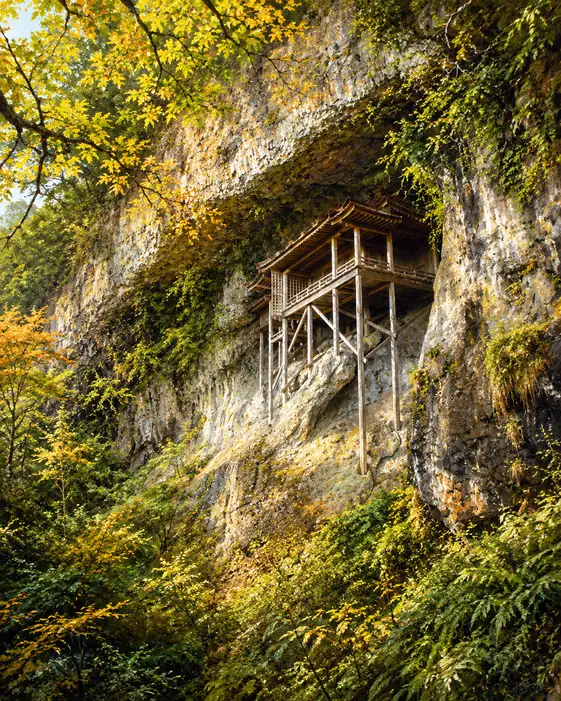 Golden Embrace of the Cliffside Sanctuary
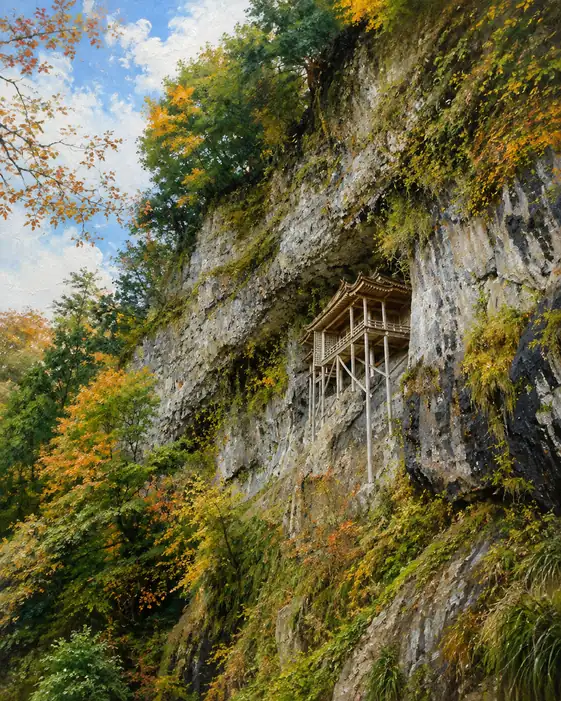 Haven upon the Precipice
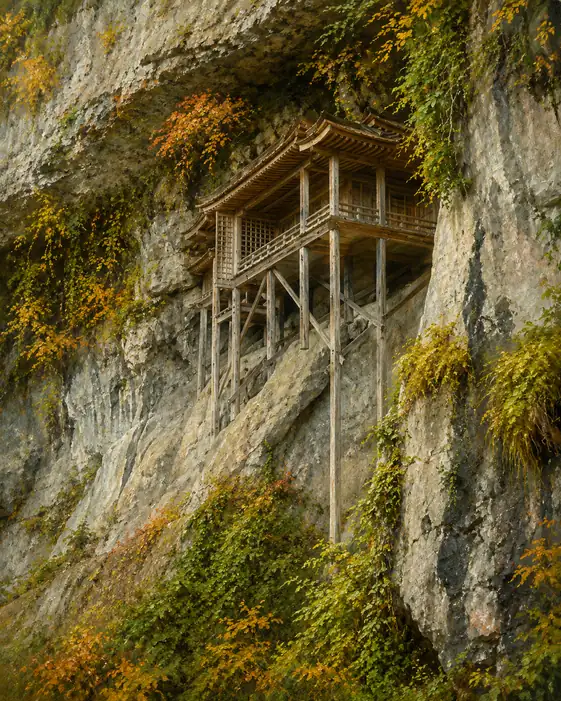 Pillars of Faith in the Stone Shadow
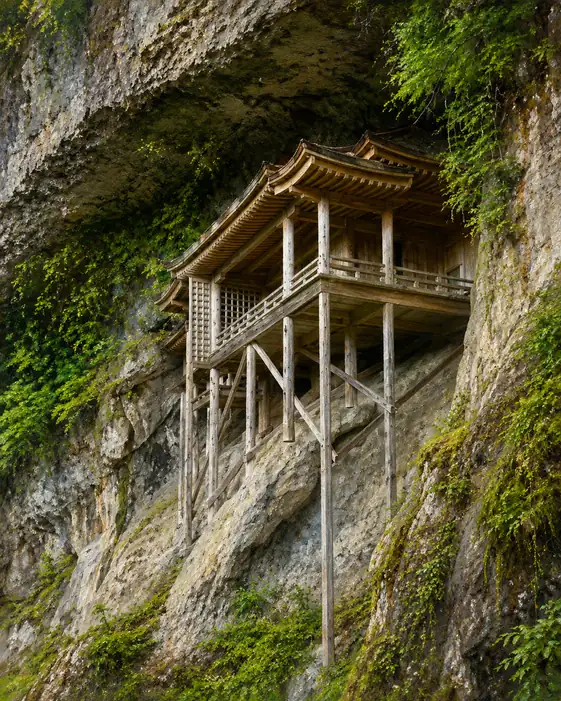 The Craft of Sustained Balance
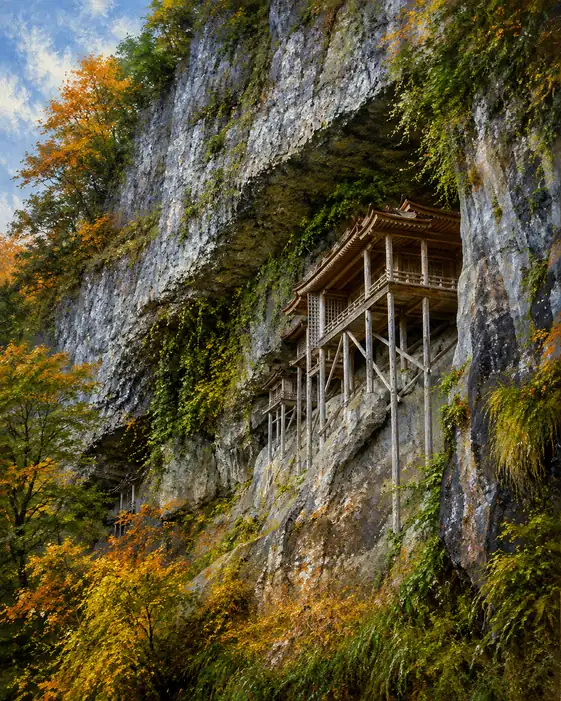 Tiered Havens Along the Stone Wall
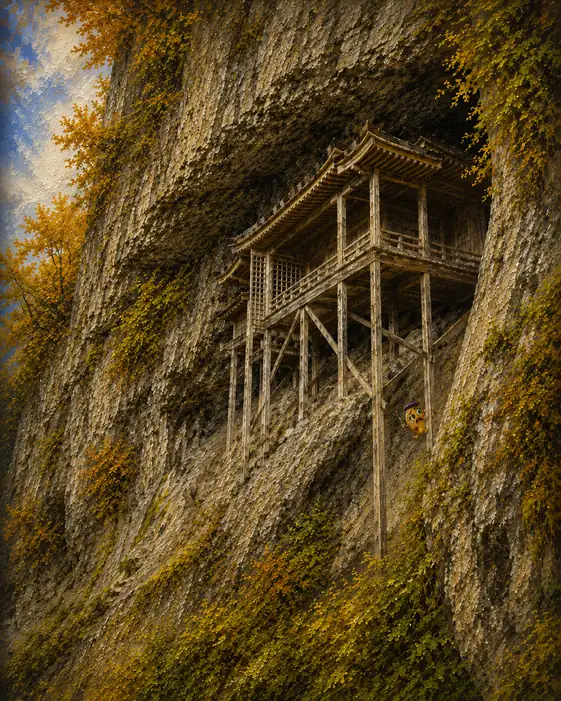 Clinging beside the Tall Pillar
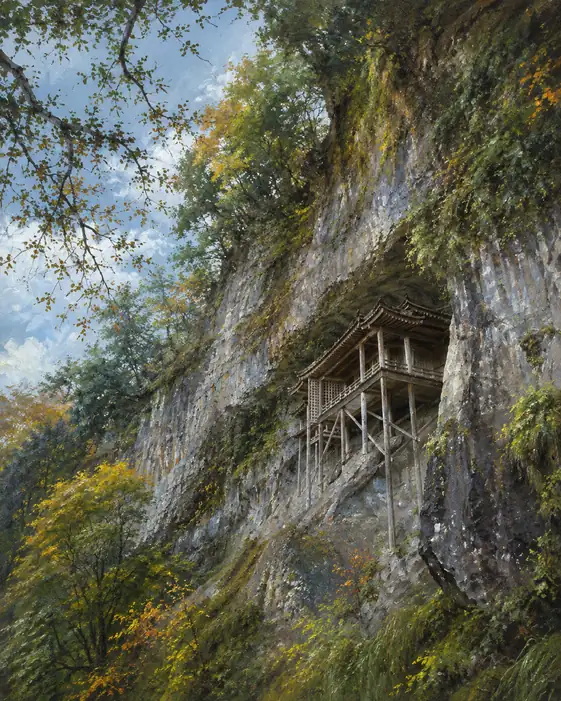 Discovery at the Edge of the Sky
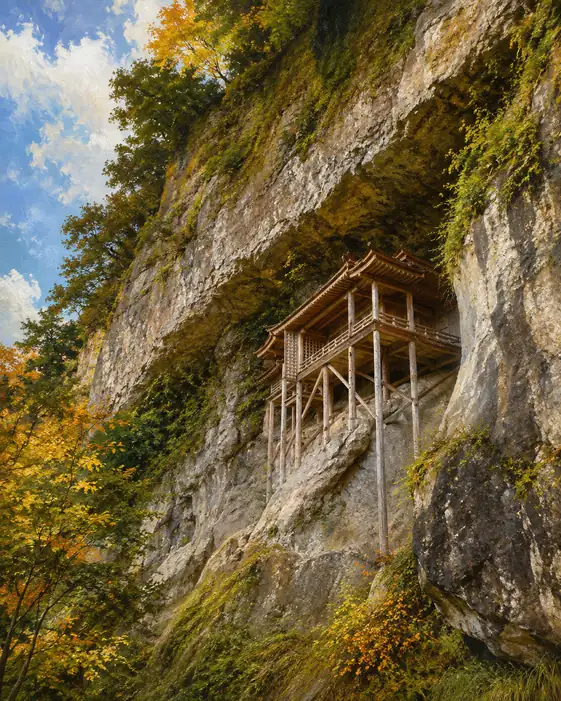 Perch between Earth and Sky