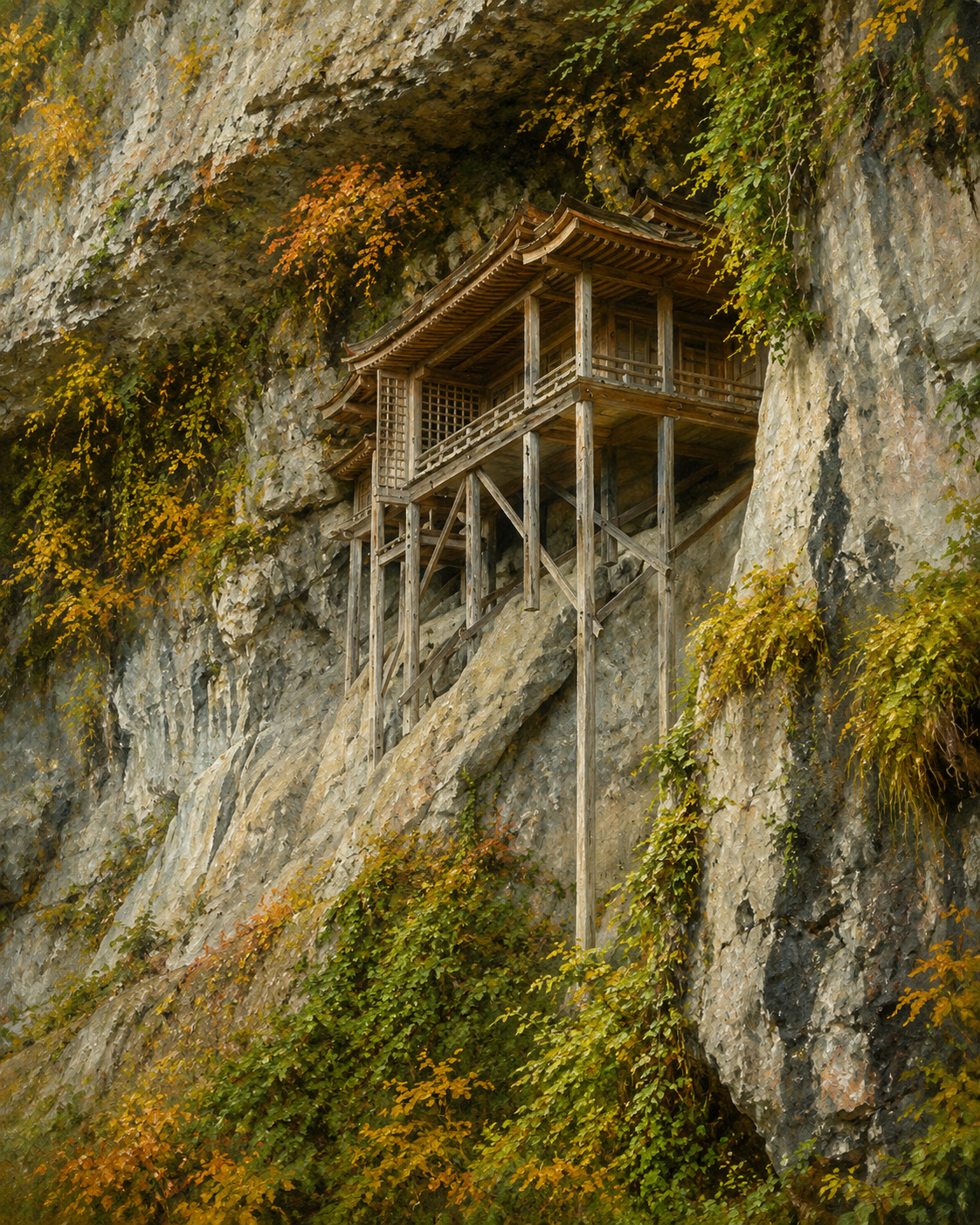
Pillars of Faith in the Stone Shadow
Critique
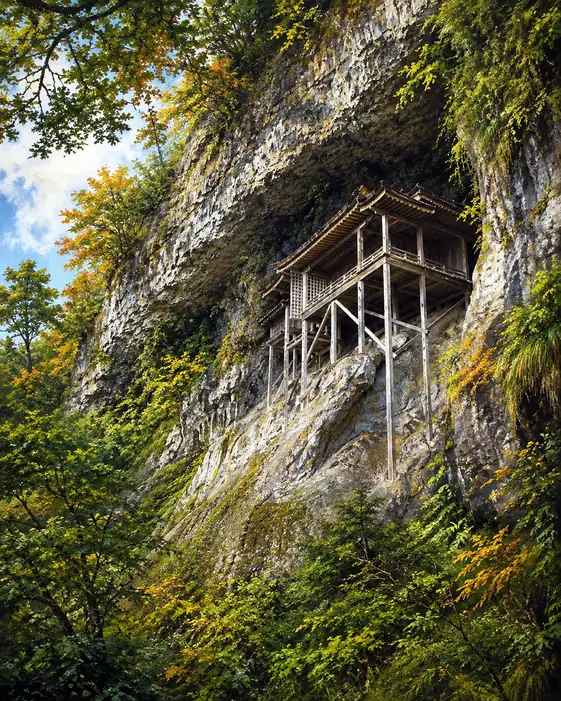
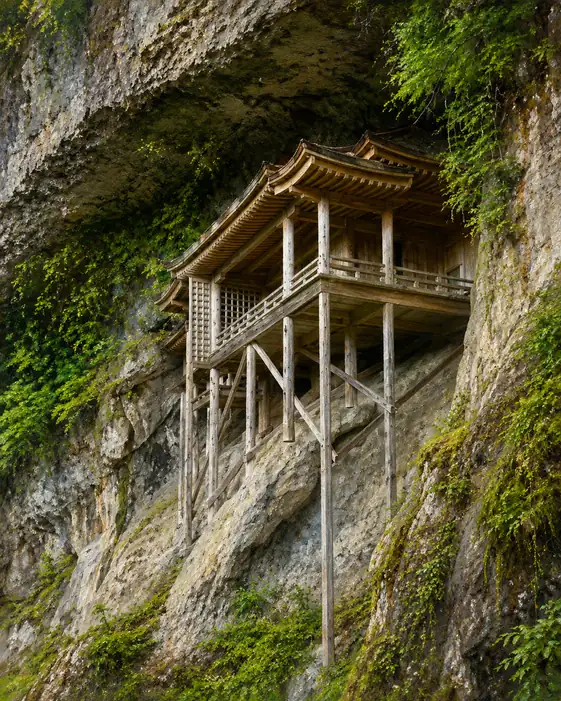
Introduction This close view of a wooden cliff temple emphasizes the audacity of support. Architecture is pressed between a dark overhang and a plunging rock face, making every post and brace appear both vulnerable and exact. Description A multi-level timber pavilion occupies the upper-center right within a deep rocky recess. Curved roofs, latticed panels, balconies, and pale weathered columns are clearly visible. Very long vertical posts and diagonal braces descend across the sloping cliff. Gray stone fills the frame, broken by vines, moss, and green, yellow, and orange foliage. Little sky is visible. Analysis The tight framing removes a distant escape and makes rock the dominant surrounding material. The pavilion's horizontals and repeated right angles contrast with fractured diagonal strata. Long posts translate the building's weight into visible lines, while cross-braces create triangular stability. Warm brown timber separates gently from cool gray stone. Vegetation occupies cracks and ledges, softening the junctions where architecture meets geology. Detailed texture gives wood, leaf, and rock distinct tactile identities. Interpretation and Evaluation The structure suggests faith made material through calculation. Its elevated position may imply withdrawal, but open balconies keep it in contact with wind, weather, and view. The supports do not conceal dependence; they display it. This honesty makes precariousness a source of dignity rather than weakness. Autumn leaves introduce cyclical change around a building designed to endure, while weathered wood admits that endurance also alters. Conclusion The work derives awe from close structural attention. The temple survives not by appearing weightless but by revealing how carefully its burden is carried. Human craft becomes a disciplined conversation with an overwhelmingly larger stone body.
Same Subcategory
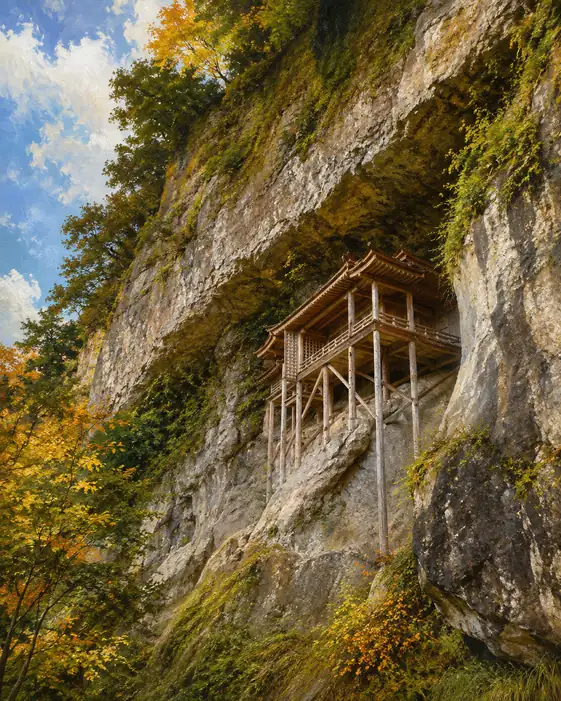 Perch between Earth and Sky
Similar Artworks
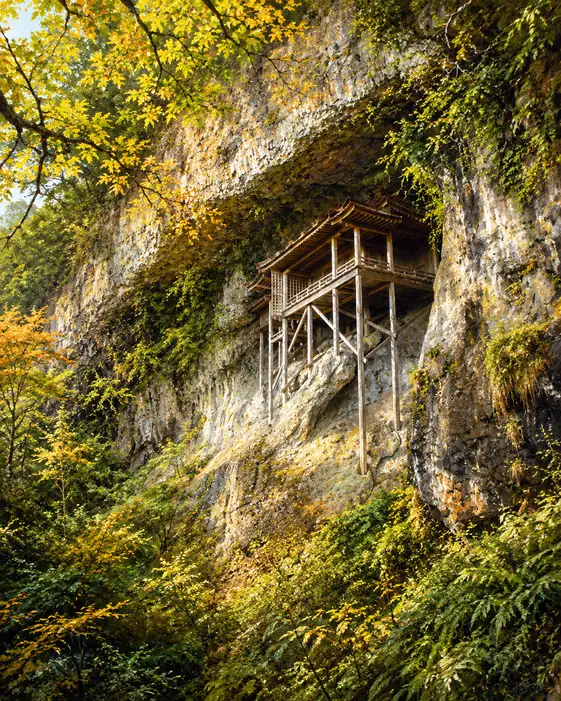 Golden Embrace of the Cliffside Sanctuary
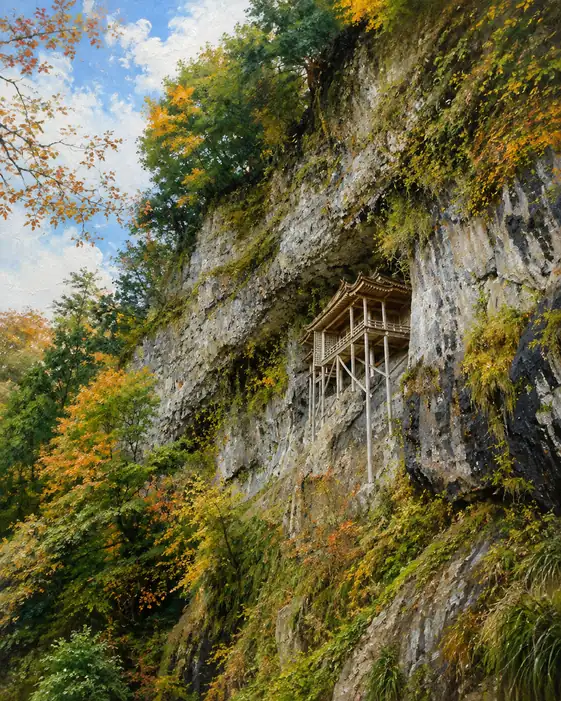 Haven upon the Precipice
 Suspended Order in the Mountain Crest
 Discovery at the Edge of the Sky
 The Craft of Sustained Balance
 Morning Radiance on the Hermitage
 Shrines within the Ancient Canopy
 Golden Realm of Suspended Sanctuaries
 Tiered Havens Along the Stone Wall
 Clinging beside the Tall Pillar