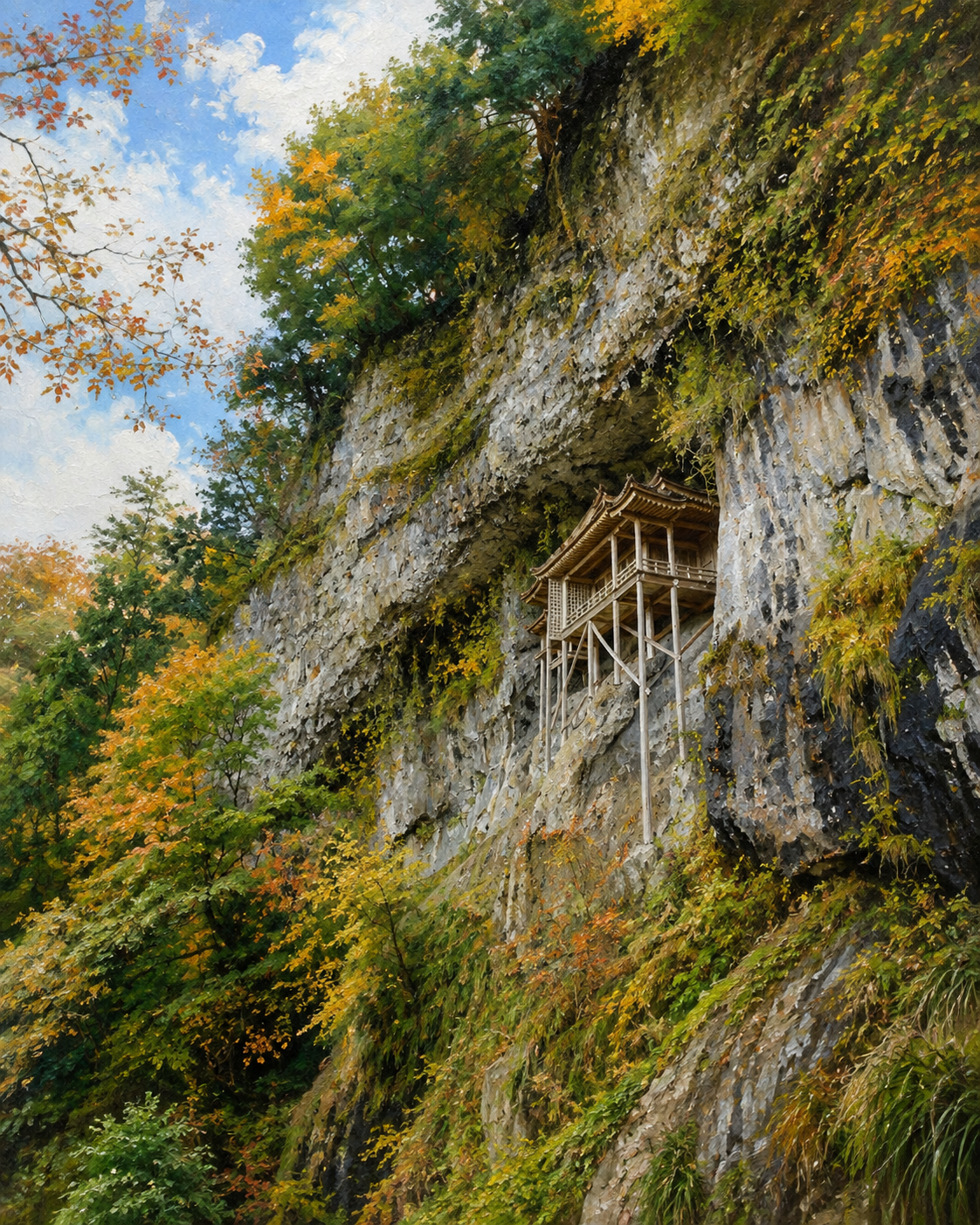
Haven upon the Precipice
Critique
Introduction This landscape depicts a traditional wooden hall clinging to a vast autumn cliff. Architecture appears both impossibly fragile and ingeniously adapted, creating a meditation on faith, risk, and habitation at the edge of stone. Description A towering gray rock wall occupies most of the frame, streaked with dark fissures, moss, vines, and yellow-orange foliage. Near the upper-right center, a small multi-level wooden pavilion projects from a recess and stands on long slender supports. Dense autumn forest fills the lower left and crowns the cliff. Pale blue sky and white clouds open along the upper-left edge. Analysis The cliff's steep diagonal and massive textured surface dominate the composition. Against it, the pavilion introduces precise horizontals, roof curves, lattices, and thin vertical posts. Warm wood is subdued within gray rock and green-gold vegetation, so discovery feels gradual. The upward viewpoint exaggerates height and vulnerability. Repeated trunks and supports create a structural rhyme between forest and building, while patches of foliage soften transitions between human construction and geology. Interpretation and Evaluation The hall embodies shelter achieved not by escaping danger but by negotiating with it. Its supports seem delicate compared with the cliff, yet their careful geometry demonstrates collective knowledge and persistence. The recess can suggest spiritual withdrawal, while balconies remain open to the surrounding world. Autumn introduces change within a structure intended to endure. Stone, forest, and architecture thus represent overlapping times rather than a simple nature-culture opposition. Conclusion The work conveys awe through scale and patient detail. The pavilion does not conquer the cliff; it survives by reading and joining its form. Human presence appears small, precarious, and nevertheless capable of meaningful dwelling.
Same Subcategory
 Little Guide of the Lantern Path
Similar Artworks
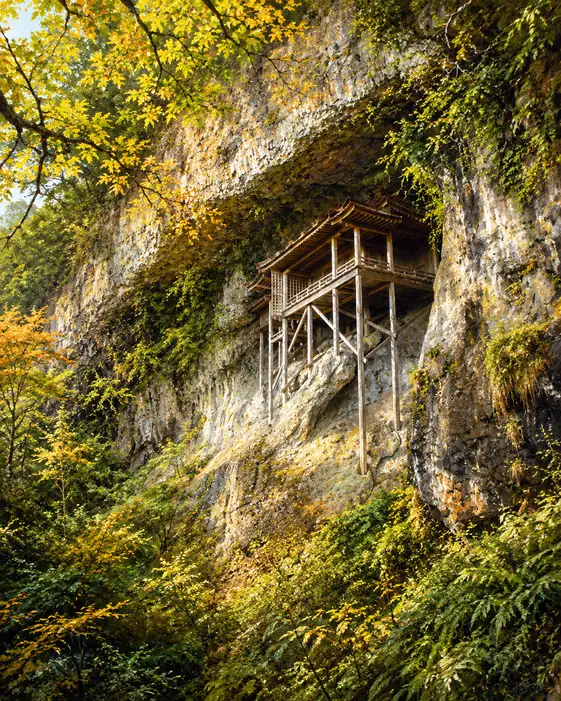 Golden Embrace of the Cliffside Sanctuary
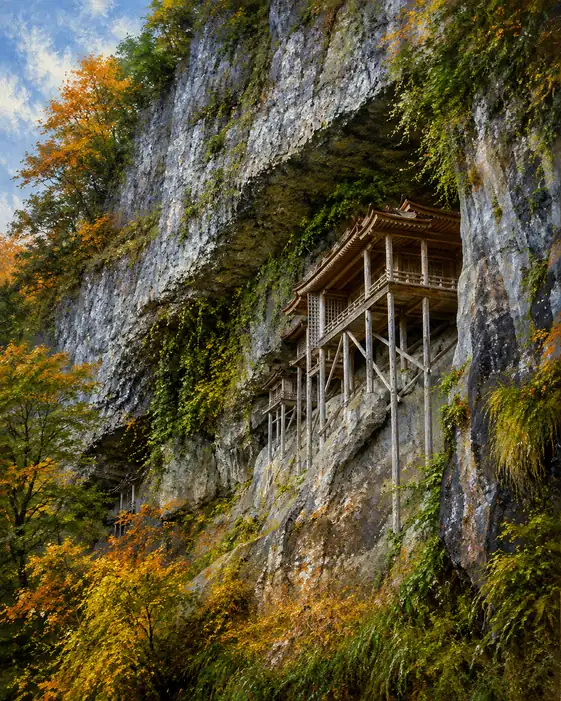 Tiered Havens Along the Stone Wall
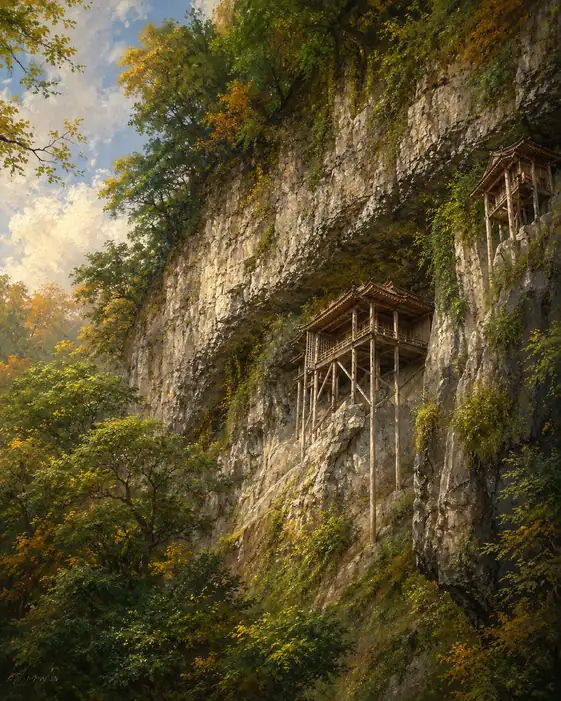 Golden Realm of Suspended Sanctuaries
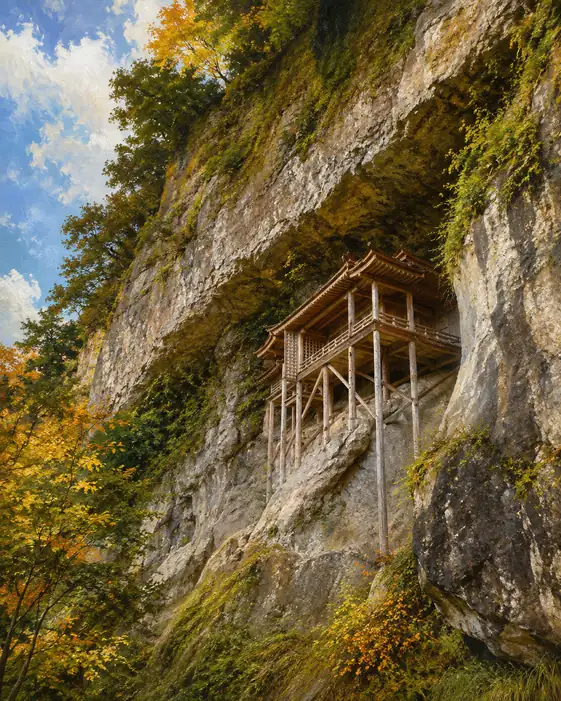 Perch between Earth and Sky
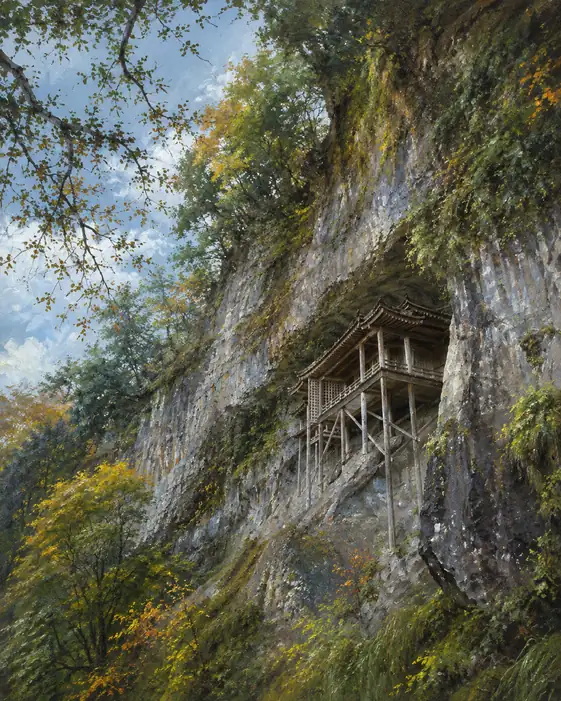 Discovery at the Edge of the Sky
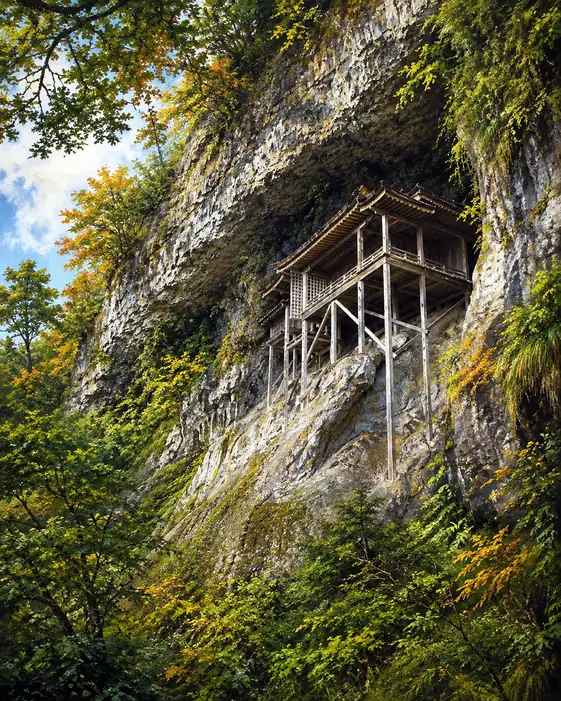 Suspended Order in the Mountain Crest
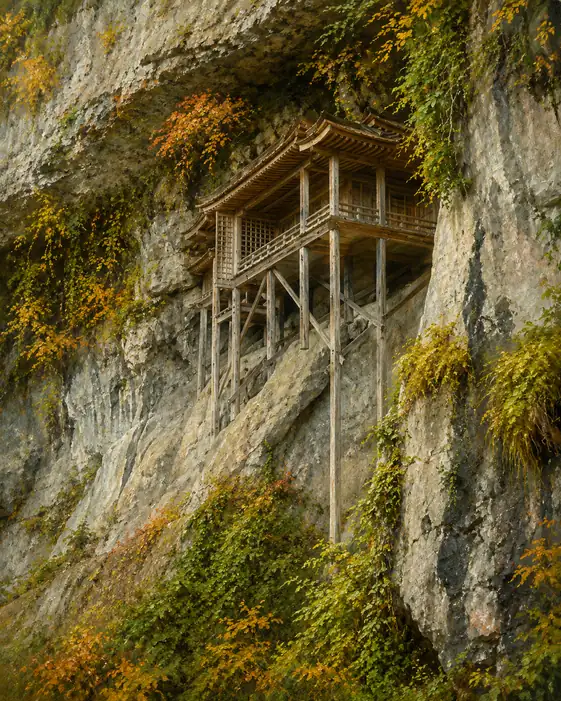 Pillars of Faith in the Stone Shadow
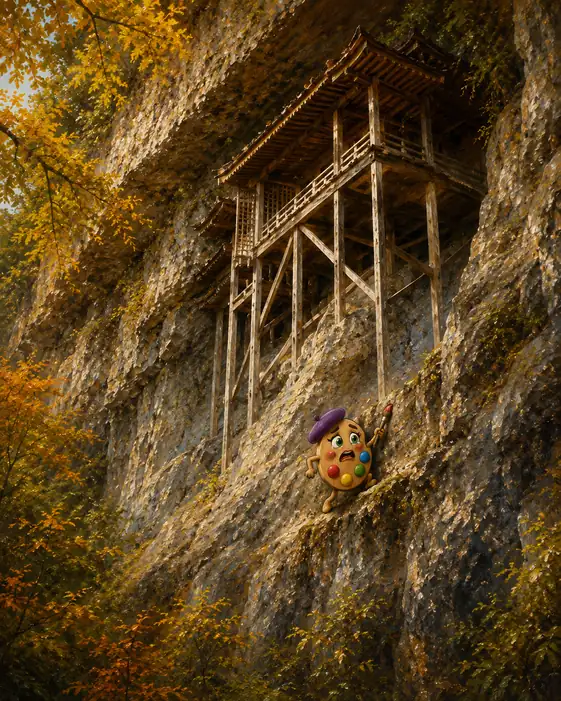 Perilous Ascent with a Paintbrush
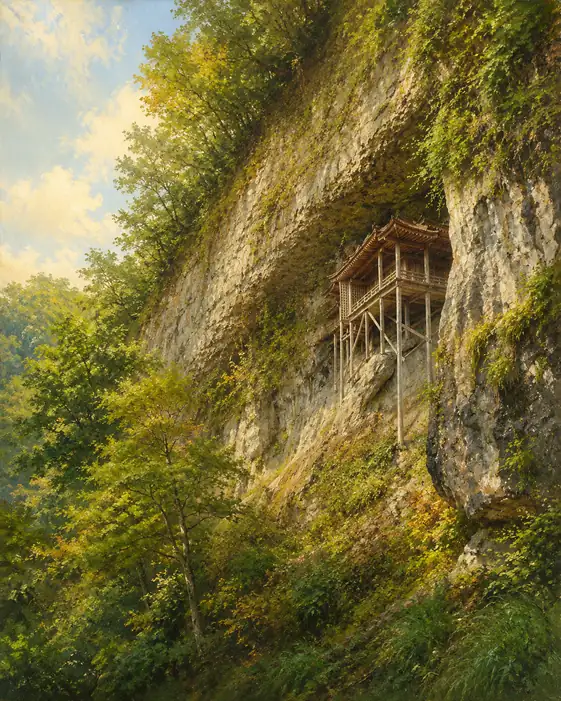 Morning Radiance on the Hermitage
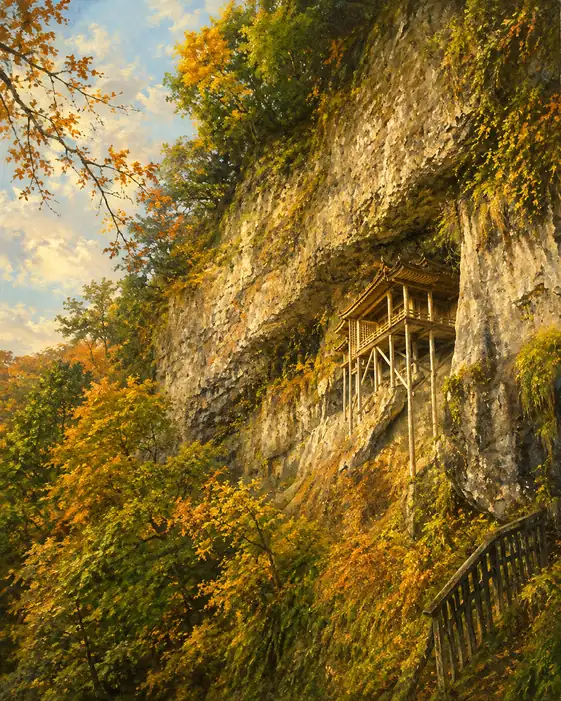 Stairway Clothed in Autumn Gold