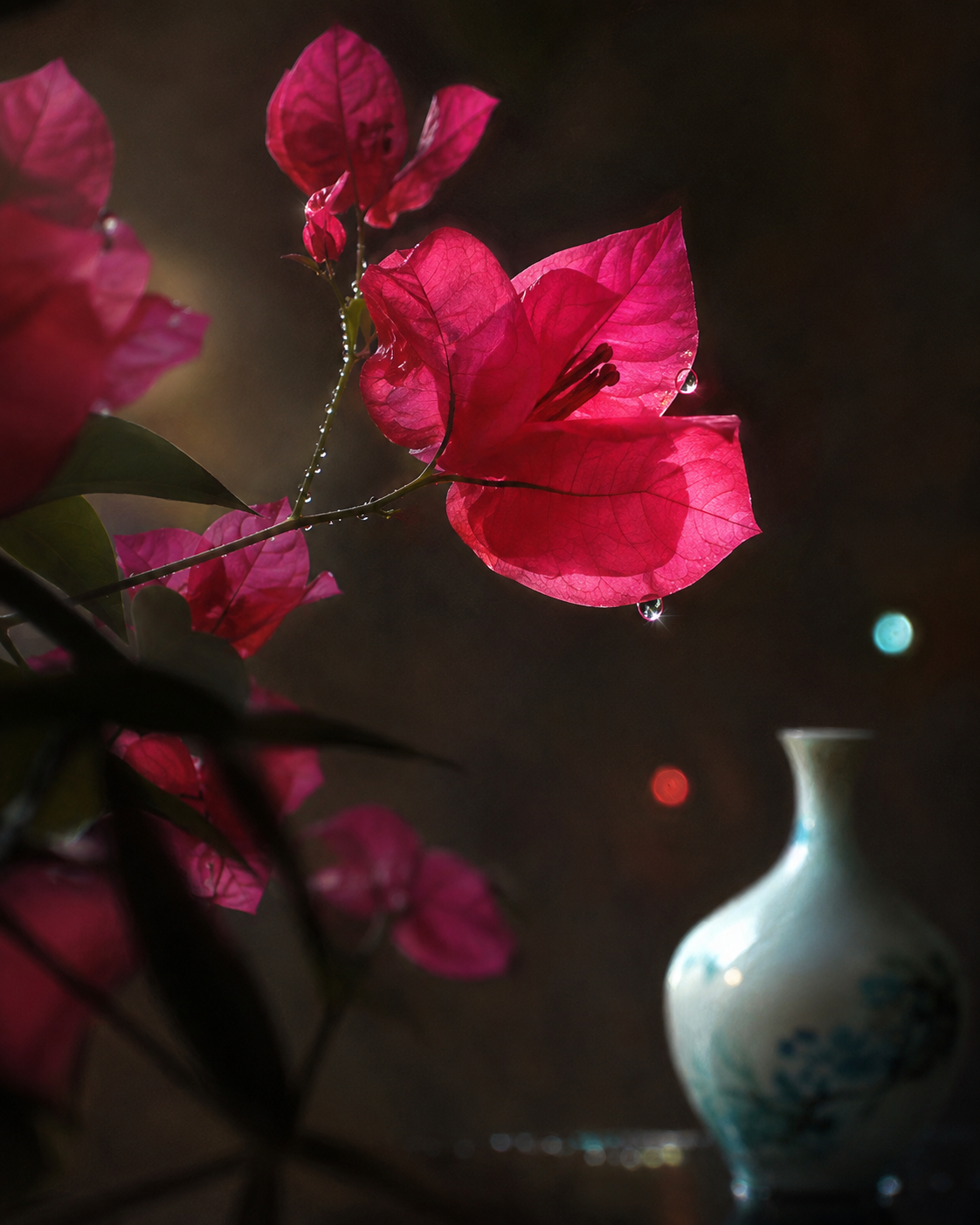
Nocturne of Crimson and Porcelain
Critique
Introduction This painting sets luminous magenta bougainvillea beside a pale blue-and-white ceramic vase. Organic branching and crafted curvature create a quiet nocturnal dialogue between living display and durable ornament. Description A sharply backlit bougainvillea cluster occupies the upper center, its translucent bracts revealing dark veins, stamens, and droplets. More leaves and blossoms recede into shadow on the left. At lower right stands a softly focused bulbous vase with a narrow neck, white glaze, and blue botanical decoration. Red, cyan, and pale gold circular lights float in the nearly black background. Analysis The flower's angular, open bracts contrast with the vase's smooth closed silhouette. A long diagonal stem crosses toward the vessel, while its upright neck provides a stable counterline. Magenta and cyan-blue intensify each other, with dark green and brown controlling saturation. Focus grants the bloom immediacy and turns the vase into an atmospheric form. Droplets along the bracts repeat the background lights and small glazed highlights, distributing brightness across the darkness. Interpretation and Evaluation The vase bears painted plant imagery, so a crafted representation of nature stands beside living growth. It promises preservation and order, while the branch remains irregular and temporary. Yet the vase is empty or at least not visibly holding the bougainvillea, preserving distance between image, container, and life. The reaching stem suggests possible contact that never resolves. This restraint keeps the relationship contemplative rather than merely decorative. Conclusion The work finds elegance in separation. Flower and vessel exchange color, curve, and reflected light without collapsing into one another. Their dark interval becomes a space where living presence and cultural memory quietly acknowledge each other.
Same Subcategory
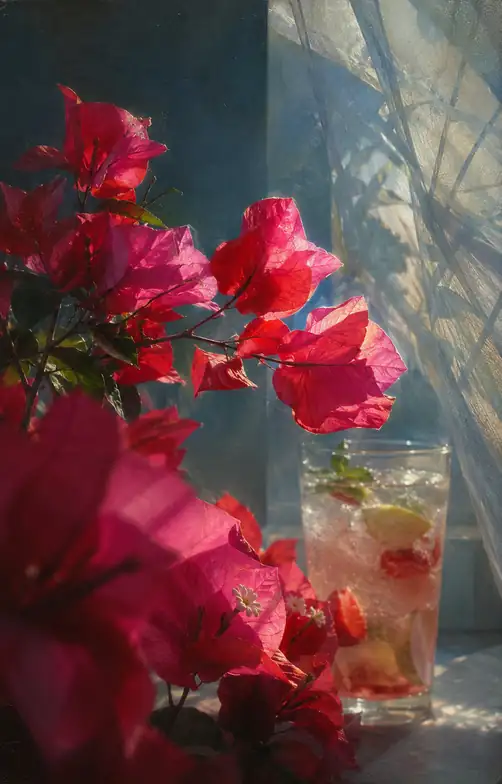 Effervescence in the Window Light
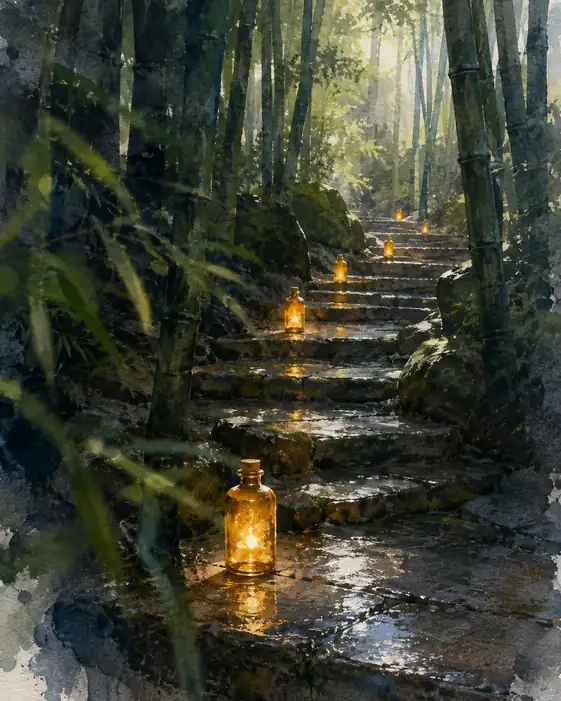 Guiding Lights in the Bamboo Mist
Similar Artworks
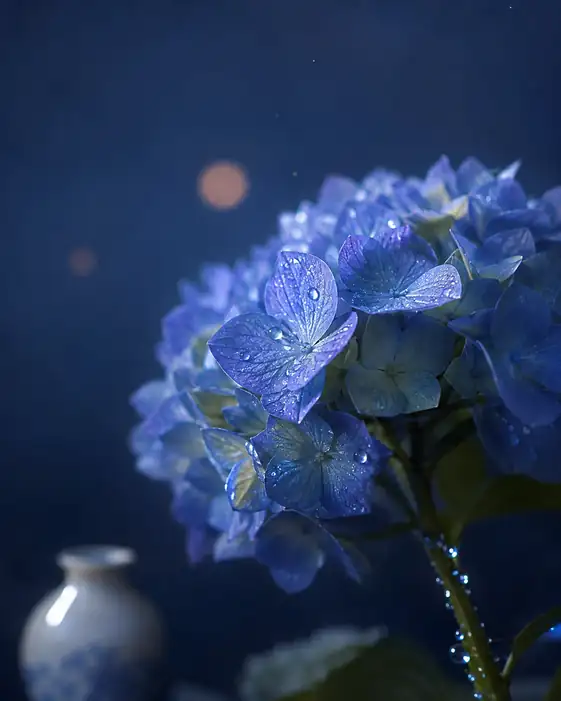 Moonlit Solitude with White Porcelain
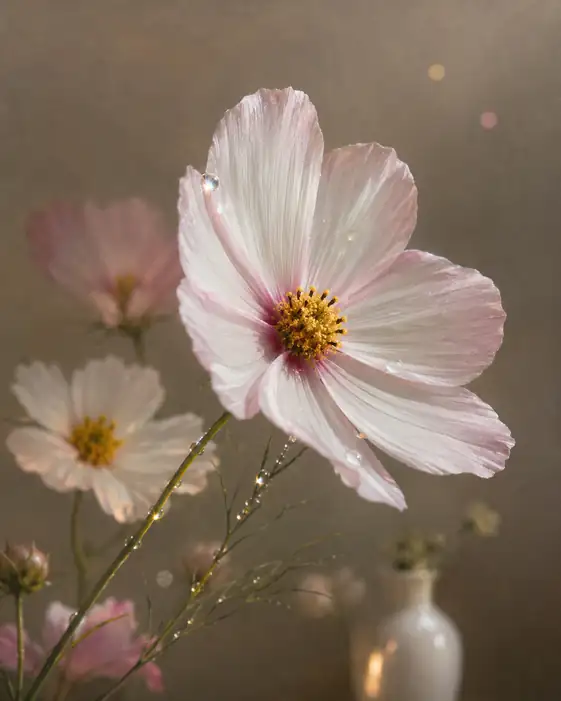 Sparkling Dew on Gentle Cosmos
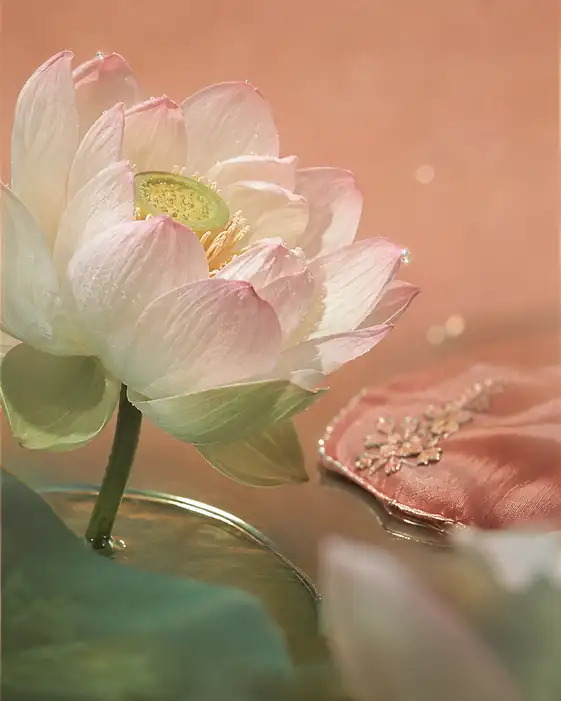 Lotus Bloom and Embroidered Silk
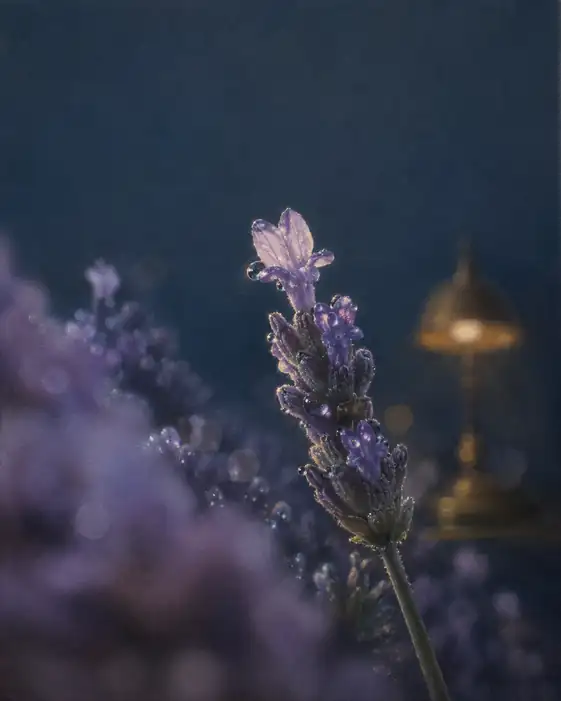 Scent of Lavender in the Brass Light
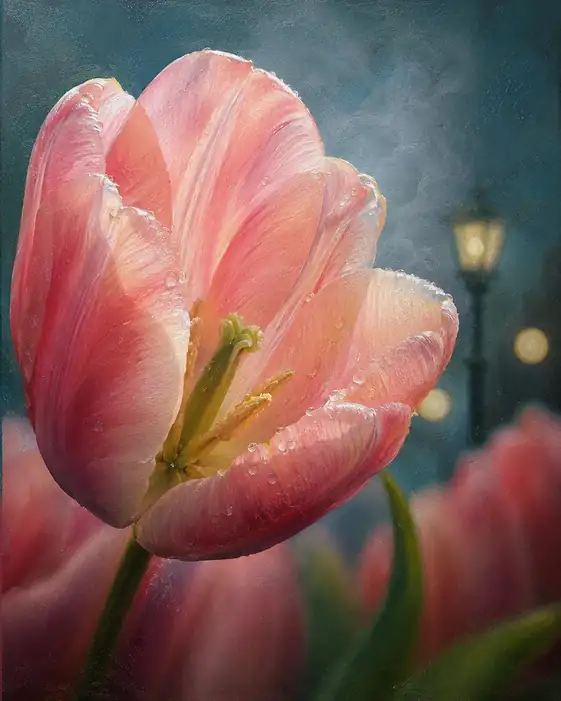 Pink Tulip Beneath the Night Lantern
 Whispering Dew and Porcelain
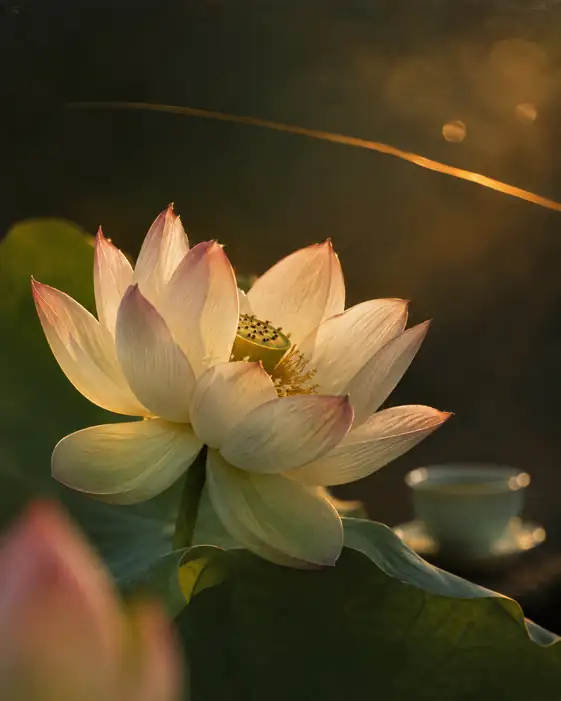 Golden Dusk on Porcelain and Lotus
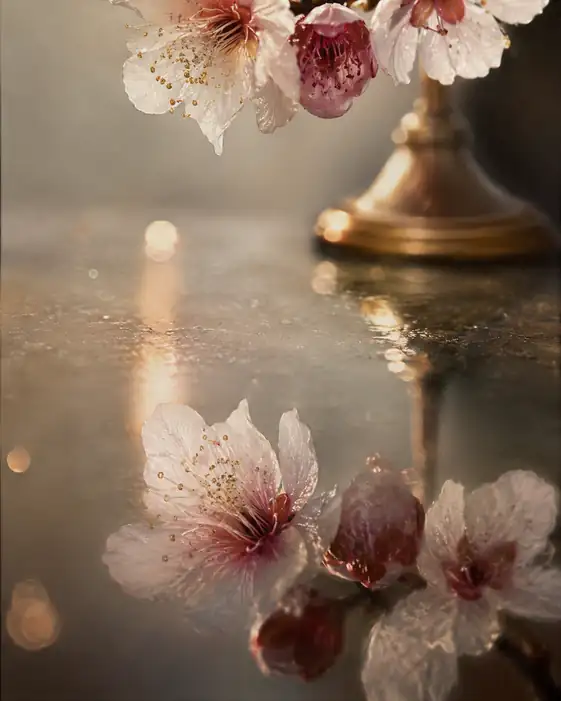 Plum Blossoms Reflected by Brass Lamp
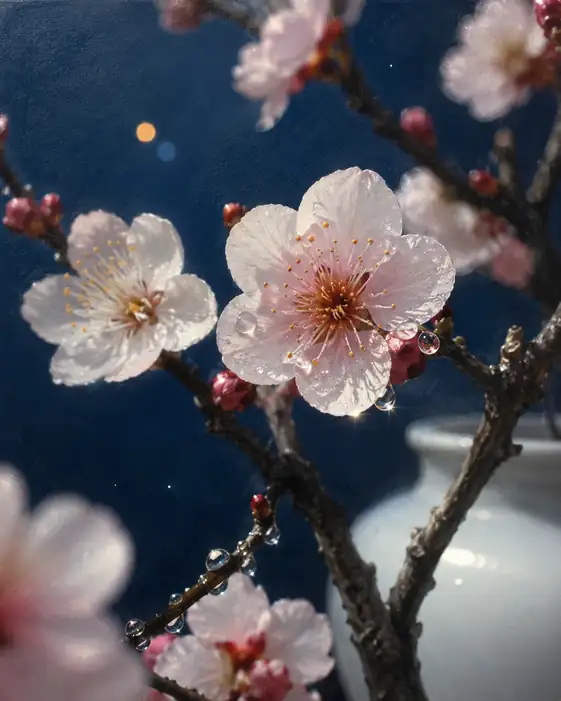 Dew-Kissed Plum Blossoms by White Porcelain
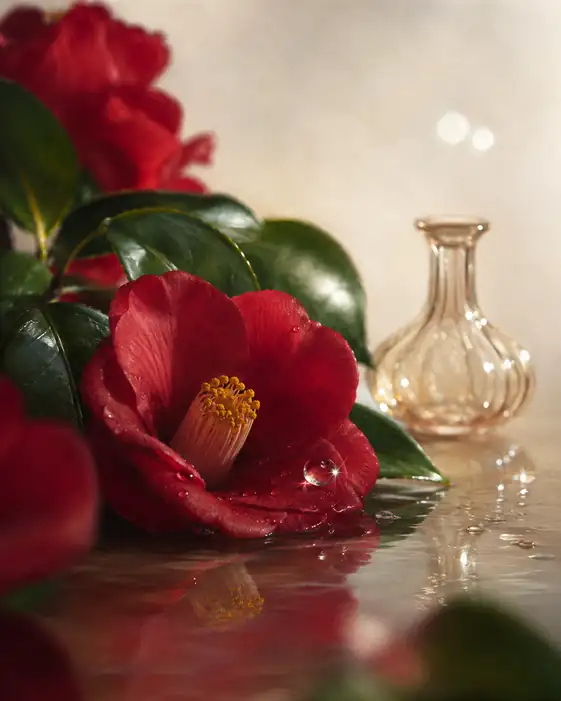 Dewdrop Camellia and Amber Flask