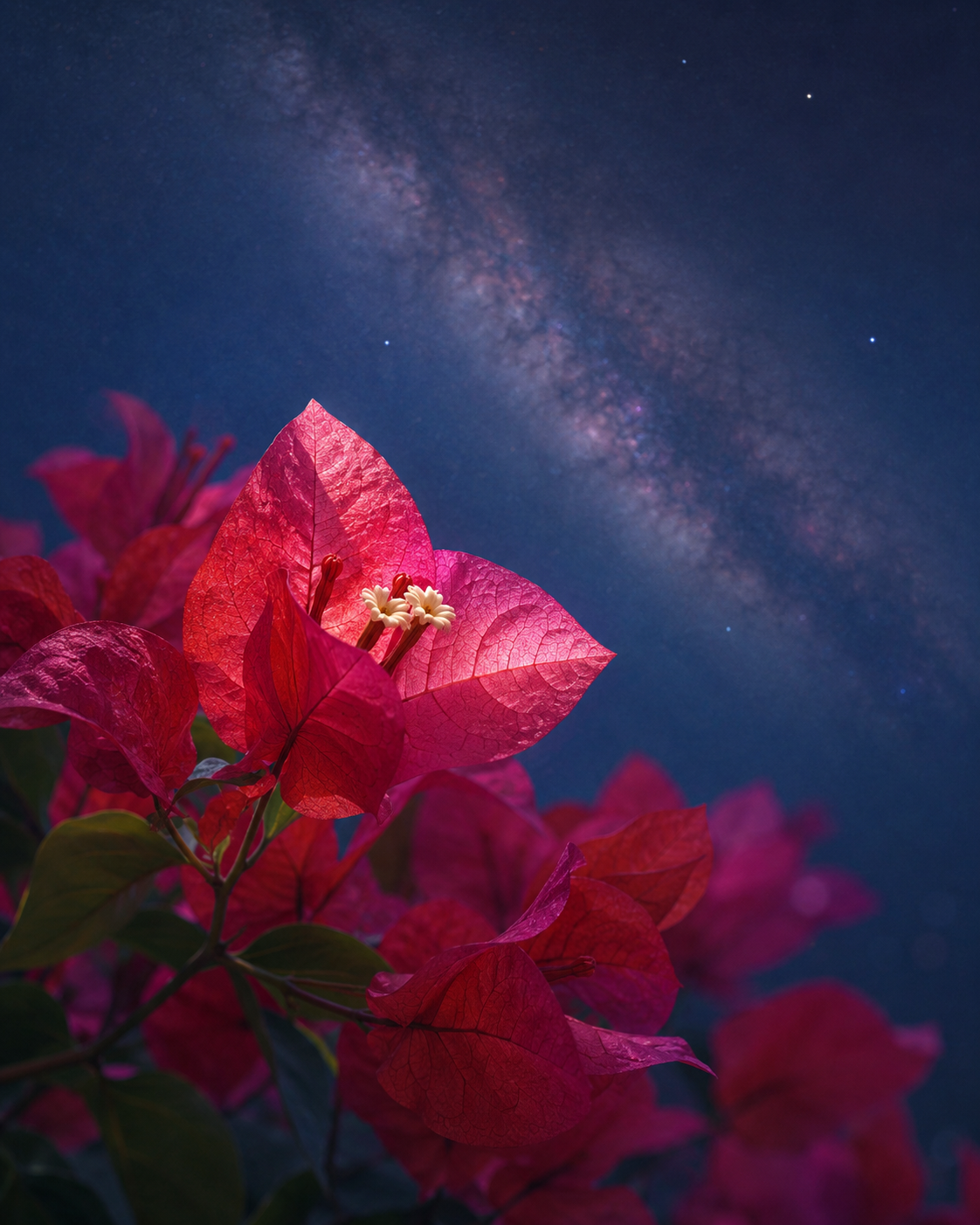
Crimson Bougainvillea beneath the Milky Way
Critique
Introduction This painting raises magenta bougainvillea beneath the Milky Way. The veined bracts and galactic band echo one another as networks of light, joining a close terrestrial bloom to an almost immeasurable celestial field. Description A sharply focused cluster of red-magenta bracts rises from the lower left, enclosing tiny cream-white flowers and dark stamens. Green leaves and softer crimson clusters spread across the bottom and sides. Above, a deep blue sky holds scattered stars and a broad diagonal band of the Milky Way, tinted violet and rose. The main bracts glow from behind, revealing intricate veins. Analysis The flower cluster forms a bright triangular mass beneath the galaxy's sweeping diagonal. Repeated branching appears in bract veins, stems, and the mottled stellar band. Magenta crosses the boundary between earth and sky, appearing both in flowers and galactic color. Crisp near detail transitions into soft distant texture without losing unity. Dark leaves provide a grounded base, while open blue space around the main cluster prevents saturation from becoming oppressive. Interpretation and Evaluation The tiny true flowers at the center of large bracts invert ordinary ideas of scale and attention, much as distant stars appear small despite their magnitude. Both realms conceal complexity behind immediately visible light. The upward-facing cluster seems to offer its color to the galaxy, yet the painting avoids literal equivalence: fragile plant and ancient cosmos retain distinct durations. Their visual rhyme instead suggests continuity of pattern across scale. Conclusion The work makes cosmic wonder intimate through repetition and color. It neither reduces the galaxy to decoration nor turns the flower into a symbol. Vein and star field illuminate mutually, allowing local life to participate in vastness without losing specificity.
Same Subcategory
 Crimson Bougainvillea Facing the Alpine Peak
 Rain Mirror, Bougainvillea, and the Blue Butterfly
Similar Artworks
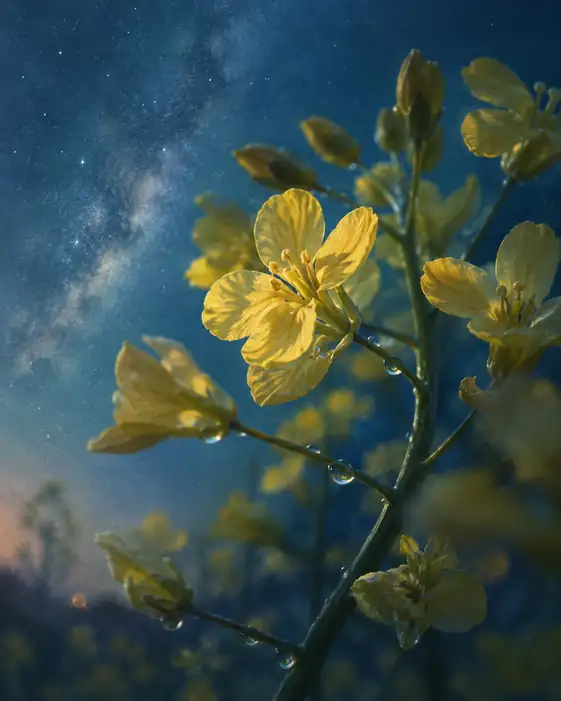 Canola Blossom Beneath Starry Skies
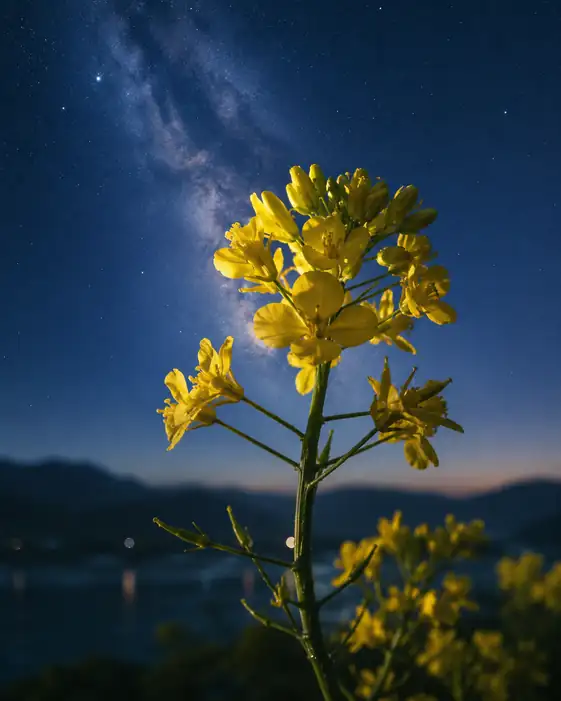 Milky Way and Golden Mustard Blossom
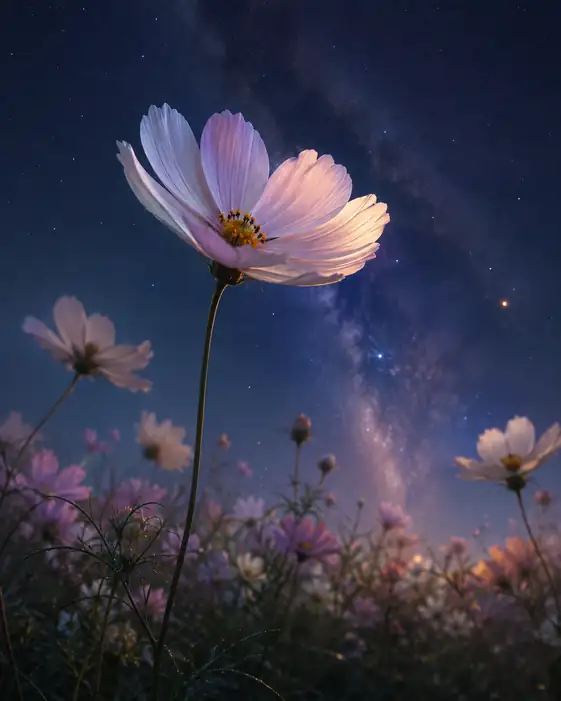 Cosmos Beneath the Starlit Sky
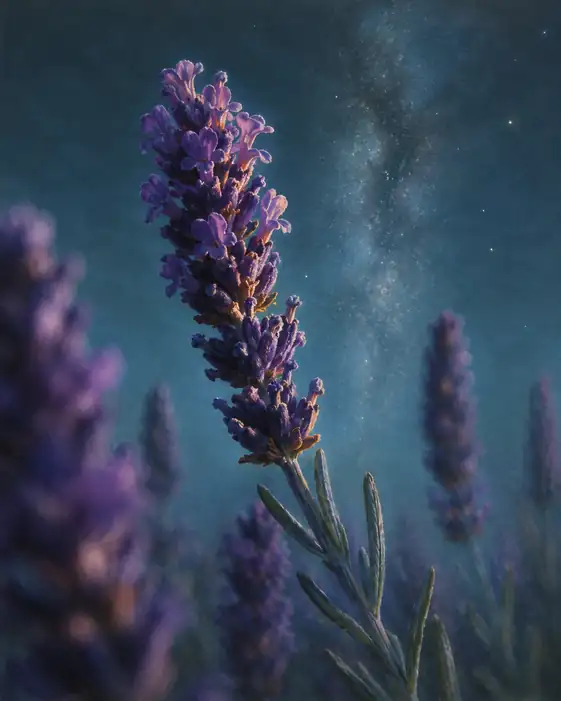 Celestial Melody in Violet
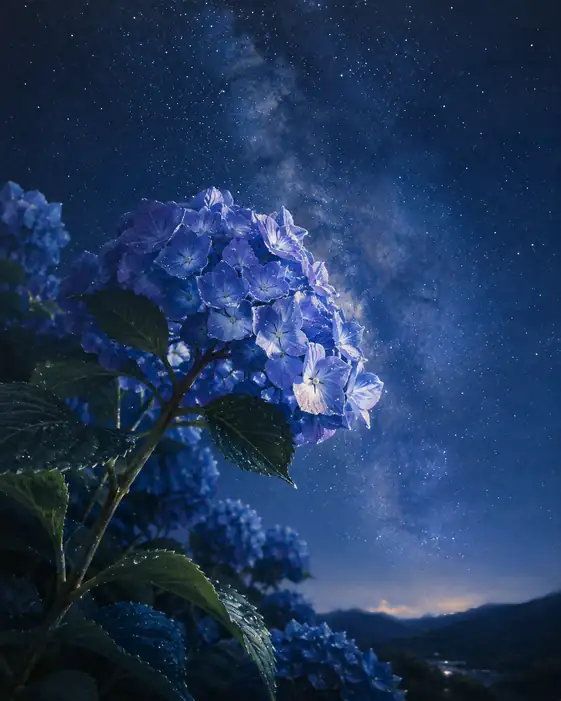 Nocturne of Stars and Azure Petals
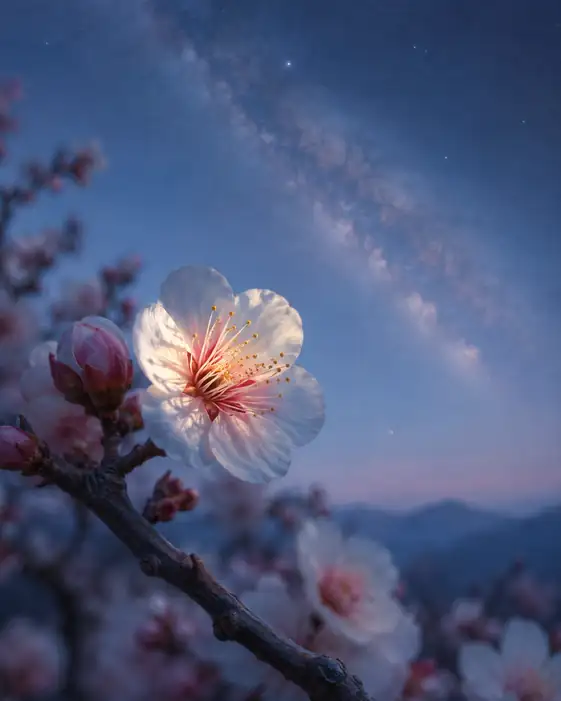 White Plum Beneath the Milky Way
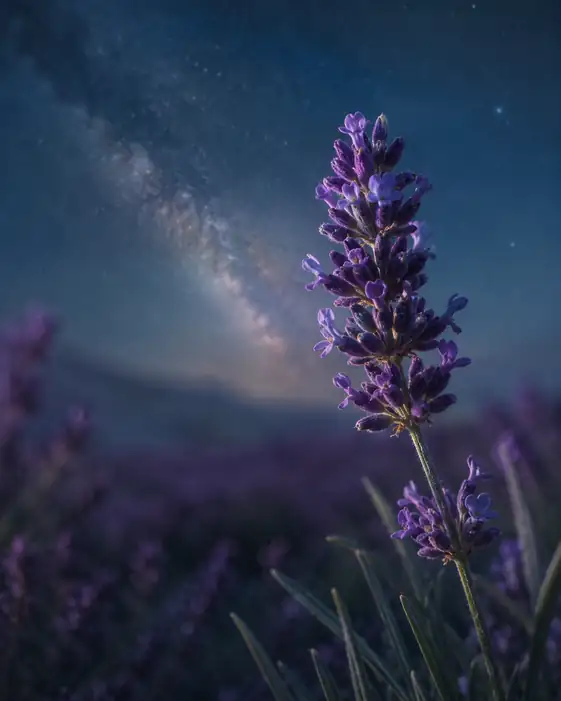 Lavender Beneath the Galaxy
 Water Lily Beneath the Milky Way
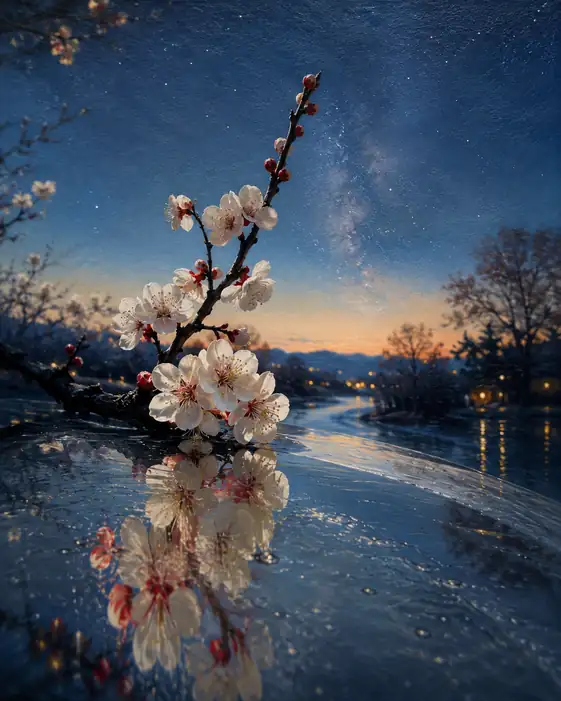 Plum Branch Under the Milky Way
 Blue Nemophila and the Lonely Boat