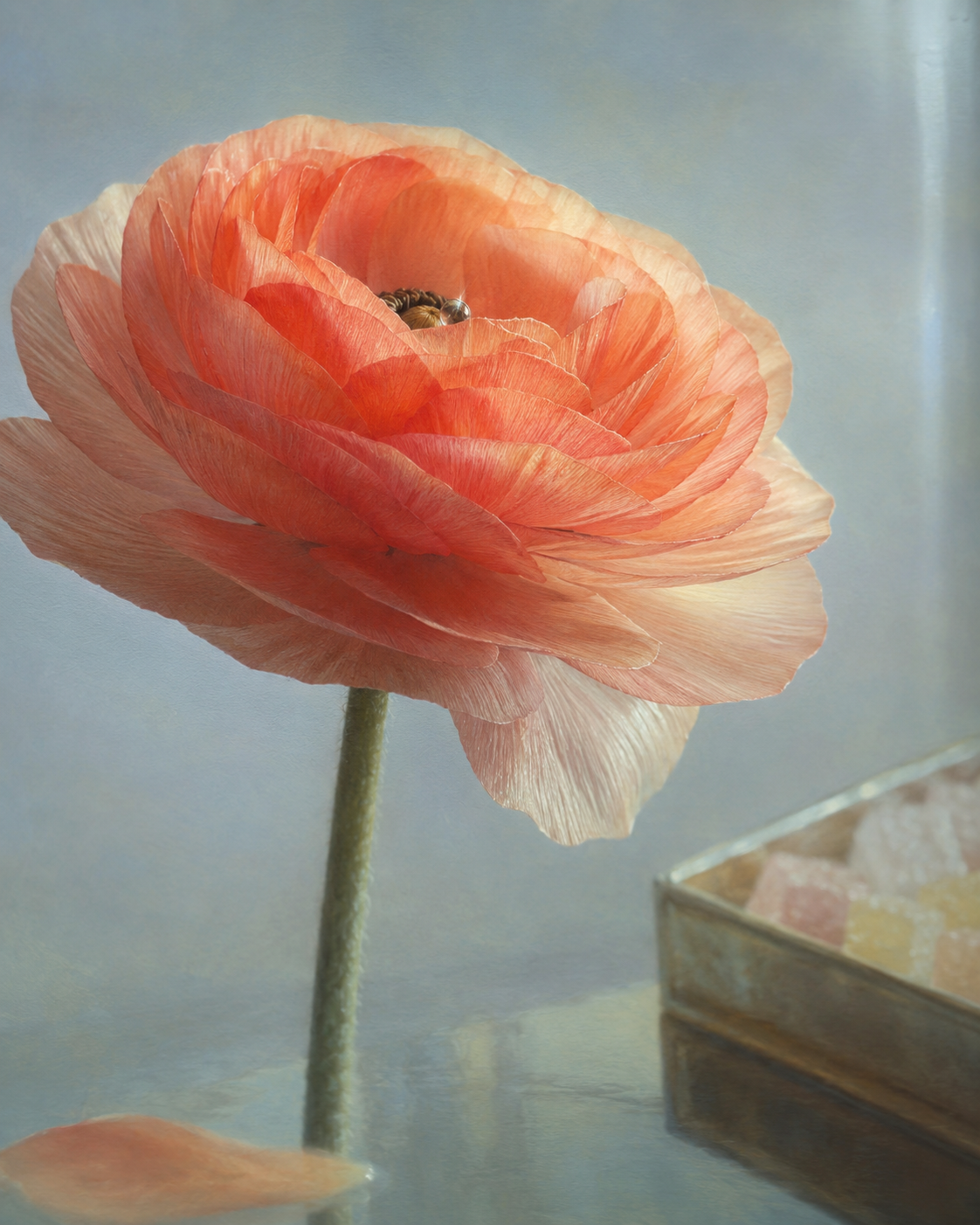
Coral Petals and the Box of Sweets
Critique
Introduction This painting magnifies a ranunculus sheltering a bee. Beside it, a wooden box of pale fragments introduces geometry, making pollination and collection parallel forms of gathering. Description A large peach-coral flower fills the upper-left and center, supported by a hairy green stem. Thin petals overlap in translucent layers around a partially hidden bee; a round droplet shines near the insect. On the lower-right tabletop, a weathered rectangular box holds irregular pink, cream, and yellow pieces. A fallen petal rests at the base of the stem against a pale blue-gray background. Analysis The flower's expanding circular mass contrasts with the box's cropped right angles. Fine vertical veins and luminous rims articulate each petal, while the box and its contents remain softer and denser. Coral repeats in bloom, fallen petal, and pale fragments, linking living form to collected material. The straight stem anchors the flower and meets a faint reflection below. Ample cool background isolates the warm subject and keeps the close view from becoming visually congested. Interpretation and Evaluation The bee transforms the bloom from a static display into a site of exchange. It gathers what the living flower offers, while the nearby box appears to store objects already detached and sorted. The comparison invites reflection on natural collection and human preservation. The fallen petal marks inevitable loss, but the insect's activity signals continuation through pollination. The droplet beside it becomes a tiny lens that intensifies attention to this concealed labor. Conclusion The work balances abundance with structure. Flower, bee, box, and fallen petal describe ways matter is held, carried, and released. Its tenderness comes from revealing an active world within what first appears to be a serene floral portrait.
Same Subcategory
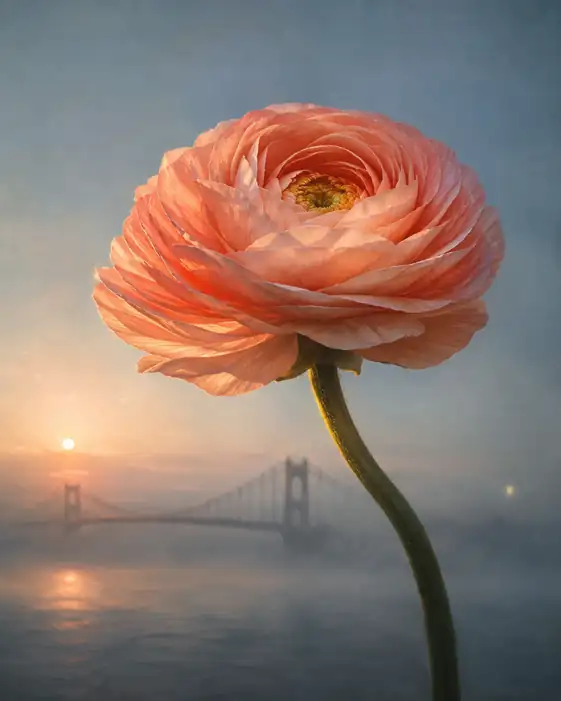 Giant Ranunculus above the Misty Suspension Bridge
Similar Artworks
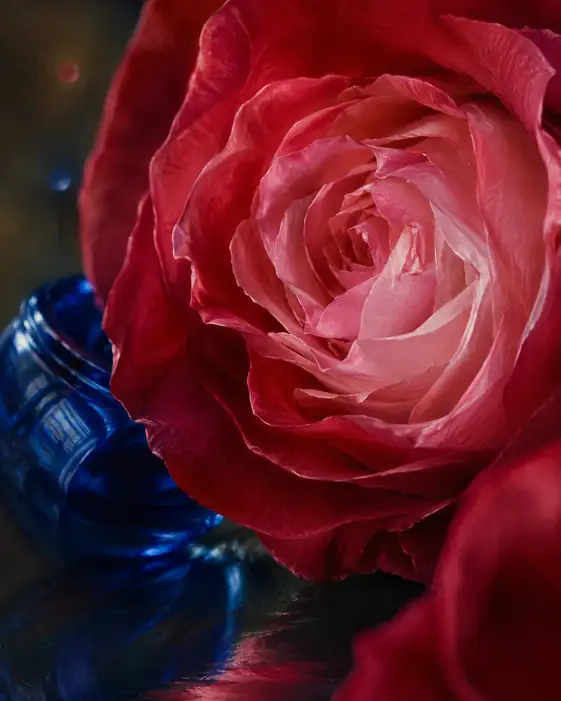 Velvet Petals and the Lapis Flacon
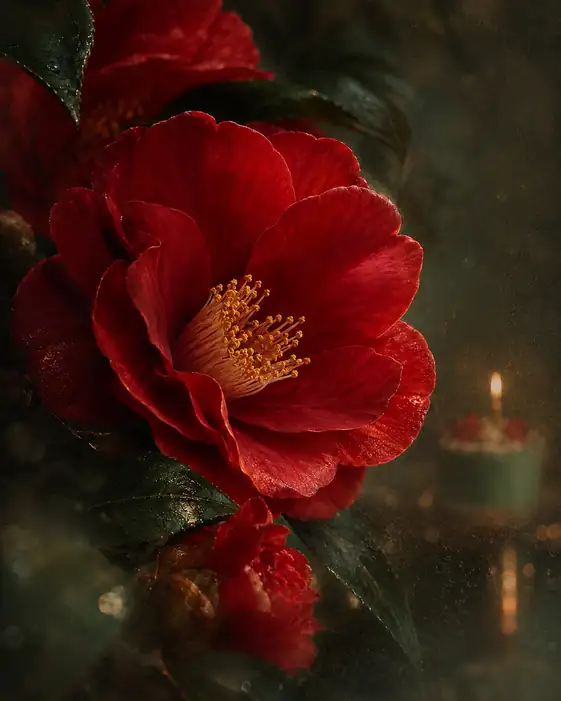 Camellia by Candlelight
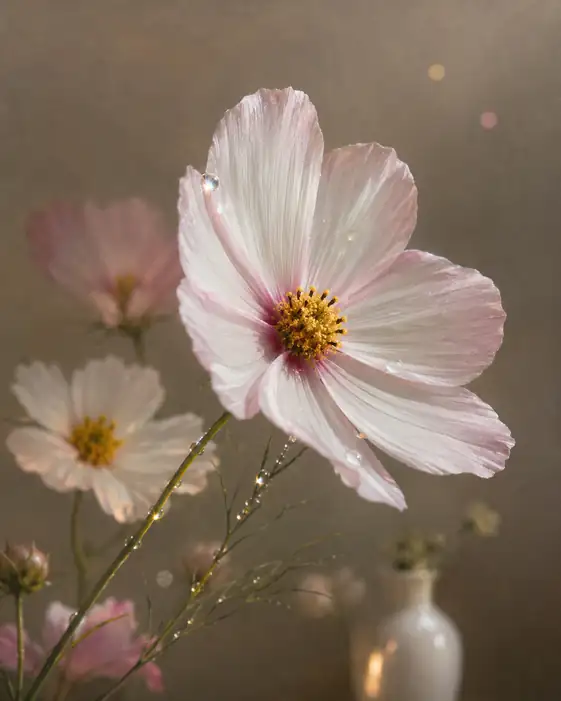 Sparkling Dew on Gentle Cosmos
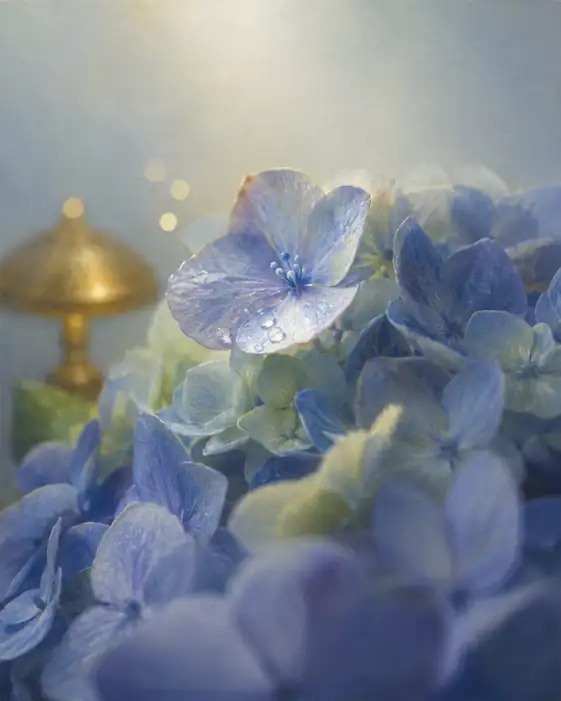 Golden Resonance in Azure Petals
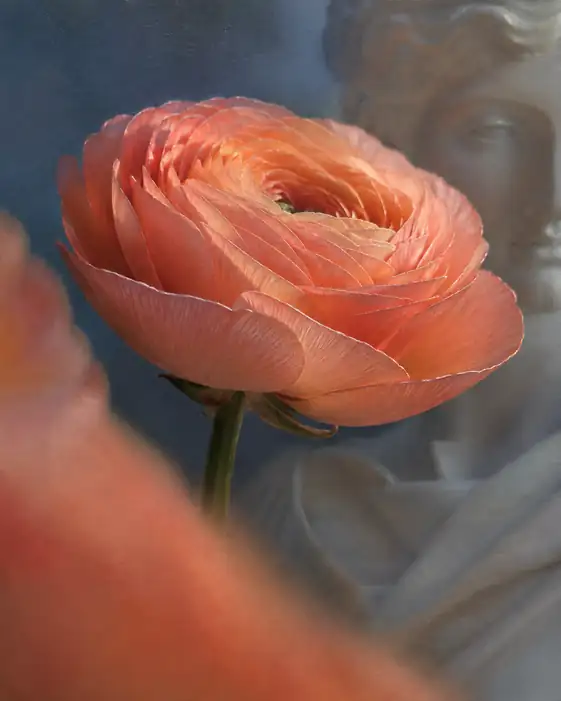 Coral Ranunculus and the Antique Bust
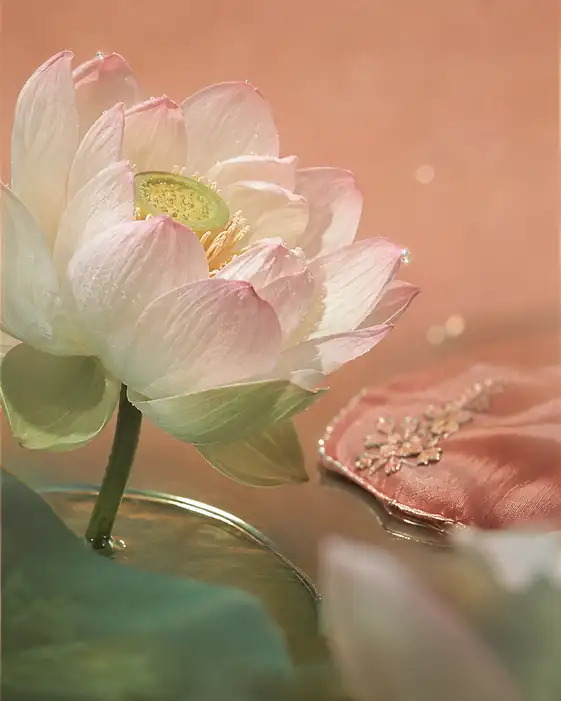 Lotus Bloom and Embroidered Silk
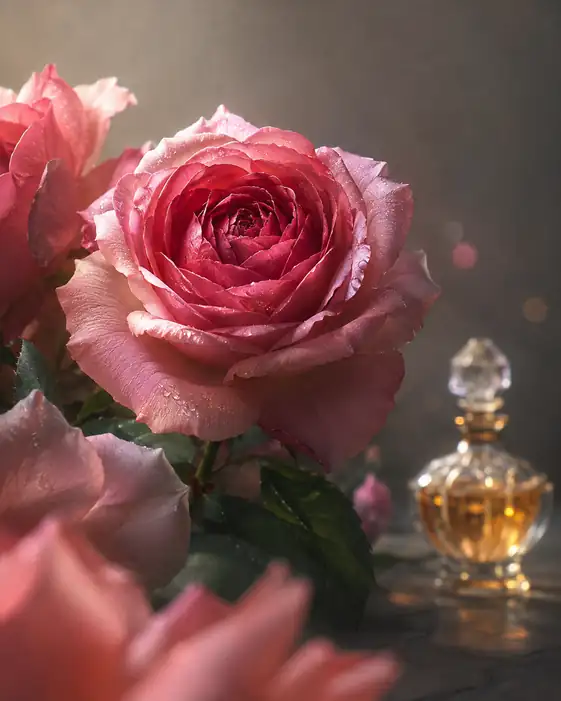 Dew-Kissed Blossom and Crystal Scent
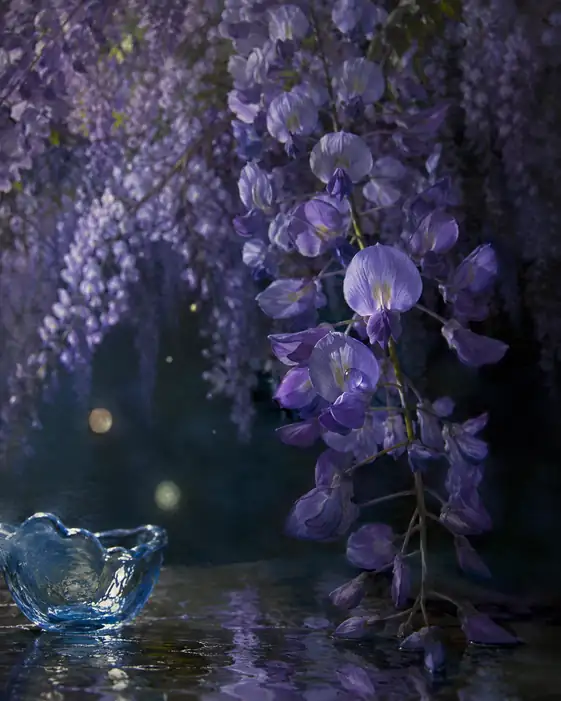 Sapphire Glass and Falling Violet Petals
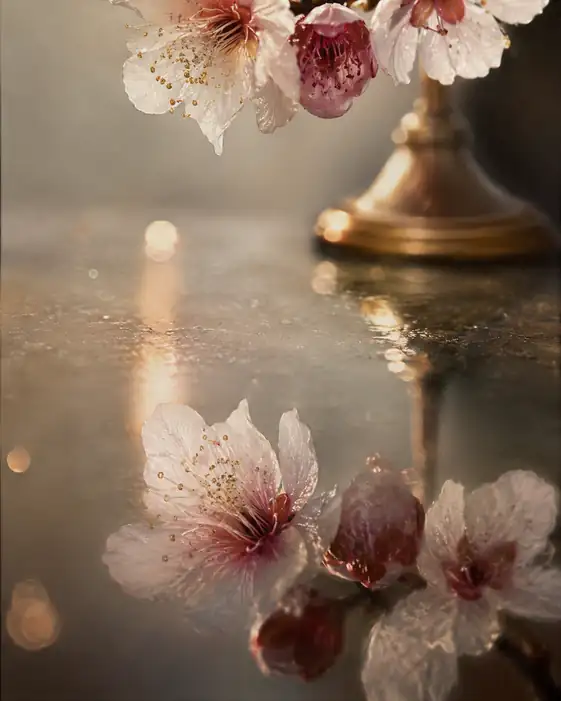 Plum Blossoms Reflected by Brass Lamp
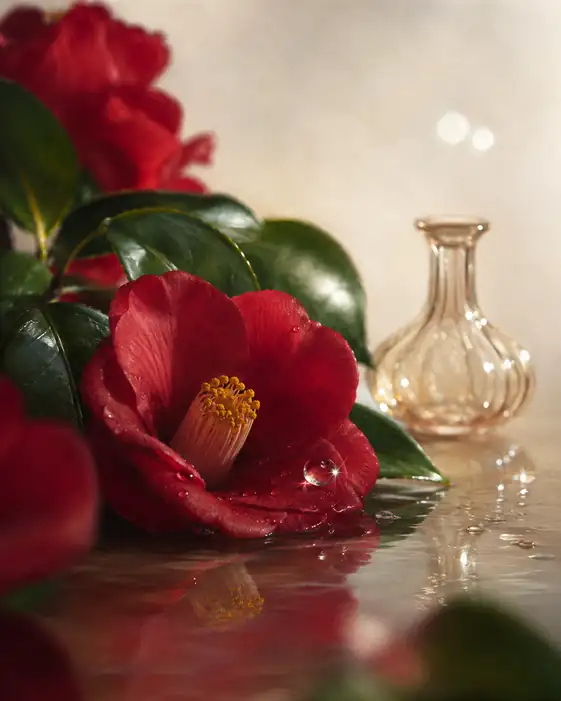 Dewdrop Camellia and Amber Flask