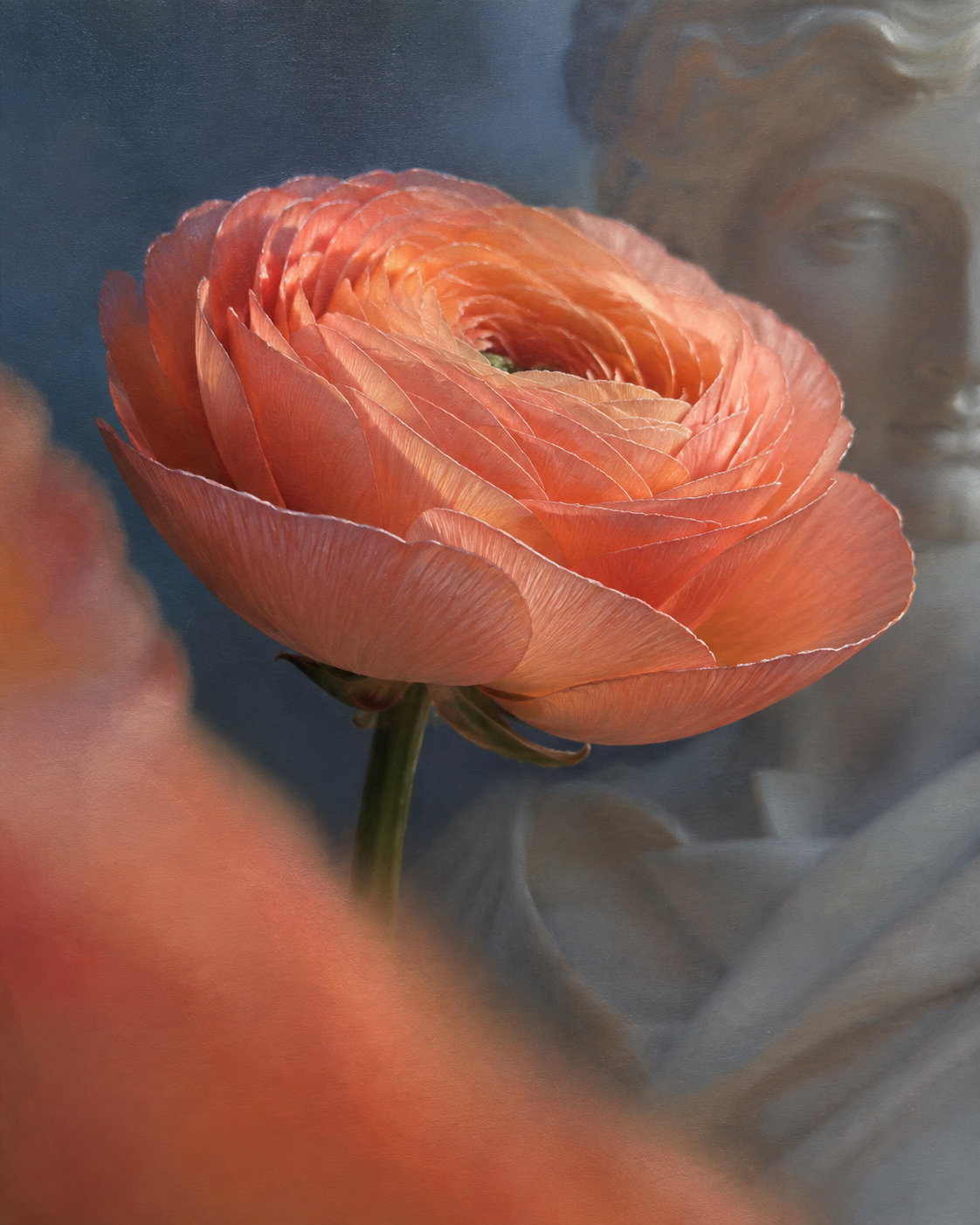
Coral Ranunculus and the Antique Bust
Critique
Introduction This painting places a coral ranunculus before a sculpted face. Living bloom and fixed image create a dialogue between renewal, carved memory, and beauty. Description A large peach-coral ranunculus fills the center, supported by a slender green stem. Numerous thin petals spiral tightly inward, with pale edges catching light. A blurred orange bloom covers the lower-left foreground. Behind, a gray-brown stone or plaster relief shows part of a face, including one eye, nose, and wavy hair. Cool blue-gray shadow separates flower from sculpture. Analysis The bloom's concentric layers create a circular, inward-moving rhythm, while the relief offers partial vertical anatomy and broad solid planes. Warm coral advances strongly against cool gray-blue. Fine parallel veins in petals contrast with the sculpture's worn, granular surface. Selective focus gives the flower immediacy and reduces the face to a watchful, ambiguous presence. The foreground blur repeats the flower's color at larger scale and frames the sharp bloom without adding another center. Interpretation and Evaluation The carved face preserves an idealized human likeness, but weather and cropping make it incomplete. The flower is physically complete at this moment, yet its perfection will be brief. Their pairing reverses common assumptions: stone endures but loses detail, while fragile life achieves intense fullness. The visible eye may seem to observe the bloom, turning the still life into a silent encounter. Because the figure remains unidentified, the work favors reflection on memory over specific mythology. Conclusion The painting balances sensuous color with historical quiet. Petal and stone each reveal time differently—one through unfolding, the other through erosion. Their close overlap suggests that beauty survives not by remaining unchanged, but by taking new forms of presence.
Same Subcategory
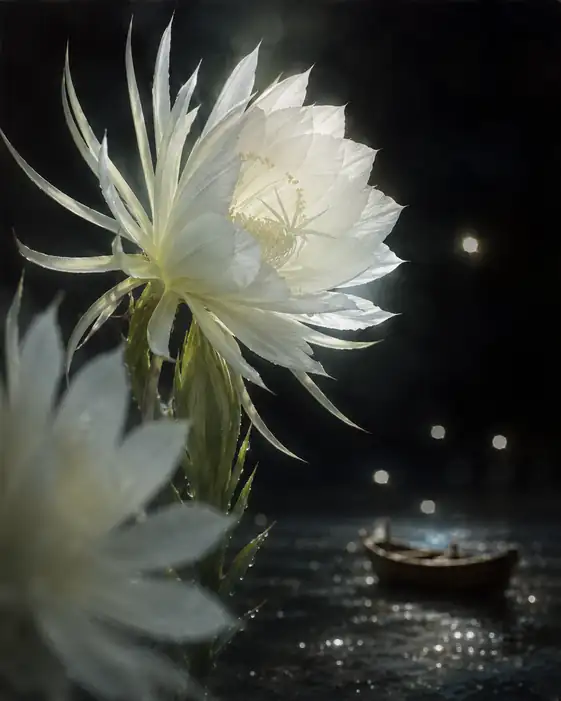 Luminous Cactus Blossom and the Drifting Skiff
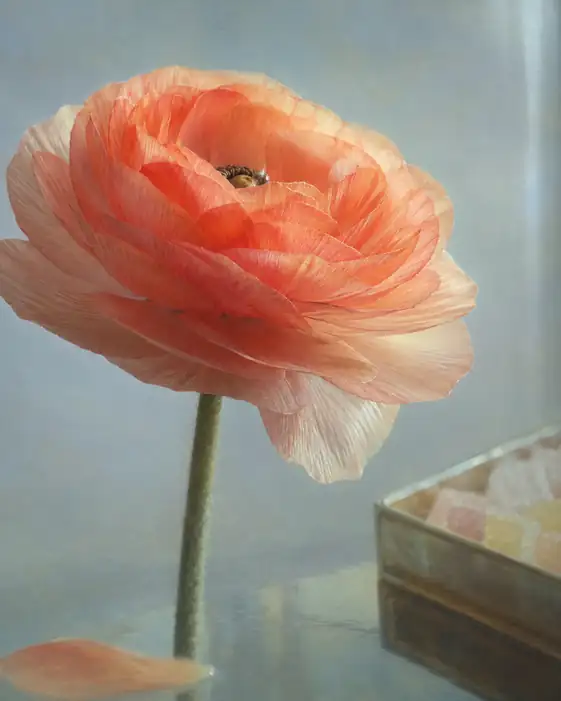 Coral Petals and the Box of Sweets
Similar Artworks
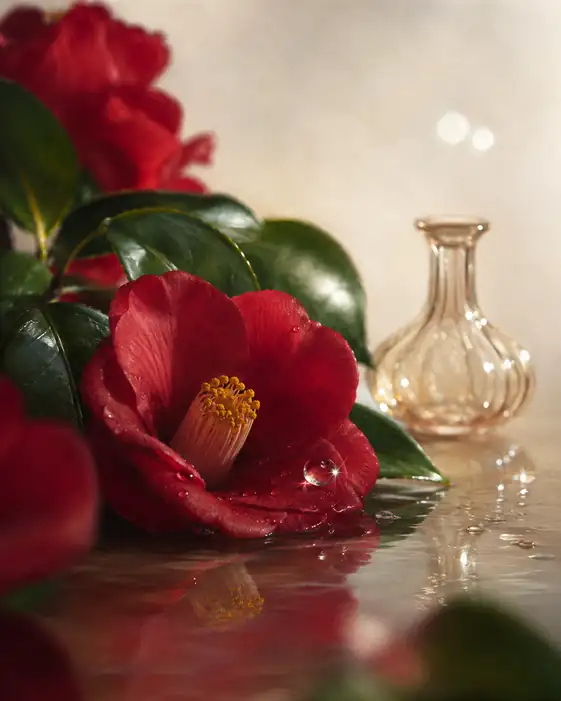 Dewdrop Camellia and Amber Flask
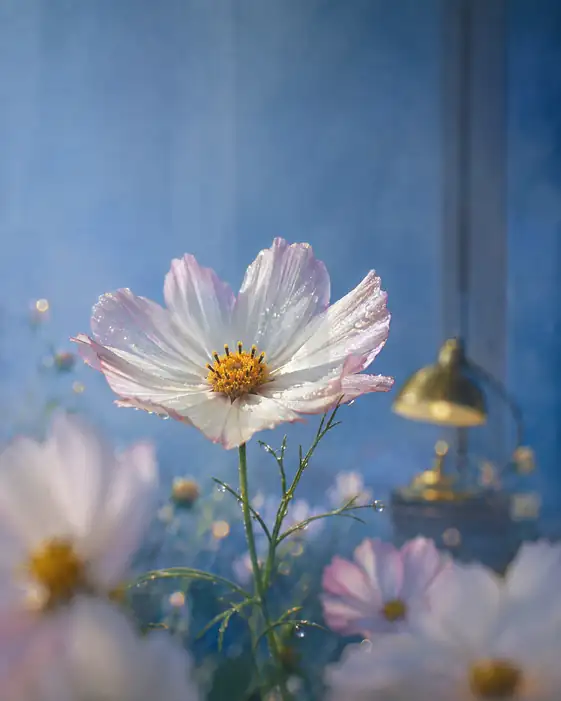 Pink Cosmos and Brass Desk Lamp
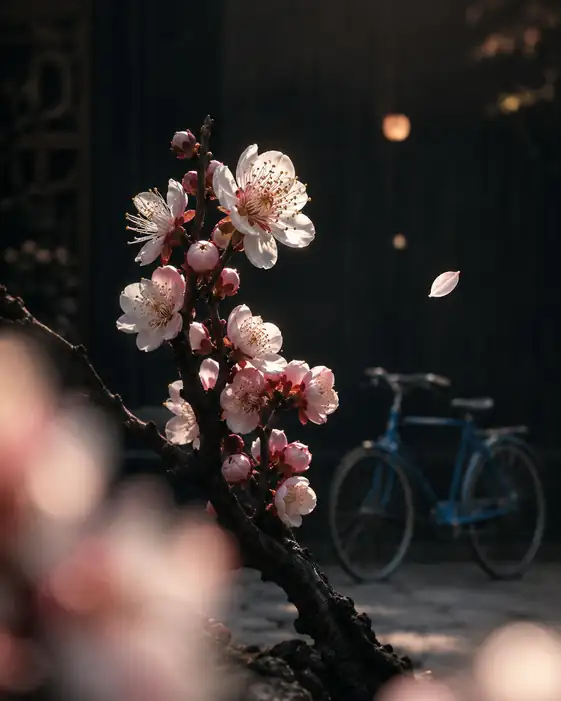 Evening Glow and Petal Whispers
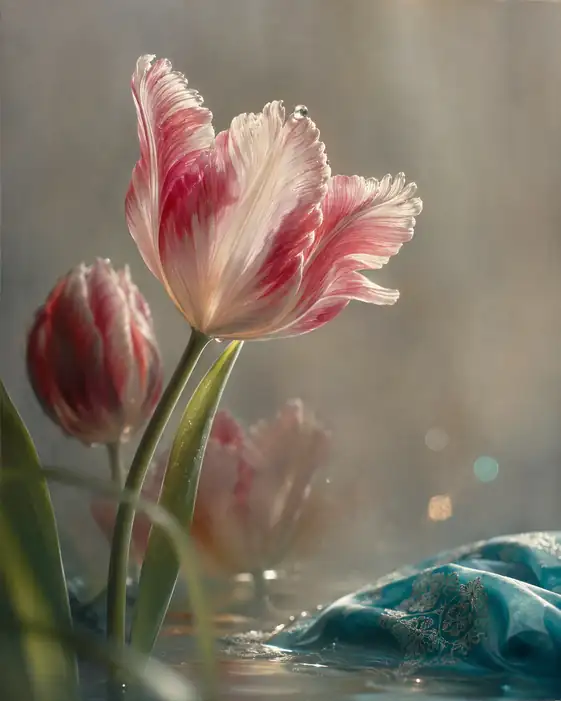 Fringed Tulip and Turquoise Silk
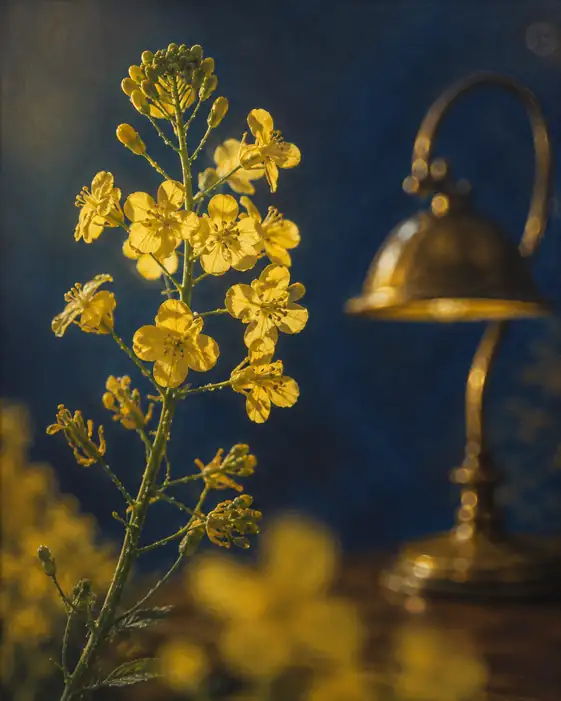 Brass Lamp and Spring Blossom
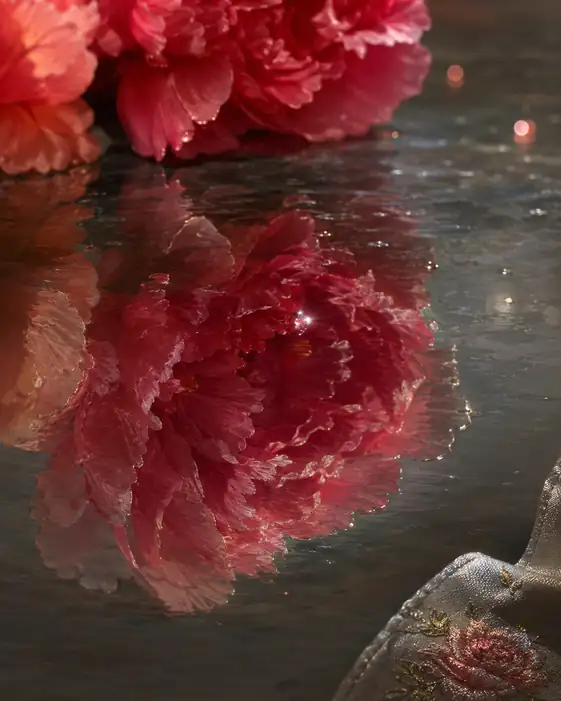 Peony Reflection and Embroidered Silk
 Spring Plum Blossom and Sparkling Glass
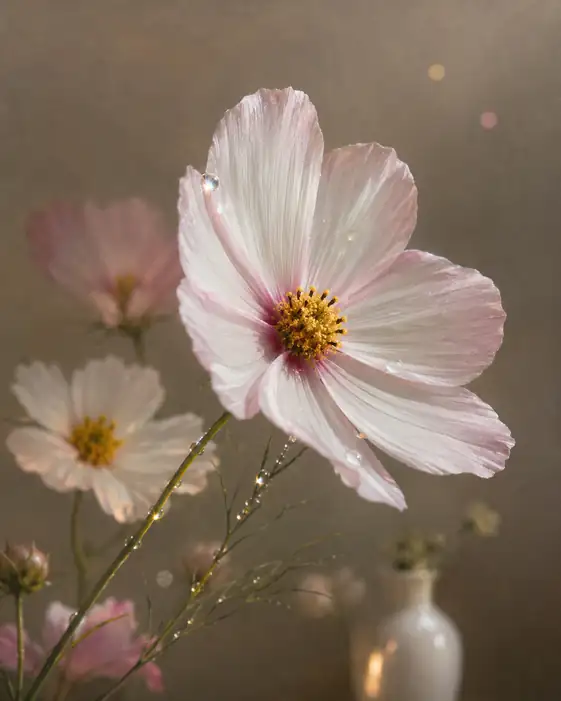 Sparkling Dew on Gentle Cosmos
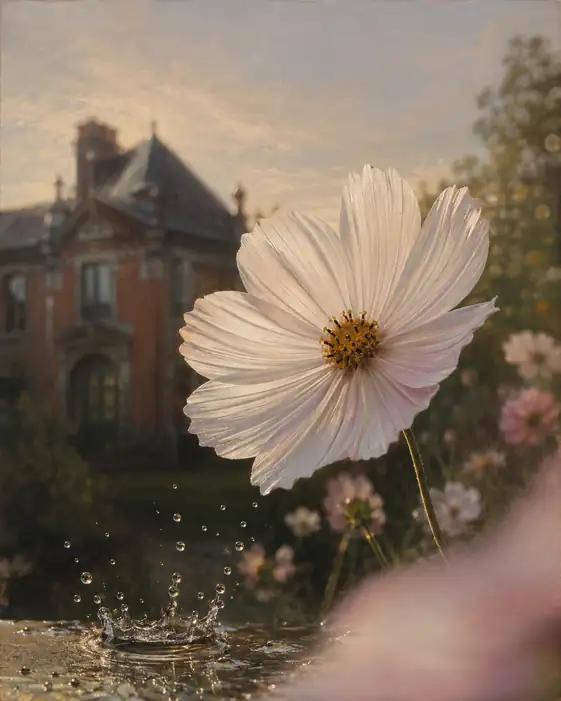 Water Crown and Autumn Cosmos
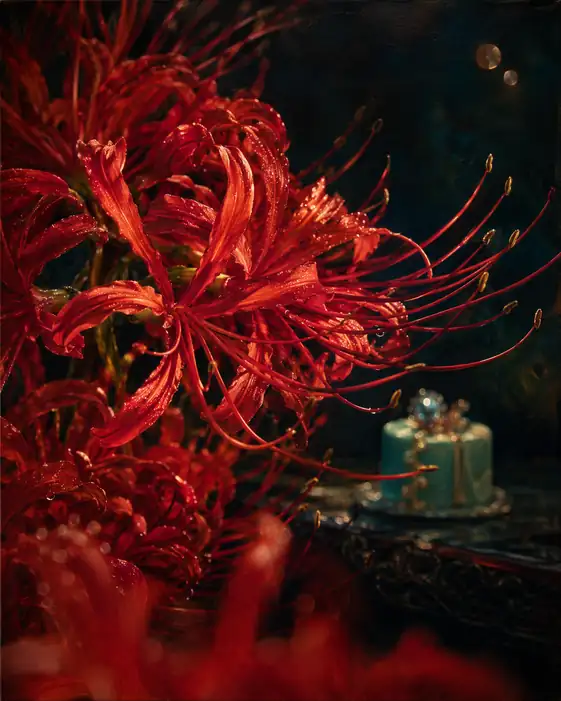 Scarlet Velvet and the Cyan Trinket Box