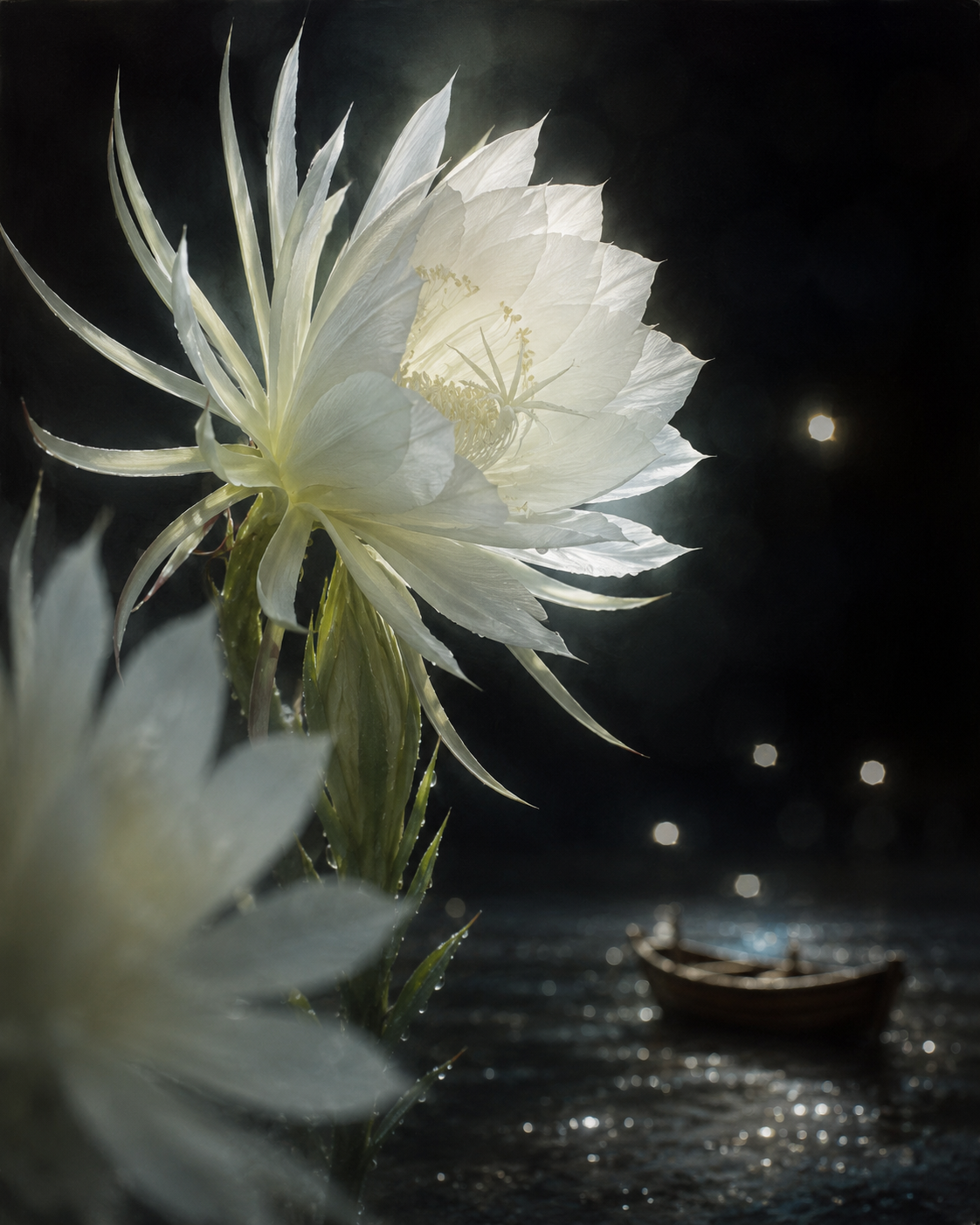
Luminous Cactus Blossom and the Drifting Skiff
Critique
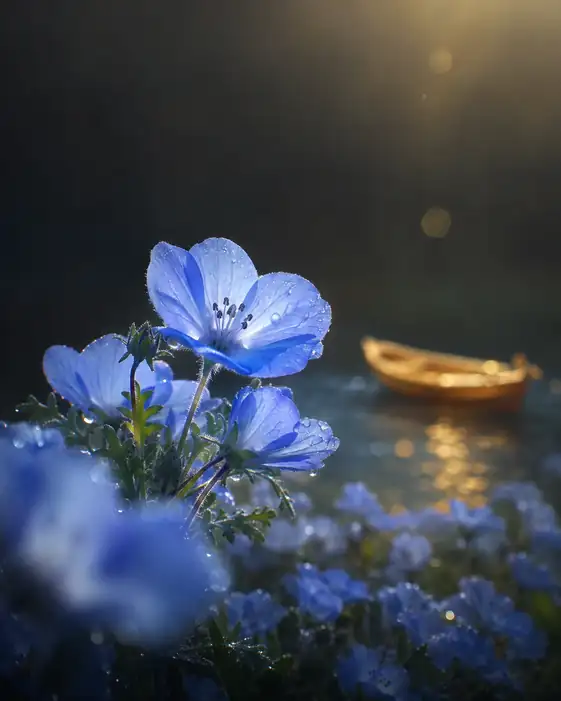
Introduction This painting turns a white night flower into a vast presence beside water and a rowboat. It becomes a nocturnal encounter between radiant excess and human-scale stillness. Description An enormous white bloom fills the upper-left region, its pointed outer segments spreading around broad inner petals and pale stamens. Moist green stems descend below it, and a second flower blurs across the left foreground. At lower right, a small wooden boat sits on black-blue rippling water. Warm polygonal lights and their reflections recede through the darkness. Analysis The flower's fanlike expansion opposes the boat's closed horizontal hull. White petals contain fine silver shadows, while the vessel is reduced to dark brown and thin gold edges. A chain of circular highlights travels from flower center to distant lamps and water, stitching together radically different scales. The bloom leans toward the open right side, directing attention toward the boat. Soft focus preserves distance, and the large dark interval prevents the flower's complexity from overwhelming the scene. Interpretation and Evaluation Rather than merely guarding the boat, the bloom can appear to be the strange shore from which a journey begins. Its outer petals resemble sails or currents frozen in air, while the actual vessel remains motionless. The empty boat invites an absent traveler, but the flower's brief nocturnal life makes waiting urgent. Monumental size does not imply permanence; the largest subject is also the most temporary. That paradox gives the fantasy emotional credibility. Conclusion The work uses scale to make fragility sublime. Darkness is threaded with possible routes of light. Between a flower soon to close and a boat not yet moved, the image holds readiness.
Same Subcategory
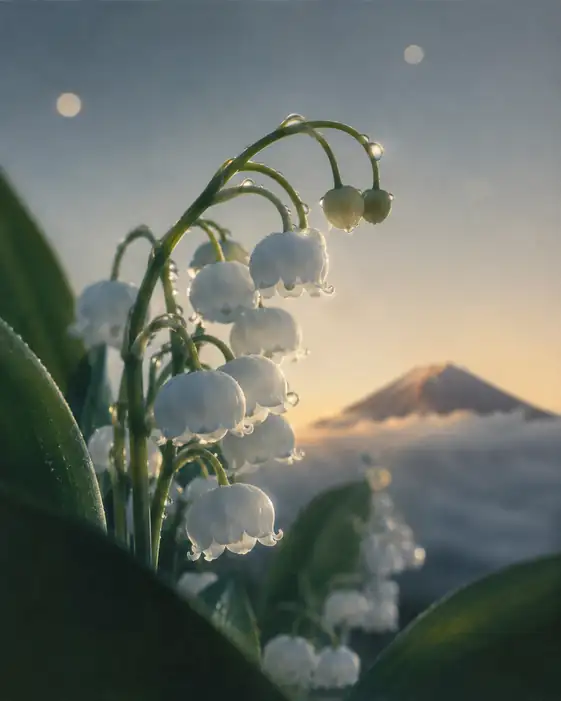 Dewdrop Bells Facing the Morning Peak
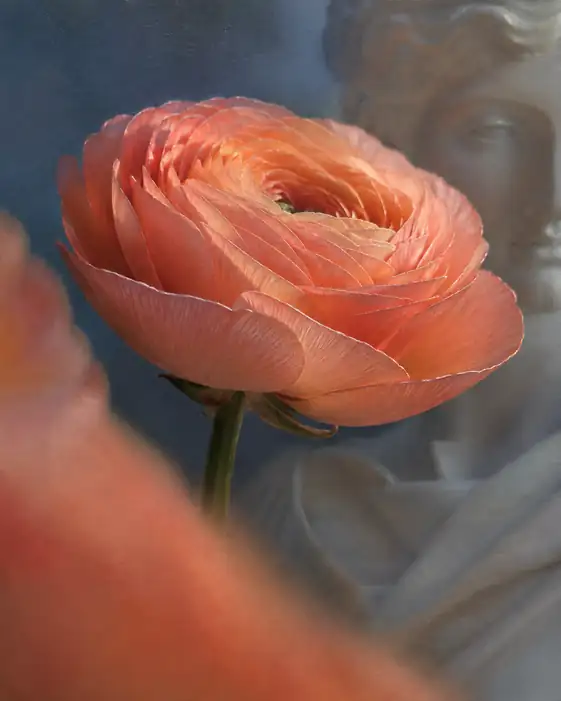 Coral Ranunculus and the Antique Bust
Similar Artworks
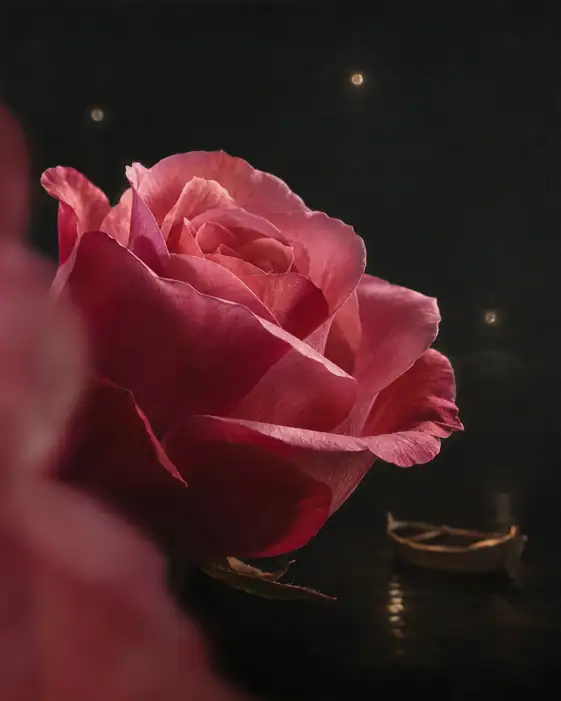 Night Voyage Beneath the Rose-Lit Sky
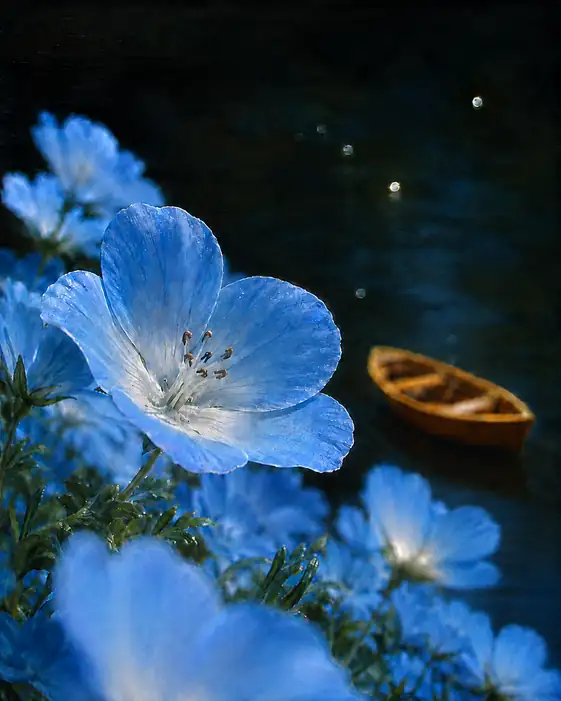 Blue Nemophila and the Lonely Boat
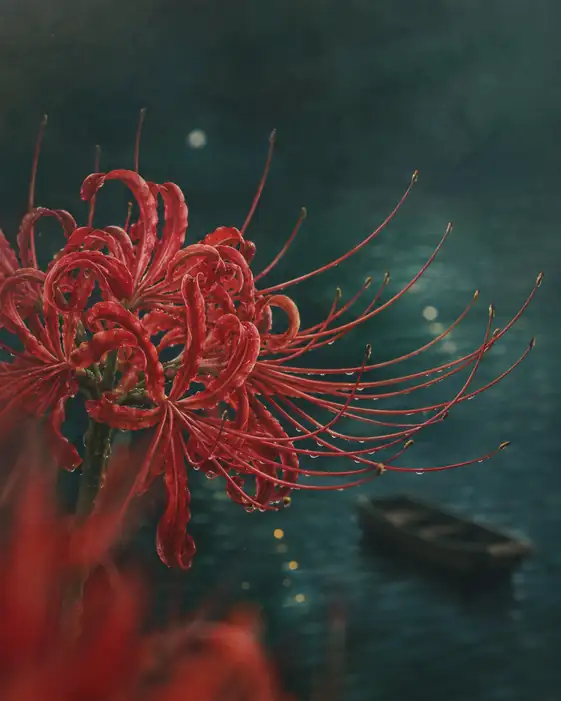 Red Lycoris and the Wooden Skiff
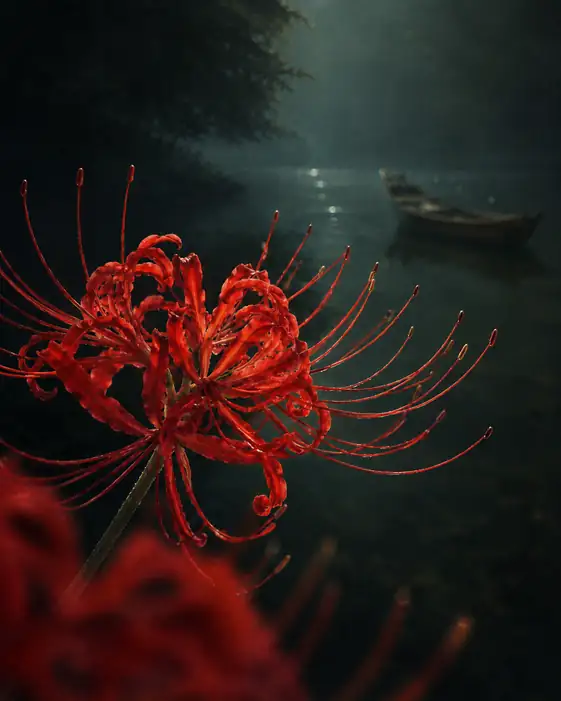 Solitary Boat on Nocturnal River
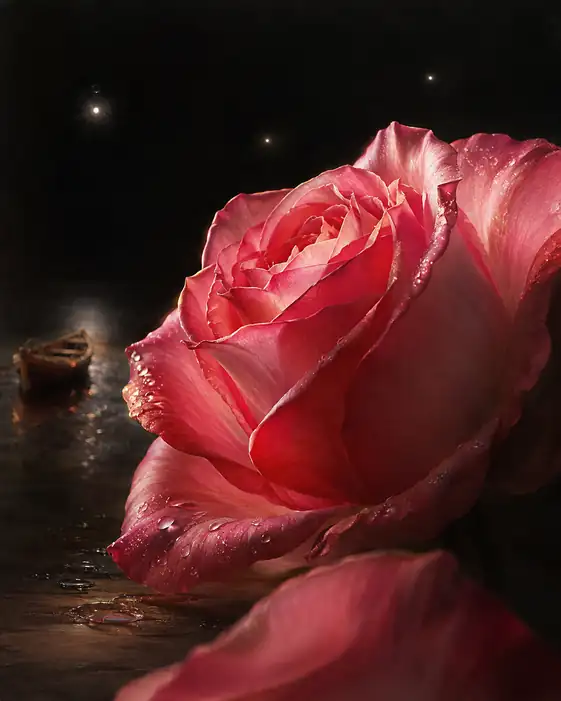 Leaving the Flowerlight Behind
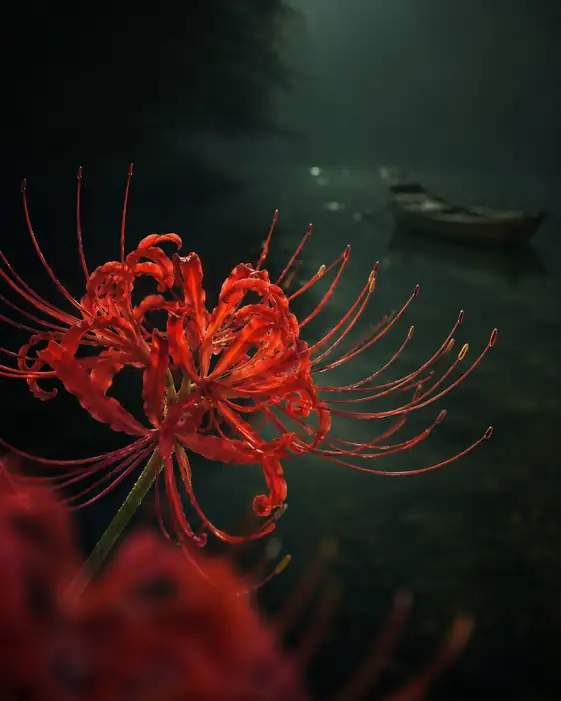 Whispers of the Dark Stream
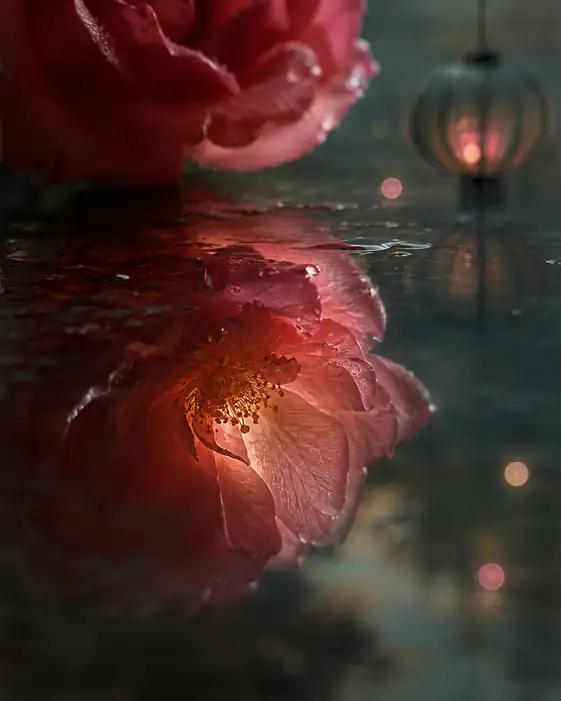 Lantern Glow on the Inverted Rose
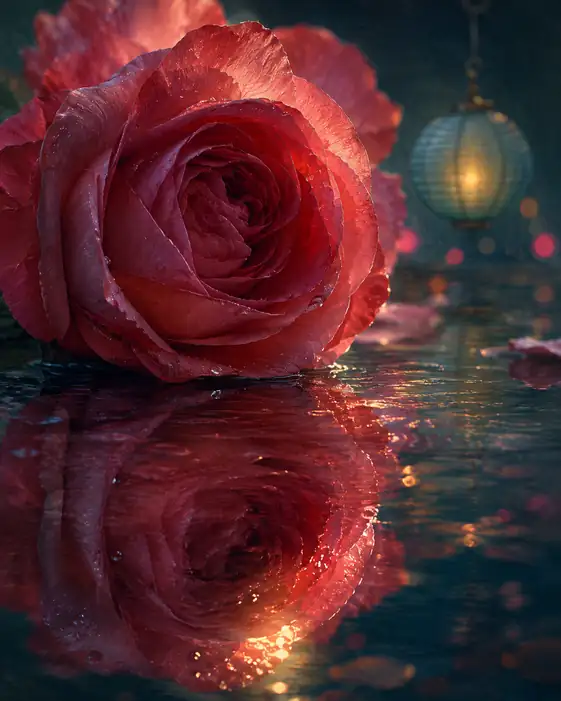 Crimson Reflection and the Floating Lantern
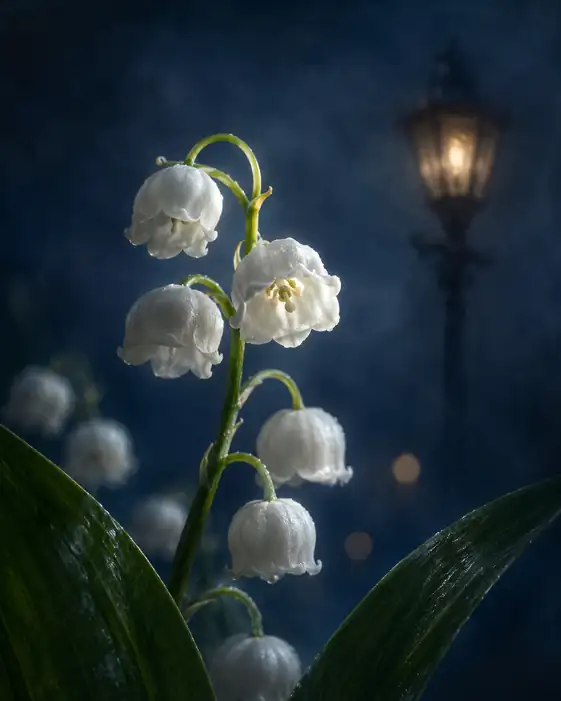 Lily of the Valley in Night Mist and Lantern Light
 Leaving the Blue Glow of Flowers Behind