
Dewdrop Bells Facing the Morning Peak
Critique
Introduction This painting places a dew-bright cluster of lily of the valley before a distant conical mountain. Repeated arches and a shared atmosphere compare fragile flowering with geological elevation without forcing either into dominance. Description White bell-shaped flowers descend from many curved green stems across the left and center. Buds crown the uppermost arcs, and droplets cling to every edge. Broad dark leaves frame the lower corners. At right, a softly focused mountain rises above a low blanket of mist in golden-blue morning light. Two pale circular highlights float high in the sky. Analysis The flower stems create nested arches, while the mountain provides one broad triangular counterform. Near bells are round, bright, and detailed; the peak is angular, muted, and remote. Backlight traces droplets along green curves and makes petal interiors glow. Dark leaves establish a heavy base from which both flower and mountain seem to rise. Selective focus layers the cluster without dissolving its rhythm. The cool sky and warm horizon unite vastly different distances. Interpretation and Evaluation The bowed bells and upright mountain propose different forms of stature. The flowers gain dignity through receptivity and collective rhythm rather than height, while the peak remains partially hidden by mist. Proximity makes the small cluster visually rival the landform, reminding viewers that scale depends on viewpoint. Droplets mark a particular morning; the mountain implies deep time. Their coexistence values the immediate without denying endurance. Conclusion The work achieves serenity through formal comparison rather than dramatic narrative. Curved stem, pointed peak, wet petal, and mist each hold a distinct timescale. Together they make humility appear expansive and distant grandeur feel gently accessible.
Same Subcategory
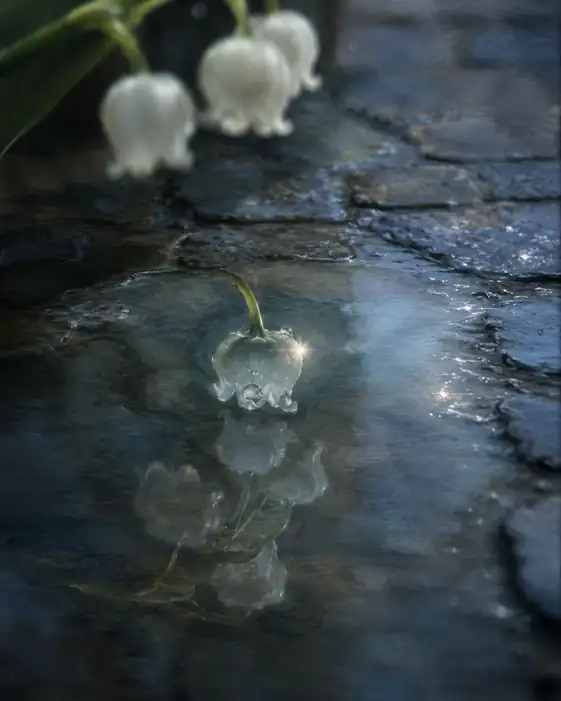 Fallen Bell on the Rainlit Cobblestones
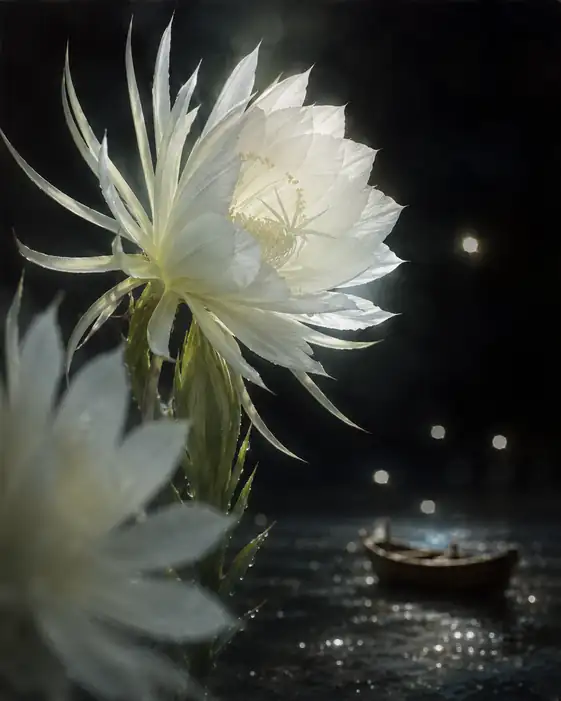 Luminous Cactus Blossom and the Drifting Skiff
Similar Artworks
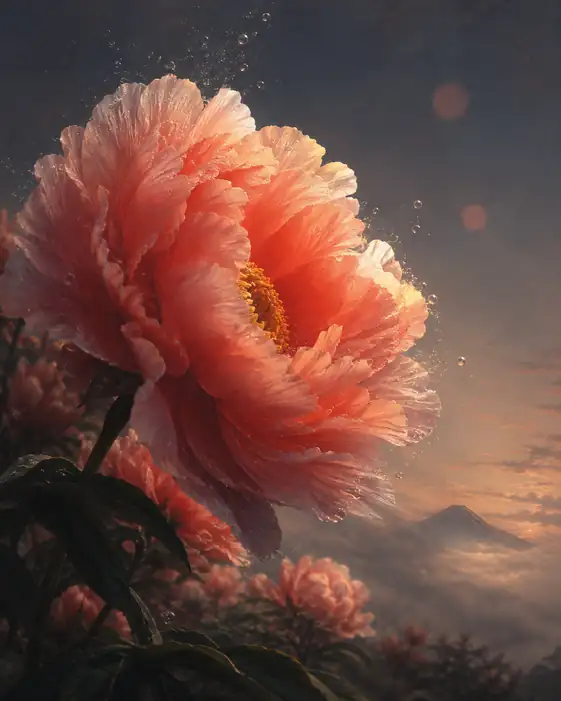 Crimson Peony and Dawn Over Mount Fuji
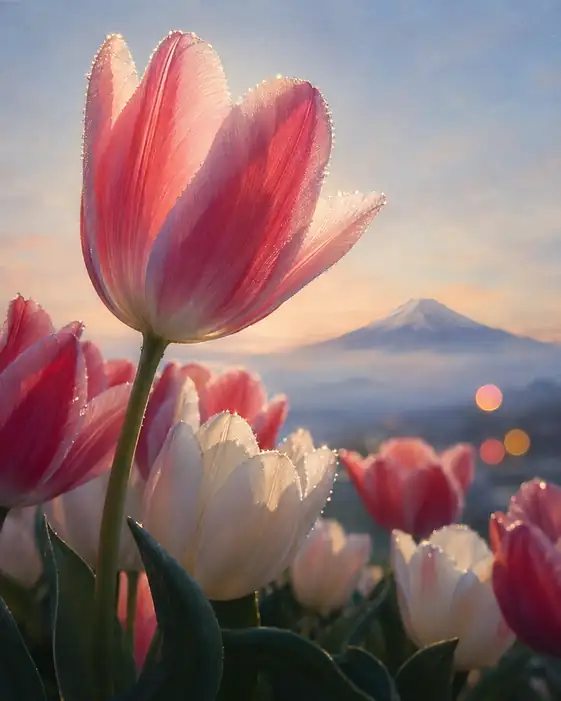 Tulips at Sunrise Before Mount Fuji
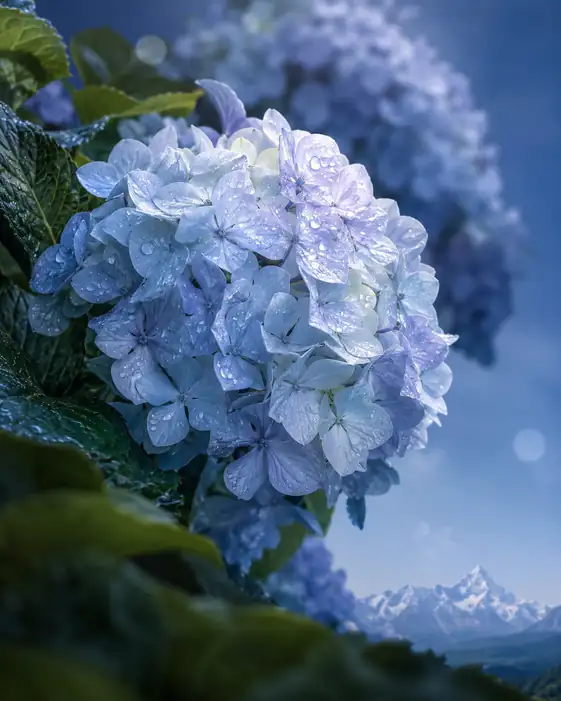 Solitary Summit Framed in Indigo
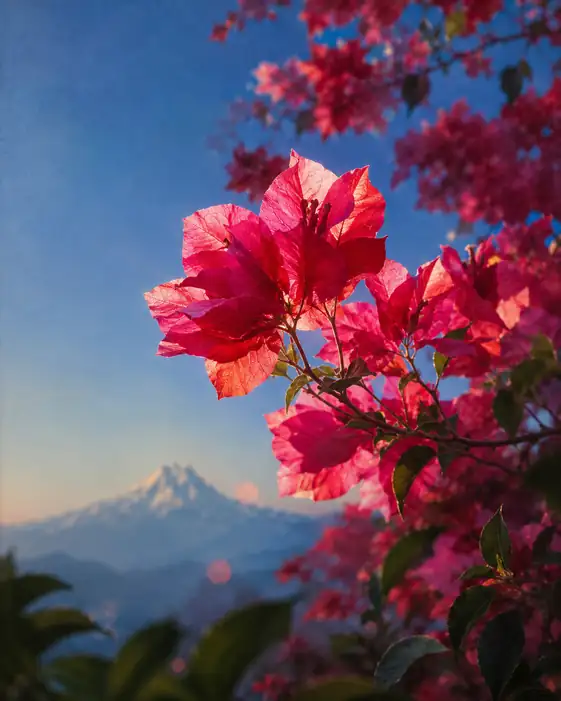 Crimson Bougainvillea Facing the Alpine Peak
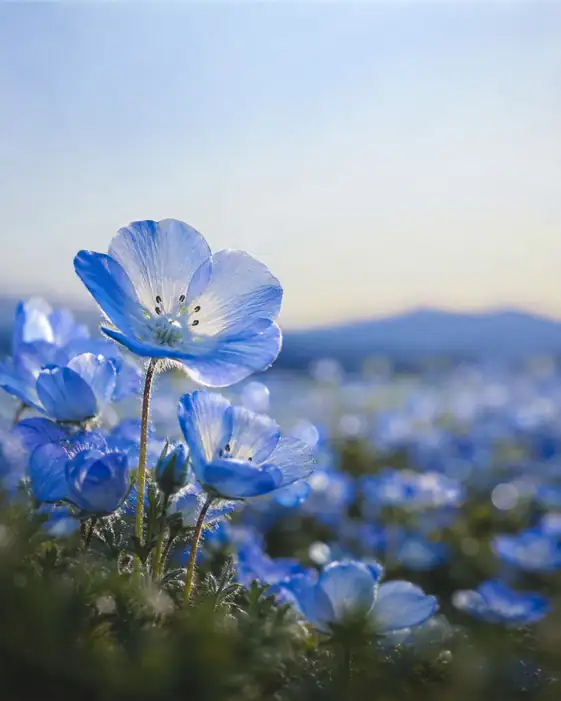 Translucent Blue Petals at Dawn
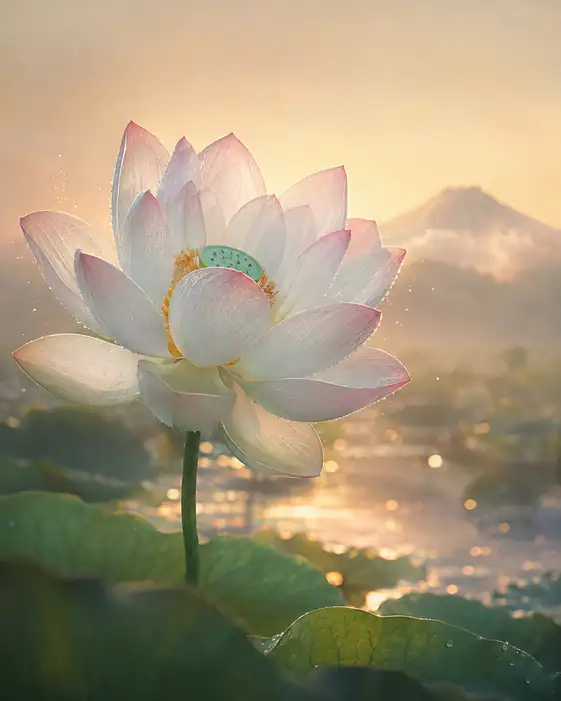 Lotus at Dawn Before Mountain Mist
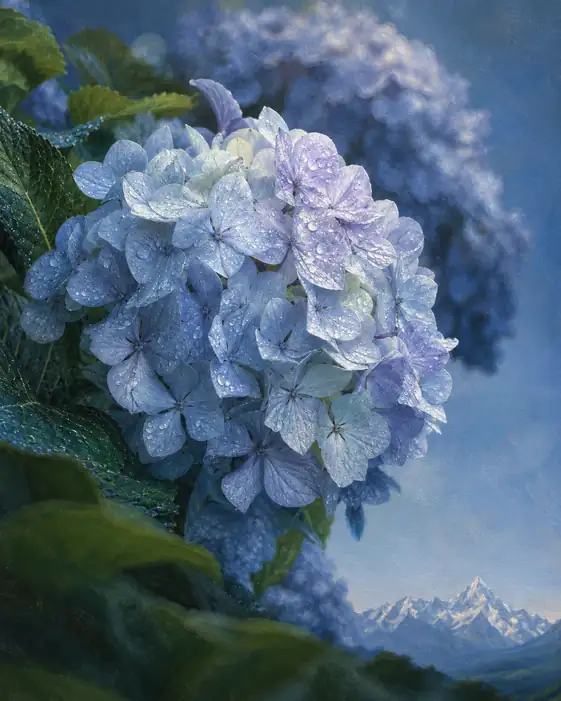 Floating Azure Above the Snowy Peaks
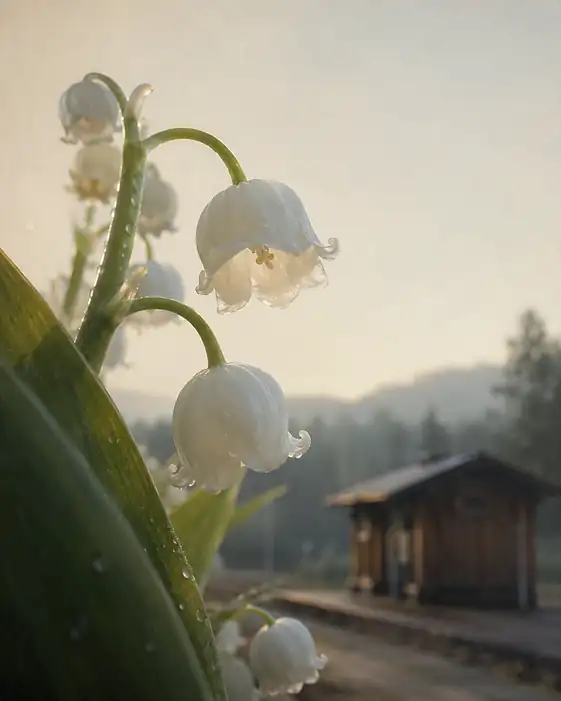 Lily of the Valley at the Morning Station
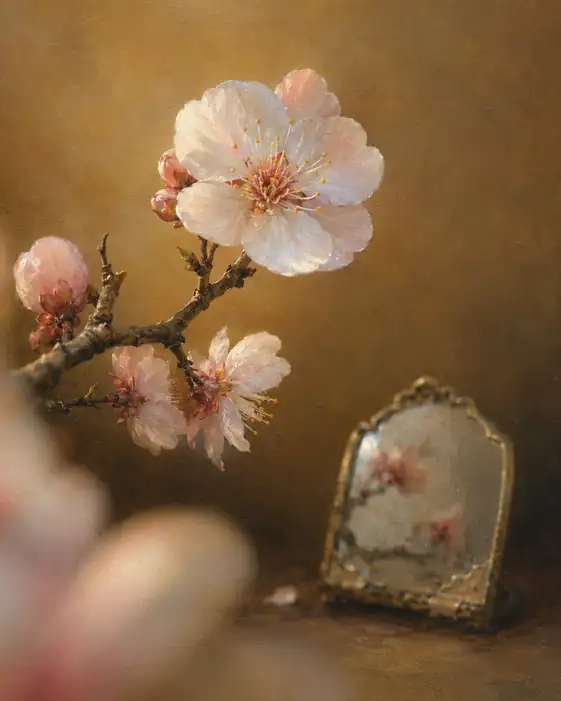 Plum Blossoms Before the Antique Mirror
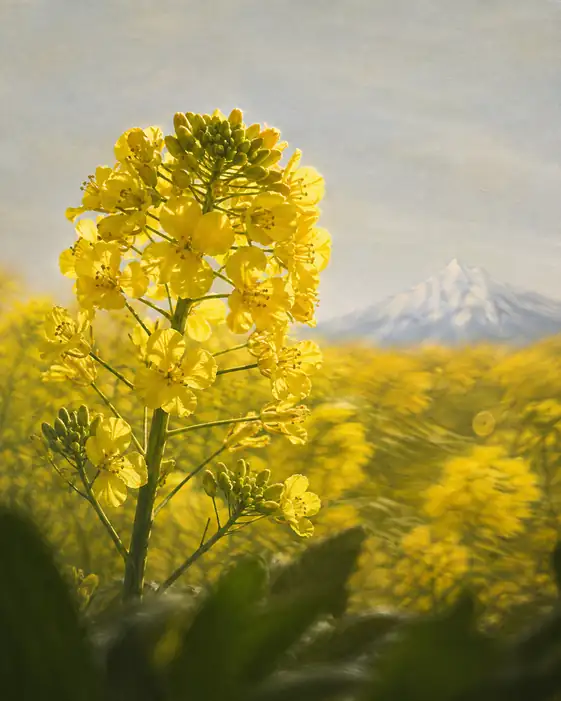 Field of Canola Beneath Snowy Crest