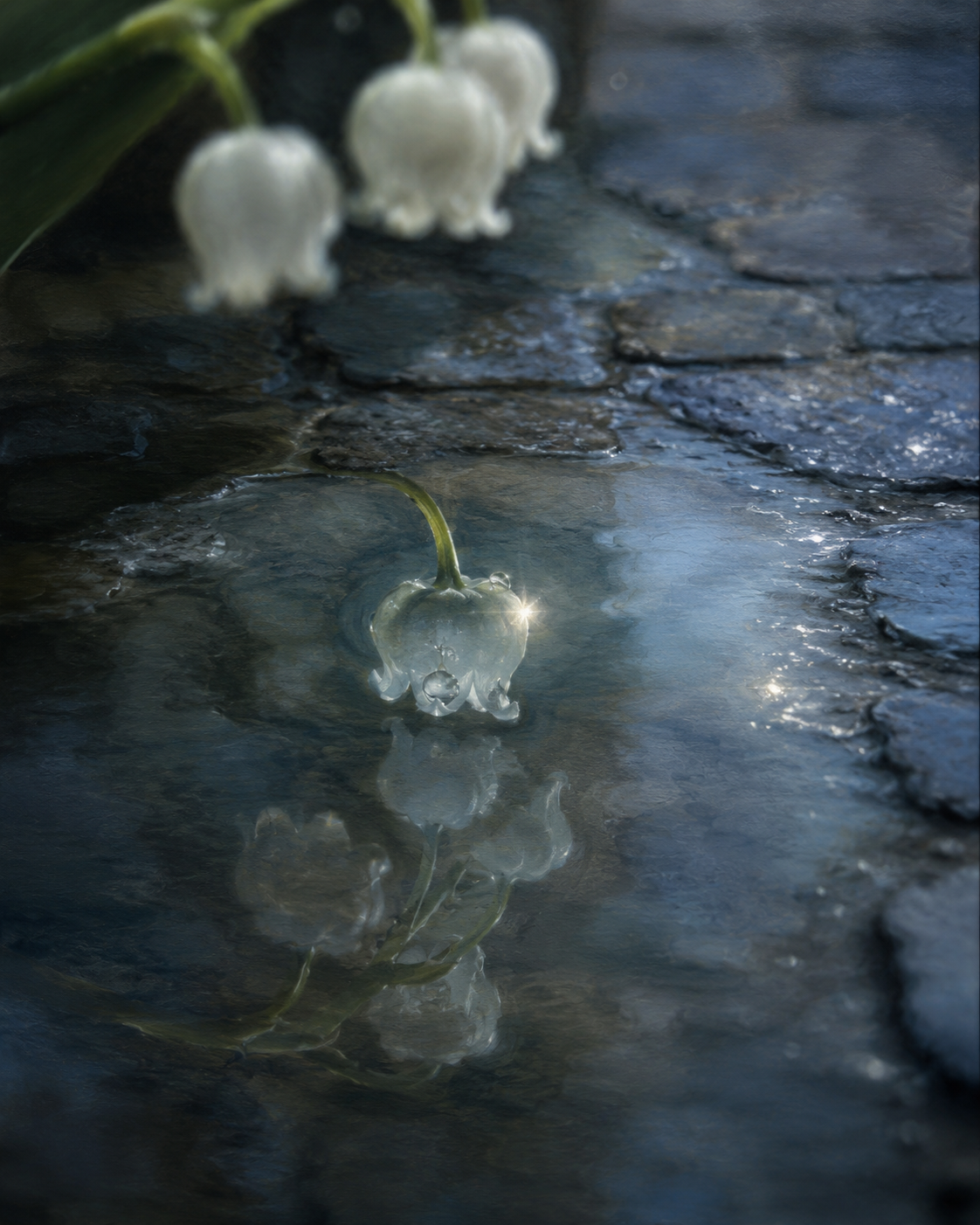
Fallen Bell on the Rainlit Cobblestones
Critique
Introduction This painting isolates a fallen lily-of-the-valley bell on wet stone and gives its reflection equal prominence. The small event becomes a meditation on descent, fragility, and the image that survives beneath a changed position. Description A single translucent white bell lies near the center of a shallow puddle, still attached to a curved green stem. A round droplet hangs within its opening, and a star-like highlight touches the upper edge. Its inverted reflection extends downward through dark blue-gray water. Three more bells blur along the upper-left stones, while uneven paving and thin rivulets fill the frame. Analysis The focused flower forms a delicate bright island within rough, dark geometry. Its smooth arch opposes the fractured edges of paving stones. The reflection nearly doubles the bell but is softened and interrupted by water texture, creating vertical depth on a horizontal ground. Tiny highlights repeat across droplet, wet stone, and puddle. Shallow focus separates the fallen subject from the still-attached flowers above, reversing the expected hierarchy between intact cluster and detached individual. Interpretation and Evaluation Descent is not presented simply as failure. At ground level the bell becomes more visible, and water grants it a second form. The suspended droplet inside the flower resembles a small lens or seed, concentrating the surrounding light. Its companions remain upright but inaccessible in blur, so the fallen bloom occupies the most vivid present. Reflection suggests memory, yet its instability admits that remembrance changes what it preserves. Conclusion The work dignifies a vulnerable subject through focus and restraint. Wetness does not merely signal damage; it creates visibility, duplication, and light. The fallen bell appears altered rather than erased, held briefly between material presence and reflection.
Same Subcategory
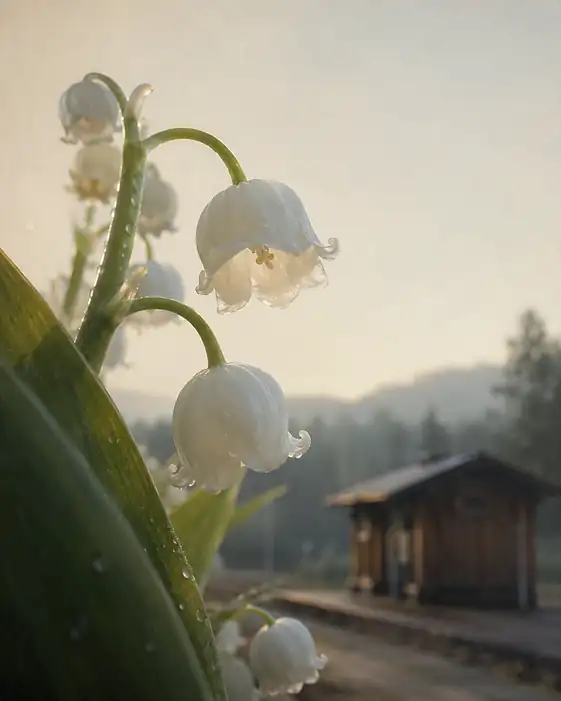 Lily of the Valley at the Morning Station
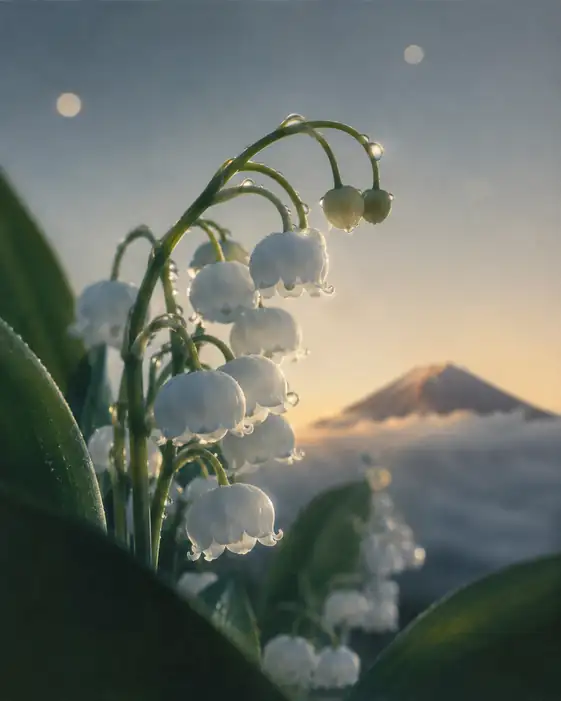 Dewdrop Bells Facing the Morning Peak
Similar Artworks
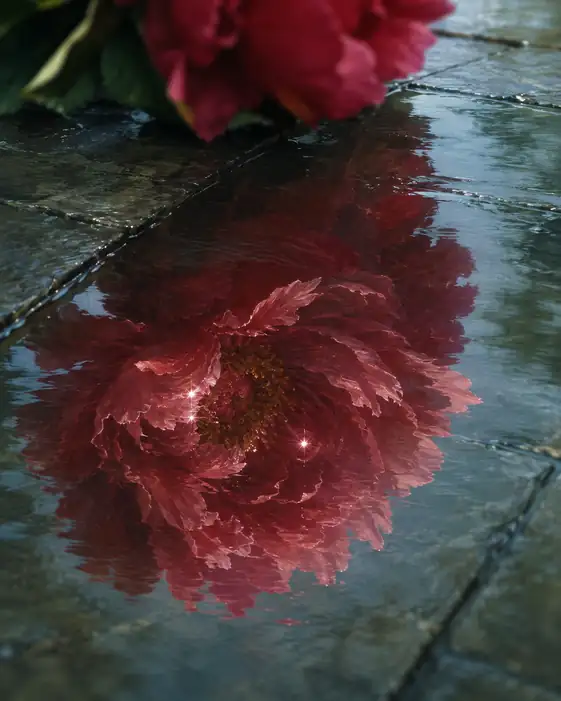 Crimson Peony Reflected in Cobblestone Puddle
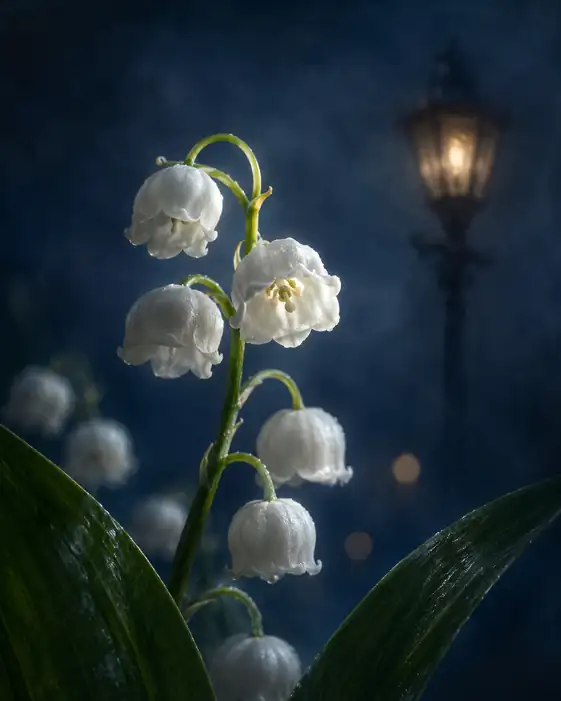 Lily of the Valley in Night Mist and Lantern Light
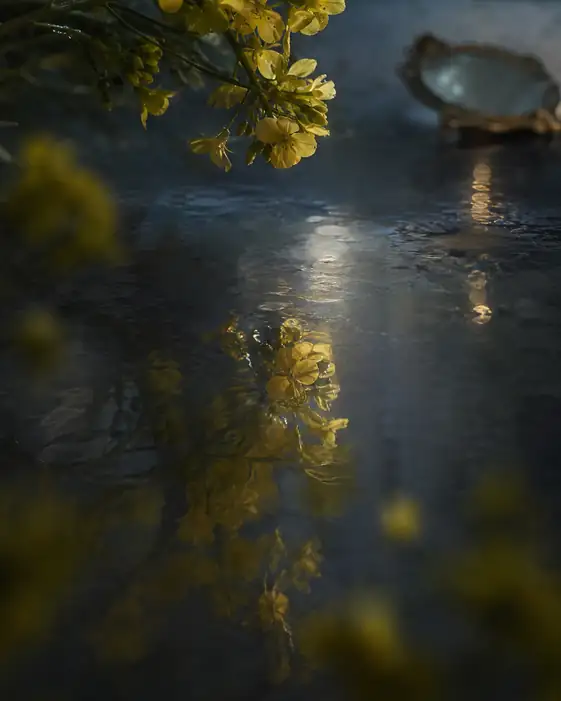 Yellow Blossoms and the Vintage Mirror
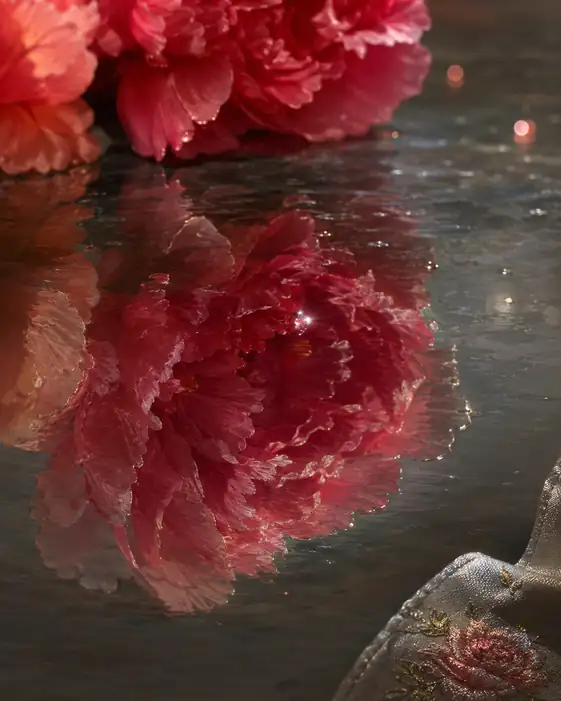 Peony Reflection and Embroidered Silk
 Mimosa Reflection on Wet Cobblestones
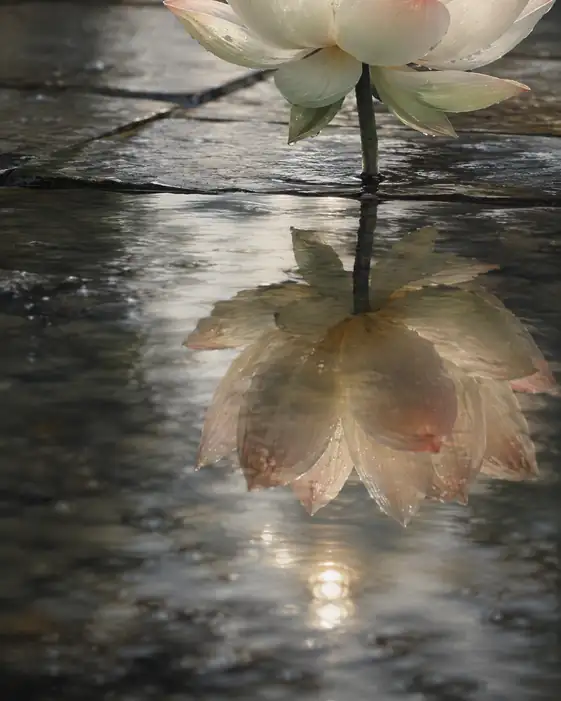 Inverted Lotus on Wet Cobblestones
 Whispering Dew and Porcelain
 White Porcelain and the Rain-Soaked Bloom
 Dew-Kissed Plum Blossoms by White Porcelain
 Tulip Reflection on Wet Cobblestones