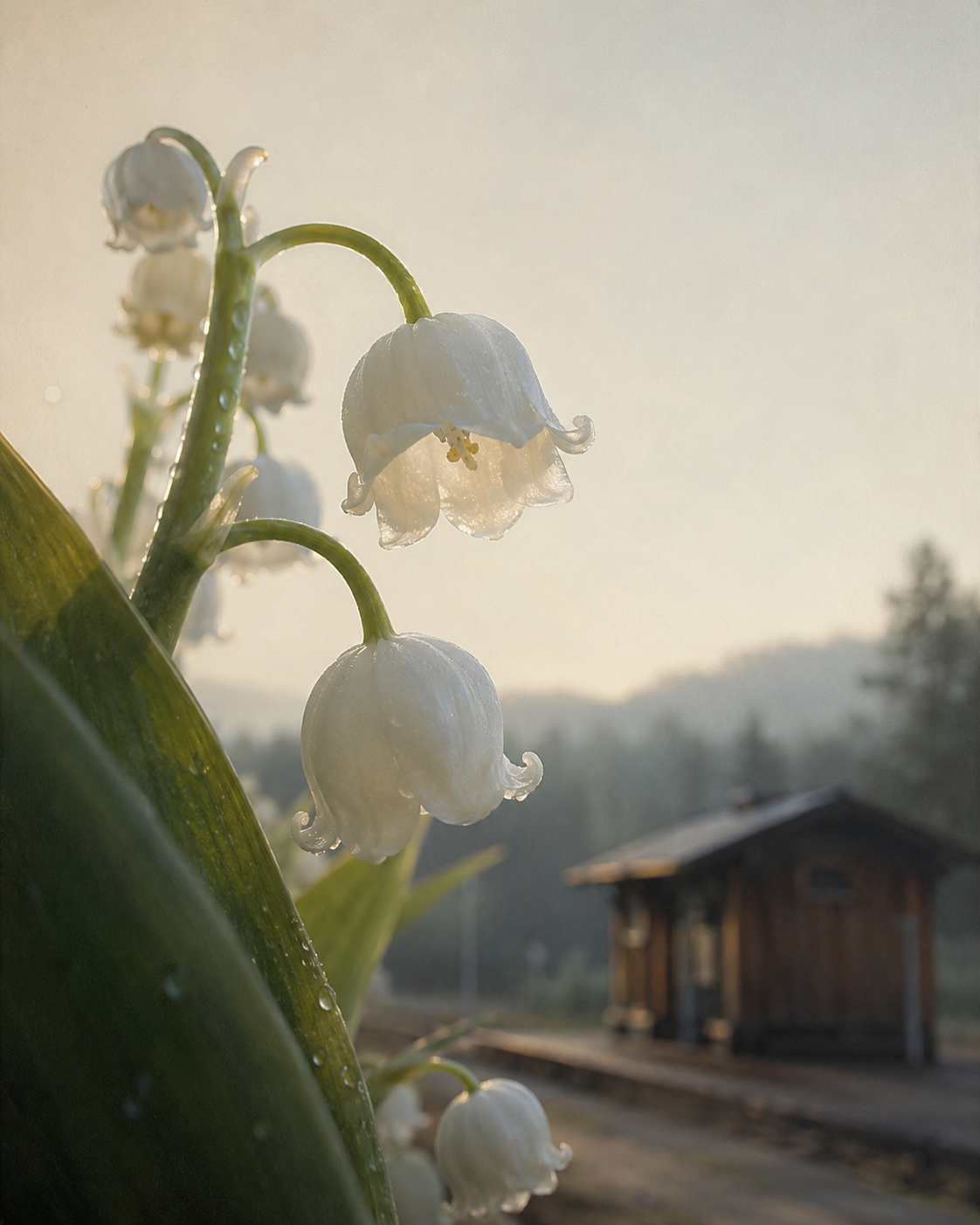
Lily of the Valley at the Morning Station
Critique
Introduction This painting enlarges dew-covered lily of the valley beside a quiet rural station. The intimate flowers and distant building join seasonal renewal to the recurring human rhythms of arrival, waiting, and departure. Description Several white bell-shaped flowers hang from curved green stems across the left and center. Droplets line the stems, petals, and a broad dark leaf filling the lower-left foreground. The sharpest bell opens slightly toward the viewer. At lower right, a small wooden station building and platform recede in warm haze, backed by low wooded hills and a pale sky. Analysis The plant's arches repeat from top to bottom, creating a descending rhythm against the leaf's strong diagonal. Fine moisture and translucent petal edges receive warm backlight, while the station remains softly geometric. The extreme scale difference makes the flowers visually larger than architecture without erasing spatial credibility. Green, ivory, and amber unify foreground and distance. A broad bright sky supplies breathing room, and the blurred tracks or platform lines guide the eye toward the building. Interpretation and Evaluation The station suggests scheduled movement, whereas flowering follows seasonal and climatic time. Both nonetheless rely on return: trains revisit a platform, and bells reopen each year. The flowers' bowed posture can resemble waiting figures, but their abundance resists loneliness. Dew locates the scene in a fresh, transitional morning, perhaps before activity begins. The absence of travelers lets the place retain possibility rather than become tied to one anecdote. Conclusion The work balances pastoral tenderness with a subtle idea of passage. Its scale reversal grants small blossoms authority over the built environment, while the station gives their brief beauty a social horizon. Morning feels not empty but expectant.
Same Subcategory
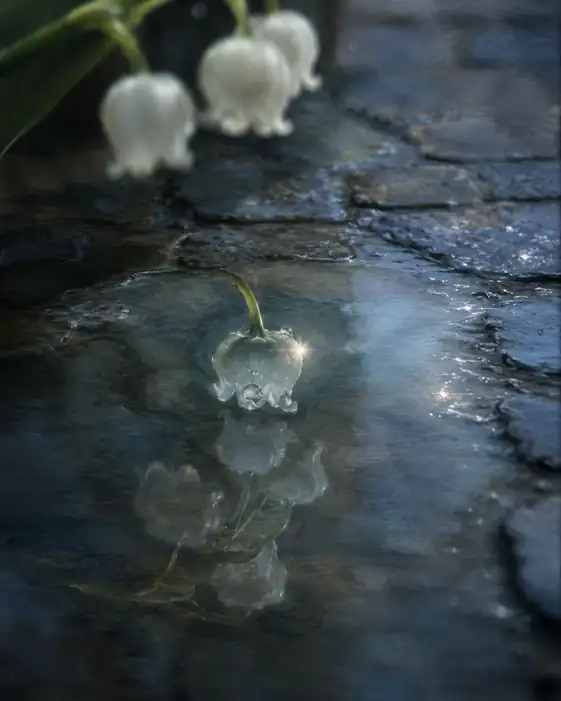 Fallen Bell on the Rainlit Cobblestones
Similar Artworks
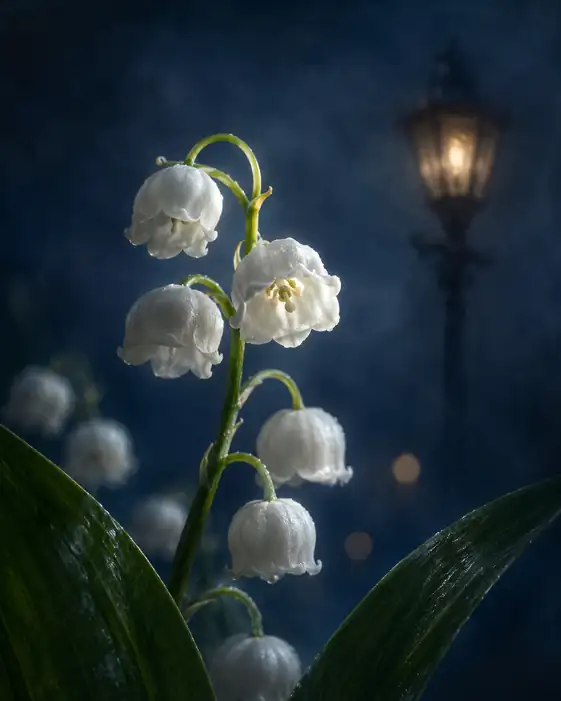 Lily of the Valley in Night Mist and Lantern Light
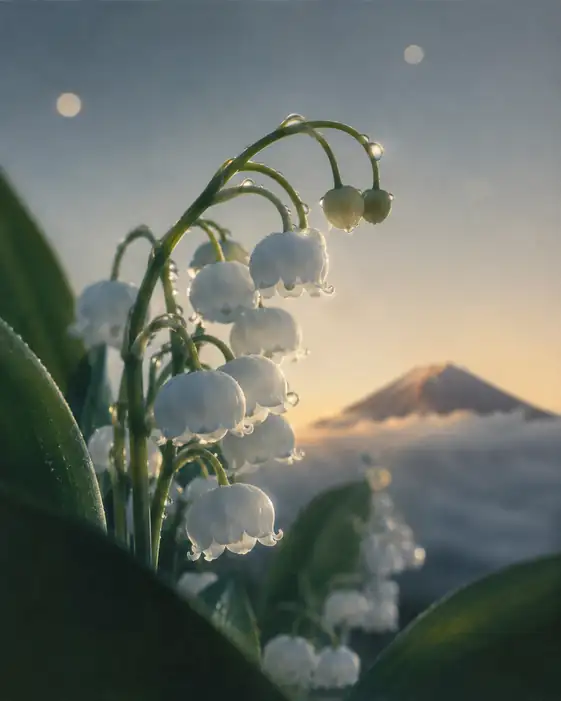 Dewdrop Bells Facing the Morning Peak
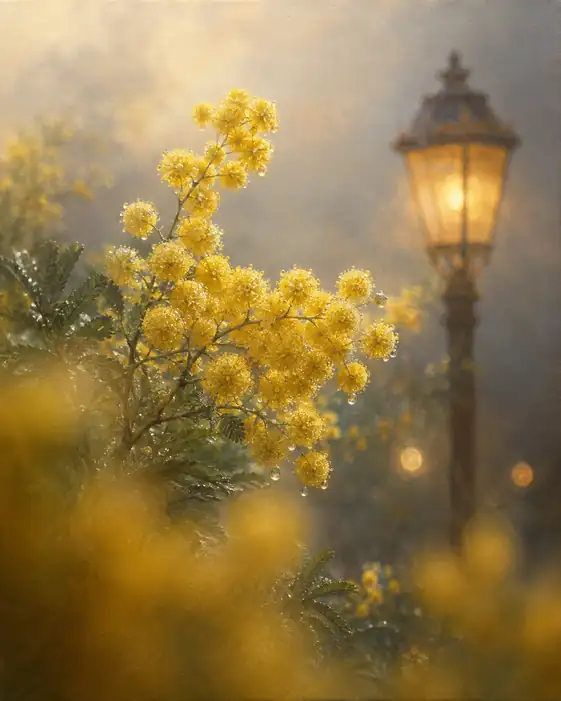 Glowing Streetlamp and Misty Mimosa
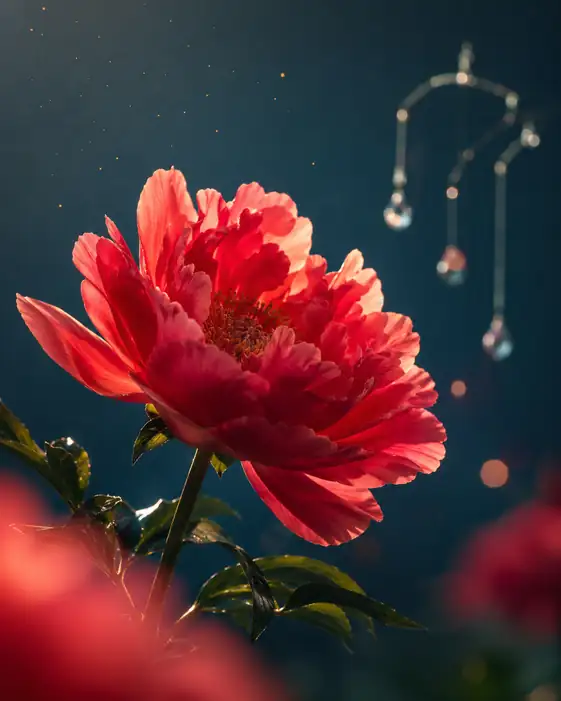 Crimson Pulse in the Twilight Calm
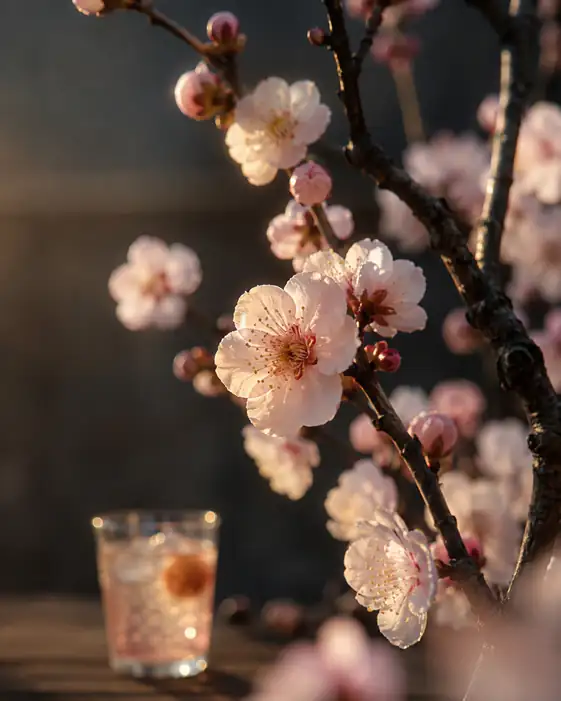 Blossoming in Amber Light
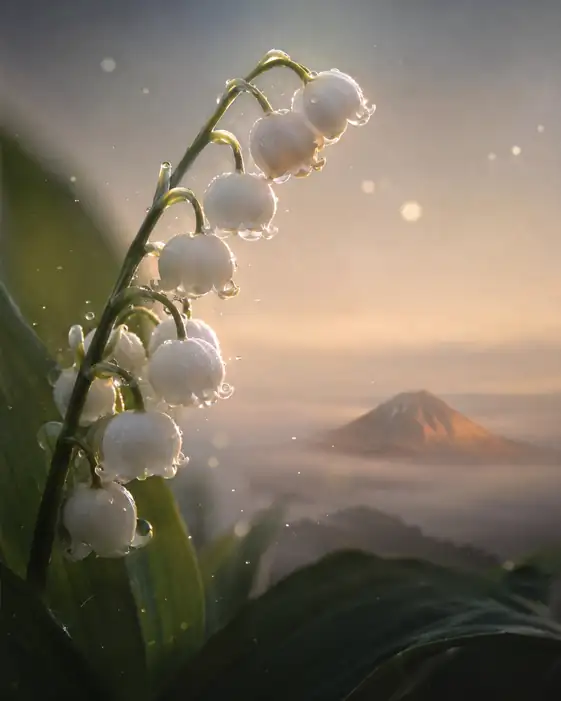 Whispers of Morning Dew and Distant Peaks
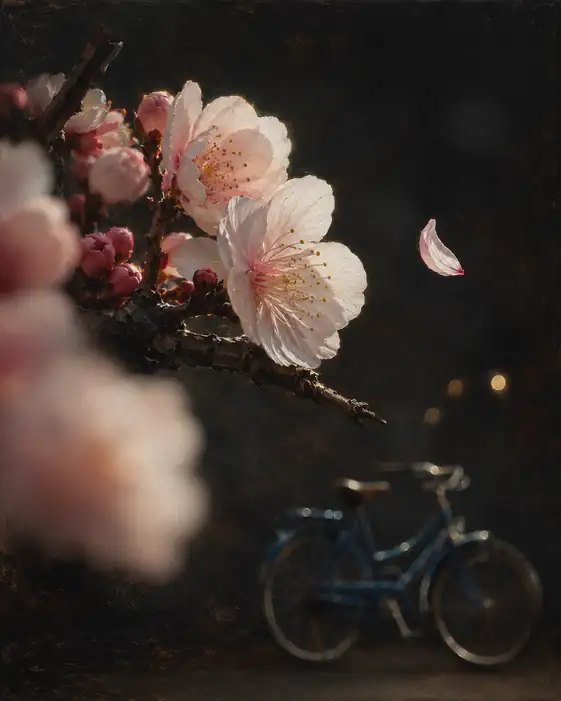 Whispering Petals in the Night Air
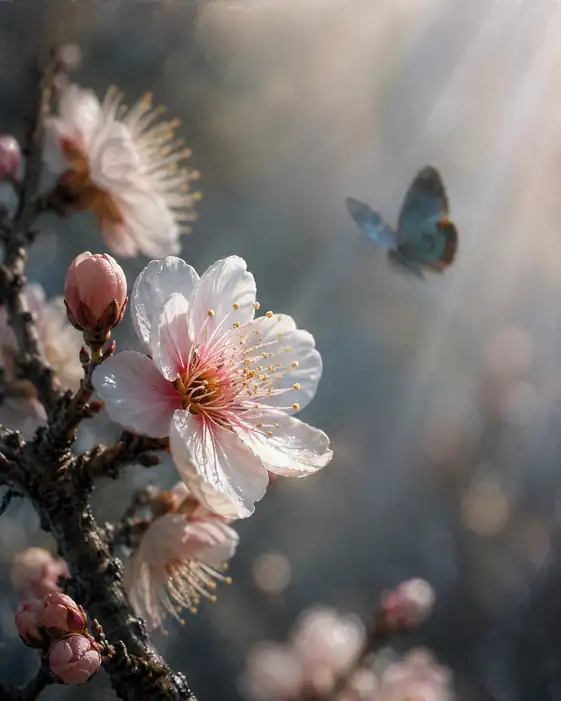 Blue Butterfly Visiting Sunlit Plum Blossom
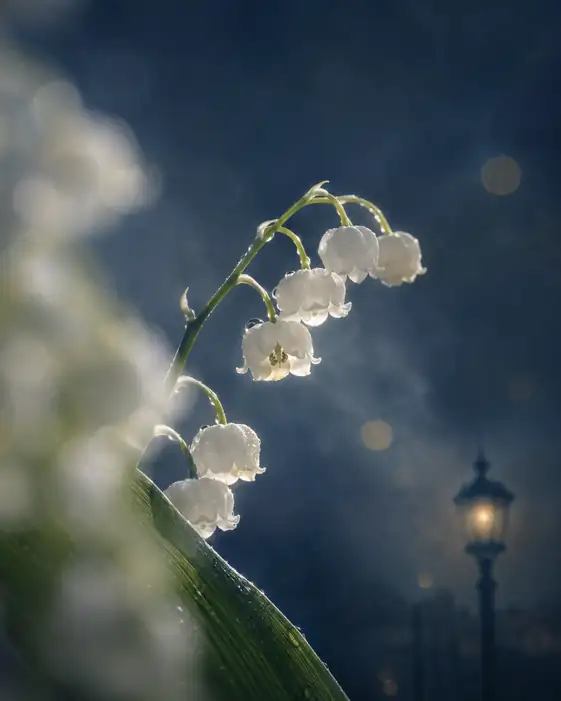 Dewdrop Bells Awaiting Dawn
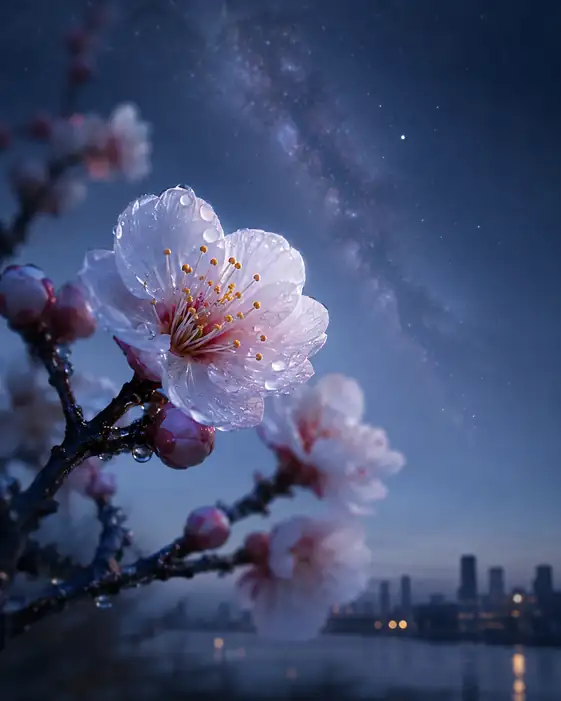 Plum Blossom Beneath the City Milky Way