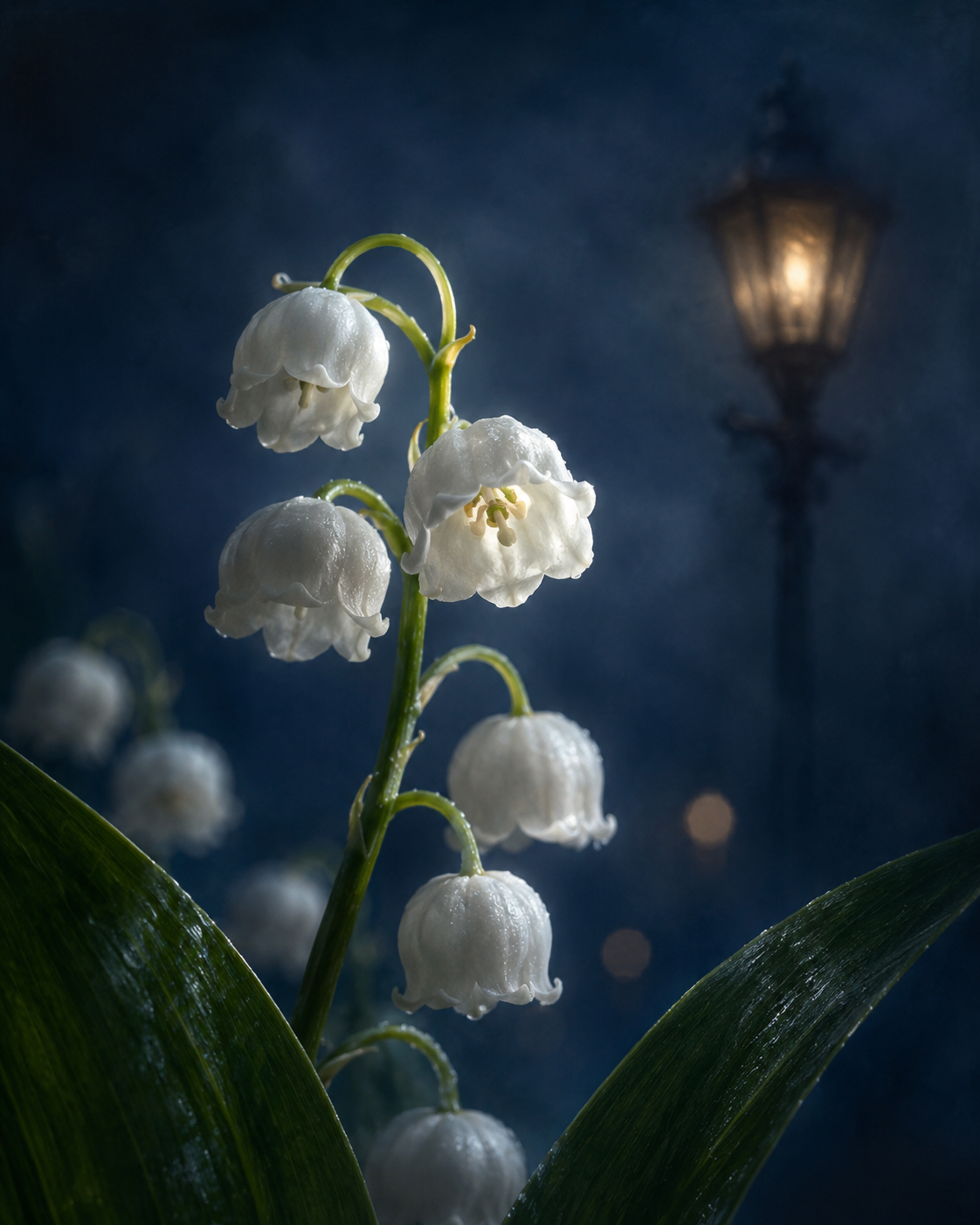
Lily of the Valley in Night Mist and Lantern Light
Critique
Introduction This painting magnifies wet lily of the valley against blue night and a streetlamp. Downward bells and enclosed glow create a dialogue between natural and human-made illumination. Description A central green stem carries several white bell-shaped flowers on curved pedicels, all coated with fine droplets. Two broad glossy leaves rise from the lower corners and frame the stem. More bells blur into the left distance. At upper right, a dark old-fashioned streetlamp glows amber through blue mist. Two faint warm circles descend below it. Analysis The main stem forms a gentle diagonal vertical, while repeated arches of the flower stalks establish rhythm. White bells vary in orientation and clarity, giving the cluster depth and individuality. Cool navy-blue fills the background, intensifying both the flowers' white and the lamp's amber. Large leaves create a dark V-shaped base, stabilize the delicate upper forms, and reveal wet linear texture. Mist softens the lamp and separates its distant geometry from the sharply observed plant. Interpretation and Evaluation Each flower resembles a tiny unlit lantern, while the streetlamp appears as their enlarged, human-made counterpart. Yet the bells shine by reflecting ambient light rather than producing it, suggesting receptivity instead of projection. Their bowed posture conveys humility, but the repeated cluster also has resilience. Dew or rain links all surfaces to a shared night. The distant lamp may imply shelter or a path beyond the garden, while the plant remains rooted in immediate darkness. Conclusion The work makes modest scale emotionally resonant. Its cool atmosphere, precise moisture, and repeated bell forms balance intimacy with distance. Natural and artificial lights do not compete; together they reveal different ways of holding brightness through the night.
Same Subcategory
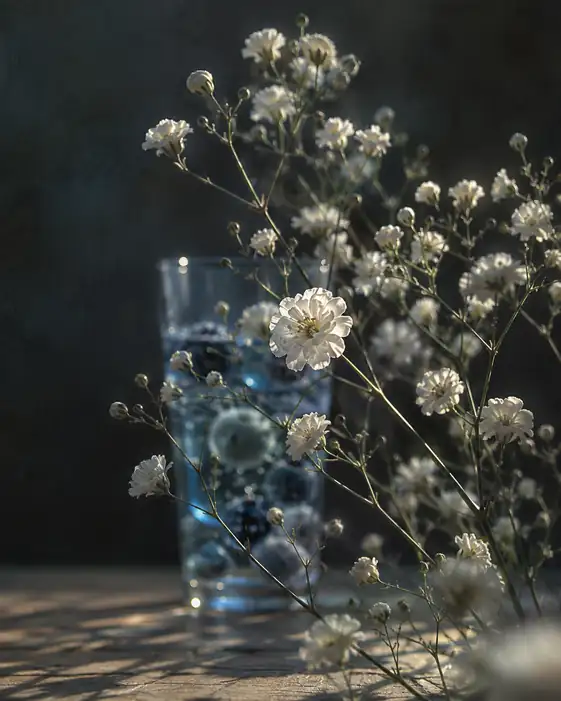 White Baby's Breath and the Blue Glass
Similar Artworks
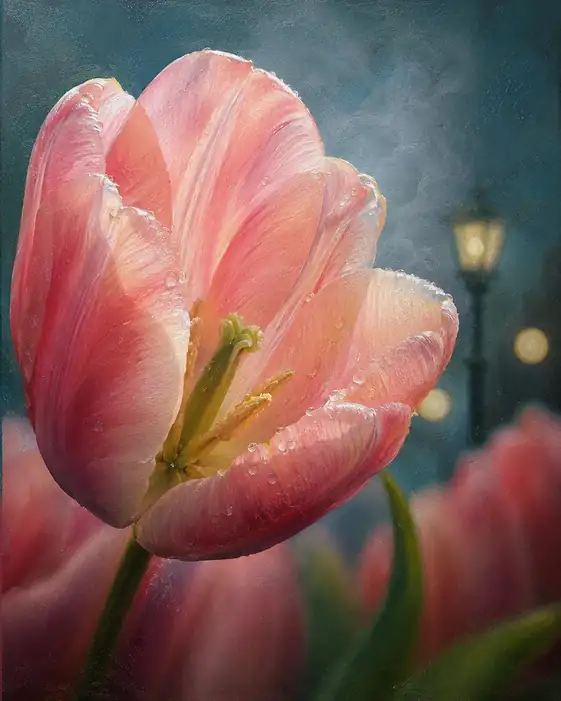 Pink Tulip Beneath the Night Lantern
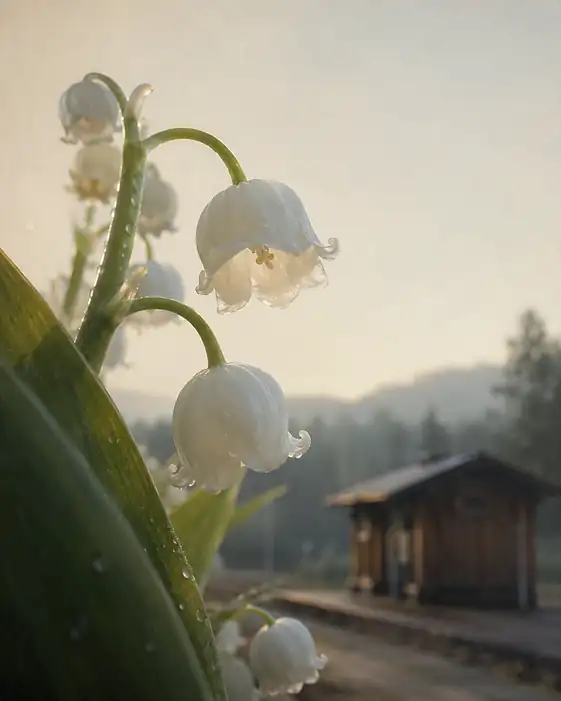 Lily of the Valley at the Morning Station
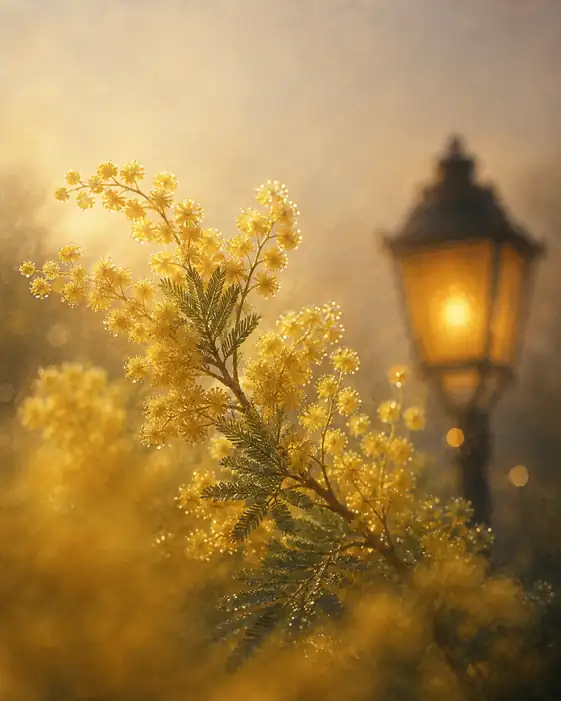 Golden Mimosa by the Morning Streetlamp
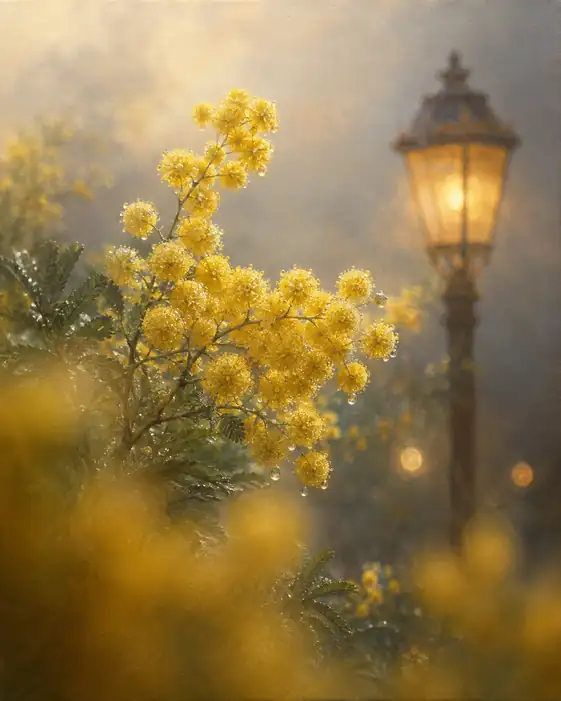 Glowing Streetlamp and Misty Mimosa
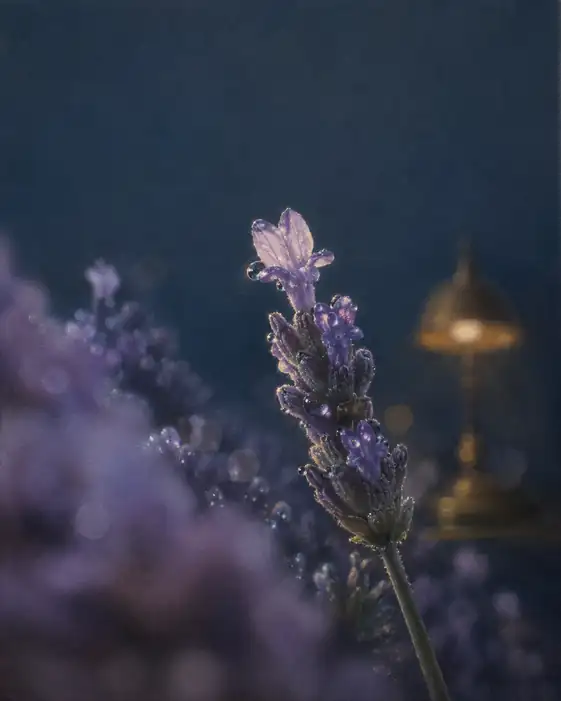 Scent of Lavender in the Brass Light
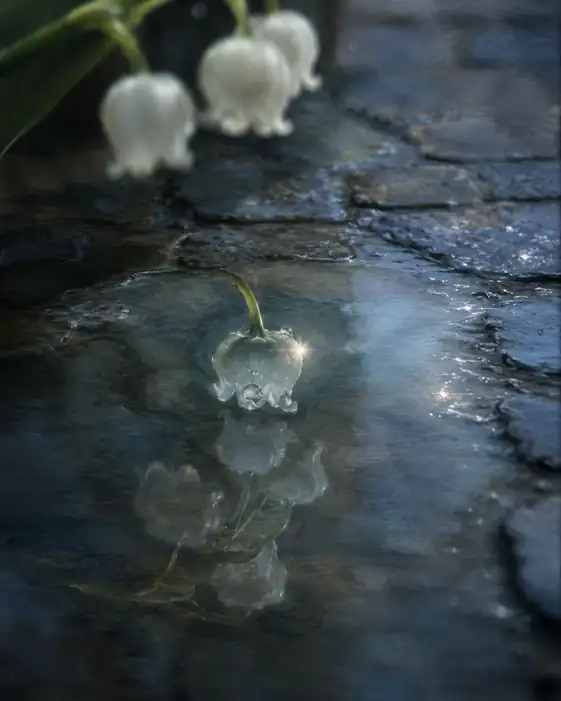 Fallen Bell on the Rainlit Cobblestones
 Crimson Pulse in the Twilight Calm
 Blossoming in Amber Light
 Whispers of Morning Dew and Distant Peaks
 Whispering Petals in the Night Air