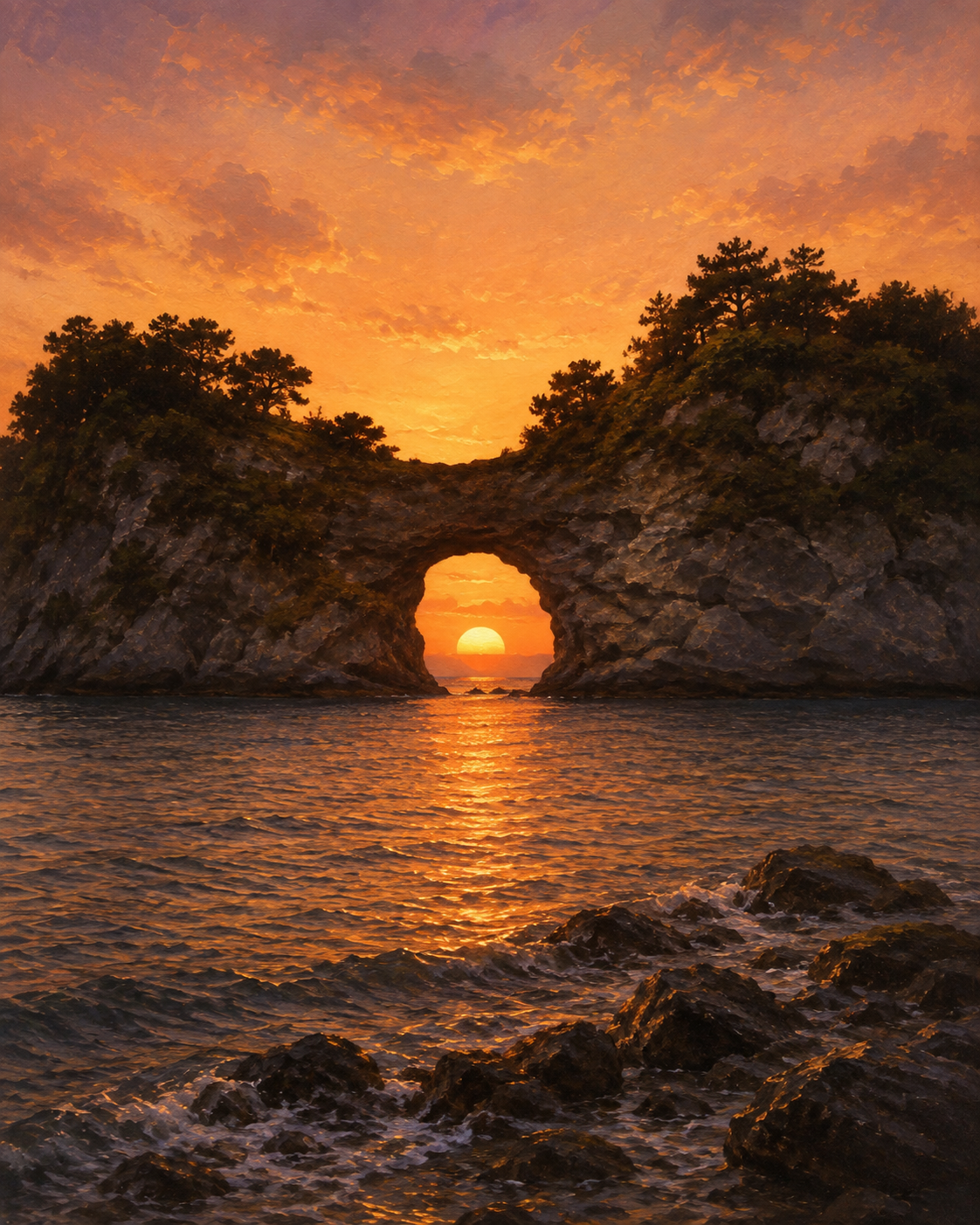
Sunset within the Great Sea Arch
Critique
Introduction This seascape moves closer to a monumental island arch, placing the sun beyond rather than tightly inside its opening. The rock becomes a massive frame through which evening is seen, emphasizing enclosure and release. Description A rugged, tree-crowned island spans the middle width, split at its base by a large rounded arch. Through it, a half-set sun glows above the distant horizon and reflects across orange water. Dark rocks and white-edged waves fill the lower foreground. The sky is predominantly amber, with muted cloud bands spreading outward from the light. Analysis The closer viewpoint enlarges rock texture and makes the arch a true spatial cavity rather than a small symbol. Its dark irregular rim frames the smooth sun and horizontal horizon. The reflection forms a central vertical axis, balanced by scattered foreground rocks. Warm orange dominates, but blue-gray shadows in stone and water provide depth. Directional surface marks distinguish rough cliff, rippling sea, and layered cloud. Trees along the crest soften the heavy geological silhouette. Interpretation and Evaluation Seeing the sun beyond the opening turns the arch into a window. Stone represents long duration, while the visible sunset is an instant framed within it. Yet erosion created the hole, so permanence itself bears evidence of change. The portal may promise escape or another realm, but foreground rocks remind viewers that they remain on a difficult shore. This tension between invitation and containment gives the centered composition complexity. Conclusion The work uses proximity to make geological form emotionally immediate. Its arch does not merely decorate the sunset; it organizes how light, distance, and time are perceived. The scene feels both sheltered by stone and drawn irresistibly through it.
Same Subcategory
 White Baby's Breath and the Blue Glass
Similar Artworks
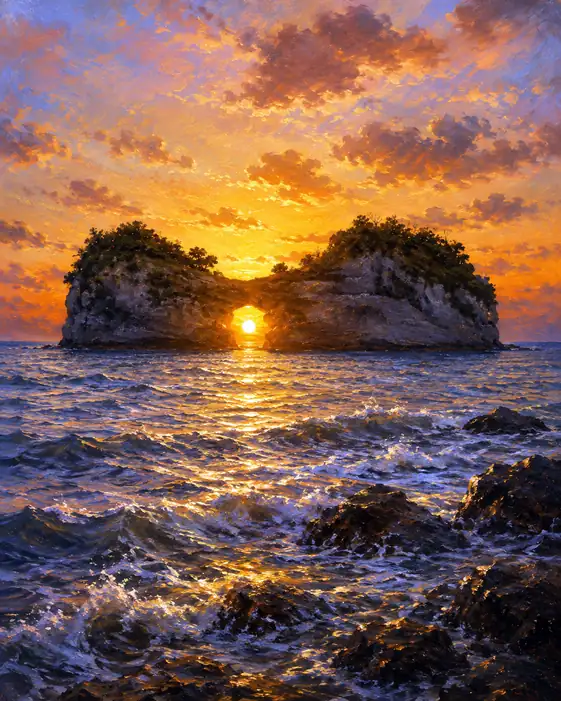 Crashing Waves and the Sunset Arch
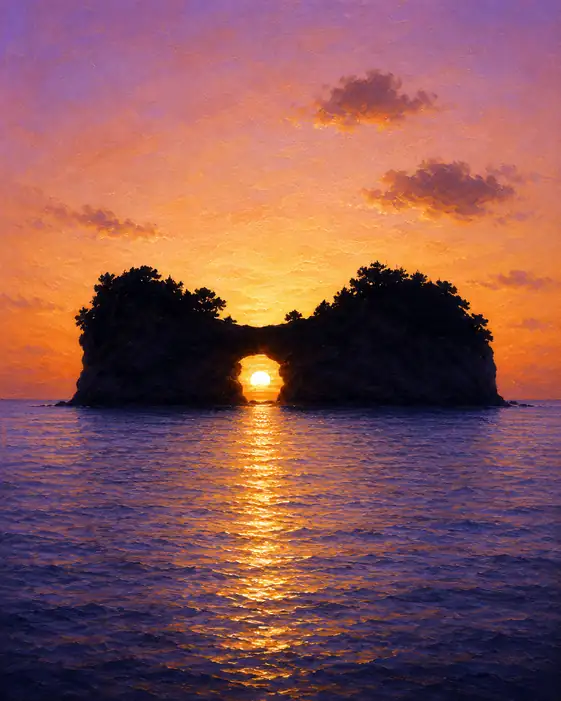 Sunset Gateway and the Golden Sea Path
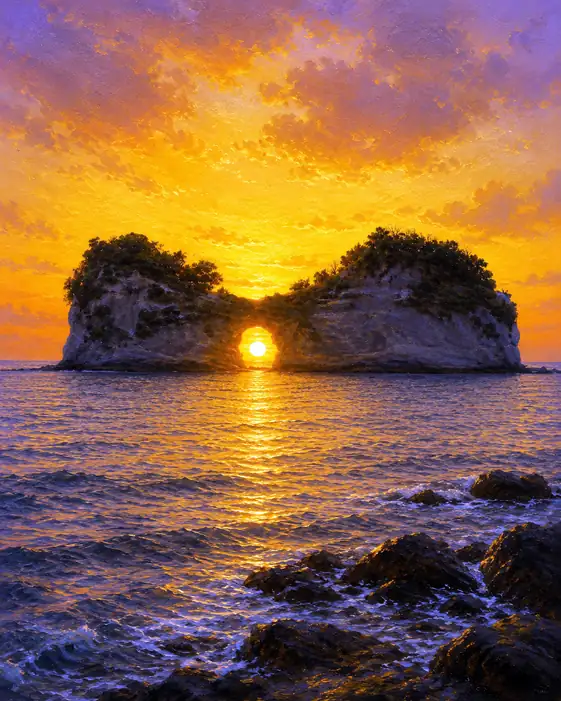 When the Sunset Dwells in Engetsu
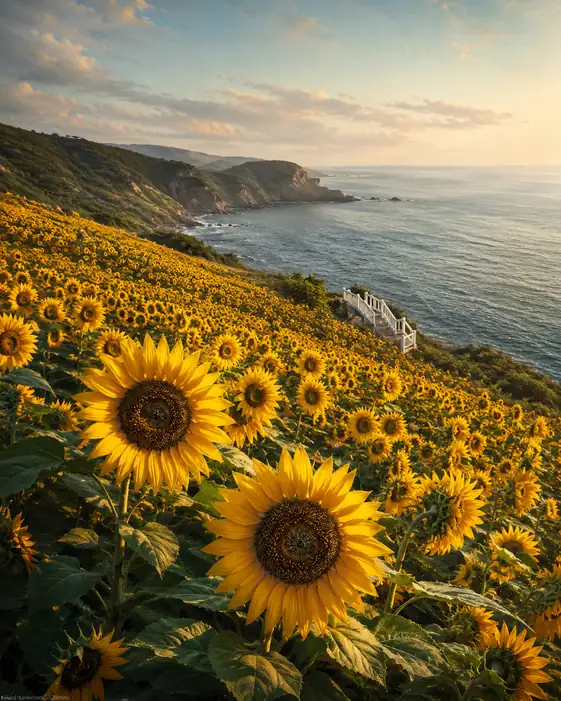 Sunflowers Cascading to the Coastal Horizon
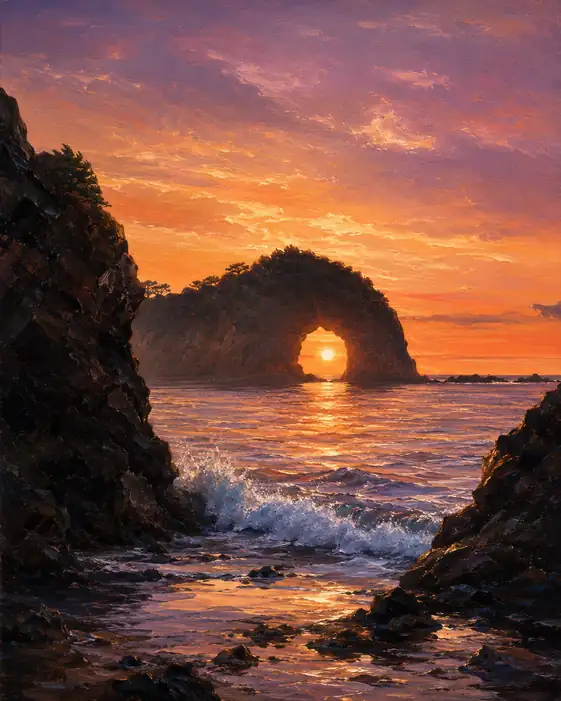 The Sun Passes Through Stone
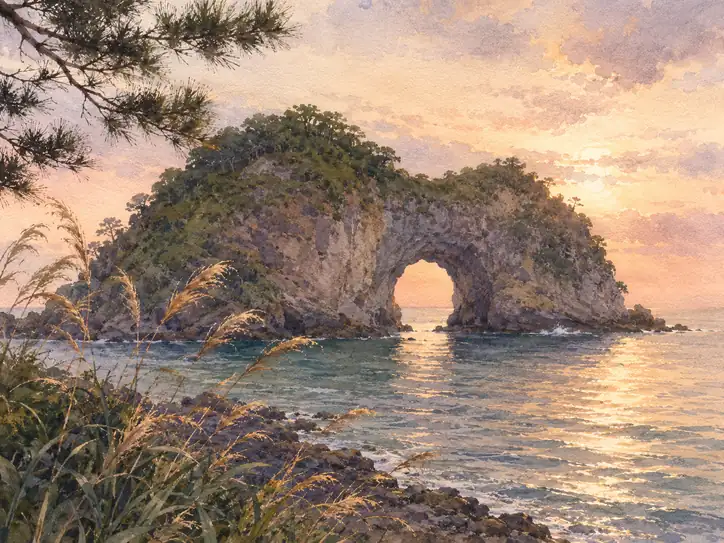 The Sun's Eye on the Sea
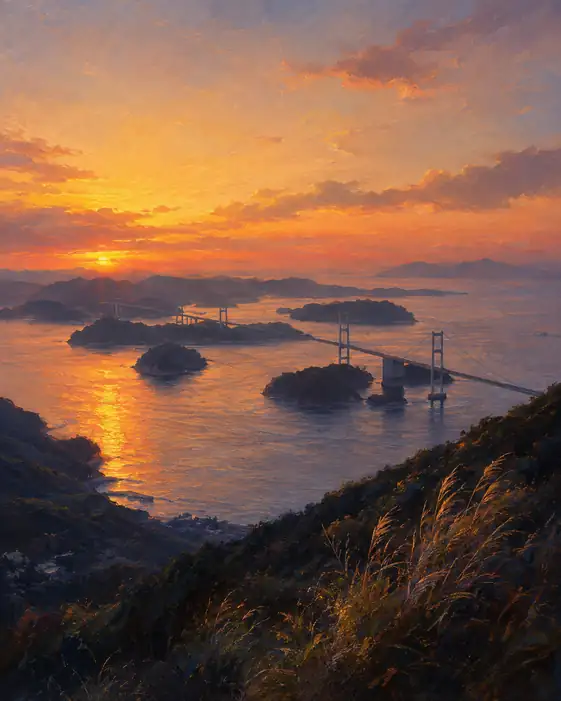 Whispers of Pampas at the Sunlit Channel
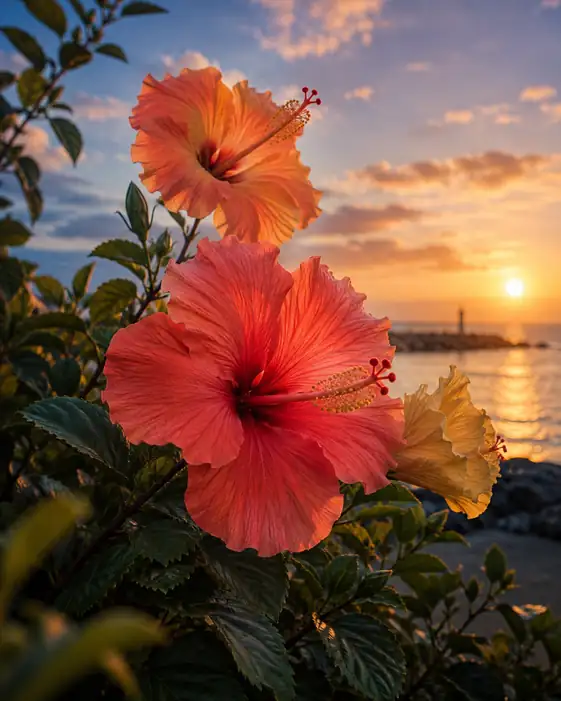 Hibiscus Glowing against the Sunset Harbor
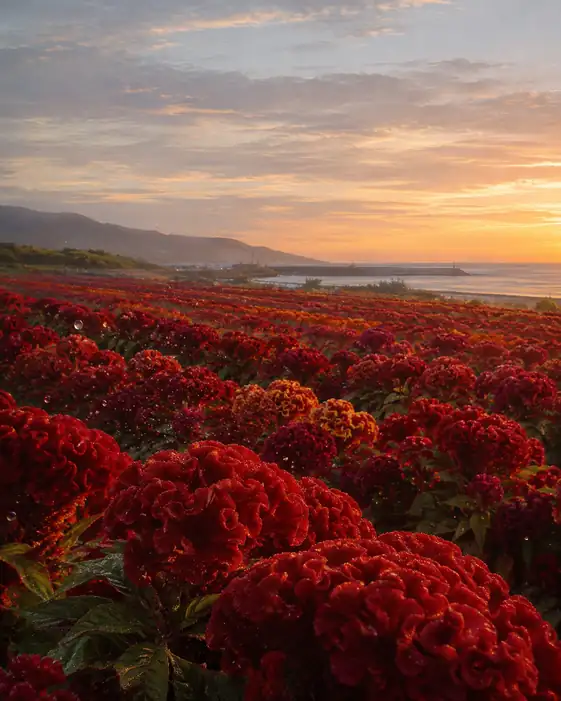 Crimson Slopes of Cockscomb at Sunset
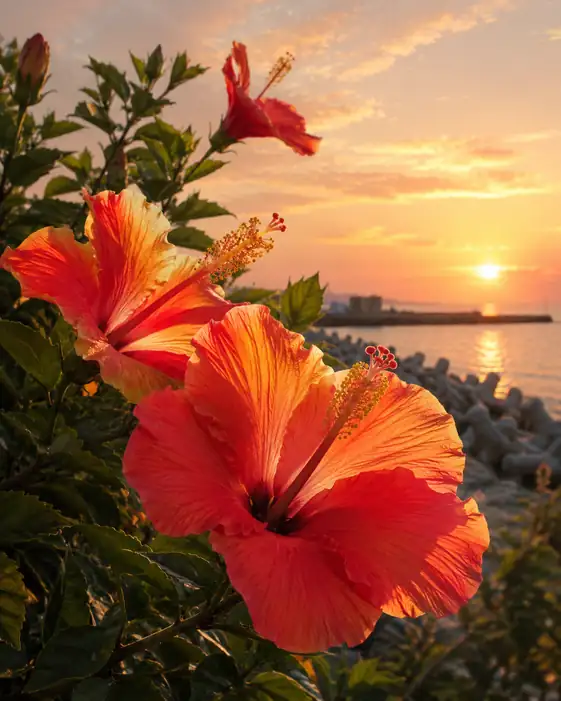 Sunset Radiance on Coastal Hibiscus