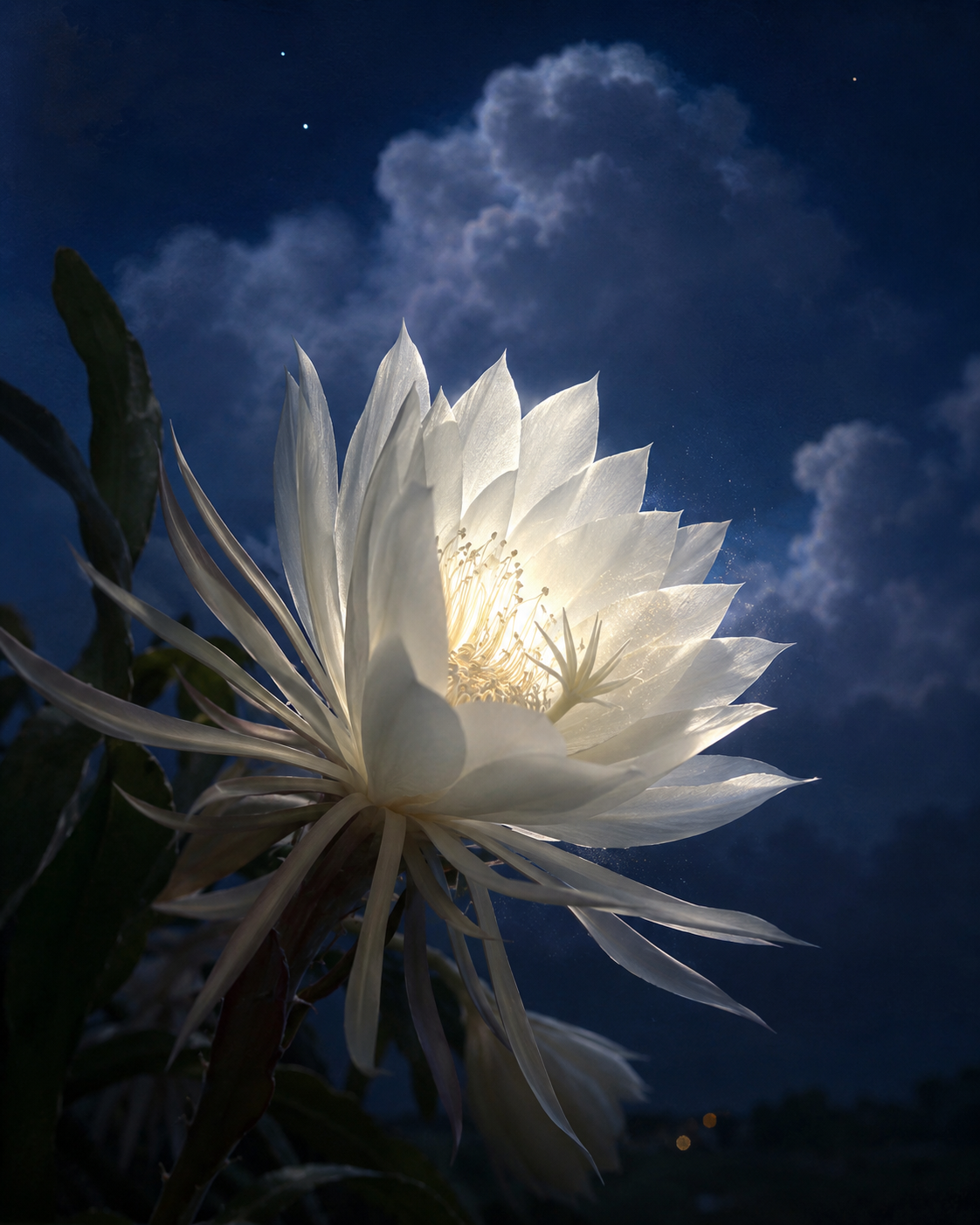
Queen of the Night Lighting the Night Clouds
Critique
Introduction This painting enlarges a white night flower against moonlit clouds. Radiant petals seem to share substance with sky, turning flowering into an encounter between intimacy and weather. Description A white flower rises from lower left, viewed from below. Pointed petals surround bright stamens, while outer segments stream around a reddish stem. Dark leaves frame the edge. Behind, blue sky holds stars and silver clouds. Pale particles drift rightward. Analysis The flower occupies the lower half, and the largest cloud mass crowns it from above, producing two related architectures of layered light. Sharp petal tips echo cloud edges but remain more regular and tactile. Strong backlight illuminates the flower's core and sends translucent gradations through the white surfaces. Dark leaves and stem anchor this luminosity. The upward perspective makes both bloom and cloud feel monumental. Scattered particles create a bridge across the blue interval and keep the scene from separating into foreground object and distant backdrop. Interpretation and Evaluation Because the flower opens at night, the illuminated cloud may seem like an atmospheric witness to a private transformation. Both flower and cloud are temporary configurations: one will close or fade, while the other disperses. Their apparent grandeur therefore rests on impermanence. The small stars introduce an enduring scale, yet they remain minor beside the immediate bloom. This hierarchy values present revelation over abstract duration. The image is theatrical, but concrete botanical detail keeps its wonder credible. Conclusion The work transforms a brief flowering into a sublime weather event. Its white-on-blue palette is lucid, while the comparison of petal and cloud adds conceptual depth. The flower appears neither dwarfed by the sky nor detached from it, but momentarily equal in radiance.
Same Subcategory
Similar Artworks
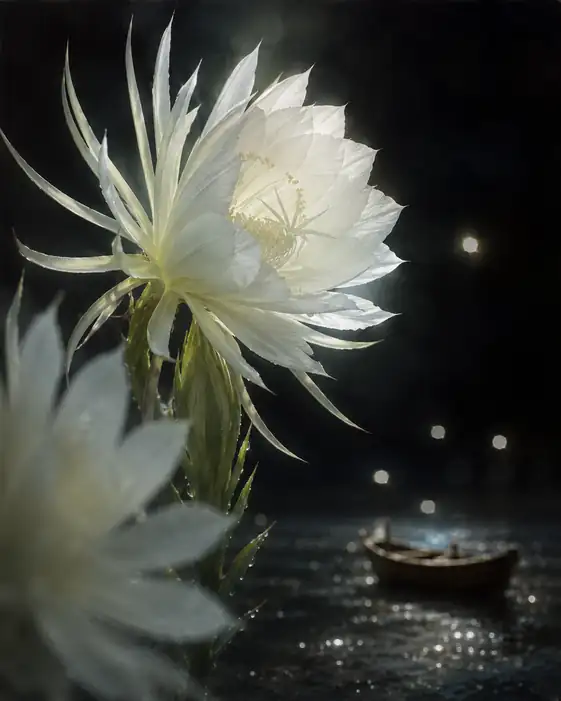 Queen of the Night over the Night Water and Skiff
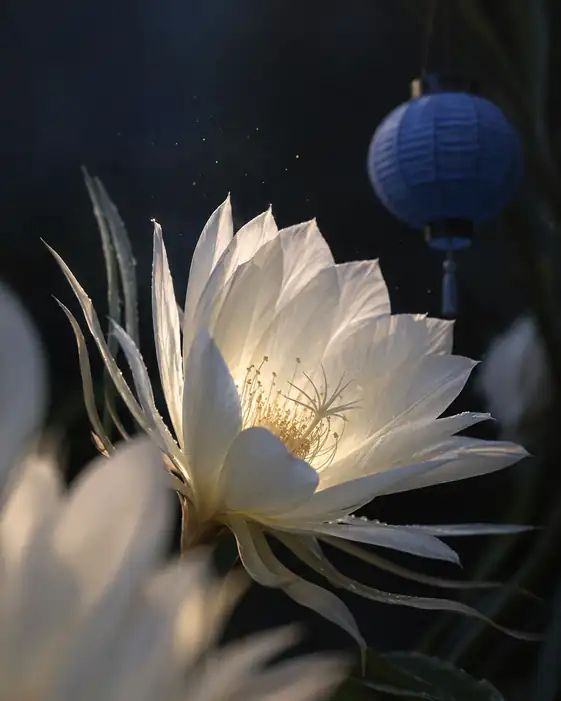 Queen of the Night beneath the Indigo Lantern
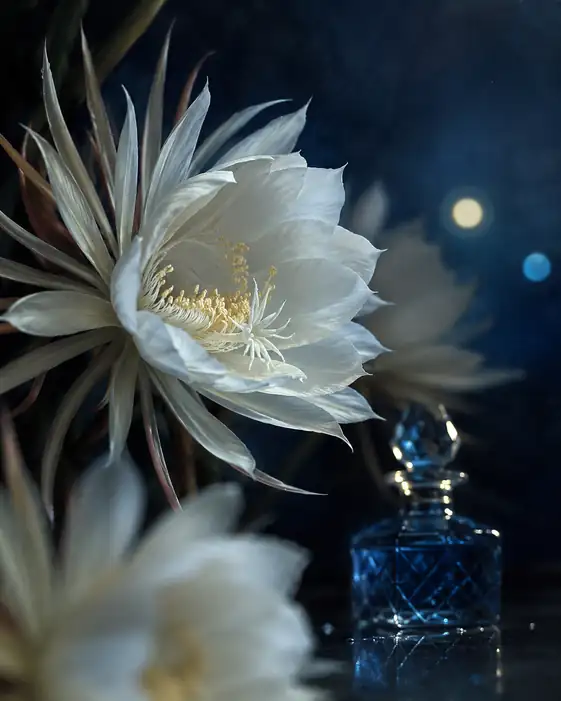 Queen of the Night and the Cobalt Vial
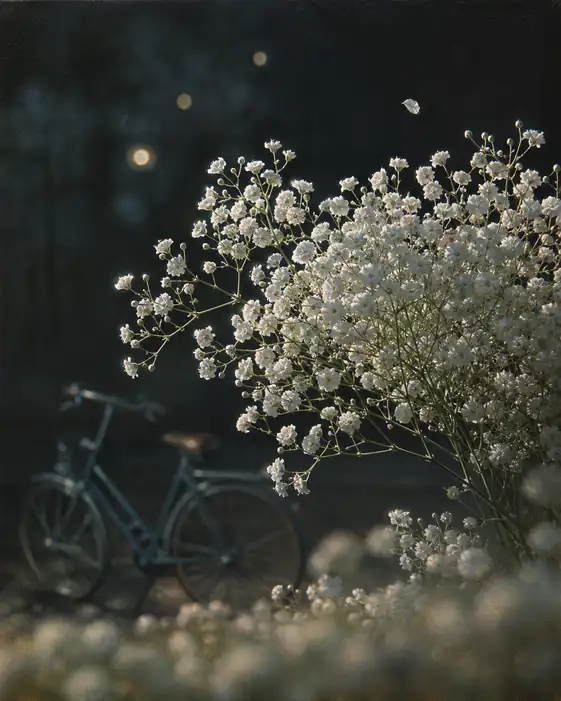 Baby's Breath in Night Mist and the Bicycle
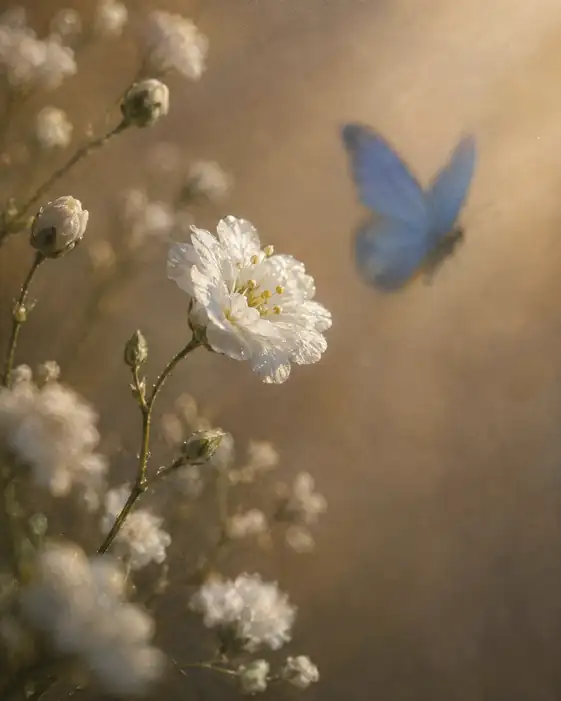 Sunlit Baby's Breath and the Blue Butterfly
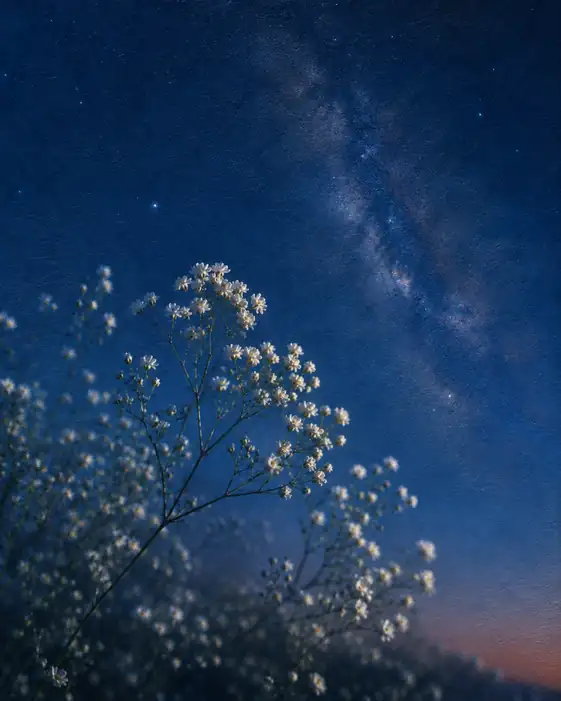 White Baby's Breath and the Milky Way
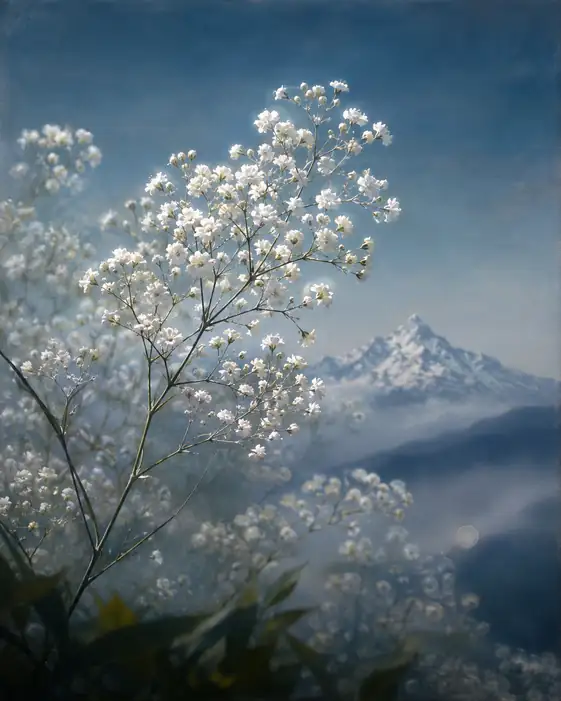 White Baby's Breath Facing the Snowy Peak
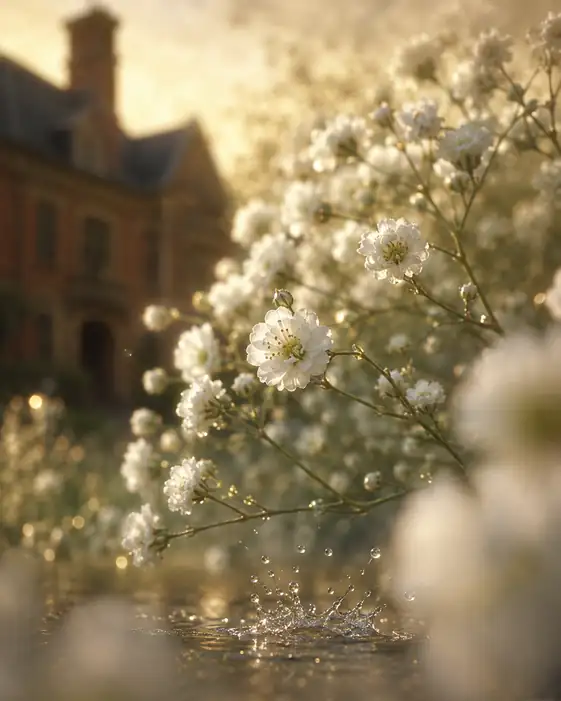 Sunlit Garden and the Water Crown
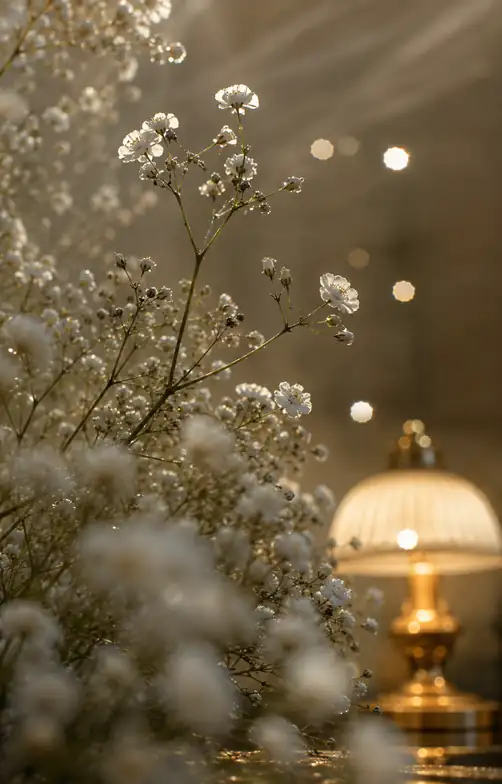 Amber Lamp and the Whispering Blooms
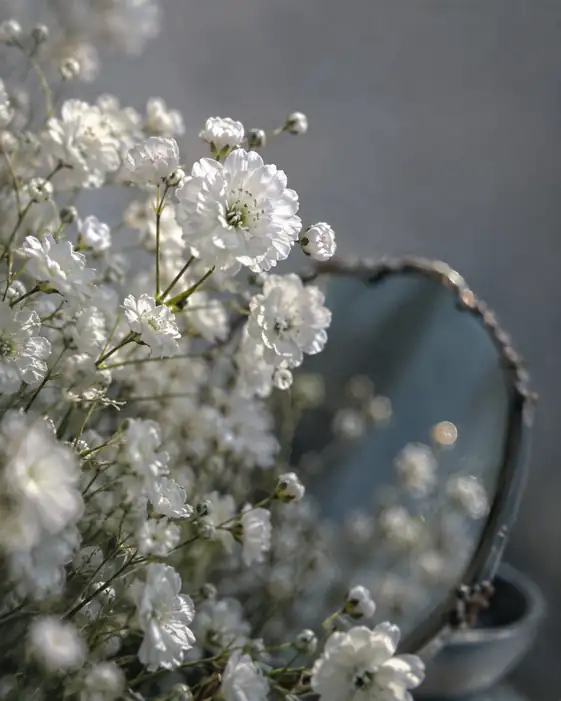 White Baby's Breath and the Mirror's Echo