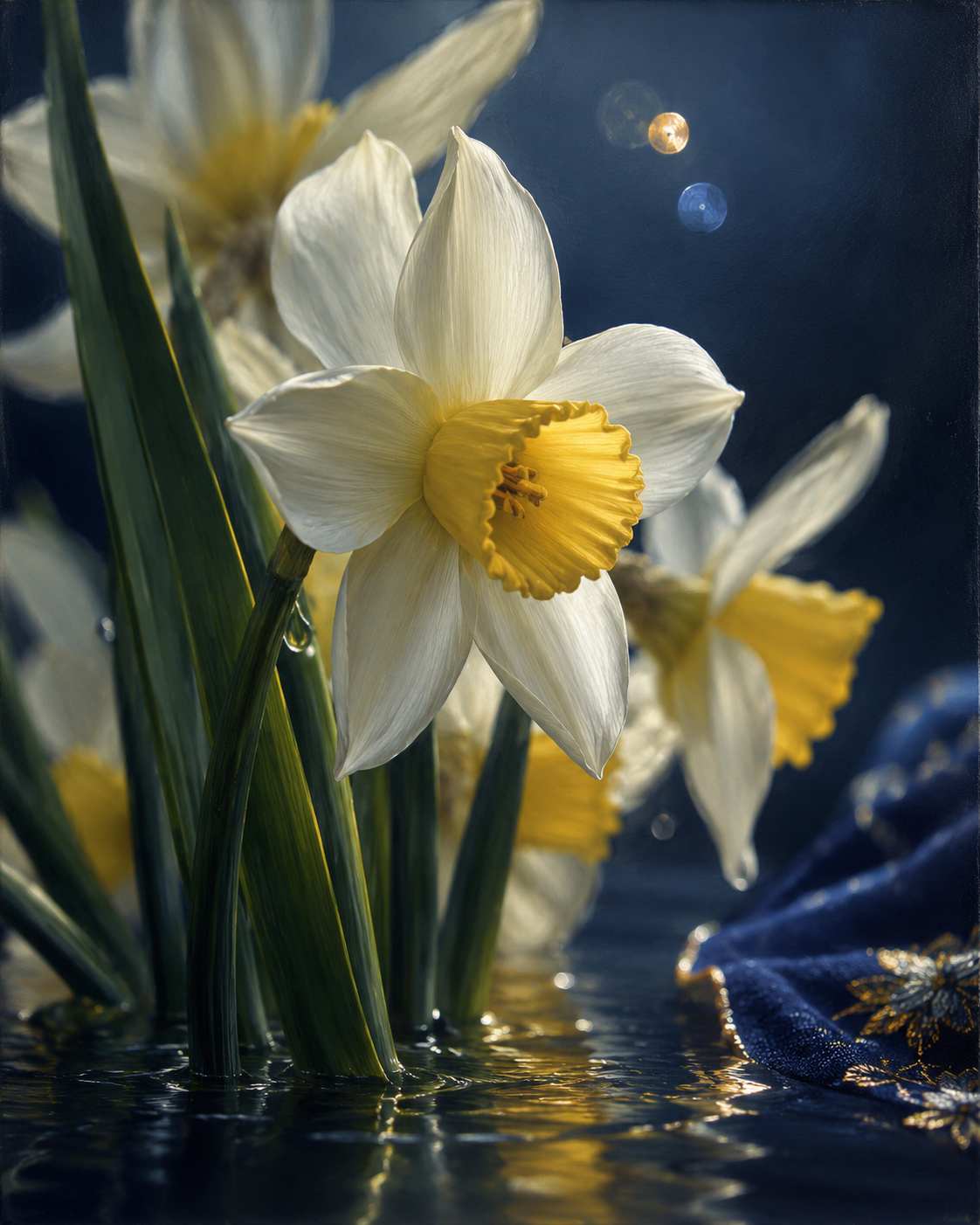
Daffodils over the Gold-Woven Silk
Critique
Introduction This painting gathers daffodils in shallow water beside patterned blue textile. Natural growth, reflected gold, and crafted ornament meet in a controlled still life. Description A white daffodil dominates the upper center, its yellow trumpet facing forward-right. Several other blooms overlap behind and below among tall dark-green leaves. Their stems emerge from rippling water that reflects yellow light. At lower right, folded deep-blue fabric embroidered with gold floral motifs touches the water. Blue and amber circular lights float in the dark background. Analysis The main flower's pale radial geometry contrasts with the leaves' vertical blades and the textile's diagonal fold. Yellow repeats in flower cups, water reflections, embroidery, and distant lights, distributing warmth through the blue field. Selective focus keeps the foremost bloom crisp while surrounding petals establish depth. The textile supplies a dense, deliberate pattern beside the flowers' organic variations. Water joins them materially, reflecting both and softening the boundary between cultivated object and living plant. Interpretation and Evaluation The embroidered floral motif creates an image within the image: human craft imitates botanical form while real flowers stand beside it. Neither is treated as secondary. The fabric preserves flowers as durable pattern, whereas daffodils remain seasonal and vulnerable. Water complicates this opposition by making both temporary reflections. The setting can therefore be read as a dialogue among nature, representation, and memory. Its richness avoids excess because blue darkness and upright leaves provide firm structural restraint. Conclusion The work transforms flowers into a meditation on preserving beauty. Gold thread, yellow petals, and liquid light appear related but never identical. Their convergence is sensuous, while differences between living bloom and crafted ornament keep the image alert.
Same Subcategory
Similar Artworks
 Morning Tea and Daffodils by the Window
 Daffodil along the Night Rails
 Daffodil and the White Steed in Morning Mist
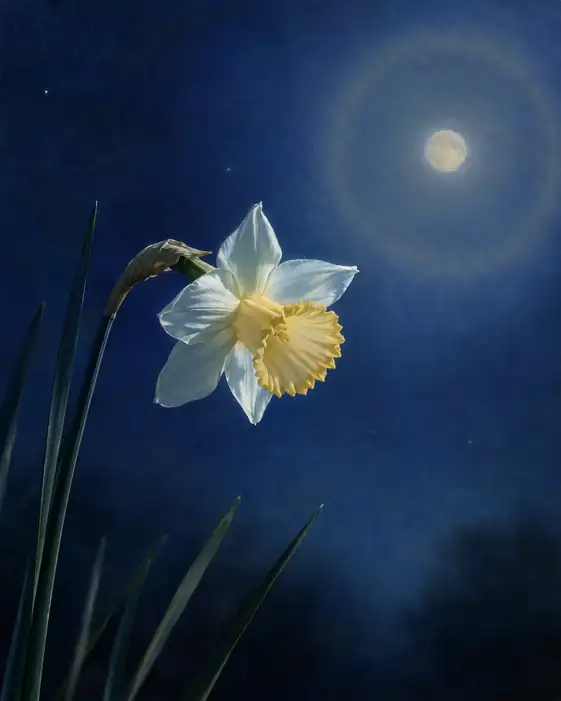 A Golden Song Beneath the Full Moon
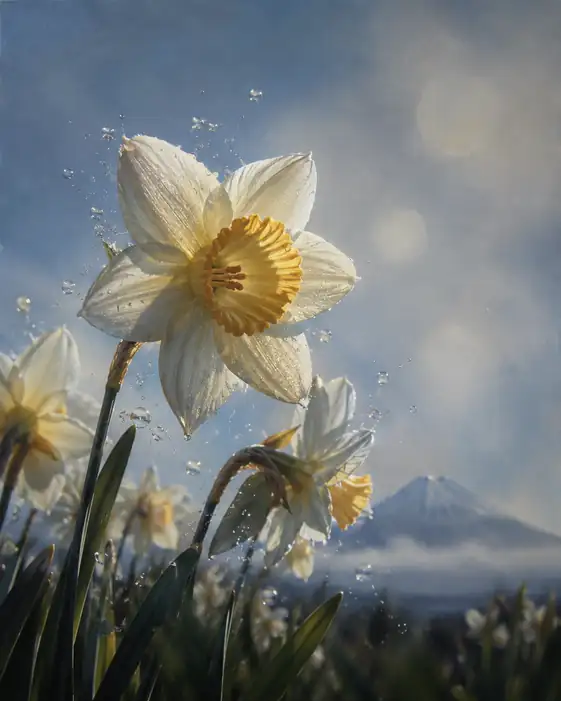 Daffodils and Water Splashes Facing the Sacred Peak
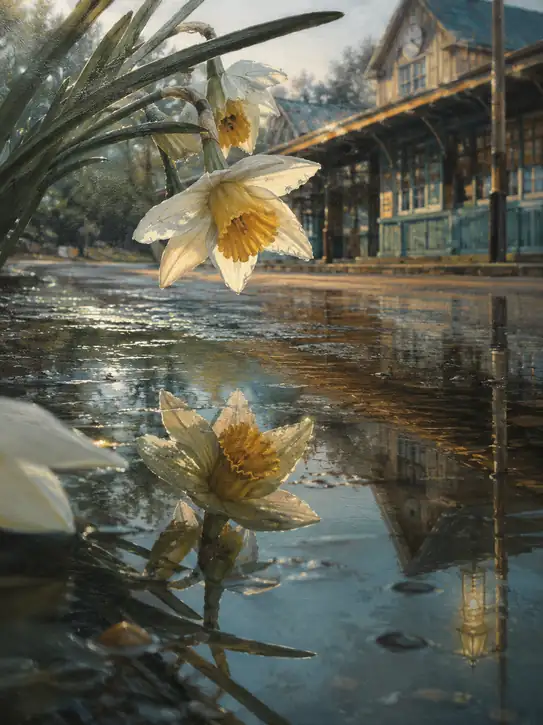 Daffodils and the Rainlit Platform
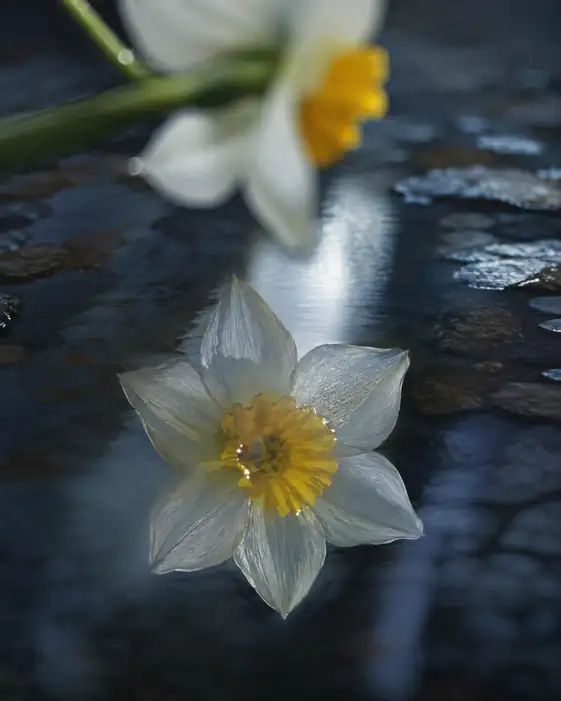 Fallen Daffodil on the Rainy Cobblestones
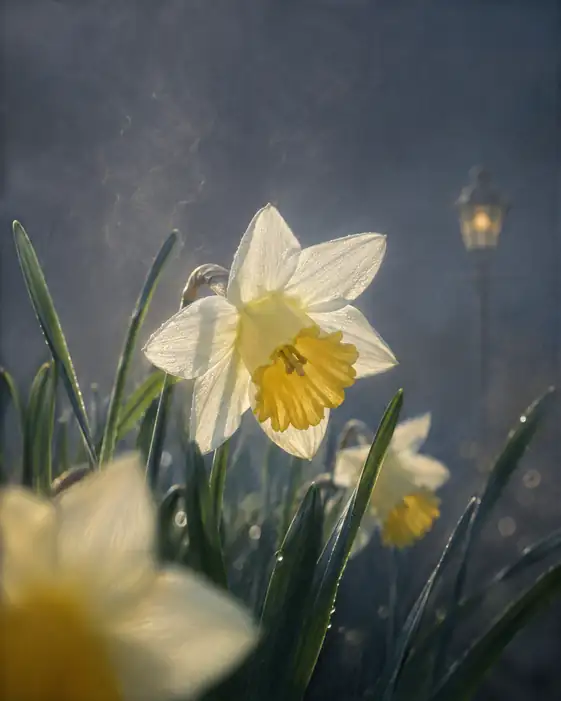 Misty Daffodils and the Distant Lantern
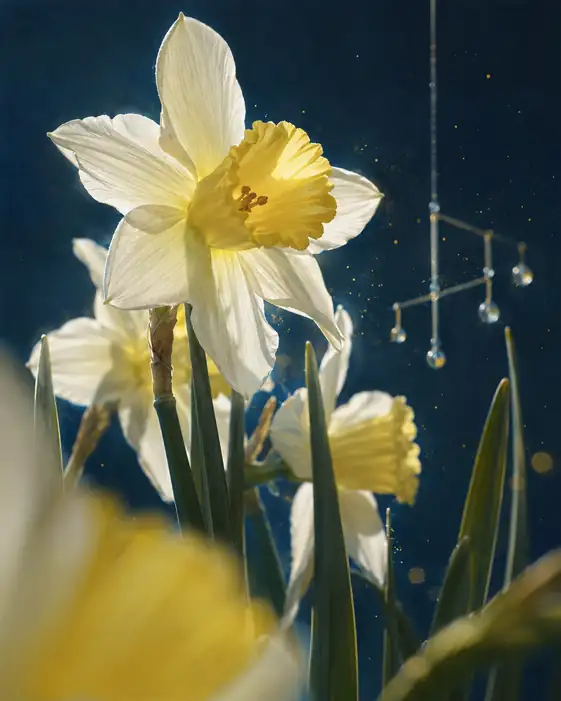 Daffodil Melody in Deep Azure
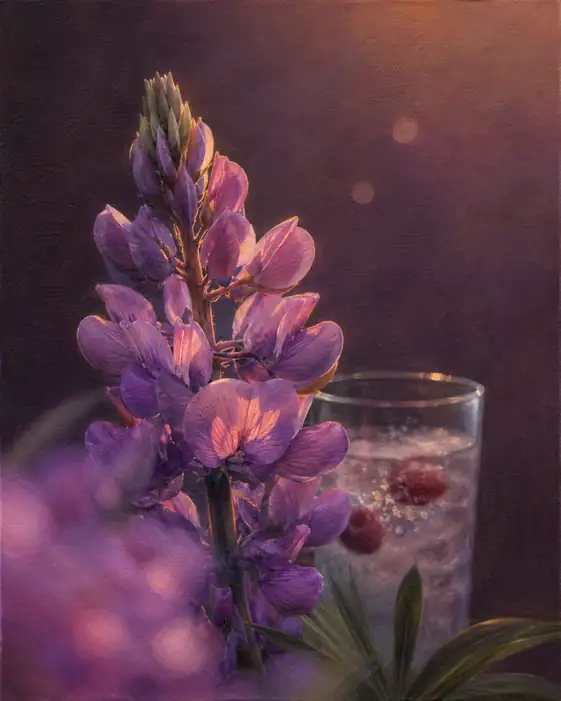 Evening Toast and the Purple Lupine