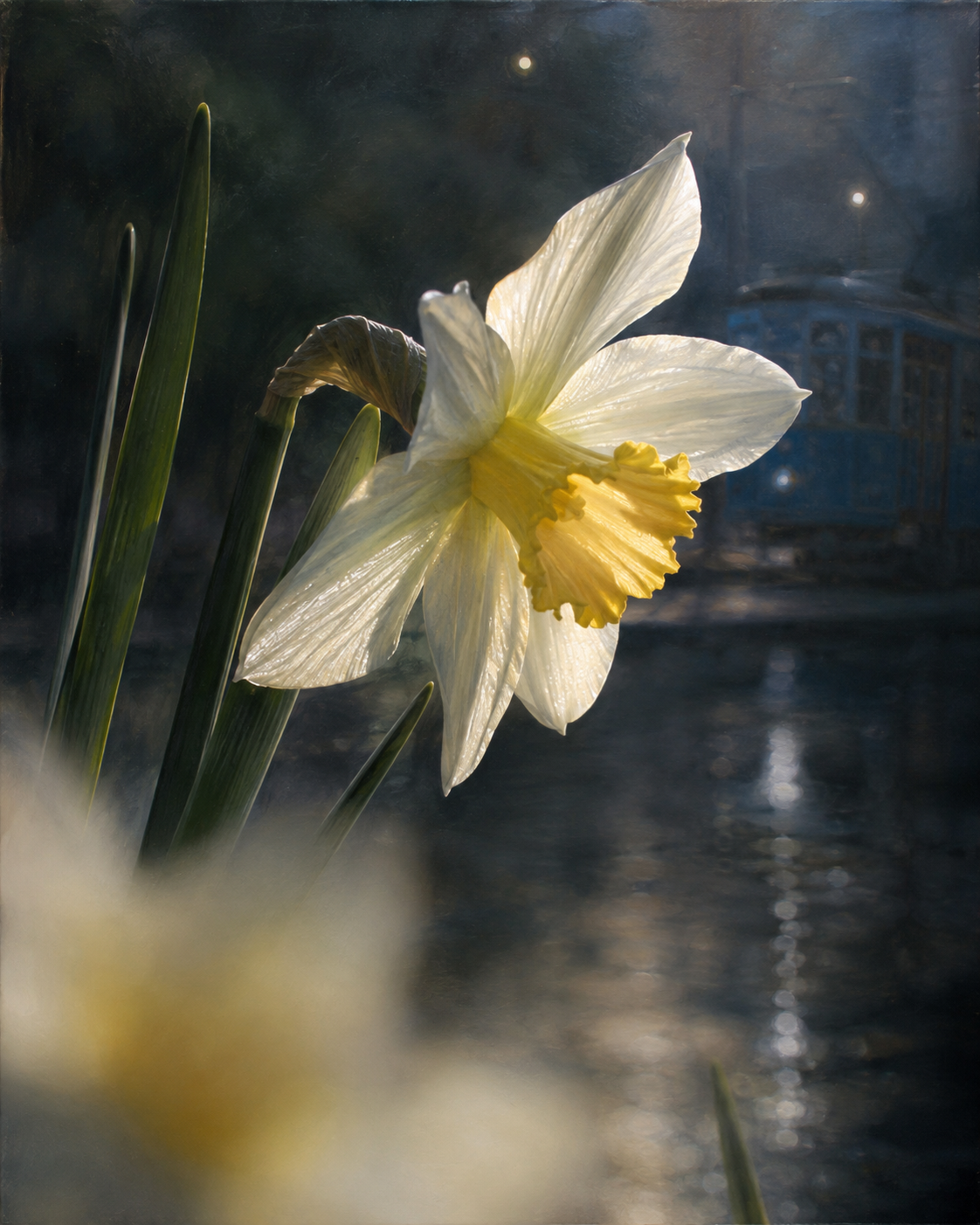
Daffodil along the Night Rails
Critique
Introduction This painting sets a luminous daffodil against a dark train. A station-side flower becomes a witness to travel, joining seasonal return with mechanical passage. Description A white daffodil fills center-left, its petals glowing around a yellow trumpet. Leaves and a brown sheath rise beside it. Behind, a blue railcar occupies the right distance, its windows softened by darkness. Reflected lights descend across wet ground as a bloom blurs below. Analysis The flower's bright radial form interrupts an environment dominated by dark rectangles and verticals. Its warm center projects toward the railcar, establishing a directional link. Sharp petal texture contrasts with the vehicle's indistinct industrial surface. Repeated lights in sky, windows, and wet reflection create a vertical rhythm that extends beyond the flower. Leaves provide intermediate geometry, sharing the train's upright structure while retaining organic curvature. The broad foreground blur increases depth and makes the principal bloom appear suddenly encountered. Interpretation and Evaluation The railcar embodies movement even while apparently stopped; the rooted flower embodies stillness even while growing and changing. Their opposition reveals that neither state is absolute. The bloom returns with seasons, and the train repeats a route, so both participate in cycles of departure and return. Human passengers remain unseen, allowing the vehicle to function as stored possibility rather than anecdote. The flower's radiance beside this shadowed machine suggests quiet life persisting at the edge of organized transit. Conclusion The work balances botanical intimacy with the melancholy scale of public travel. Focus and light give the daffodil agency without romanticizing the train into mere background. Together they create a poised image of waiting, repetition, and brief illumination beside a darkened route.
Same Subcategory
Similar Artworks
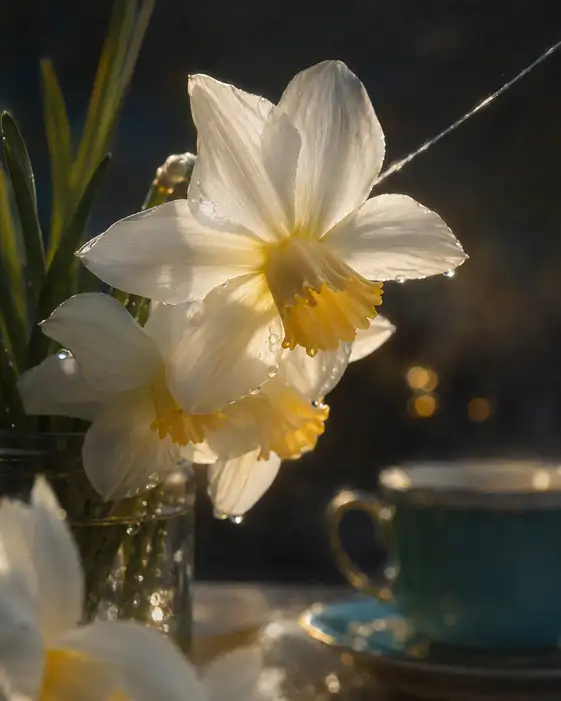 Morning Tea and Daffodils by the Window
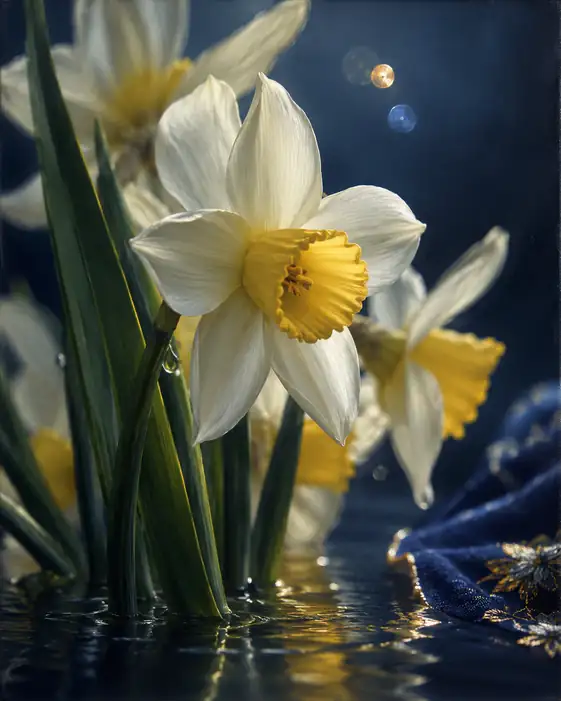 Daffodils over the Gold-Woven Silk
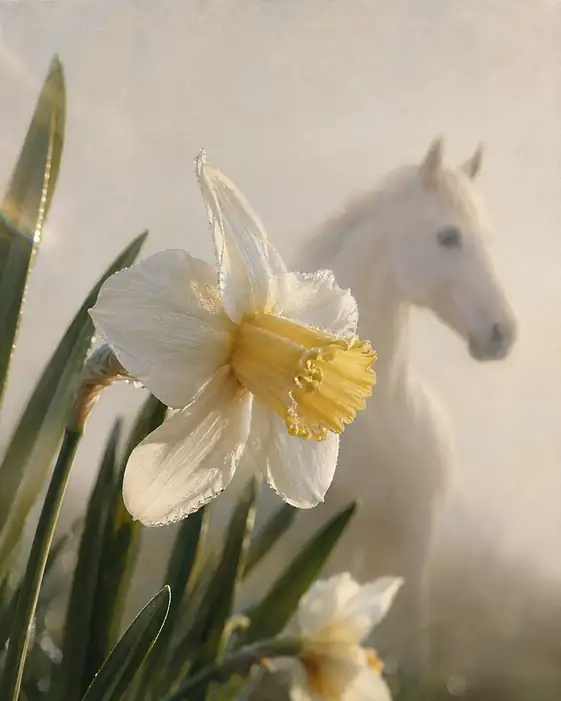 Daffodil and the White Steed in Morning Mist
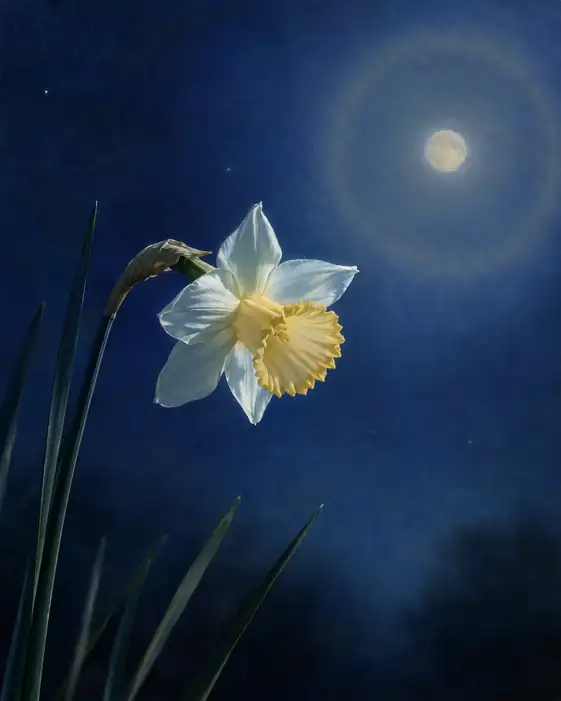 A Golden Song Beneath the Full Moon
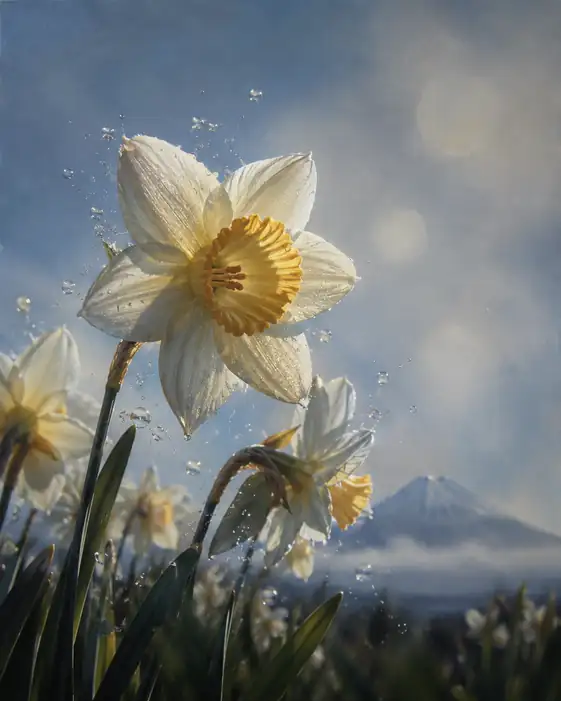 Daffodils and Water Splashes Facing the Sacred Peak
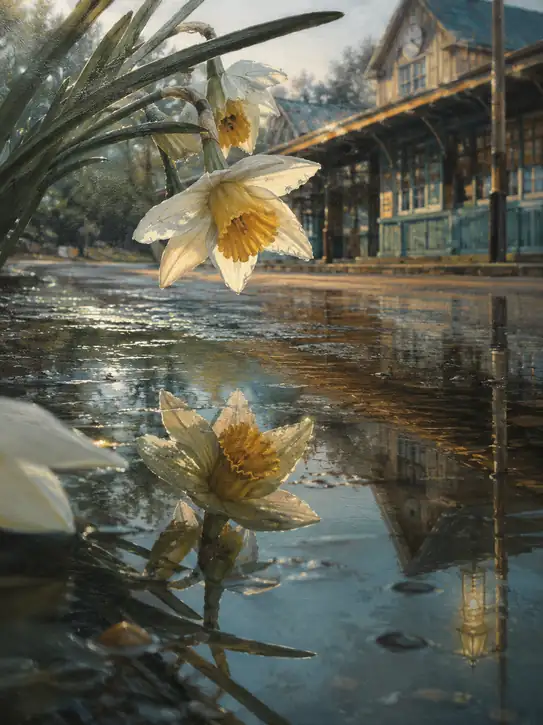 Daffodils and the Rainlit Platform
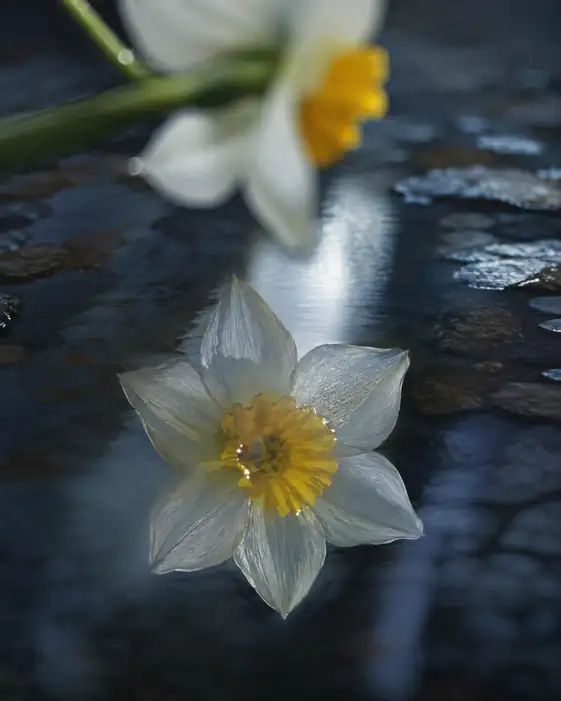 Fallen Daffodil on the Rainy Cobblestones
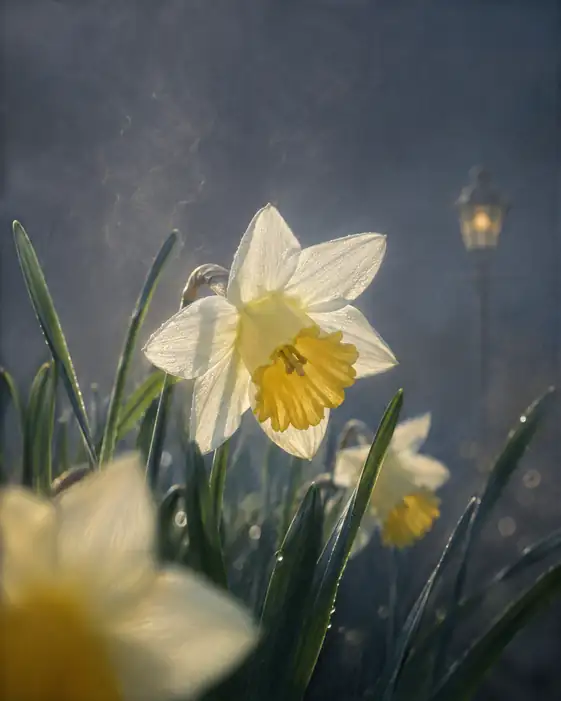 Misty Daffodils and the Distant Lantern
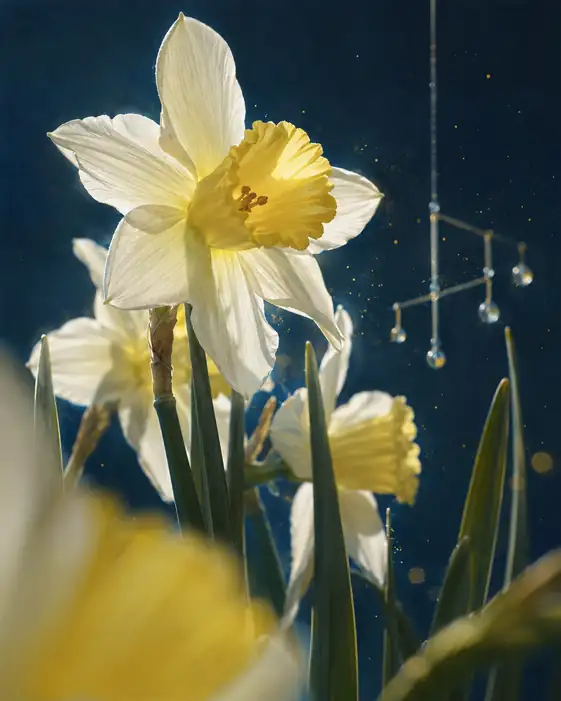 Daffodil Melody in Deep Azure
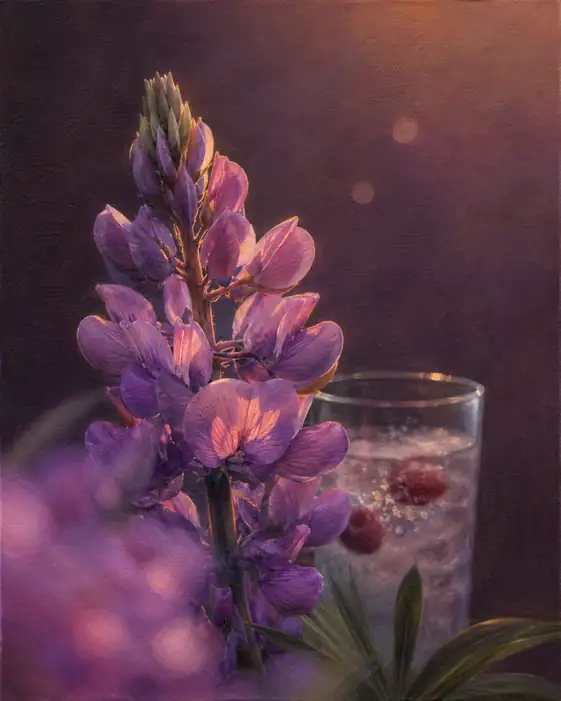 Evening Toast and the Purple Lupine