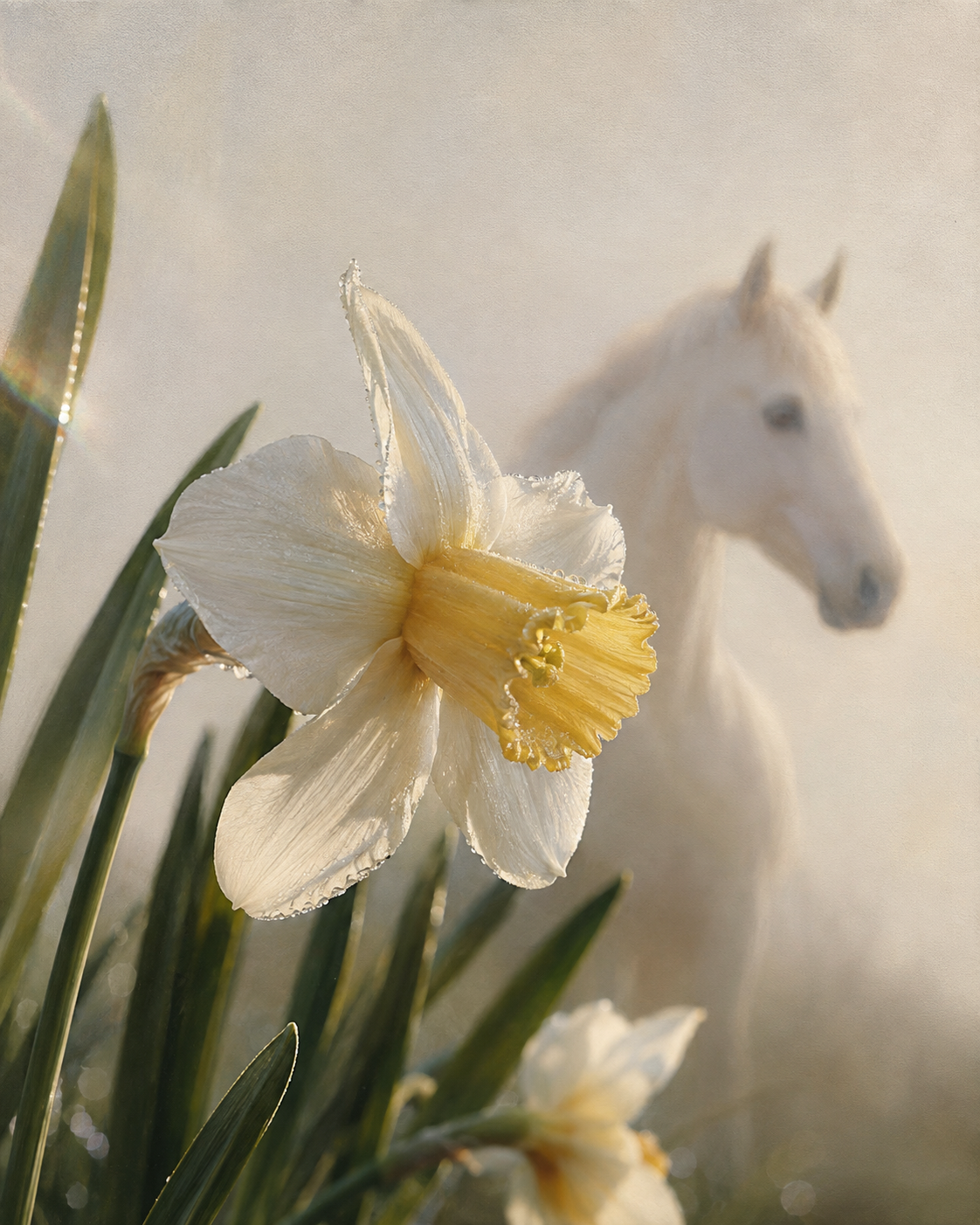
Daffodil and the White Steed in Morning Mist
Critique
Introduction This painting brings a dewy daffodil before a pale horse. Shared whiteness creates gentleness, while focus distinguishes intimate detail from dreamlike presence. Description A white daffodil projects from left-center, its yellow trumpet facing right and droplets lining the petals. Dark leaves rise around it. In warm mist, a white horse appears in profile, head lowered and ears upright. A rainbow flare touches the left leaf. Analysis The flower occupies the sharp foreground and overlaps the horse's neck, binding two otherwise separate scales. Its radial petals contrast with the animal's elongated head and soft vertical body. Ivory, cream, and gold dominate, while green leaves create strong dark blades that prevent the scene from dissolving into pale haze. Shallow focus makes the horse recognizable but inaccessible, closer to an apparition than a portrait. Droplets and the small spectral flare add prismatic accents to the restrained palette. Interpretation and Evaluation The pairing invites associations of innocence, alertness, and renewal, yet it avoids literal allegory. The flower turns openly toward the viewer's right, while the horse seems to look in the same direction, creating a shared orientation. Both are physically delicate in different ways: petals can tear, and the horse's quiet power remains softened by mist. The blurred animal may represent a memory or wished-for companion, but its substantial silhouette prevents pure fantasy. Focus becomes the means by which nearness and emotional distance coexist. Conclusion The work is most persuasive when whiteness reveals difference rather than sameness. Petal, coat, mist, and light each possess a distinct texture. Their gentle convergence produces a luminous pastoral image that remains grounded by leaves, water, and attentive composition.
Same Subcategory
Similar Artworks
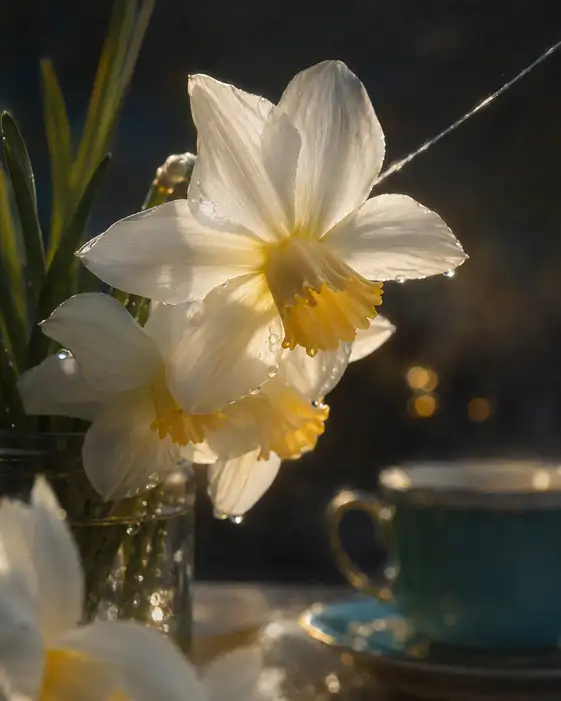 Morning Tea and Daffodils by the Window
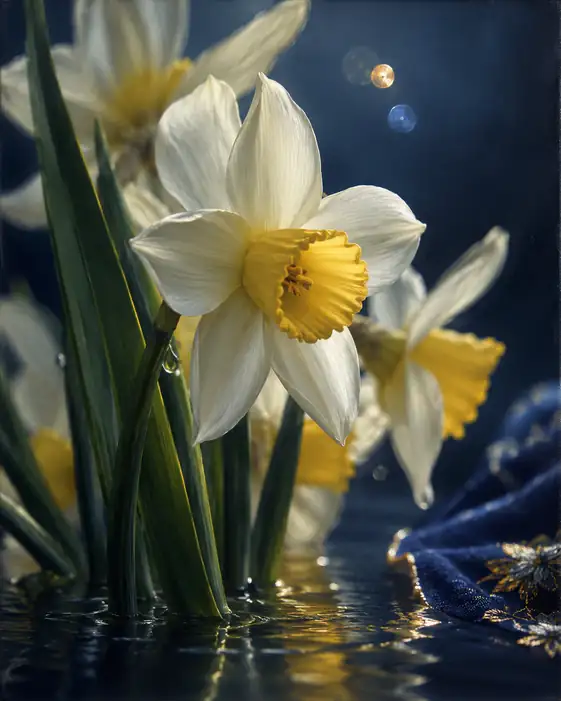 Daffodils over the Gold-Woven Silk
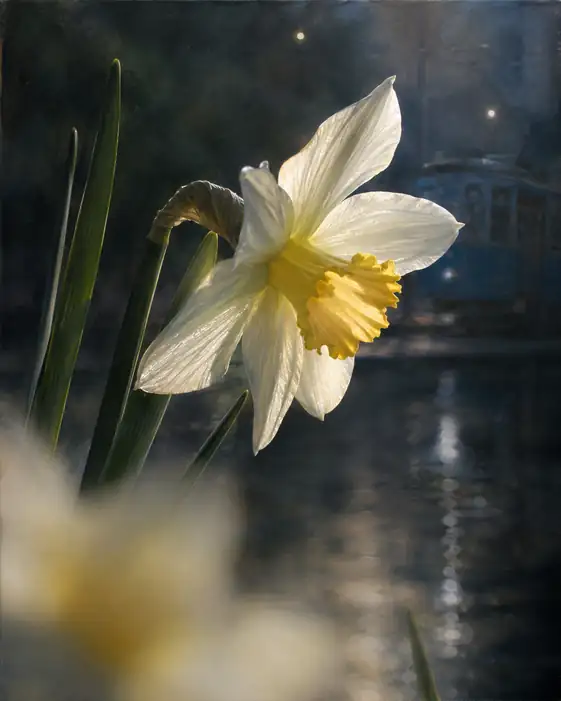 Daffodil along the Night Rails
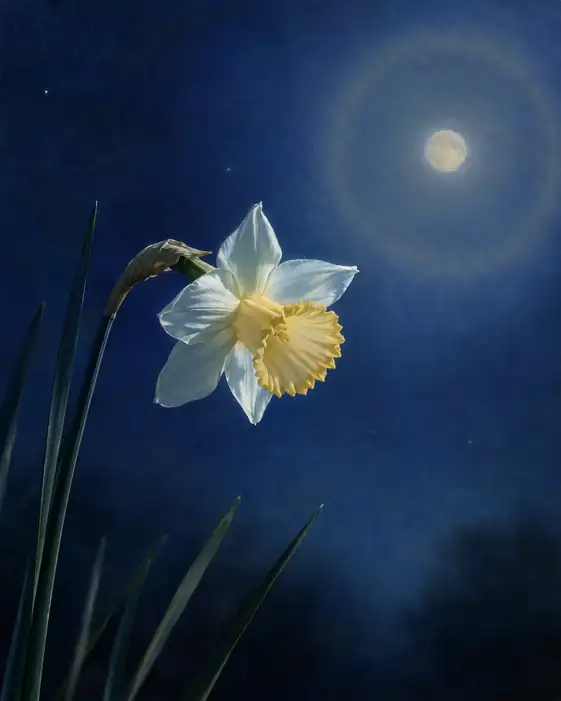 A Golden Song Beneath the Full Moon
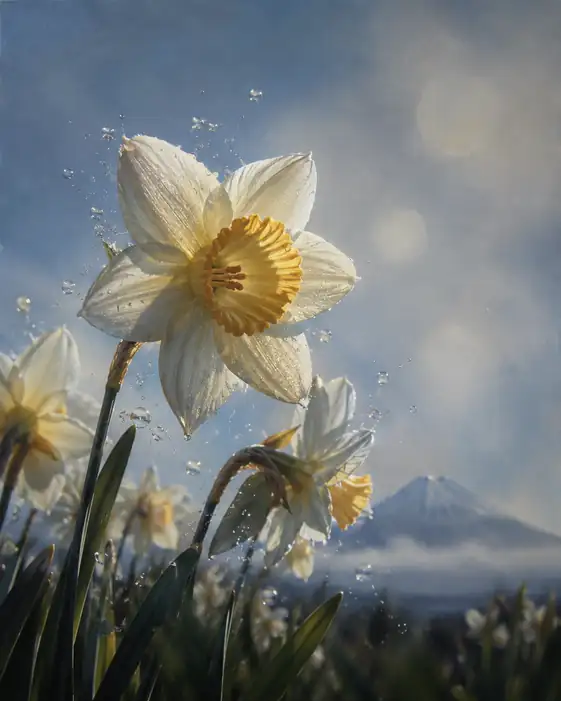 Daffodils and Water Splashes Facing the Sacred Peak
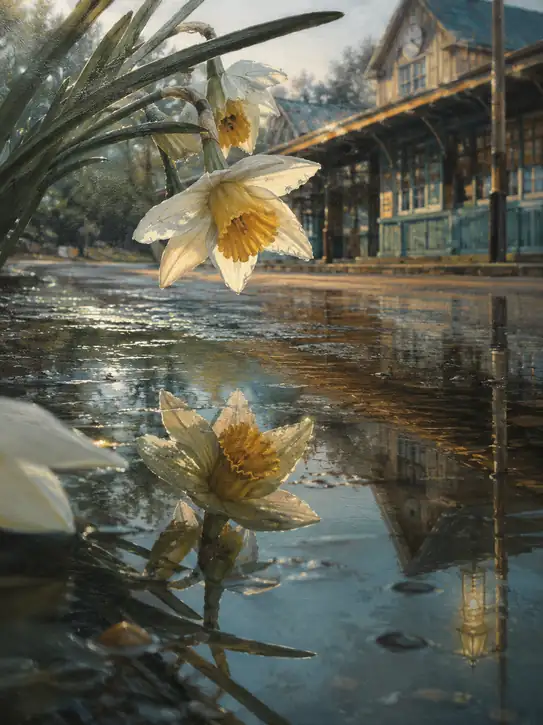 Daffodils and the Rainlit Platform
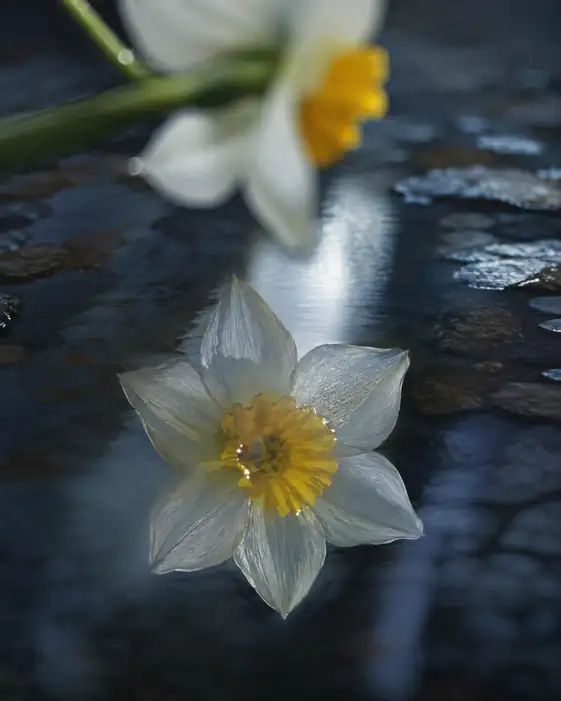 Fallen Daffodil on the Rainy Cobblestones
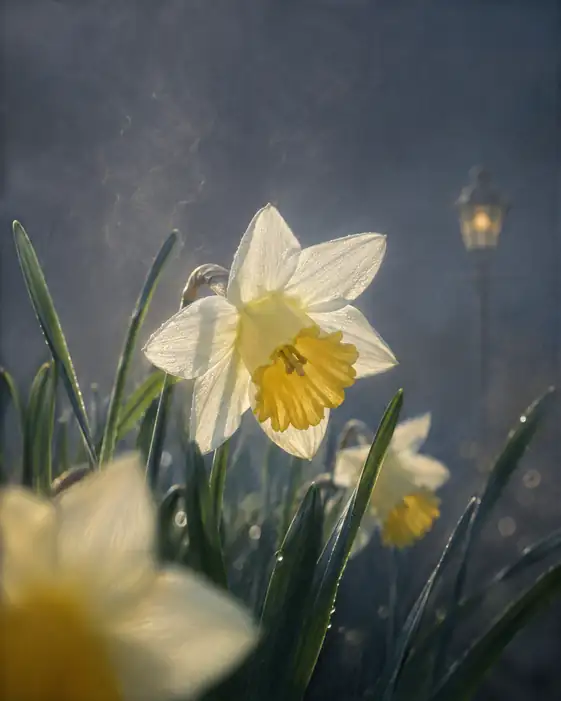 Misty Daffodils and the Distant Lantern
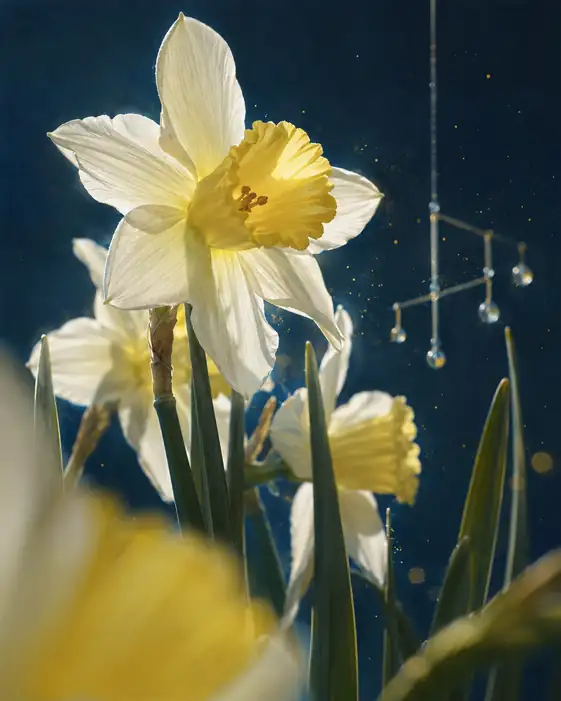 Daffodil Melody in Deep Azure
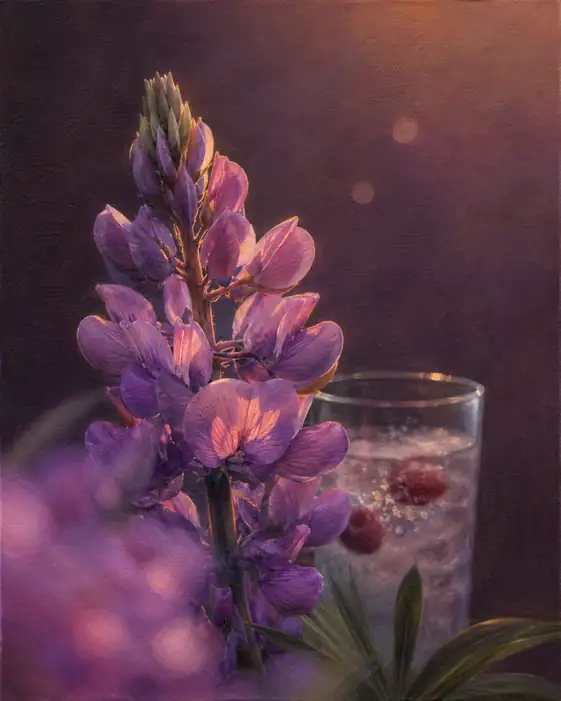 Evening Toast and the Purple Lupine