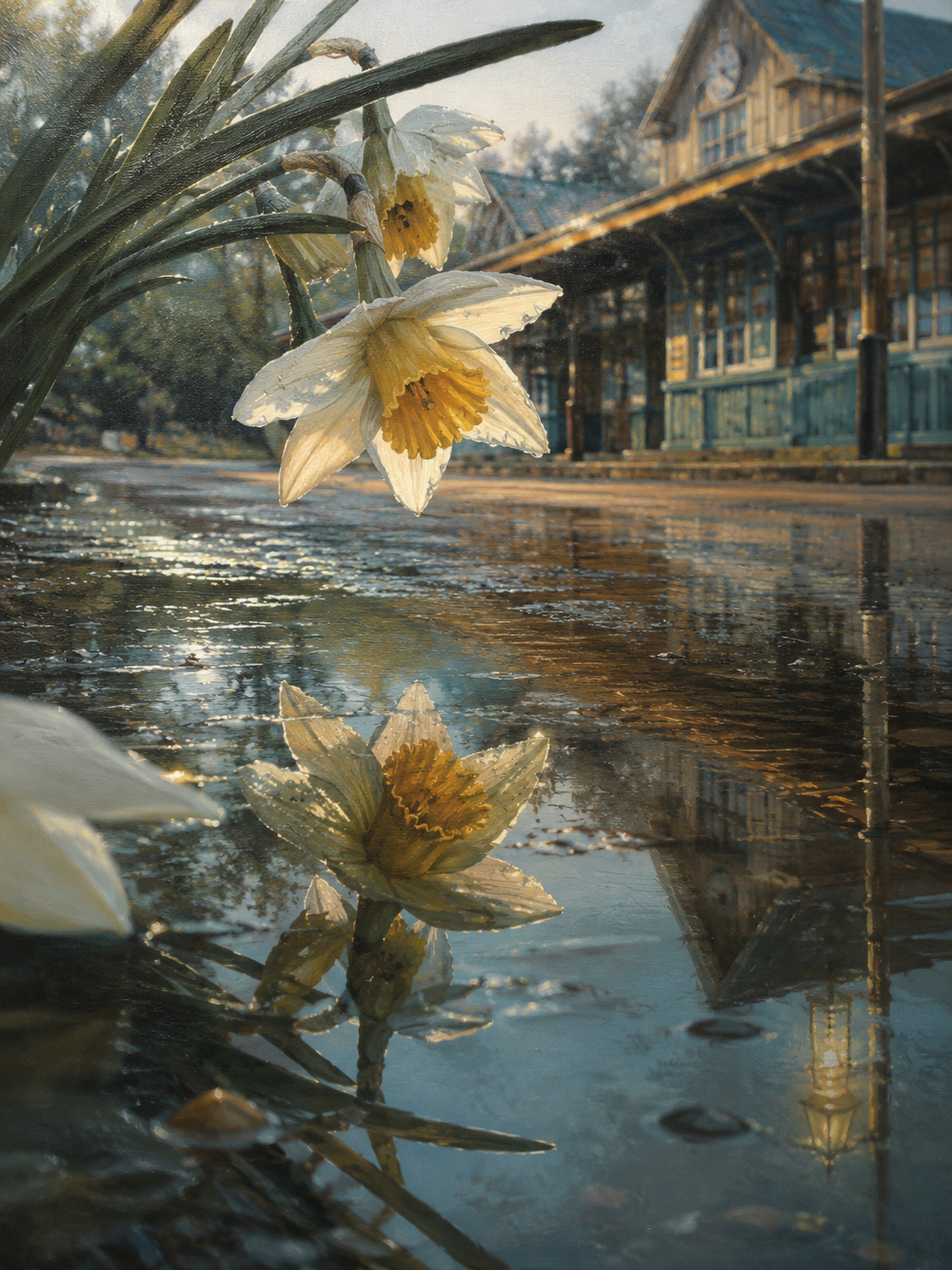
Daffodils and the Rainlit Platform
Critique
Introduction This painting frames wet daffodils beside a traditional station-like building. Botanical intimacy meets public architecture, while puddles double both into a meditation on place and weather. Description White-and-yellow daffodils hang from green leaves at upper left, one projecting toward center. Another rises beside a puddle. At right stands a timber building with teal panels, windows, gabled roof, and covered platform. Its structure and lantern reflect below. Analysis The composition is divided by a low reflective horizon, yet flowers cross that boundary and bind upper reality to lower image. Curving stems oppose the building's repeated posts, window grids, and roof lines. Warm sunlight edges petals and timber, while blue-green surfaces cool the palette. The nearest bloom is large but does not conceal the architecture; instead, its diagonal points toward the facade. Ripples and broken reflections prevent the lower half from becoming a mechanical duplicate, giving the geometry fluid motion. Interpretation and Evaluation The station-like setting suggests arrivals and departures, whereas perennial flowers imply return through seasonal cycles. Rain has temporarily altered both, placing architecture and bloom within the same unstable mirror. The reflected lantern introduces human warmth without requiring visible figures. Absence thus becomes inhabited rather than empty: the building seems to retain traces of travelers, and the flowers continue their own recurring passage. This parallel is persuasive because it emerges through repeated forms and temporal cues. Conclusion The work joins civic memory to close botanical observation with unusual grace. Its puddle is not incidental scenery but the device that folds structure, light, and flower into one field. After rain, an ordinary platform becomes a luminous threshold between staying and moving on.
Same Subcategory
Similar Artworks
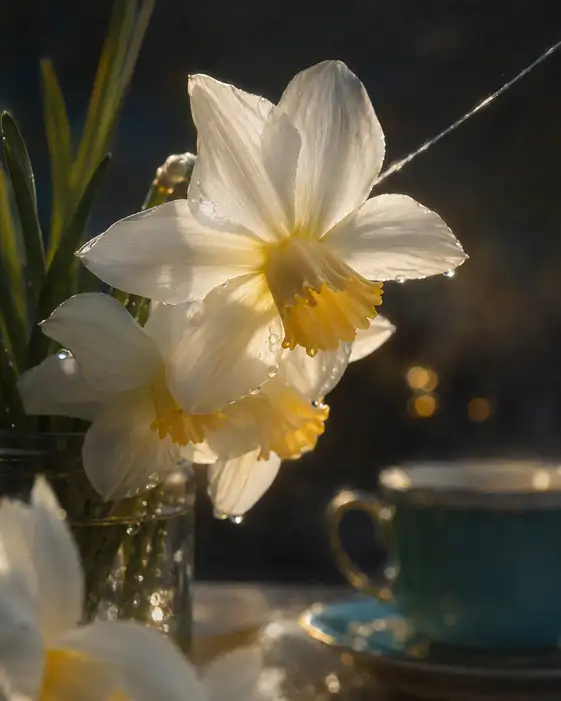 Morning Tea and Daffodils by the Window
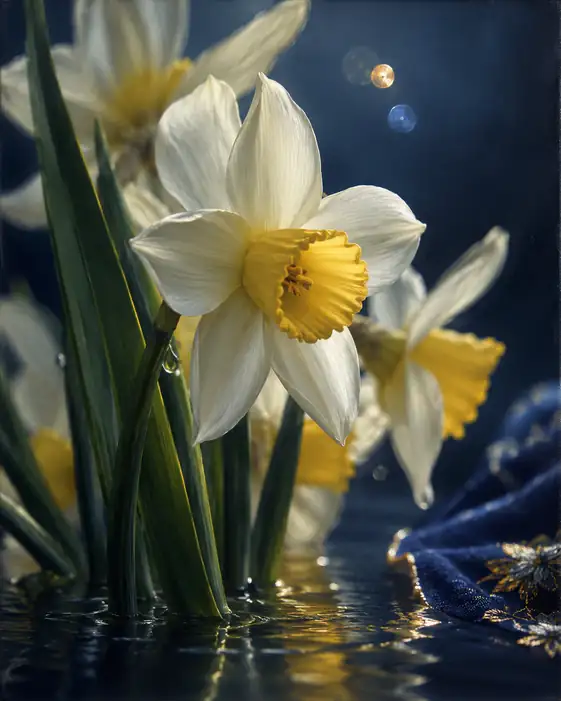 Daffodils over the Gold-Woven Silk
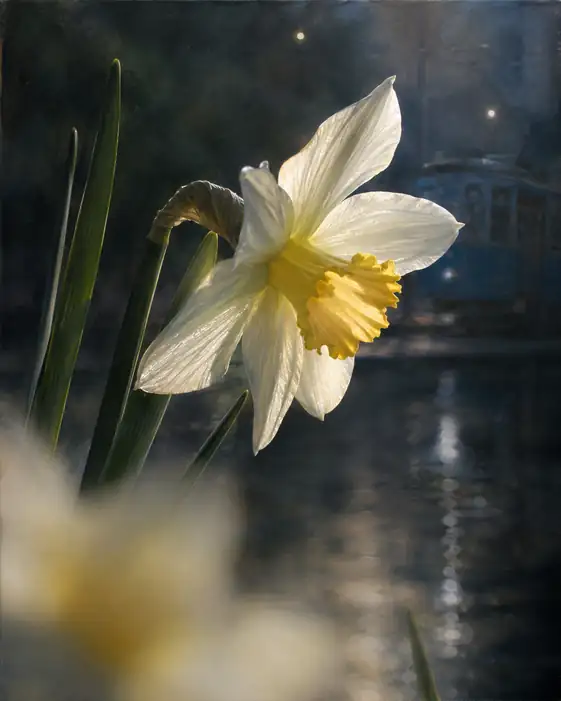 Daffodil along the Night Rails
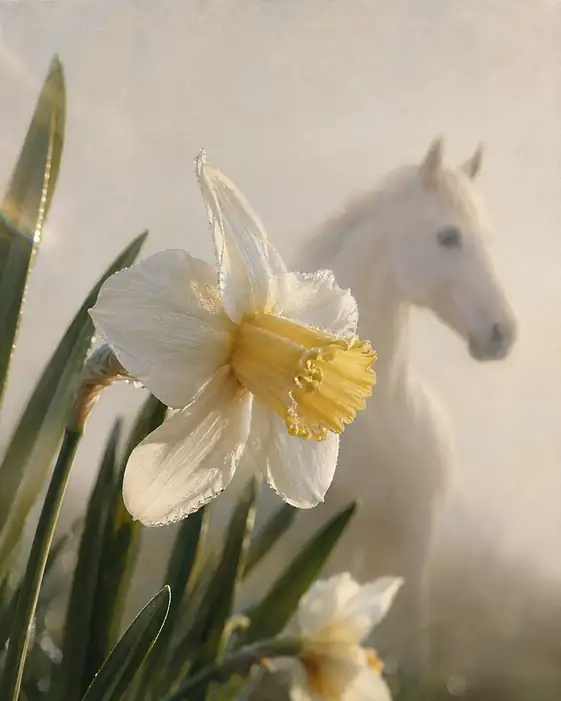 Daffodil and the White Steed in Morning Mist
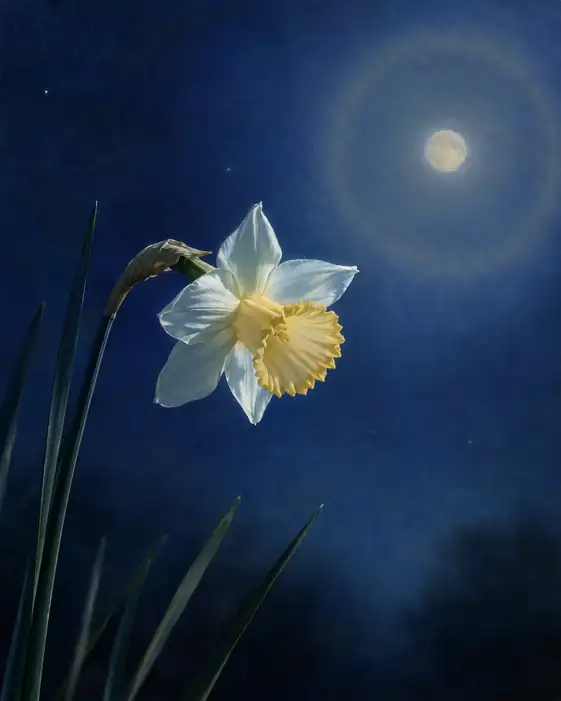 A Golden Song Beneath the Full Moon
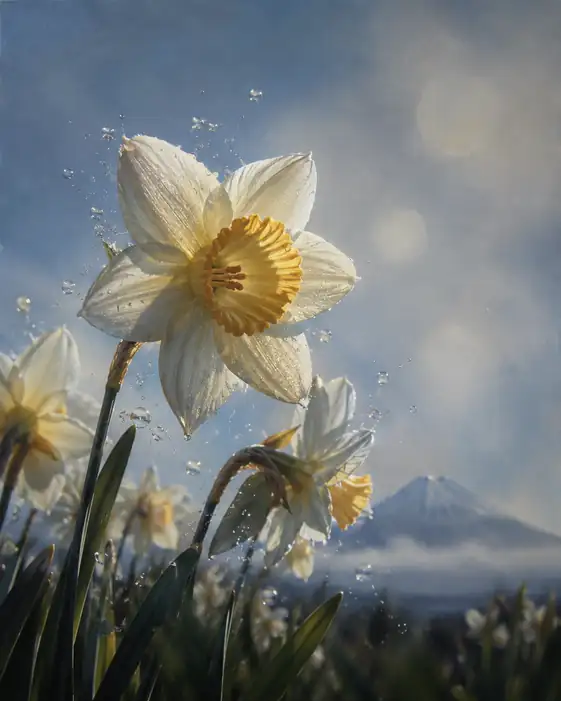 Daffodils and Water Splashes Facing the Sacred Peak
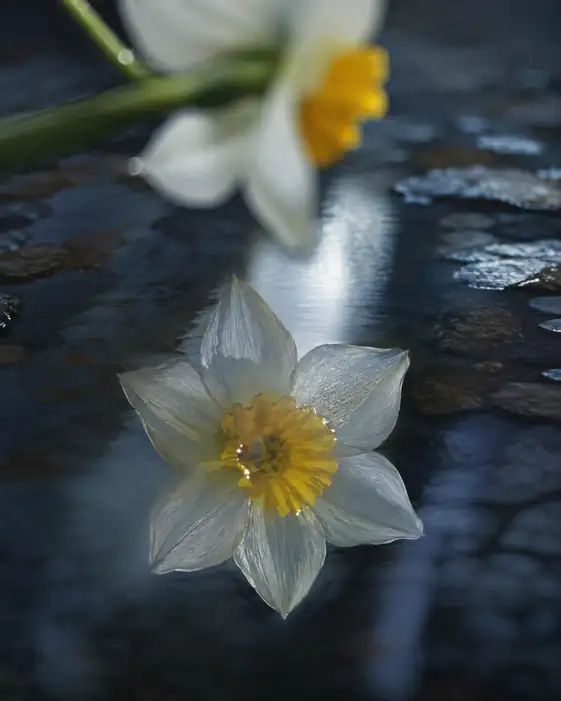 Fallen Daffodil on the Rainy Cobblestones
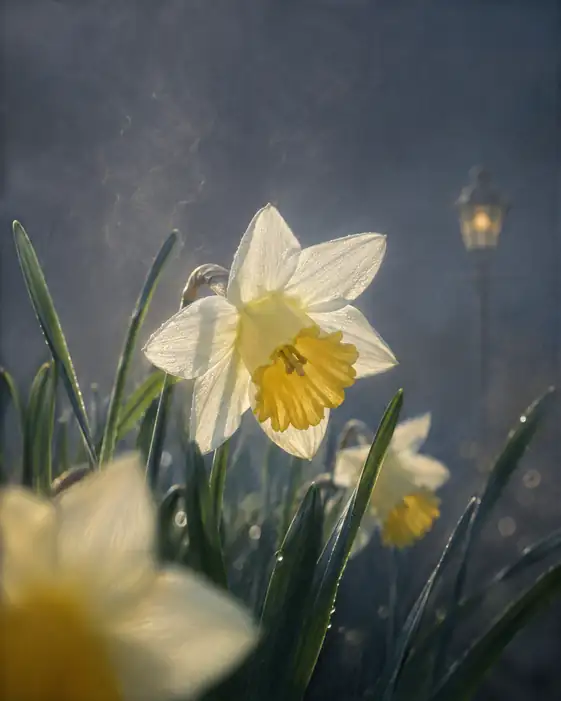 Misty Daffodils and the Distant Lantern
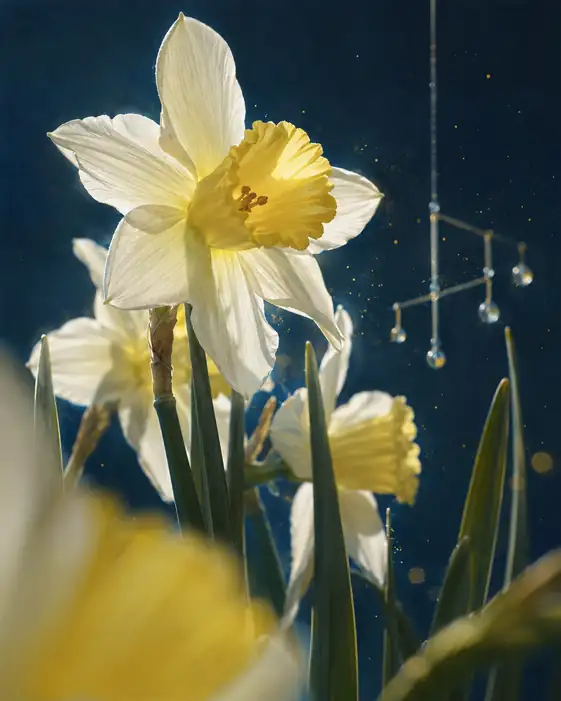 Daffodil Melody in Deep Azure
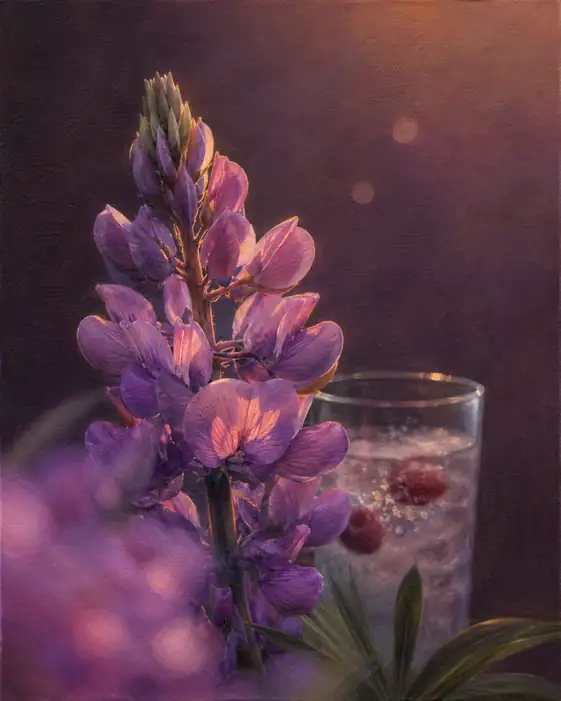 Evening Toast and the Purple Lupine