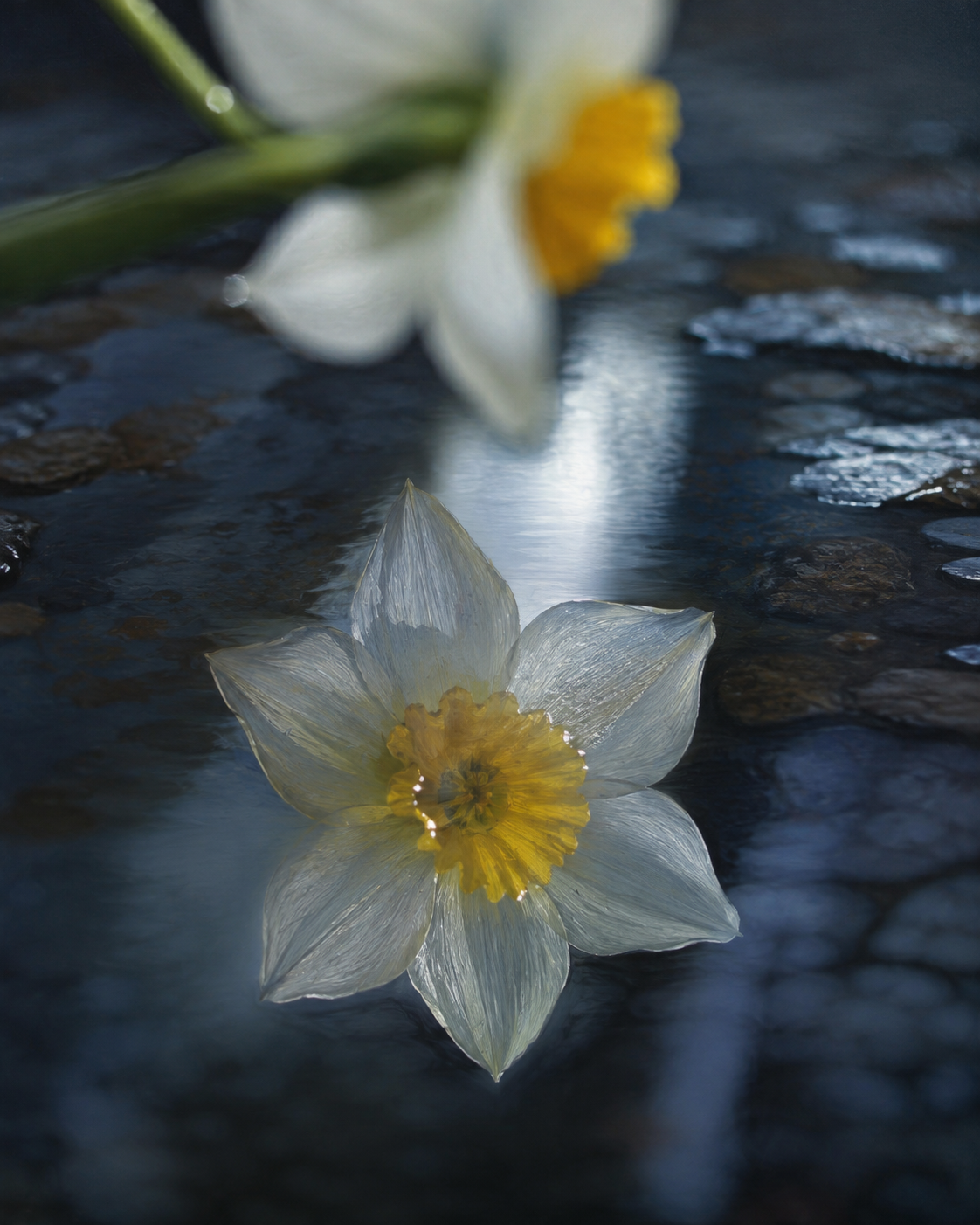
Fallen Daffodil on the Rainy Cobblestones
Critique
Introduction This painting shows a fallen daffodil on wet stone, with another bloom blurred above. Attention to the ground-level flower finds dignity in descent and reflection. Description A white daffodil lies sharply below, its veined petals around a yellow cup. Dark water covers uneven stones, producing a silver reflection. A second flower on a green stem hangs softly above. Wet fragments glint at the edges. Analysis The lower flower's radial symmetry contrasts with the irregular dark mosaic of the ground. Its pale petals gather available light and create a clear visual island. The bright vertical reflection links it to the blurred flower above, establishing an axis between fallen and suspended states. Depth of field reverses expectation: the ground-level bloom is fully present, whereas the apparently living flower is remote. Yellow centers repeat across both forms, maintaining recognition despite the focus difference. Cool blue-black and silver make the modest gold accents especially resonant. Interpretation and Evaluation The fallen flower may evoke loss, but it is neither crushed nor visually diminished. Its open face becomes more accessible than the bloom above, suggesting that descent can reveal rather than merely end. Water provides a second medium of transformation, loosening the boundaries between petal, stone, and reflected light. The upright or hanging flower can be read as an earlier state, while the lower one occupies a lucid present. This temporal ambiguity keeps the image contemplative rather than mournful. Conclusion Through focus reversal and restrained color, the painting grants a discarded or fallen bloom unusual authority. Its beauty depends on vulnerability, wetness, and proximity to the ground. The result is a tender meditation on altered states, where decline remains capable of illumination.
Same Subcategory
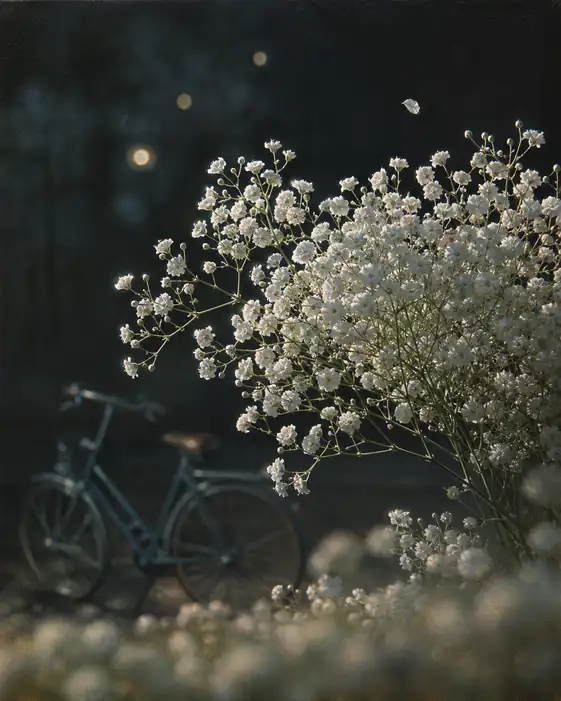 Baby's Breath in Night Mist and the Bicycle
Similar Artworks
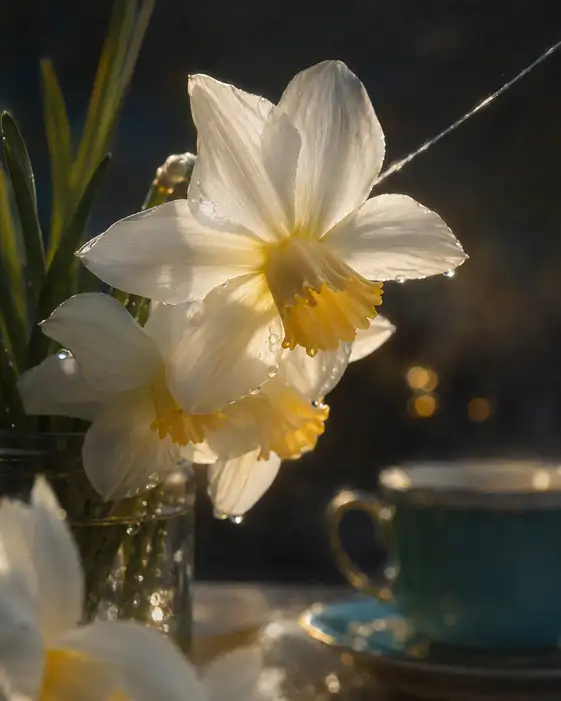 Morning Tea and Daffodils by the Window
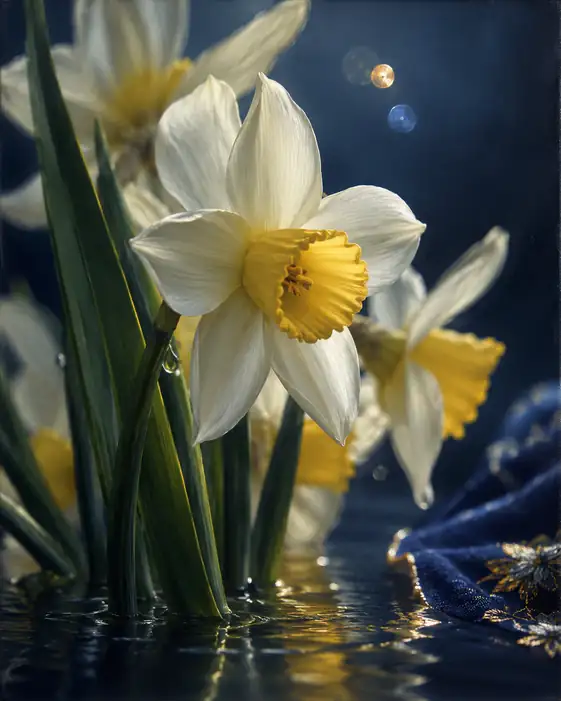 Daffodils over the Gold-Woven Silk
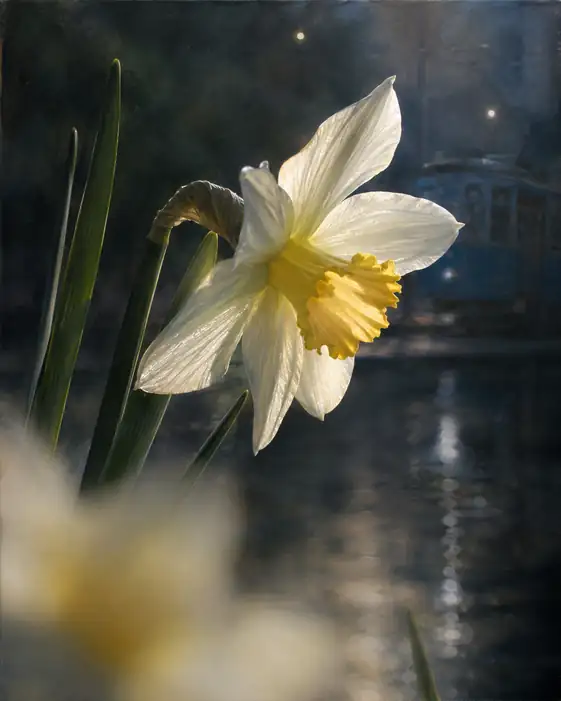 Daffodil along the Night Rails
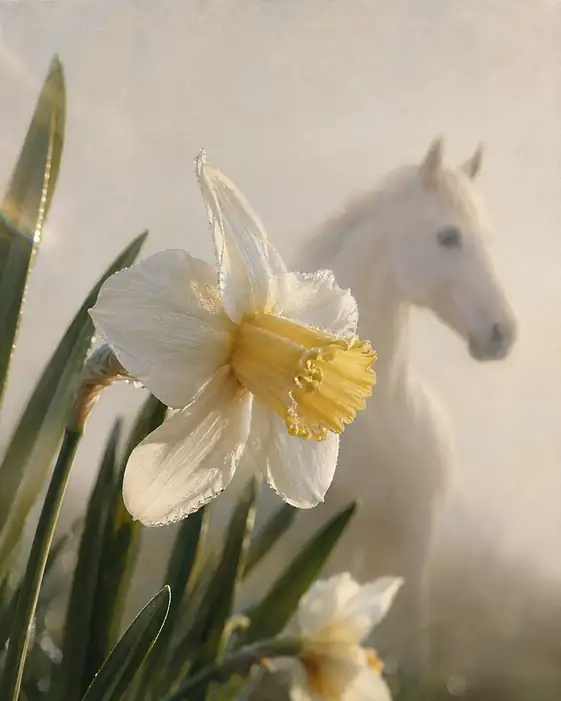 Daffodil and the White Steed in Morning Mist
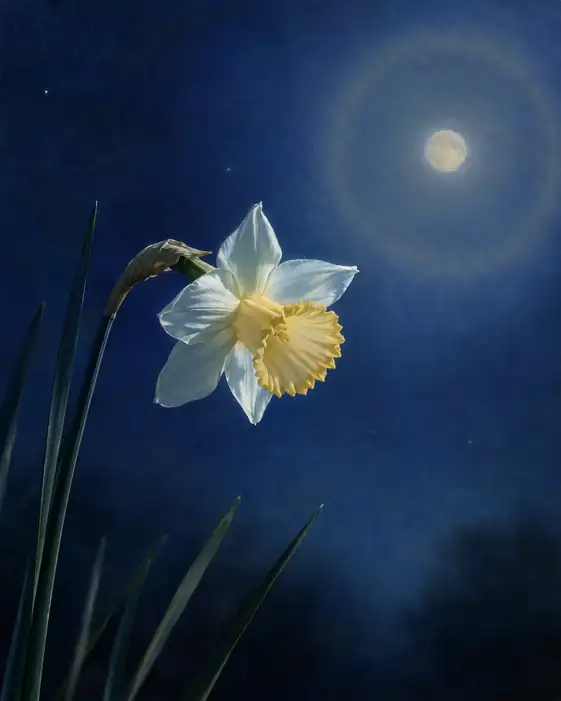 A Golden Song Beneath the Full Moon
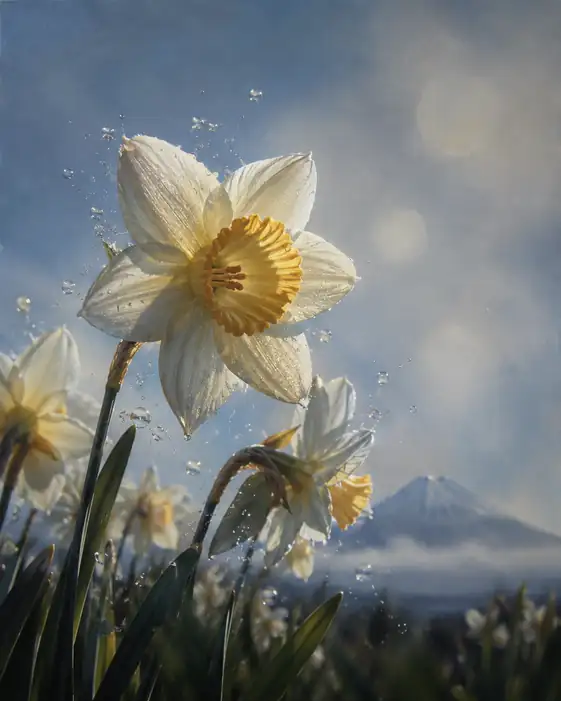 Daffodils and Water Splashes Facing the Sacred Peak
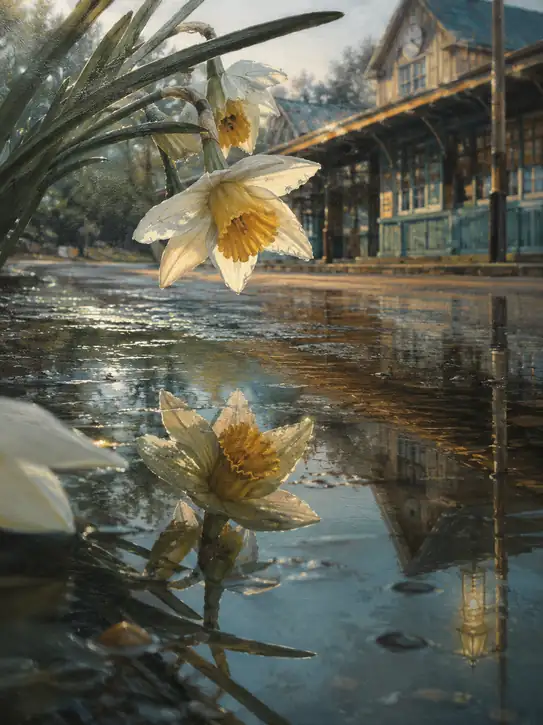 Daffodils and the Rainlit Platform
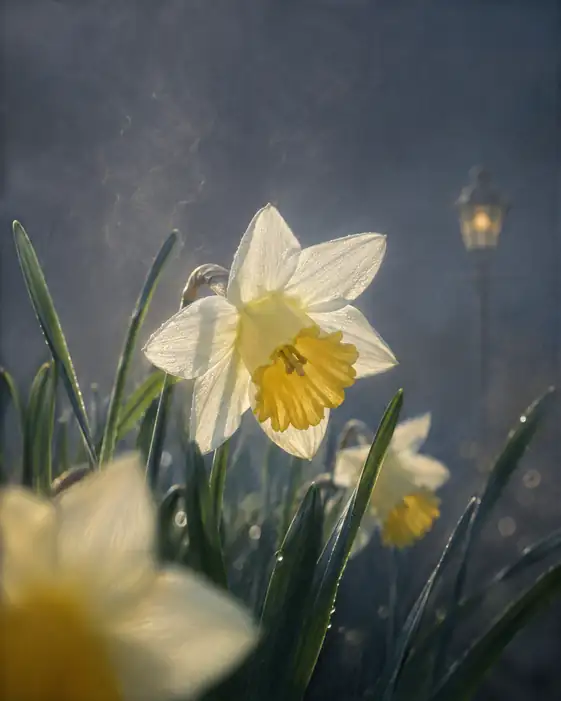 Misty Daffodils and the Distant Lantern
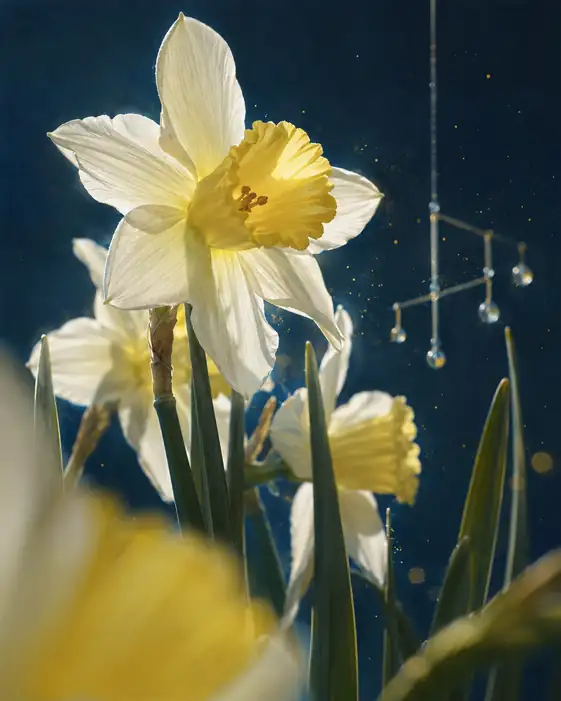 Daffodil Melody in Deep Azure
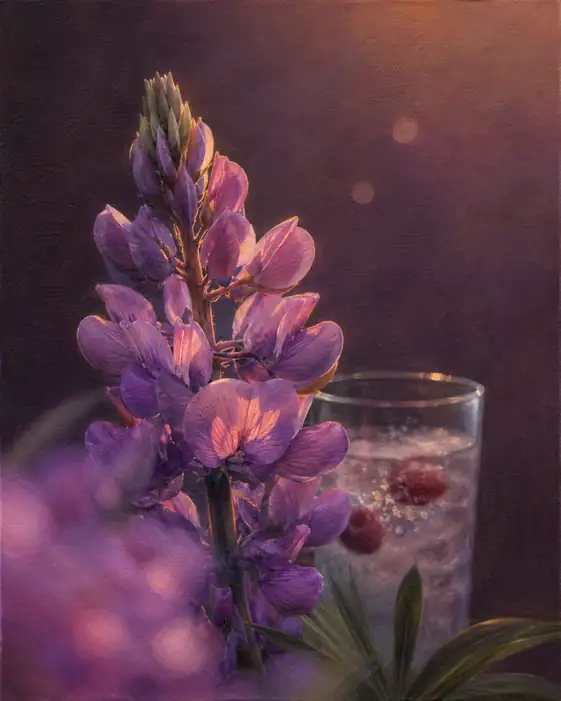 Evening Toast and the Purple Lupine