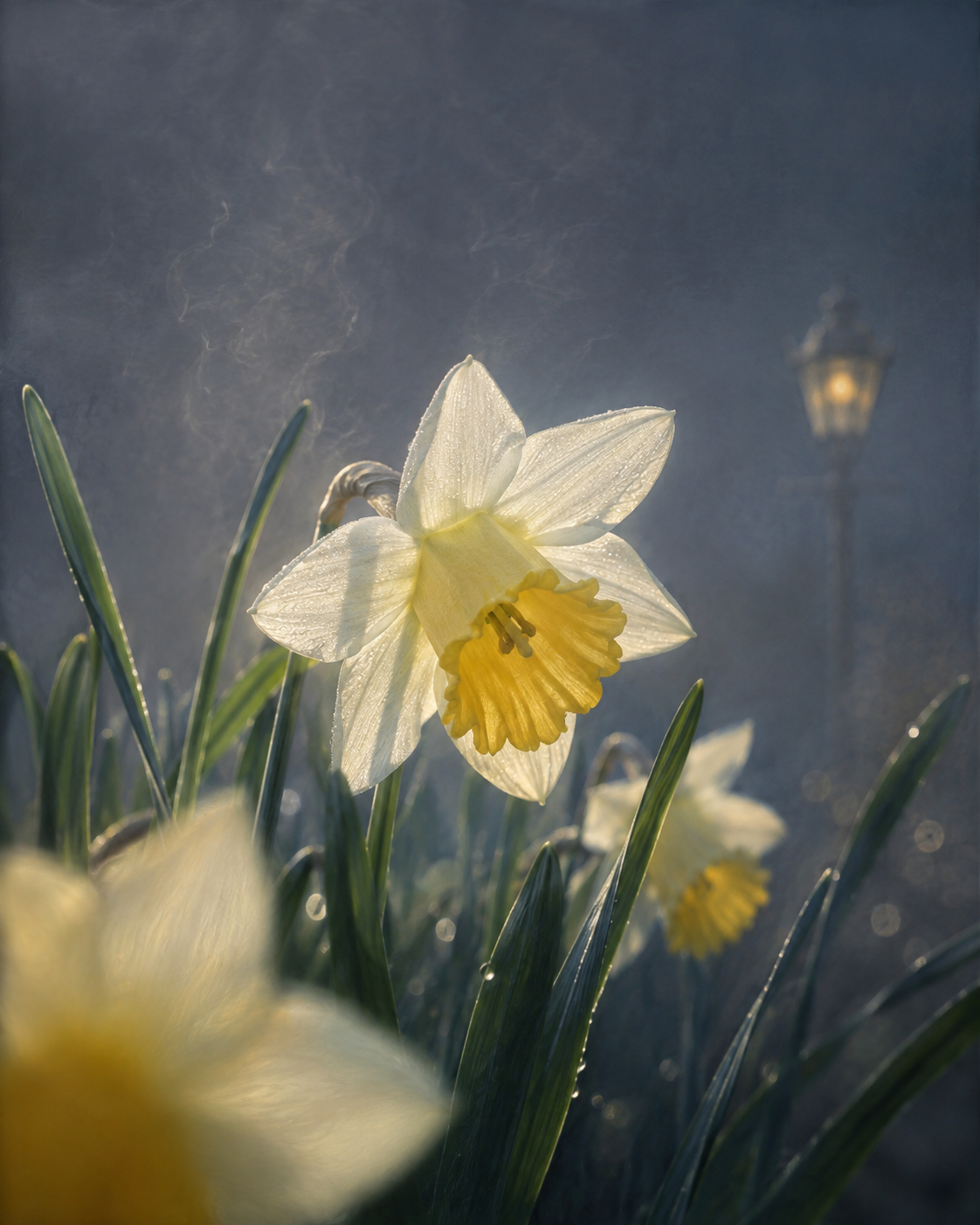
Misty Daffodils and the Distant Lantern
Critique
Introduction This painting presents a dewy daffodil in cool mist, with a lantern behind it. Living translucency and human-made light create a dawn scene between night and morning. Description A white daffodil occupies the center, its petals around a downward yellow trumpet. Droplets coat the veins. Dark blade-shaped leaves rise throughout, and other daffodils blur nearby. Mist drifts across blue-gray. At upper right, a warm lantern shines softly. Analysis The flower's pale radial form opens against a field of narrow vertical leaves. Strong backlight passes through petals and reveals their ridges, while the yellow trumpet projects toward the viewer with greater visual weight. Cool blue-gray dominates, making the lantern's amber point and the flower's center especially potent. Shallow focus isolates the main bloom but retains enough repeated forms to suggest a garden. The vapor's curling lines soften the rigid leaves and distribute movement through otherwise still air. Interpretation and Evaluation The lantern and flower offer two kinds of illumination. One is constructed, distant, and enclosed; the other is living, near, and made radiant by receiving light. Dew signals a fresh beginning, while lingering darkness and mist preserve traces of night. The daffodil therefore seems to mediate between states rather than simply symbolize spring. Its lowered trumpet adds humility to the luminous display, as though the flower were listening rather than proclaiming. This ambiguity gives the familiar motif emotional subtlety. Conclusion The painting uses a restrained cool palette to make small warm accents meaningful. Detailed moisture, drifting vapor, and the remote lantern build a convincing threshold atmosphere. The result is tender and alert, celebrating renewal without erasing the mystery from which morning emerges.
Same Subcategory
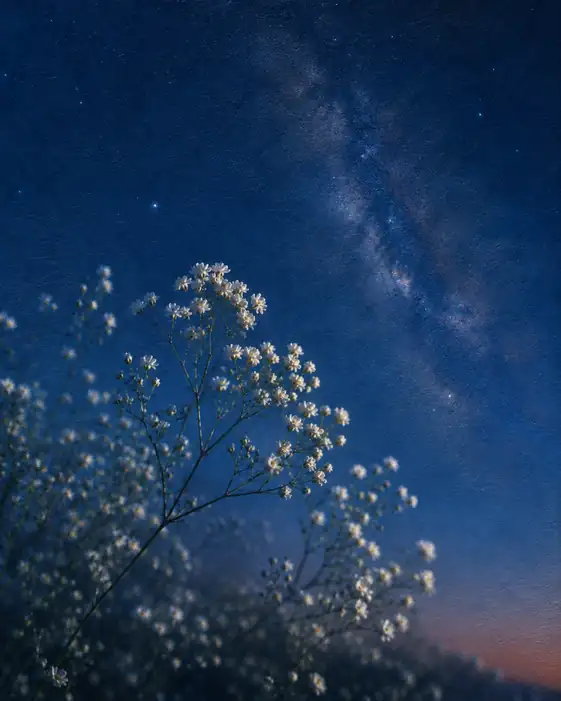 White Baby's Breath and the Milky Way
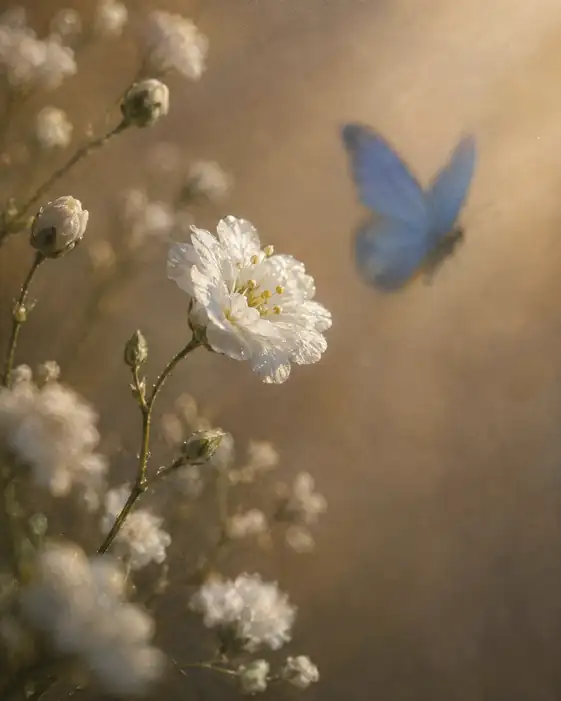 Sunlit Baby's Breath and the Blue Butterfly
Similar Artworks
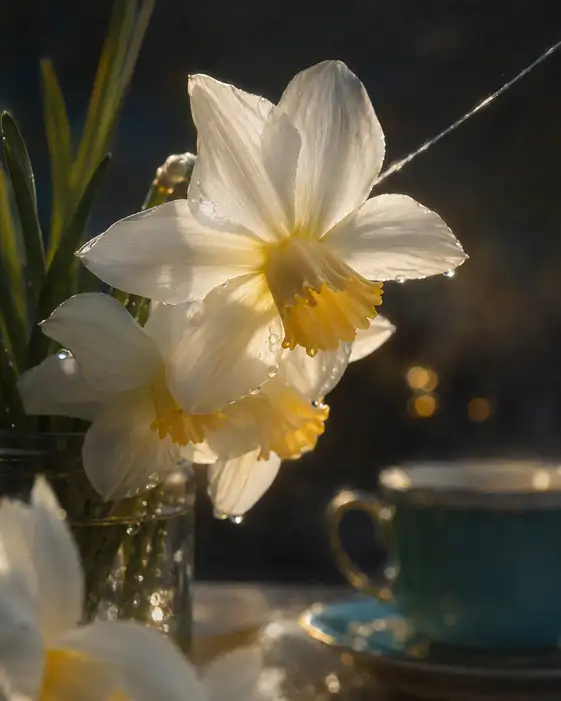 Morning Tea and Daffodils by the Window
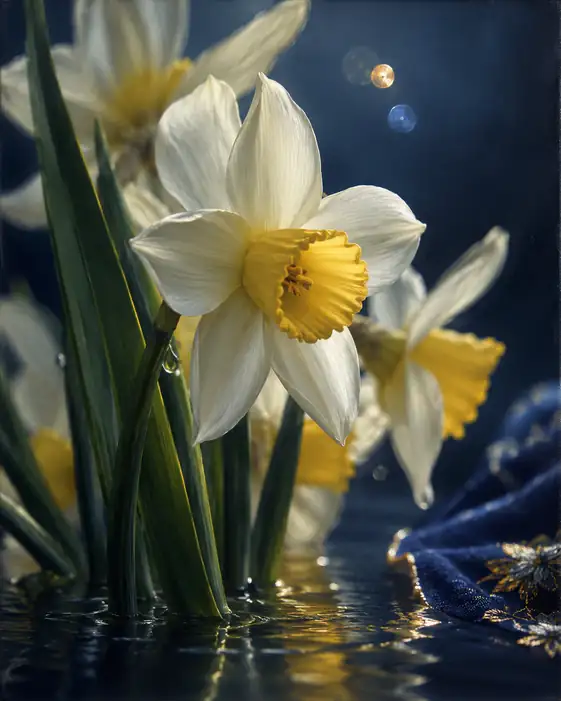 Daffodils over the Gold-Woven Silk
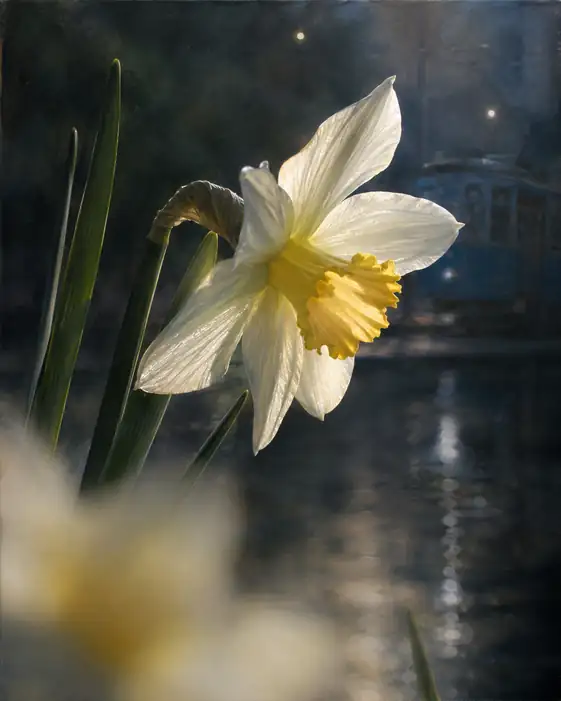 Daffodil along the Night Rails
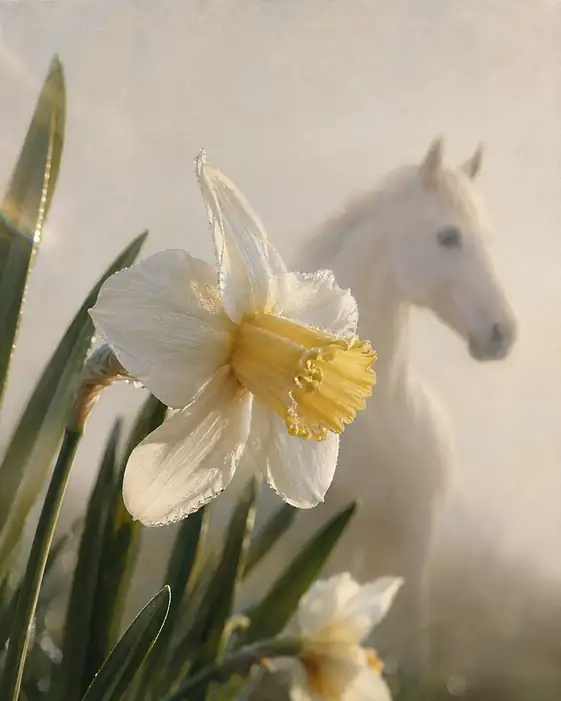 Daffodil and the White Steed in Morning Mist
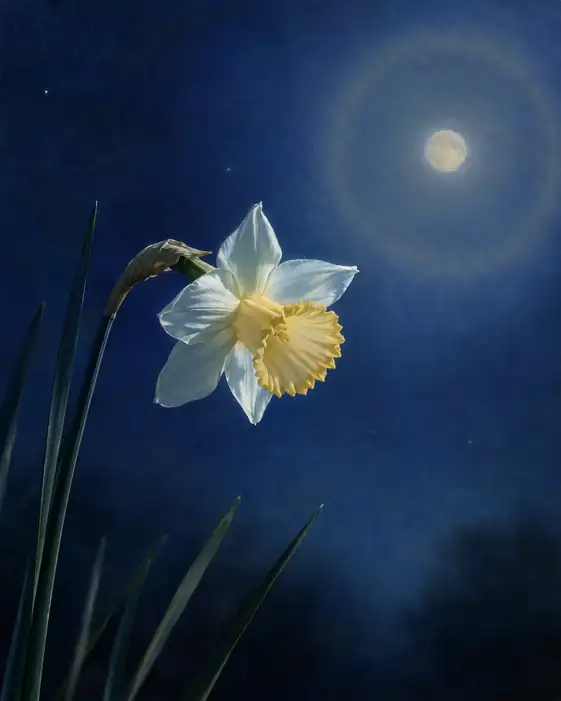 A Golden Song Beneath the Full Moon
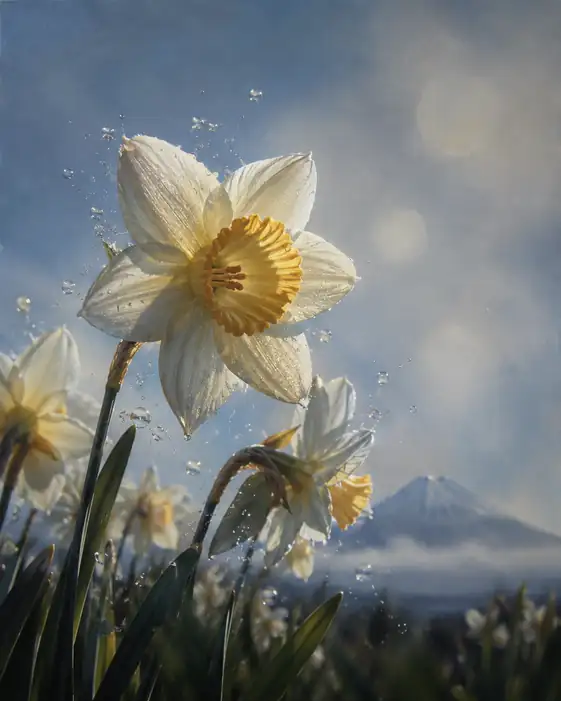 Daffodils and Water Splashes Facing the Sacred Peak
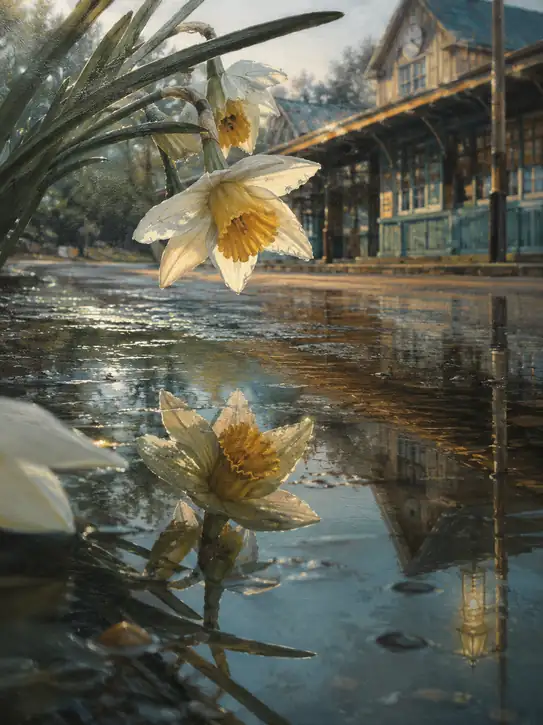 Daffodils and the Rainlit Platform
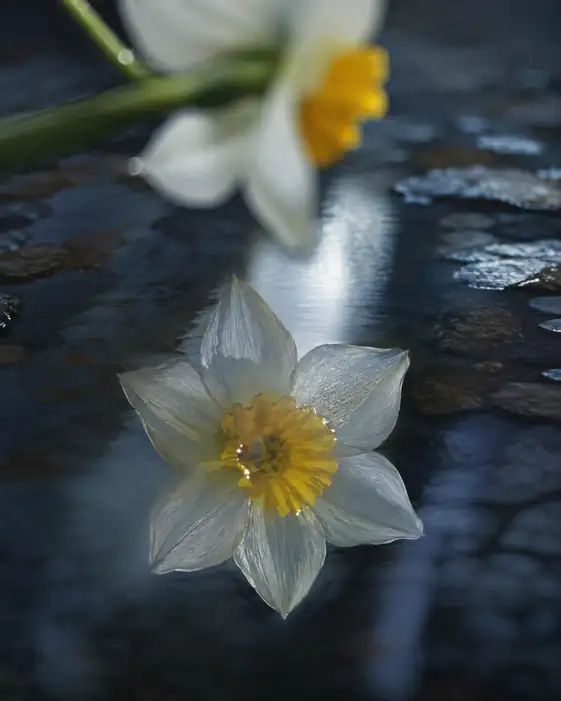 Fallen Daffodil on the Rainy Cobblestones
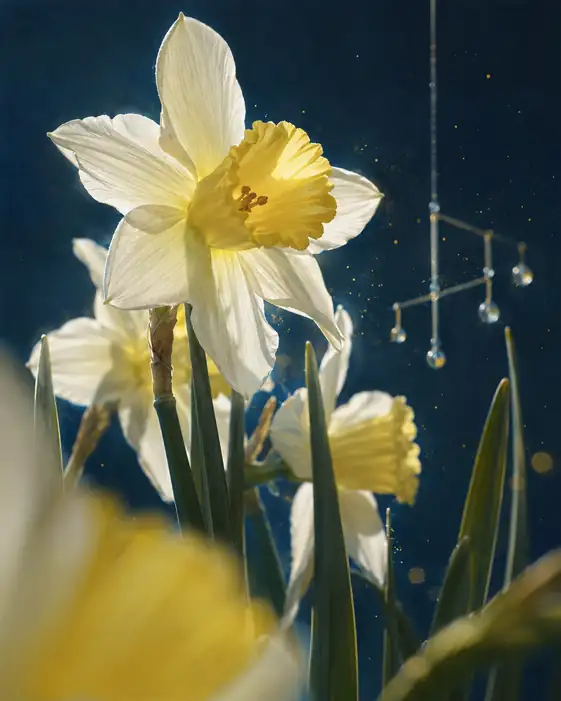 Daffodil Melody in Deep Azure
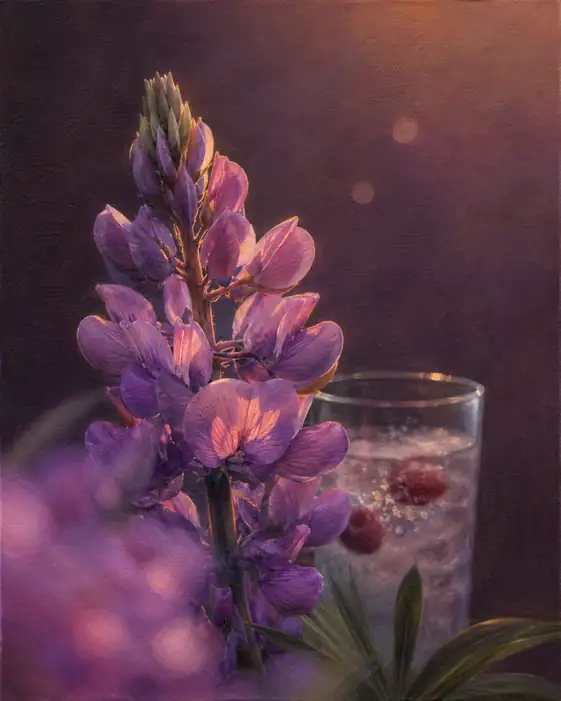 Evening Toast and the Purple Lupine