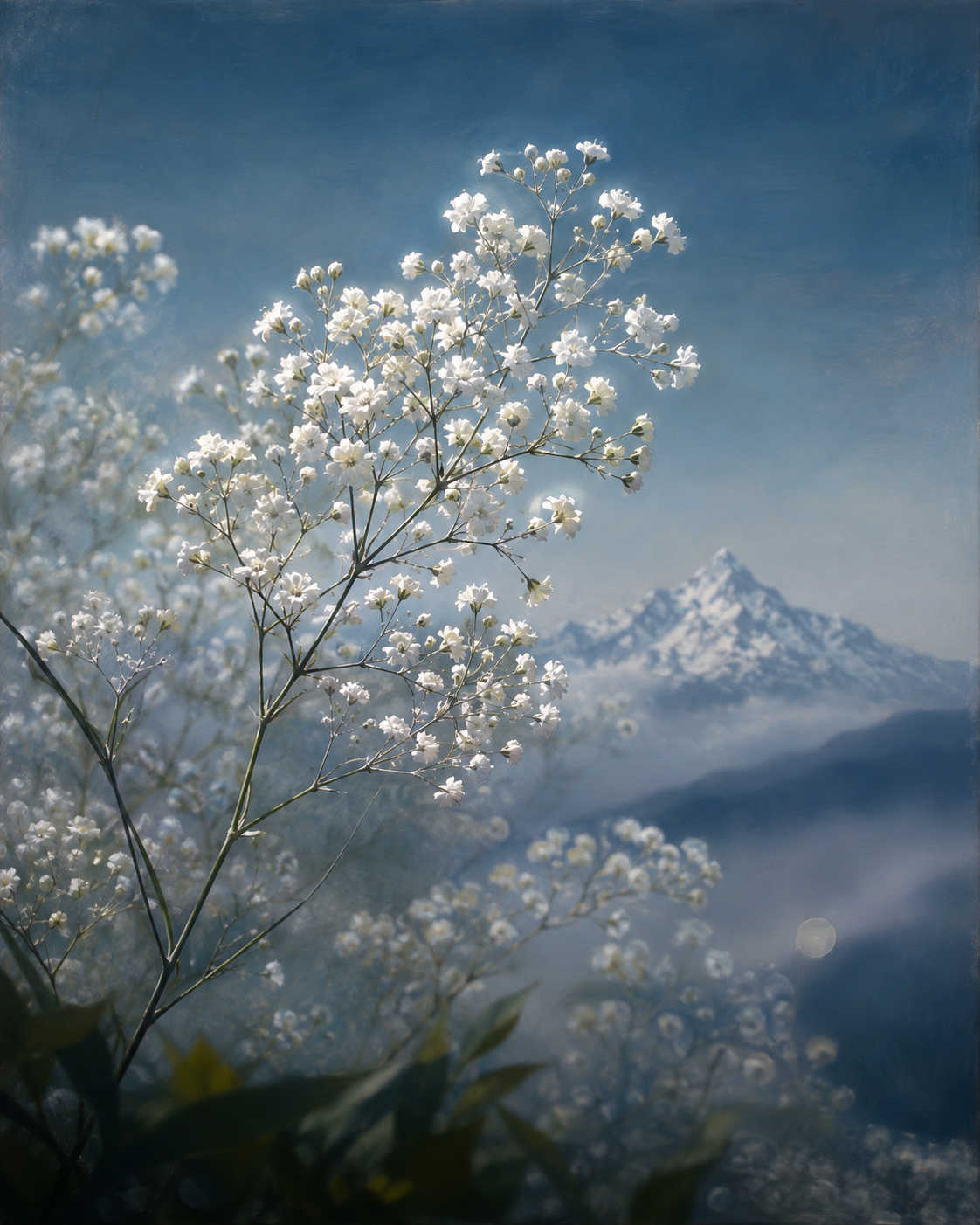
White Baby's Breath Facing the Snowy Peak
Critique
Introduction This painting places baby's breath before a snowy mountain. Aligning branching stems with a distant peak compares seasonal life and monumental geological form. Description A white spray rises from lower left. Dark-green stems support flowers and buds against blue sky. More flower clouds recede along the edges. At right, a snowy mountain emerges beyond misty ridges, while dark leaves anchor the foreground. Analysis The principal branch forms an open triangular network that partly echoes the mountain's silhouette. Its asymmetry and many small gaps contrast with the peak's compact mass. White repeats across petals and snow, linking near and far despite their scale difference. Cool blues unify the atmosphere, while green stems provide the strongest linear accents. Selective focus keeps the central flowers legible and turns surrounding clusters and ridges into layered veils. The large sky above the mountain prevents the abundant flowers from making the composition crowded. Interpretation and Evaluation The pairing proposes two versions of endurance. The mountain appears permanent from a human perspective, whereas the flowers open briefly and depend on slender stems. Yet proximity makes the blossoms visually taller than the peak, granting transient life equal dignity. Their branching structure may also resemble a map of paths leading toward the mountain. The work avoids sentimental hierarchy: delicacy is not presented as weakness, nor mass as superiority. Both become different expressions of form under the same clear light. Conclusion The painting succeeds through disciplined color and a resonant manipulation of scale. Its white flowers seem at once earthbound and cloudlike, mediating between dark leaves below and snowy elevation beyond. The result is serene, spacious, and quietly elevating.
Same Subcategory
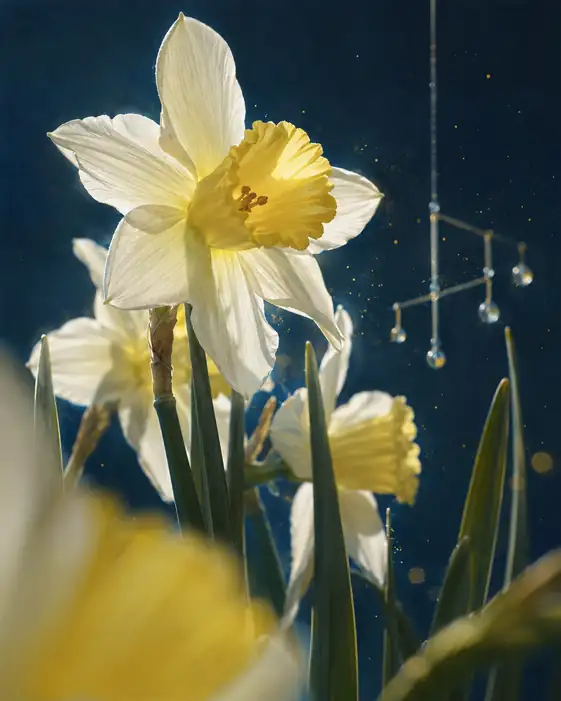 Daffodil Melody in Deep Azure
Similar Artworks
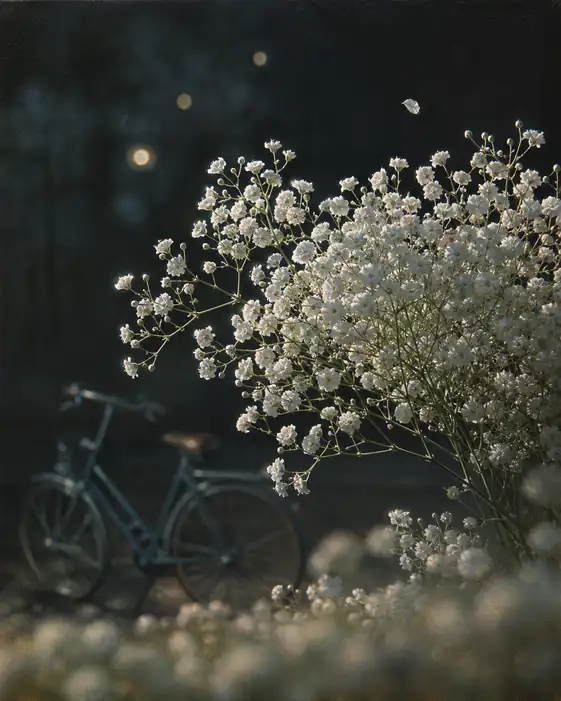 Baby's Breath in Night Mist and the Bicycle
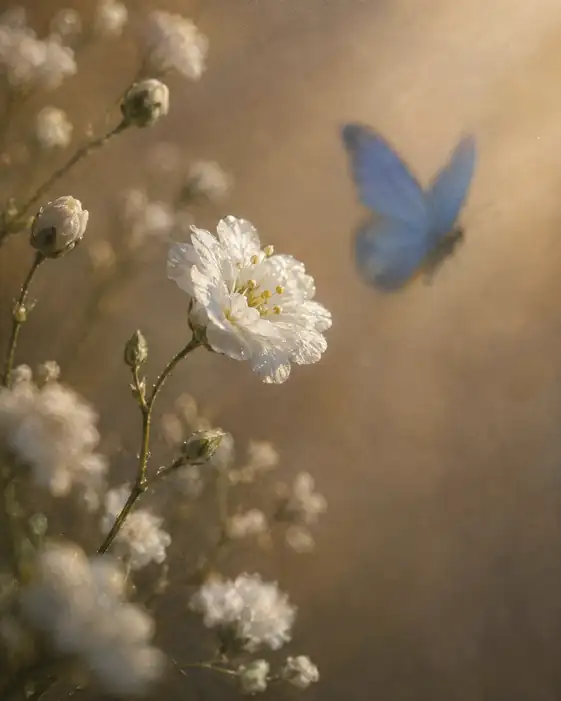 Sunlit Baby's Breath and the Blue Butterfly
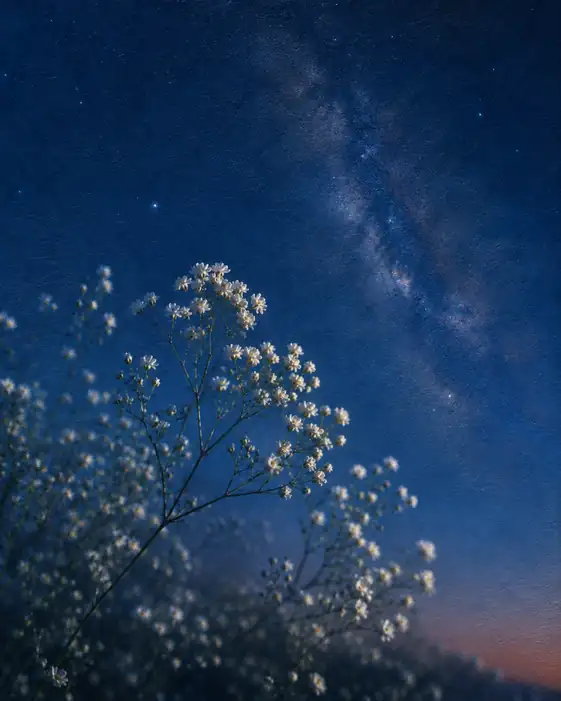 White Baby's Breath and the Milky Way
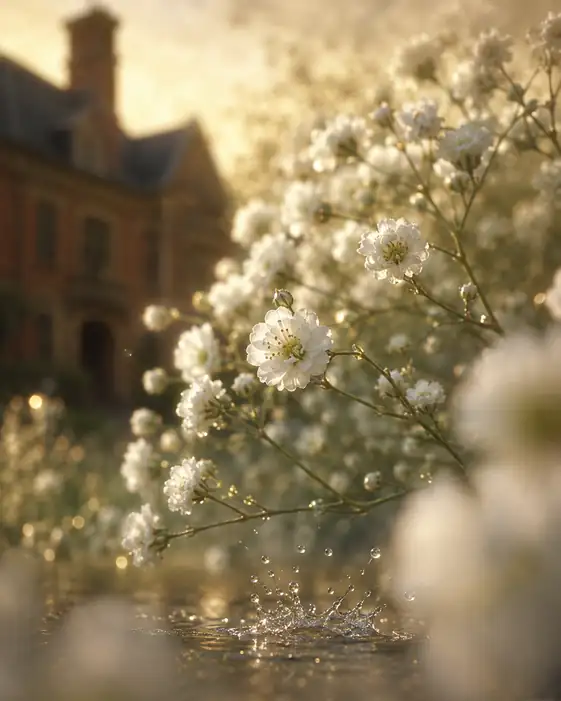 Sunlit Garden and the Water Crown
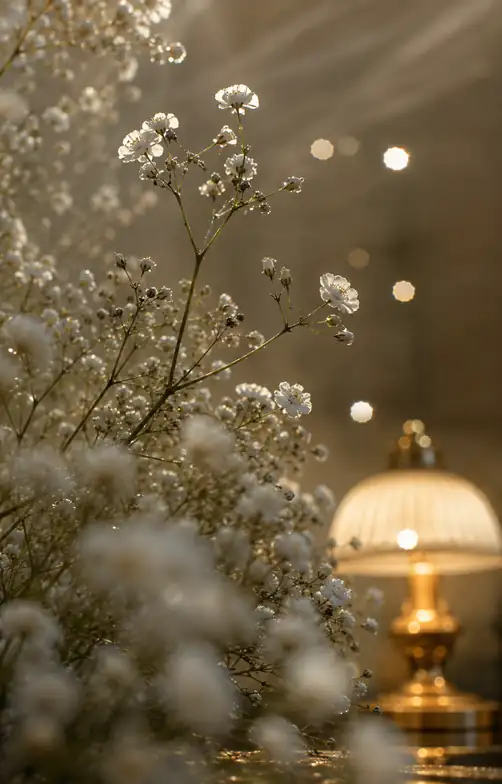 Amber Lamp and the Whispering Blooms
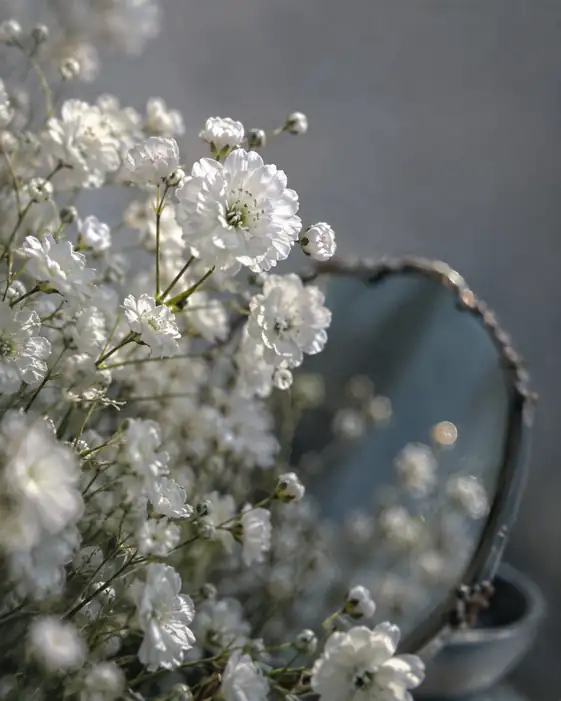 White Baby's Breath and the Mirror's Echo
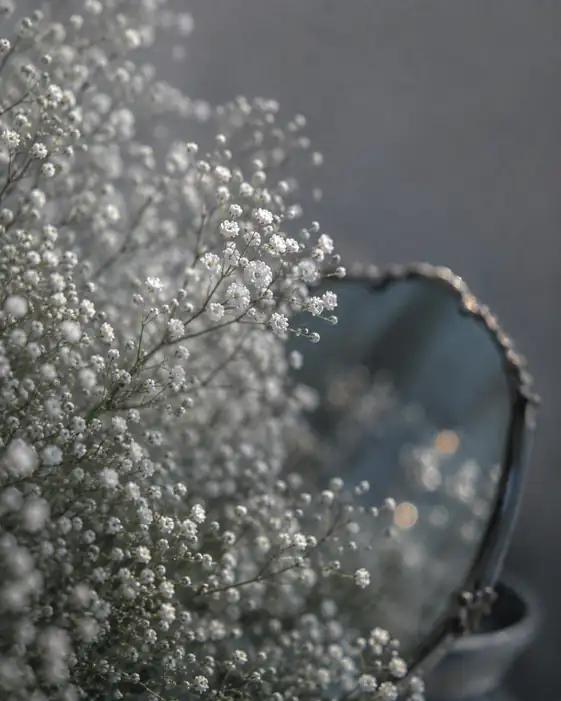 Starlit Baby's Breath and the Antique Mirror
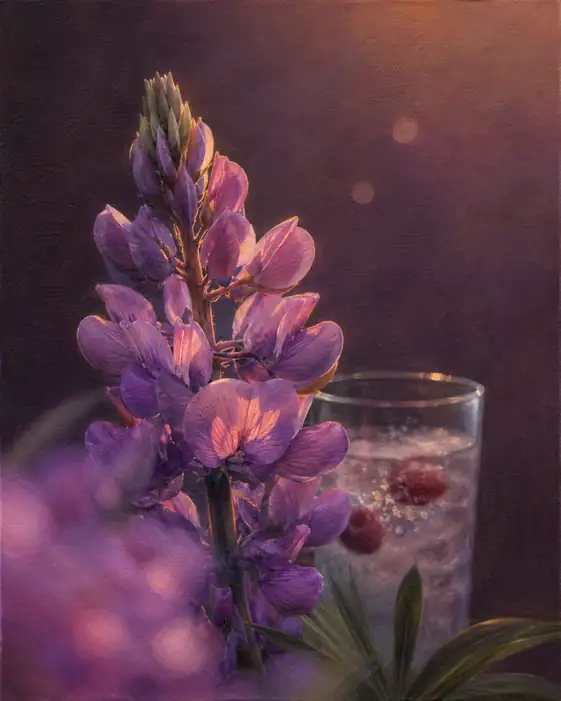 Evening Toast and the Purple Lupine
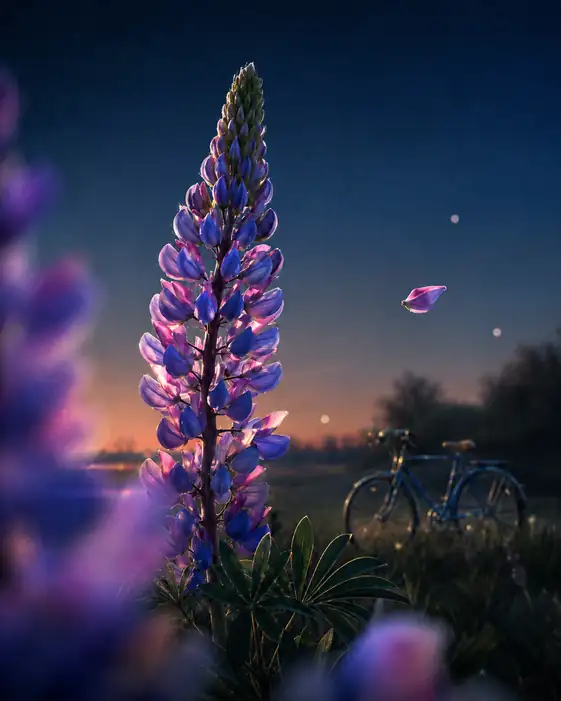 Floating Petal and the Twilight Bicycle
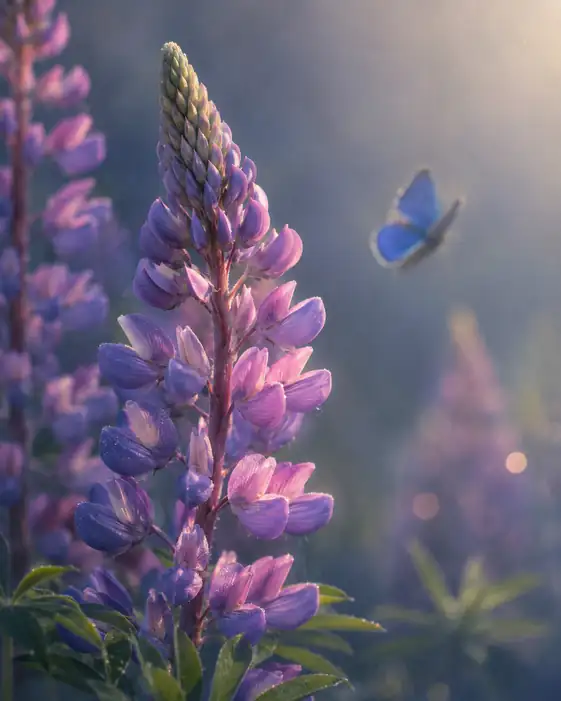 Purple Lupine and the Azure Butterfly