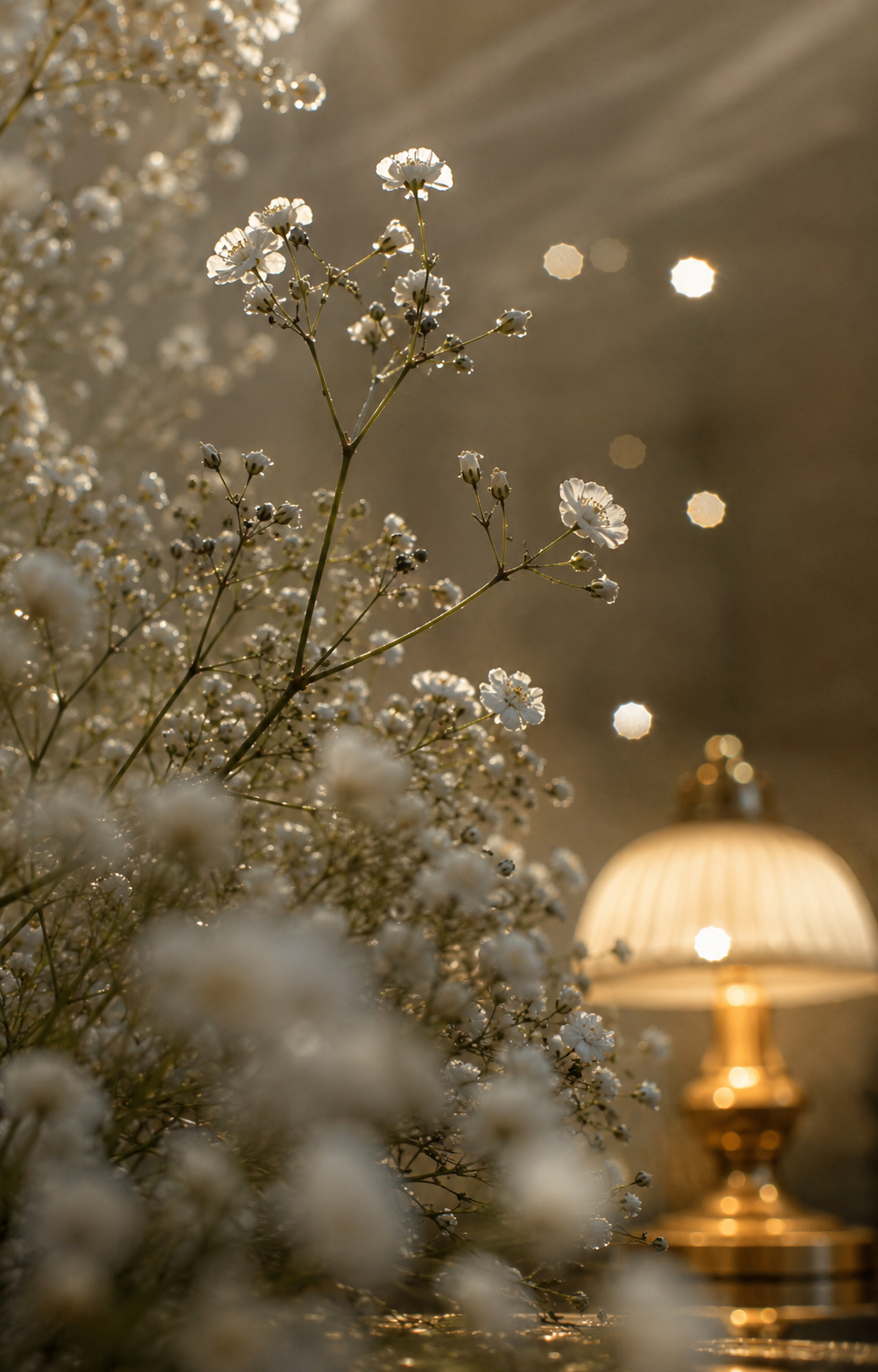
Amber Lamp and the Whispering Blooms
Critique
Introduction This painting brings baby's breath into amber lamplight. Branching silhouettes and luminous edges transform domestic illumination into an atmosphere of ceremony and wonder. Description White sprays rise from a blurred foreground. Several flowers and buds stand against a brown wall, their stems carrying droplets. At lower right, a cream-shaded golden lamp glows out of focus. Polygonal lights float among the flowers. Analysis The composition is built from an exchange between botanical branching and repeated light points. Thin dark stems articulate diagonals across the upper field, while the lamp supplies a stable vertical and dome. Backlighting turns petal rims and droplets into bright beads, linking natural forms to the artificial lights. The focus plane selects only a few upper blossoms; the large foreground mass becomes cloudlike, giving the scene unusual depth. A restrained palette of ivory, umber, and gold unifies objects with very different textures. Interpretation and Evaluation The lamp may suggest shelter, domestic memory, or human-made warmth, while the flowers carry the irregular growth of the outside world indoors. Yet the painting avoids a rigid nature-culture opposition: electric highlights resemble dew, and flowers resemble tiny lamps. Each seems to borrow the other's radiance. The elevated stems also read like a constellation above a bright horizon, enlarging a tabletop arrangement into an imagined cosmos. This transformation is achieved through optics rather than overt fantasy, which gives it credibility. Conclusion The work succeeds by making light the shared substance of flower, water, and furnishing. Its golden unity is sensuous, but careful focus and structural contrast prevent softness from becoming vague. A commonplace lamp and modest blossoms together create an intimate, almost sacred nocturne.
Same Subcategory
Similar Artworks
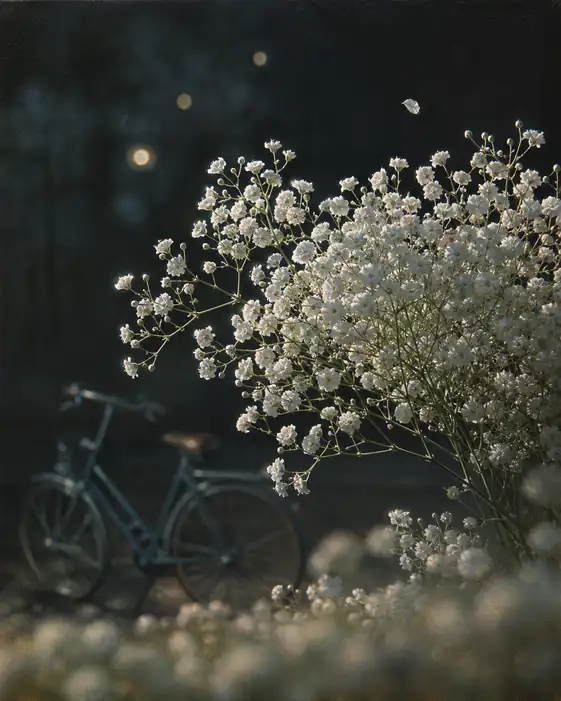 Baby's Breath in Night Mist and the Bicycle
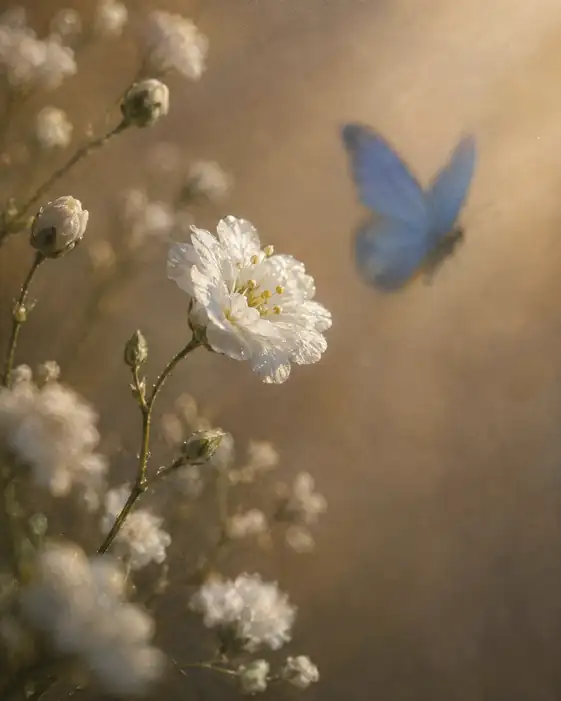 Sunlit Baby's Breath and the Blue Butterfly
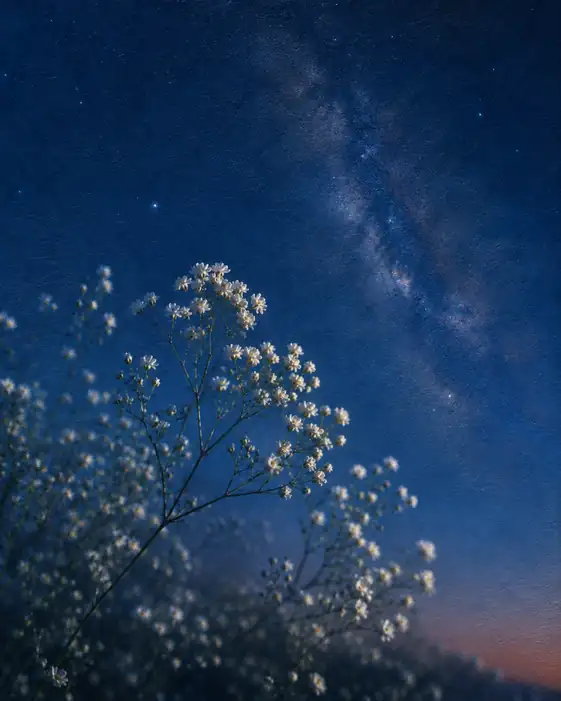 White Baby's Breath and the Milky Way
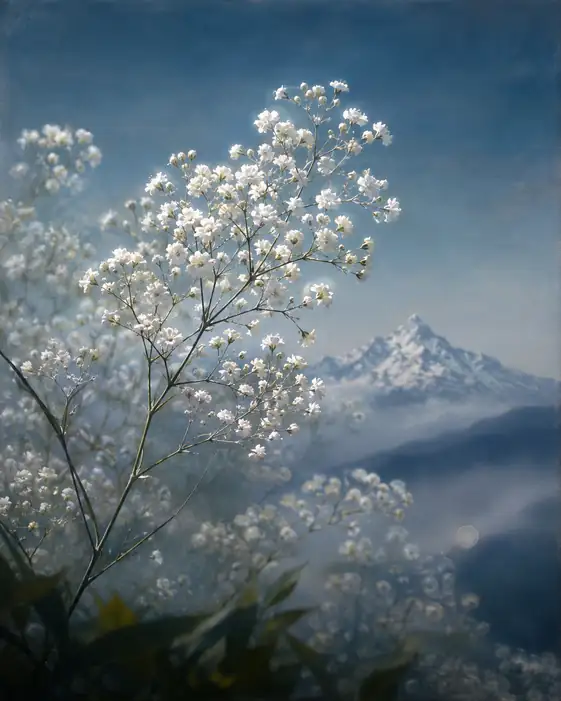 White Baby's Breath Facing the Snowy Peak
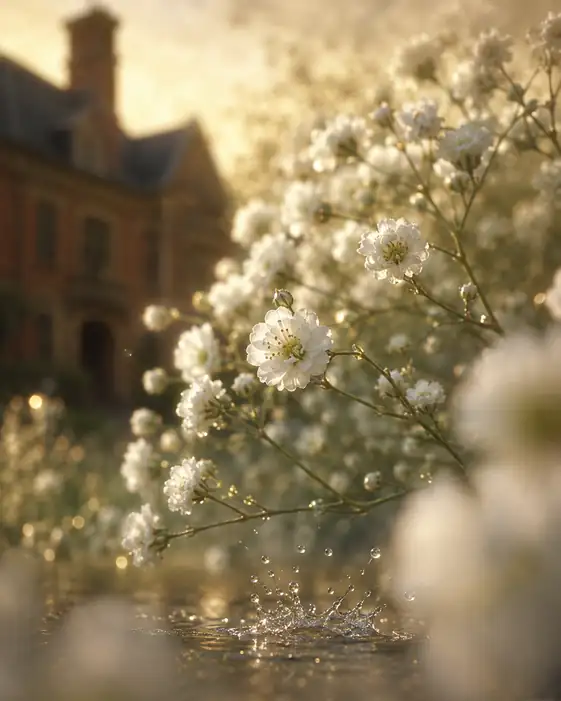 Sunlit Garden and the Water Crown
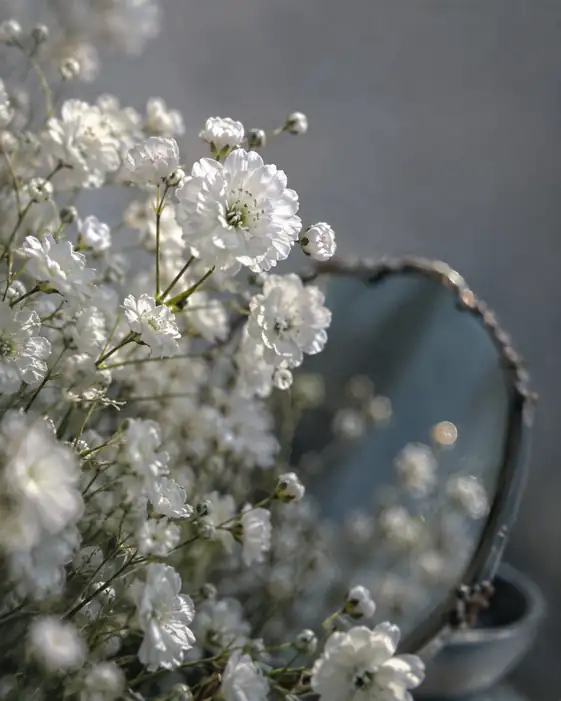 White Baby's Breath and the Mirror's Echo
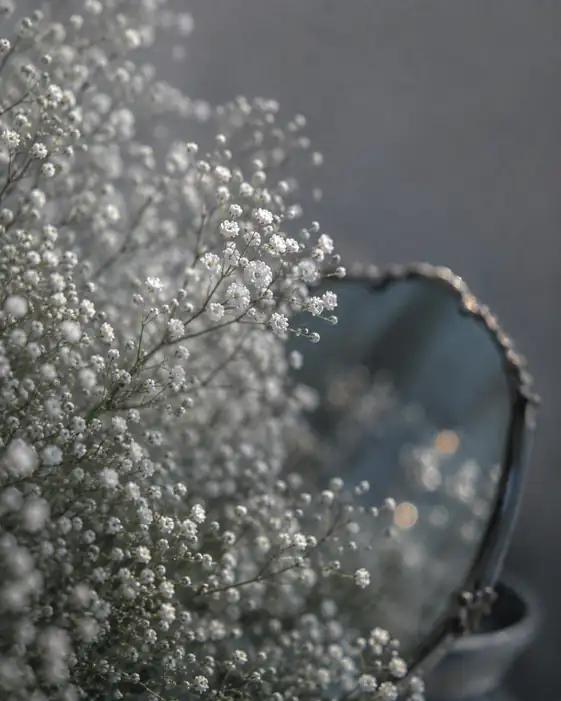 Starlit Baby's Breath and the Antique Mirror
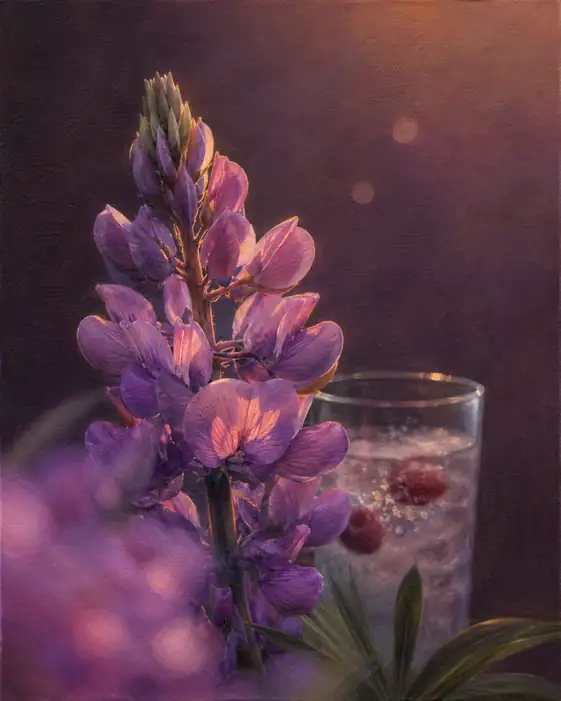 Evening Toast and the Purple Lupine
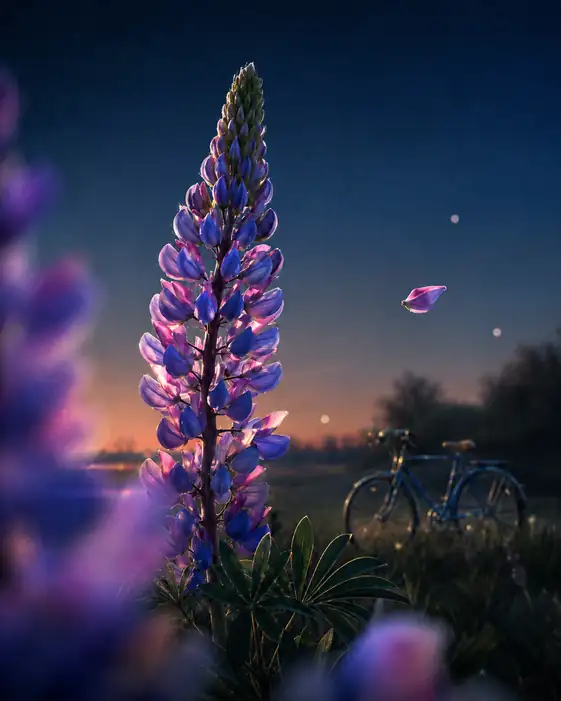 Floating Petal and the Twilight Bicycle
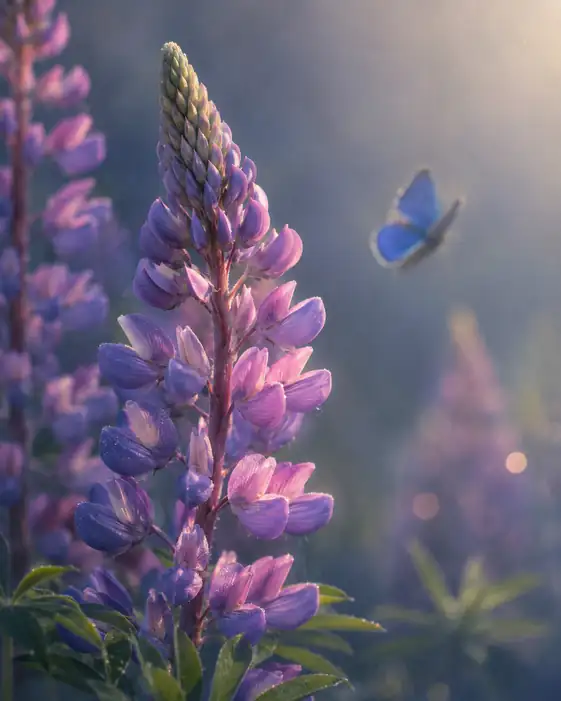 Purple Lupine and the Azure Butterfly