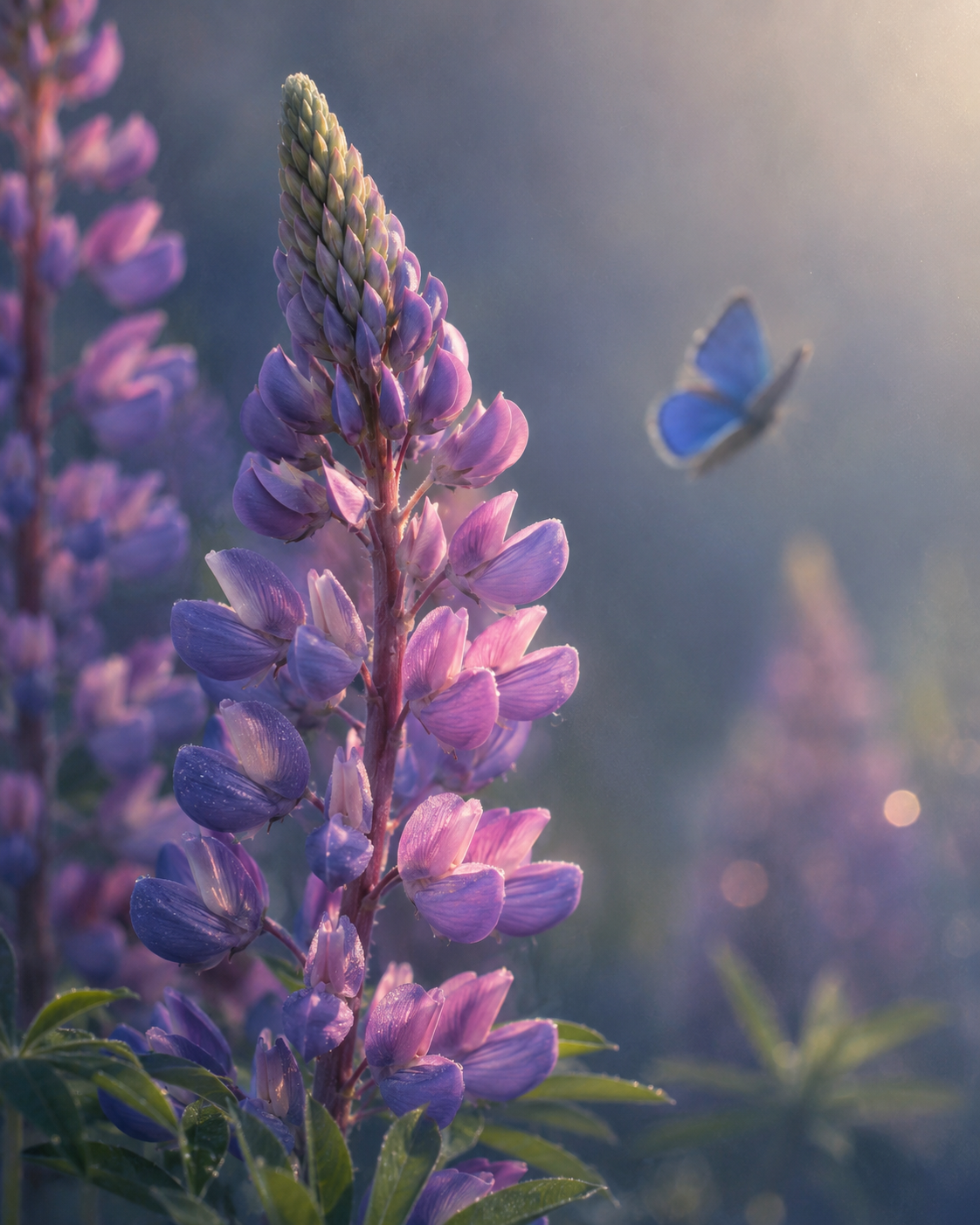
Purple Lupine and the Azure Butterfly
Critique
Introduction This painting stages an encounter between lupine and butterfly. It captures two movements: the flower's gradual upward growth and the insect's instantaneous flight. Description A purple-pink lupine rises left of center, crowned by greenish buds and open florets below. Specks catch on petals and leaves. A blue butterfly hovers softly at upper right. Other lupines recede as violet shapes beneath pale warm light. Analysis The lupine forms a firm vertical axis, while the butterfly introduces a small diagonal interruption across the open background. Sharp detail gives the flower weight and structure; the insect's blur conveys motion without painted speed lines. Pink rim light warms the violet petals and separates them from the cool atmosphere. The uncluttered space between bloom and butterfly becomes an active interval, allowing the viewer to anticipate contact. Repeated flower spikes at the margins establish a wider meadow while keeping the principal pair visually distinct. Interpretation and Evaluation The work contrasts rooted persistence with airborne freedom, yet it also shows their dependence. The butterfly approaches what the stationary flower offers, and the flower's future reproduction belongs partly to such visitors. Closed buds at the top embody potential, while opened petals below record stages already reached. This progression makes the bloom a measure of slow time, set against the butterfly's fleeting instant. The symbolism remains fresh because it is grounded in a plausible natural meeting and reinforced by compositional distance. Conclusion Through selective focus, complementary movement, and luminous violet color, the painting turns a meadow detail into a poised narrative. Its greatest strength is the charged empty space between its subjects, where expectation, reciprocity, and transience briefly coincide.
Same Subcategory
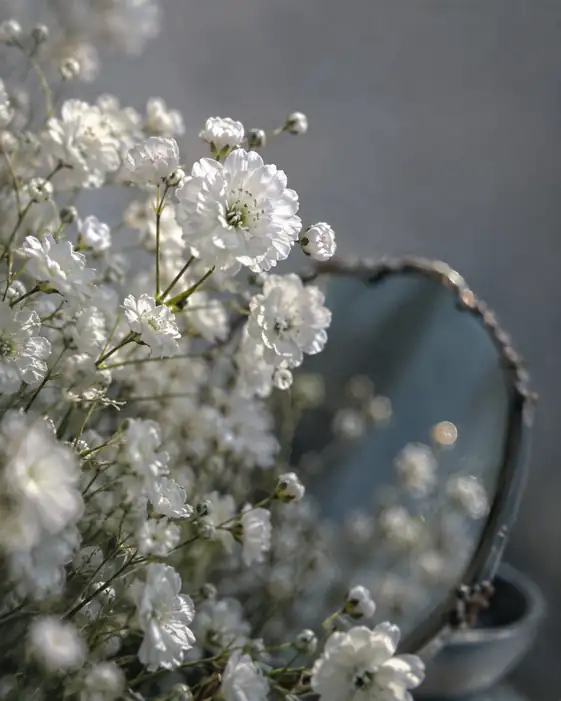 White Baby's Breath and the Mirror's Echo
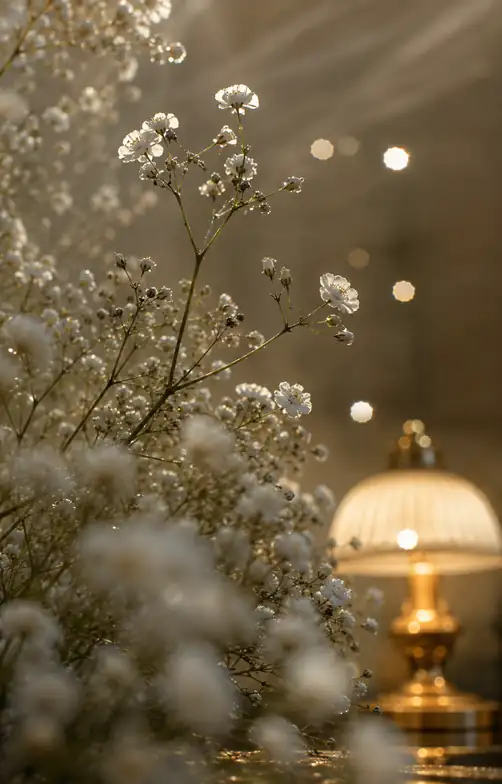 Amber Lamp and the Whispering Blooms
Similar Artworks
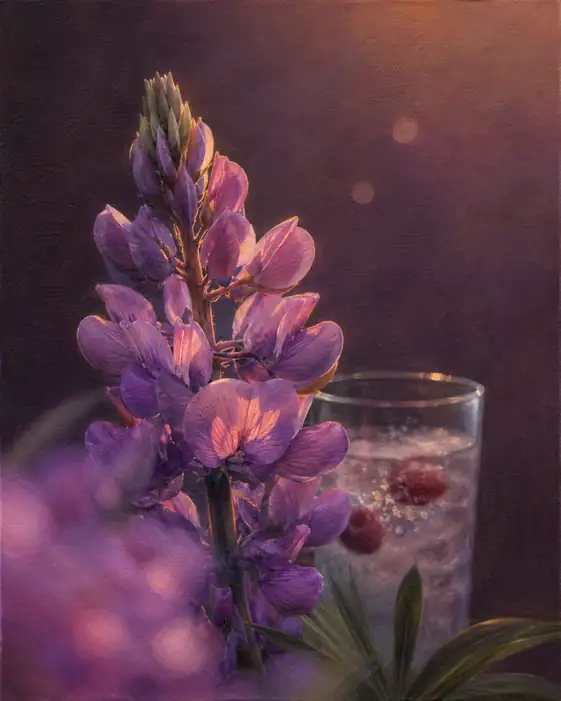 Evening Toast and the Purple Lupine
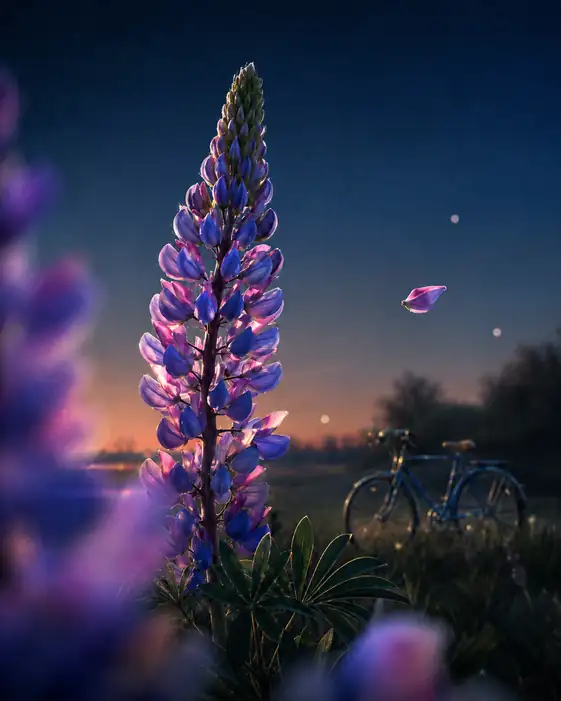 Floating Petal and the Twilight Bicycle
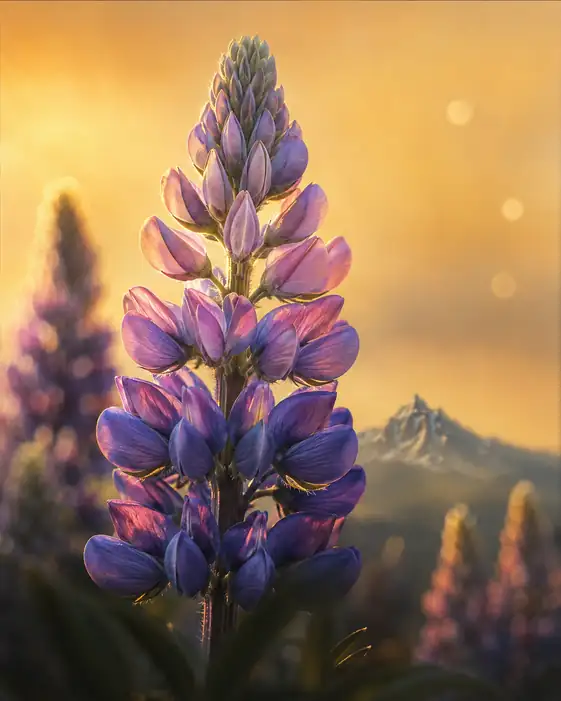 Lupine Reaching the Golden Mountain Ridge
 Purple Lupine Reaching the Clear Stream
 Purple Lupine beneath the Brass Lamp
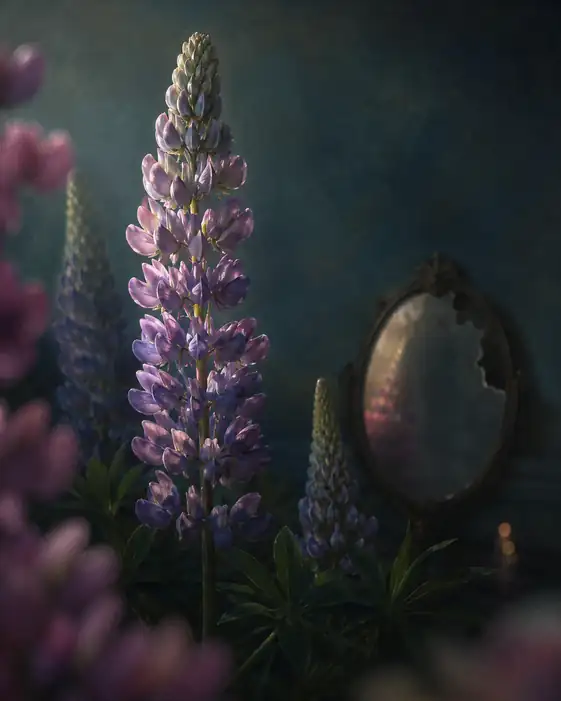 Purple Lupine beside the Antiquated Mirror
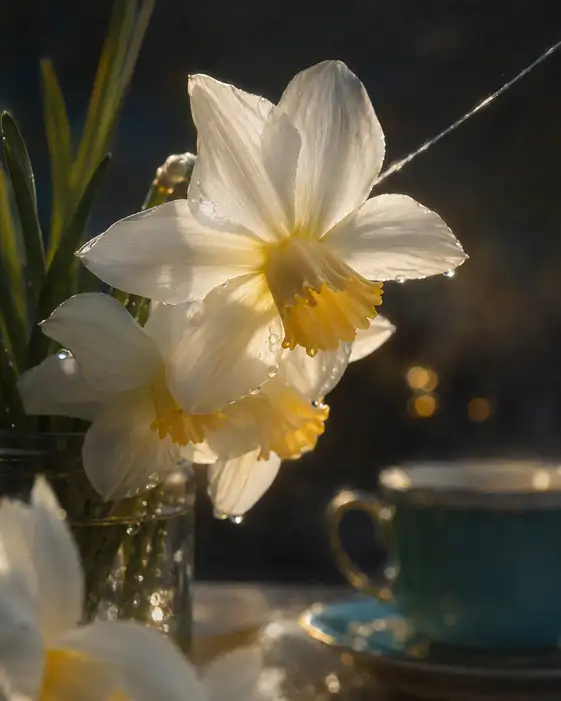 Morning Tea and Daffodils by the Window
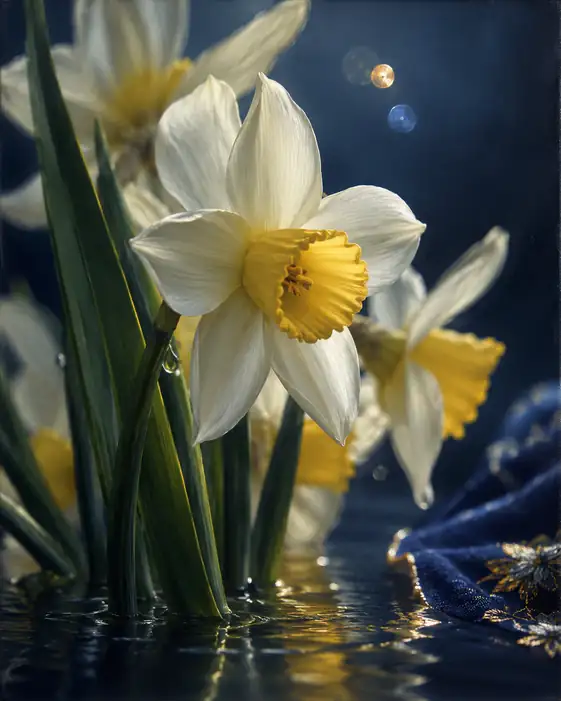 Daffodils over the Gold-Woven Silk
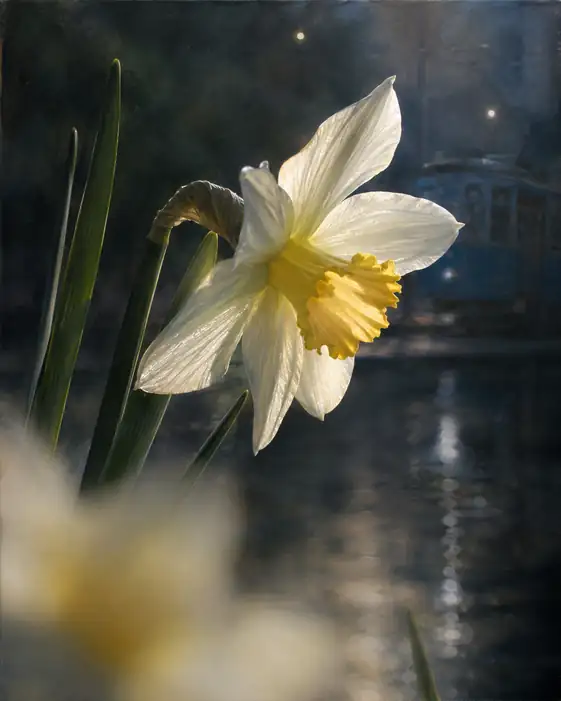 Daffodil along the Night Rails
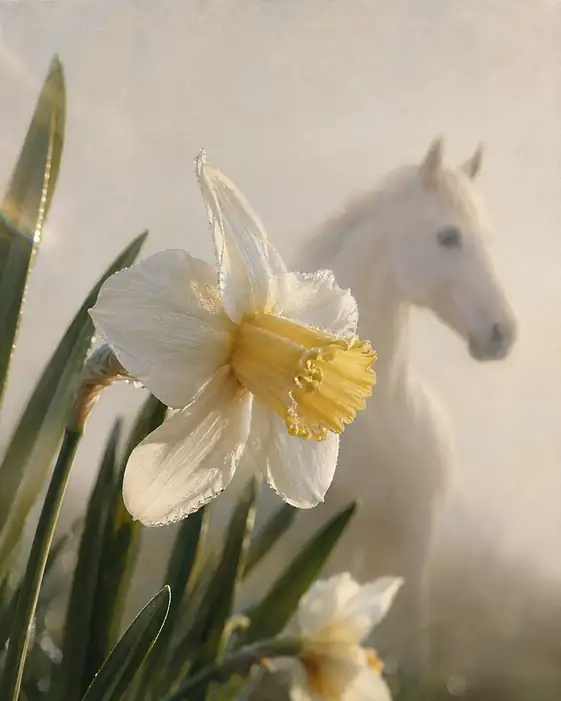 Daffodil and the White Steed in Morning Mist