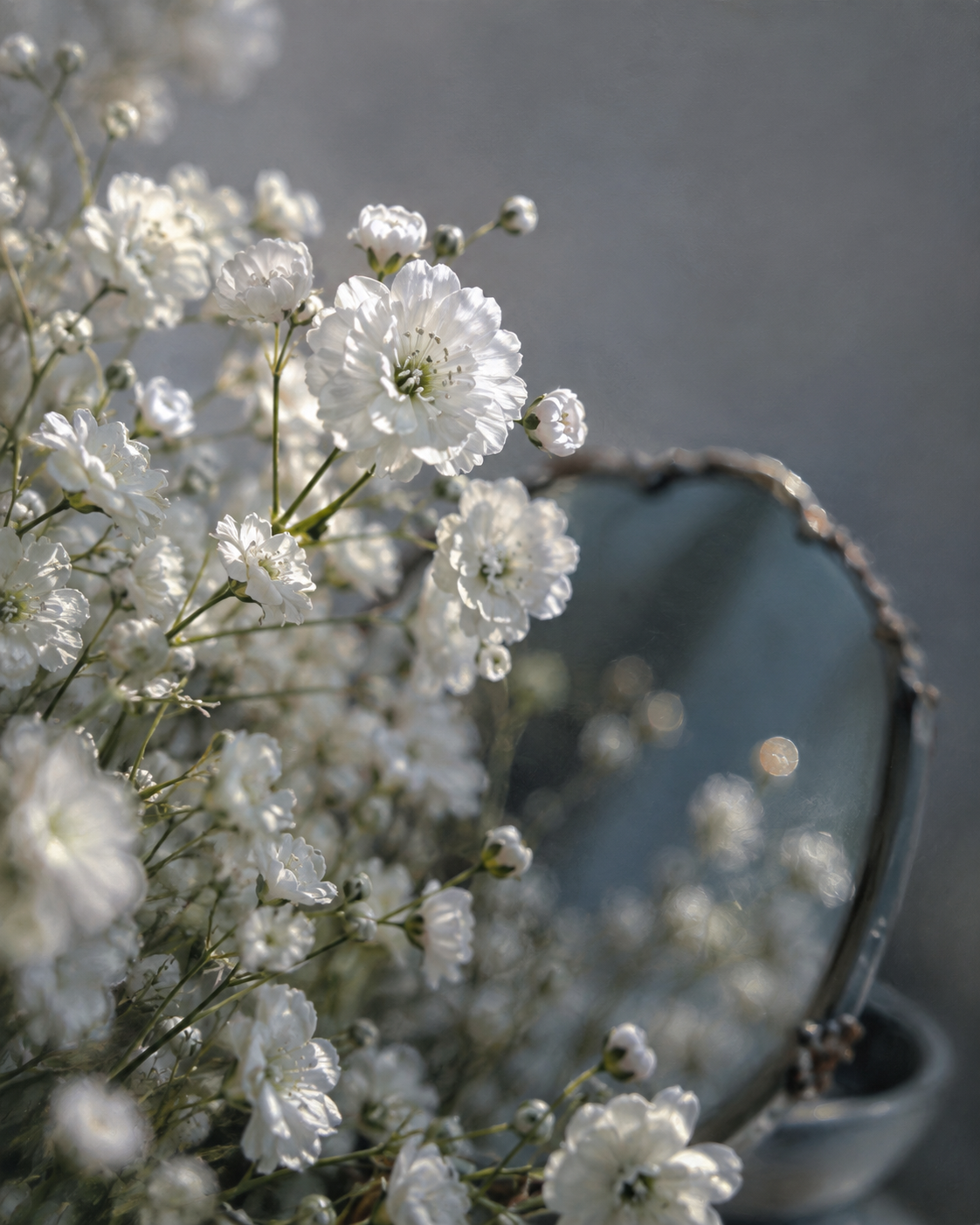
White Baby's Breath and the Mirror's Echo
Critique
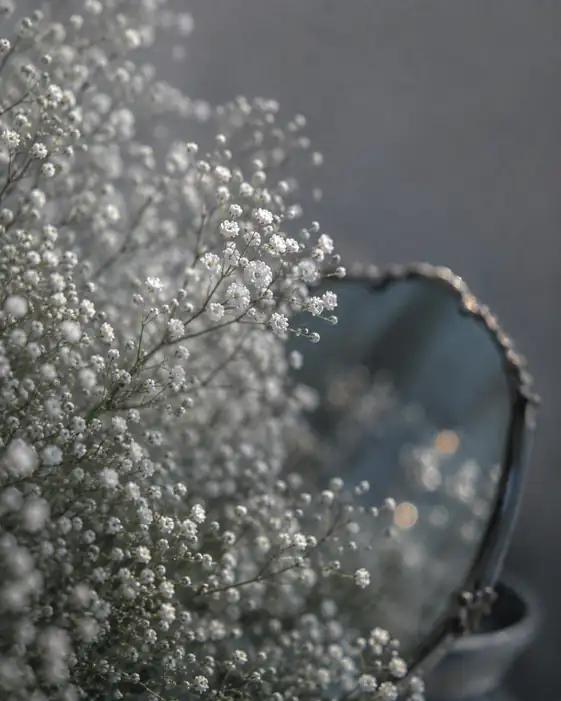
Introduction This painting joins white blossoms to an aged mirror, making reflection as important as the flowers. Beauty appears both present and already passing into memory. Description Layered white flowers and buds spread from the left on green stems. One upper bloom is sharply defined. An oval mirror occupies the lower right, its dark rim catching light. The glass reflects diffuse flowers and warm highlights against cool gray. Analysis The composition balances organic abundance with a single geometric enclosure. Branching stems advance diagonally toward the mirror, while the oval opens a calmer, bluish zone within the crowded field. Shallow focus converts near and distant blossoms into different degrees of clarity, creating depth through resolution rather than strong color contrast. White petals are modeled with cool shadows and bright edges, so their apparent simplicity contains considerable tonal variation. The mirror does not produce a precise duplicate; its soft reflections extend the rhythm of luminous circles while preserving spatial uncertainty. Interpretation and Evaluation The imperfect mirror suggests recollection rather than factual repetition. Flowers outside it possess tactile petals and visible stamens, whereas those inside survive as light and atmosphere. This contrast can evoke the way a vivid present becomes a softened memory. At the same time, the worn rim prevents the image from becoming merely decorative, introducing age beside fresh growth. The idea is convincing because reflection, focus, and material texture all support it without requiring a literal narrative. Conclusion By opposing fragile blossoms to enduring but tarnished glass, the work gives modest floral beauty emotional weight. Its restrained palette, selective clarity, and unresolved reflection sustain a tender meditation on presence, time, and the limits of preservation.
Same Subcategory
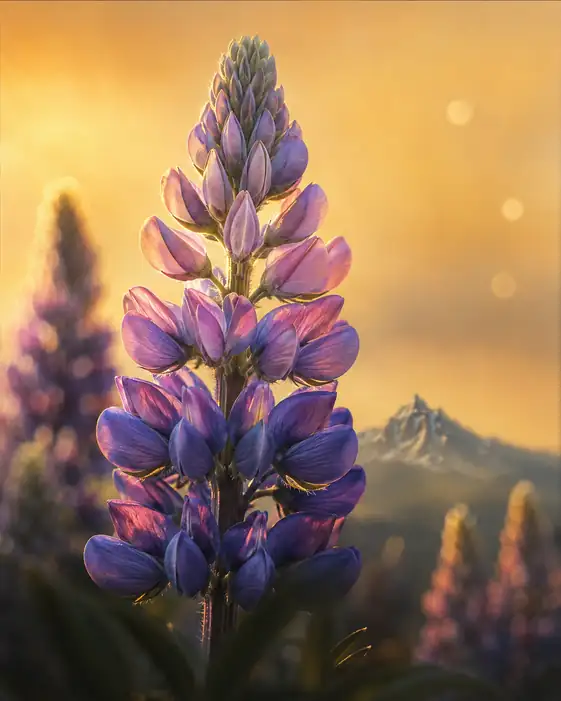 Lupine Reaching the Golden Mountain Ridge
Similar Artworks
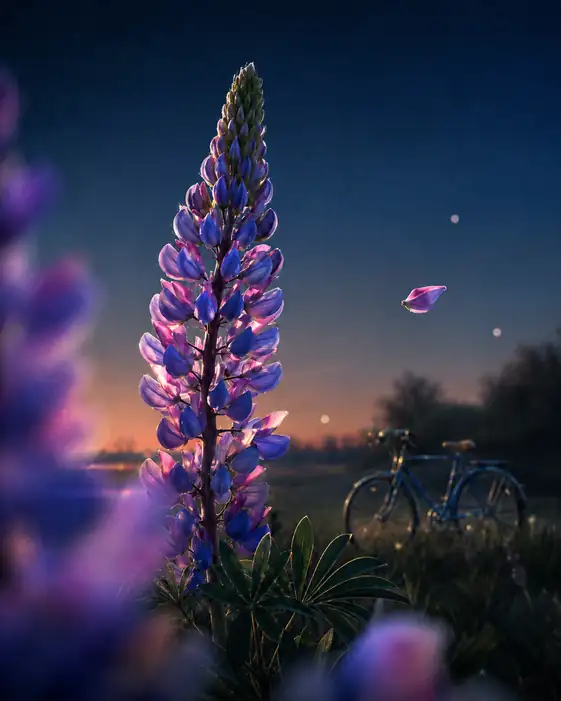
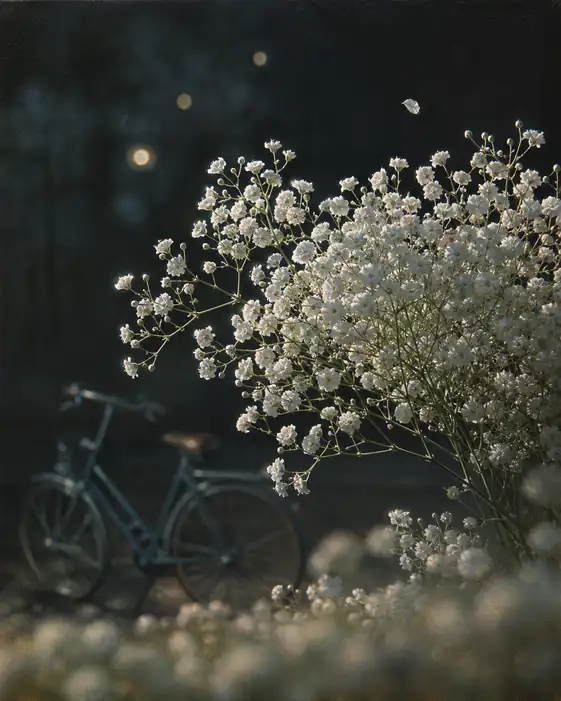 Baby's Breath in Night Mist and the Bicycle
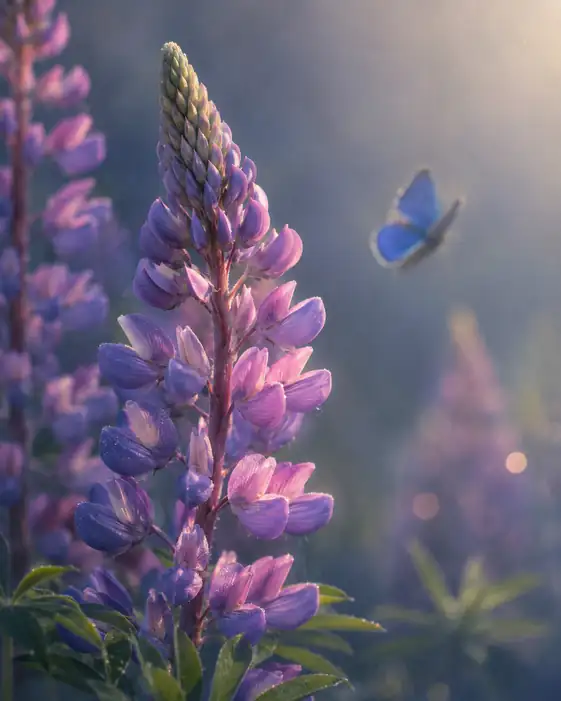
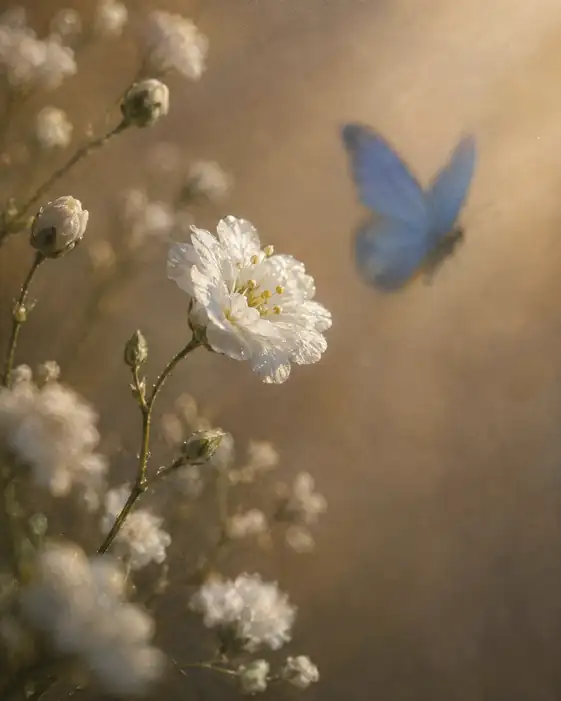 Sunlit Baby's Breath and the Blue Butterfly
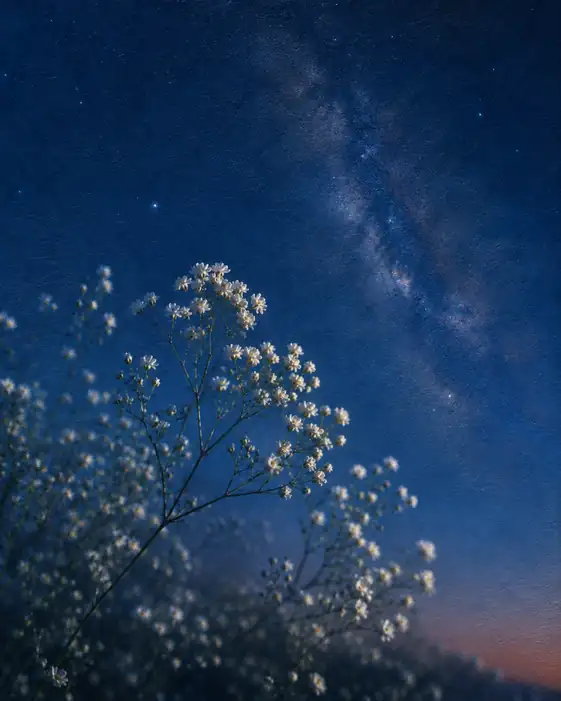 White Baby's Breath and the Milky Way
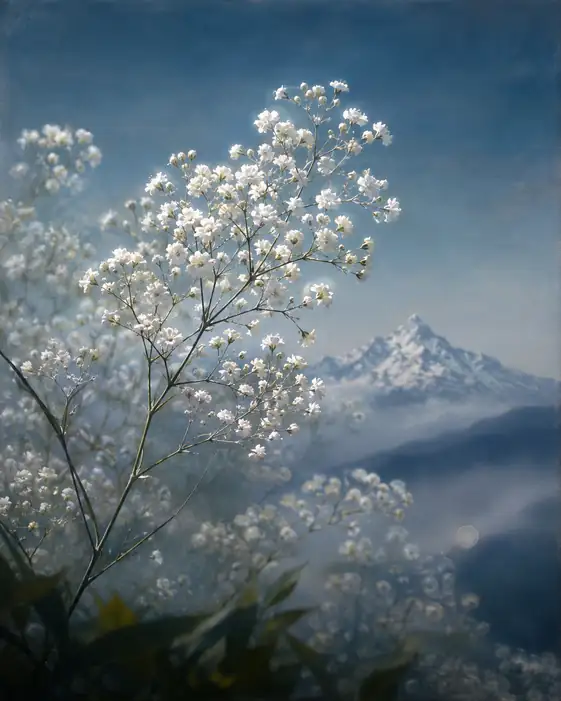 White Baby's Breath Facing the Snowy Peak
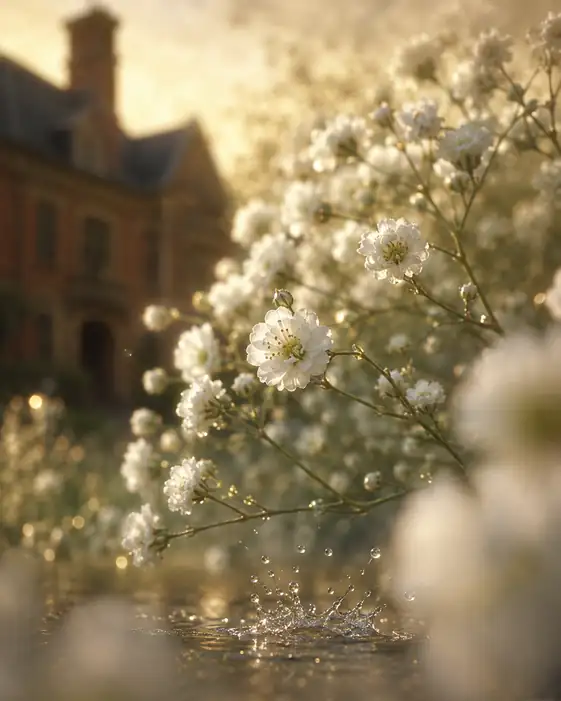 Sunlit Garden and the Water Crown
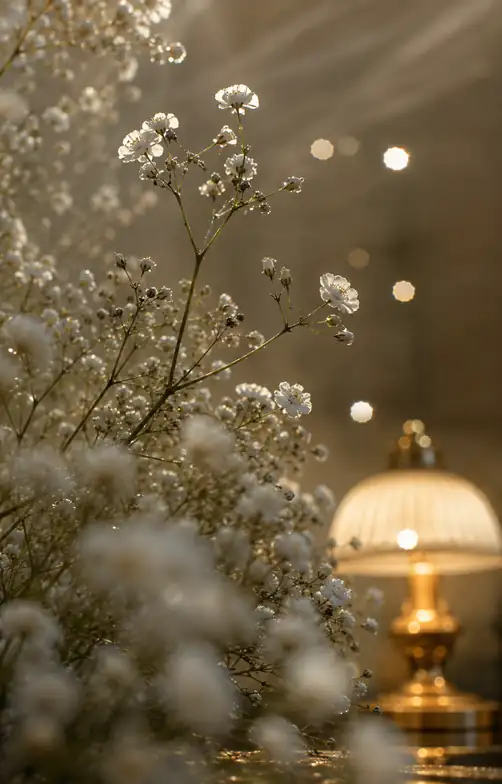 Amber Lamp and the Whispering Blooms
 Starlit Baby's Breath and the Antique Mirror
 Evening Toast and the Purple Lupine
 Floating Petal and the Twilight Bicycle
 Purple Lupine and the Azure Butterfly