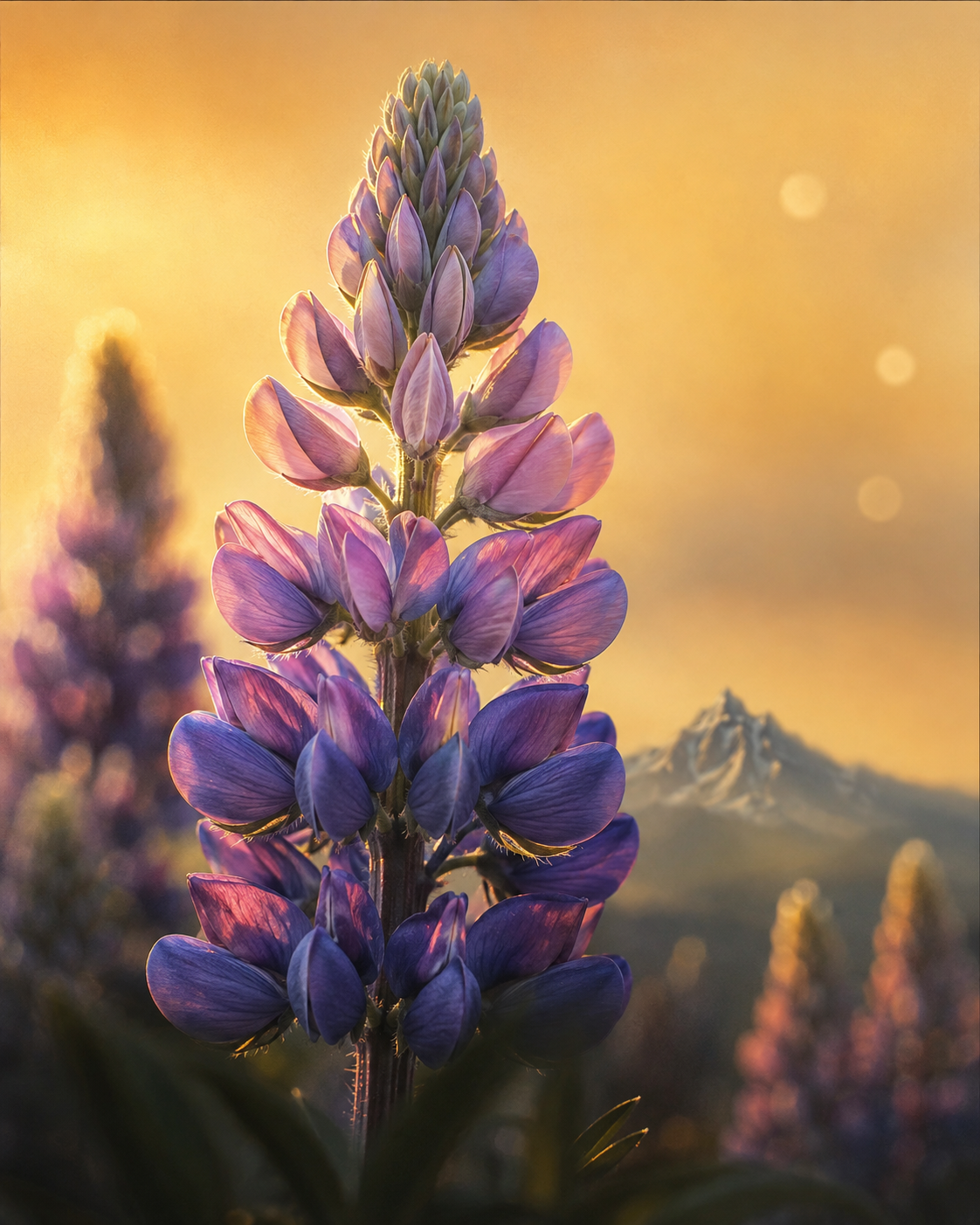
Lupine Reaching the Golden Mountain Ridge
Critique
Introduction This painting places a lupine and mountain peak in conversation. The enlarged flower's ascent echoes the distant landform, turning a botanical study into a meditation on growth and duration. Description A purple lupine rises left of center. Green-lavender buds crown the spike, while open violet florets cluster below. Golden light outlines petals and hairs. At right, a soft mountain peak meets an orange sky. Other lupines and dark leaves blur along the edges. Analysis The flower creates a vertical rhythm, but its slight lean remains organic. Tiers of blossoms guide the eye from saturated purple to pale buds. The distant mountain provides a broad triangular answer to this narrow spire. Violet and gold heighten luminosity, while backlighting separates petals from the atmosphere. Shallow focus establishes scale: flower is immediate, mountain remote. Peripheral blooms prevent a solitary emblem. Interpretation and Evaluation Flower and mountain can be read as two forms of ascent governed by radically different times. One reaches maturity within a season; the other appears shaped across ages. Yet the composition treats neither as superior, allowing their silhouettes to rhyme across distance. The unopened buds at the top preserve futurity within the mature bloom, while the sunset-like light introduces the close of a day. These multiple temporal registers give the beauty depth without burdening it with an explicit story. Conclusion The work succeeds through a clear but fertile comparison between botanical growth and geological elevation. Its glowing color and layered focus make the scene immediately pleasurable, while the dialogue of flower, peak, bud, and fading light sustains a more lasting reflection on becoming.
Same Subcategory
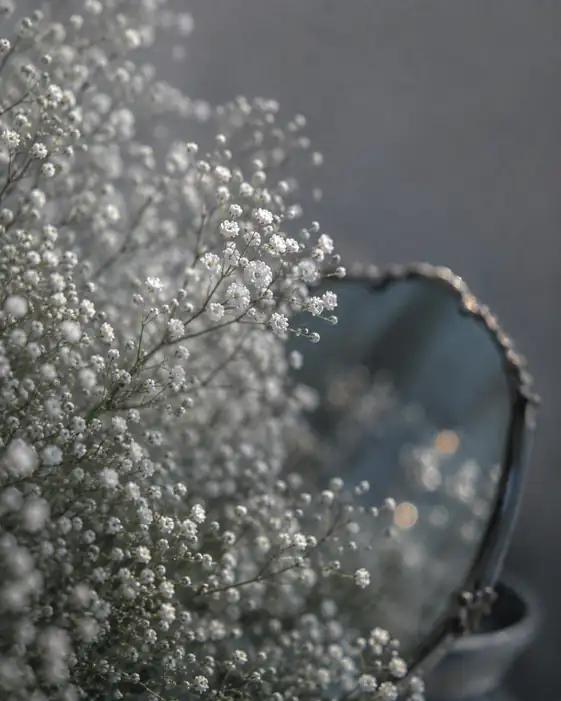 Starlit Baby's Breath and the Antique Mirror
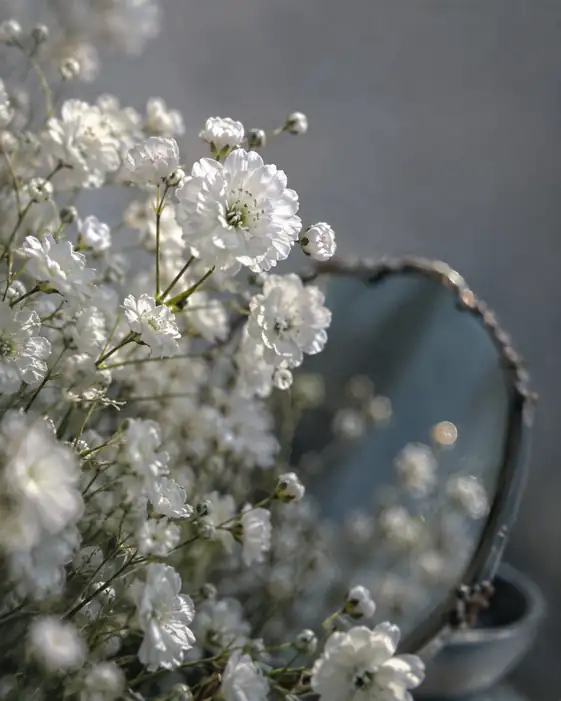 White Baby's Breath and the Mirror's Echo
Similar Artworks
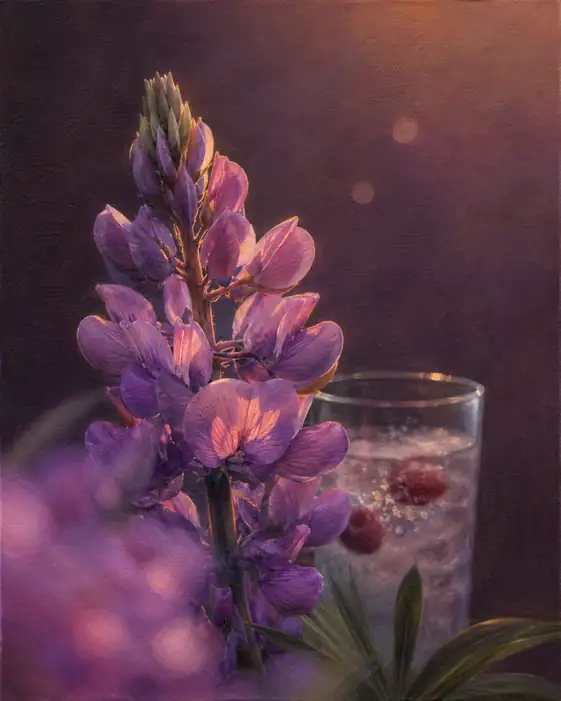 Evening Toast and the Purple Lupine
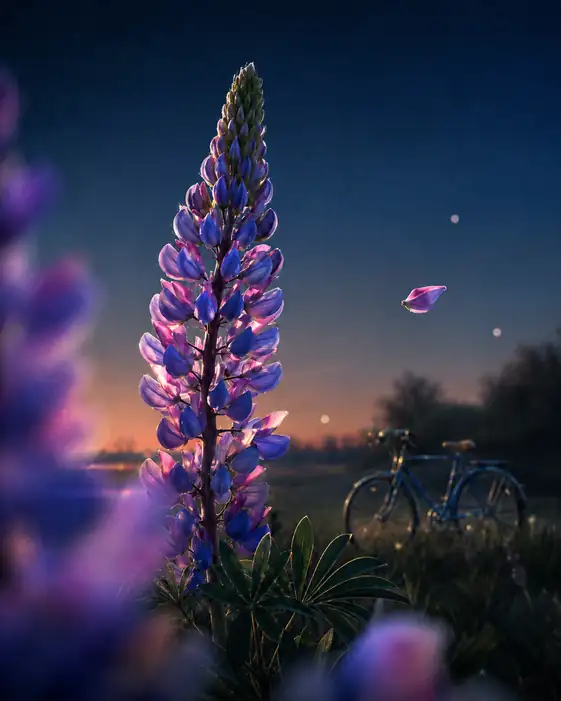 Floating Petal and the Twilight Bicycle
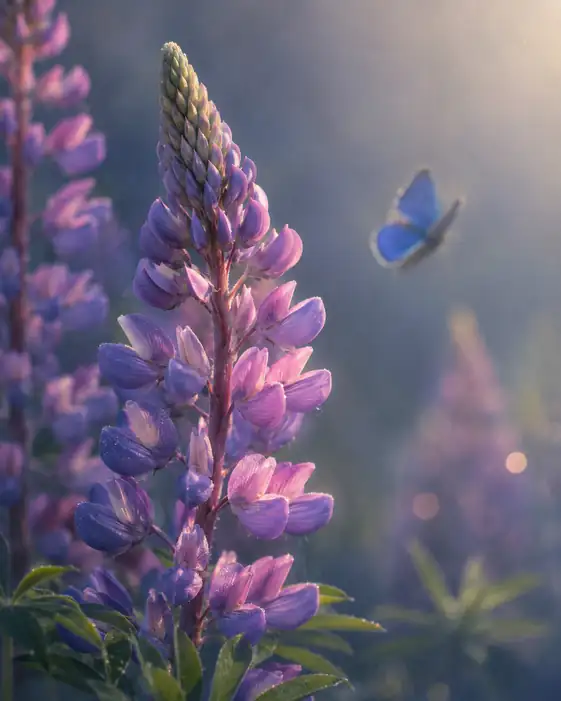 Purple Lupine and the Azure Butterfly
 Purple Lupine Reaching the Clear Stream
 Purple Lupine beneath the Brass Lamp
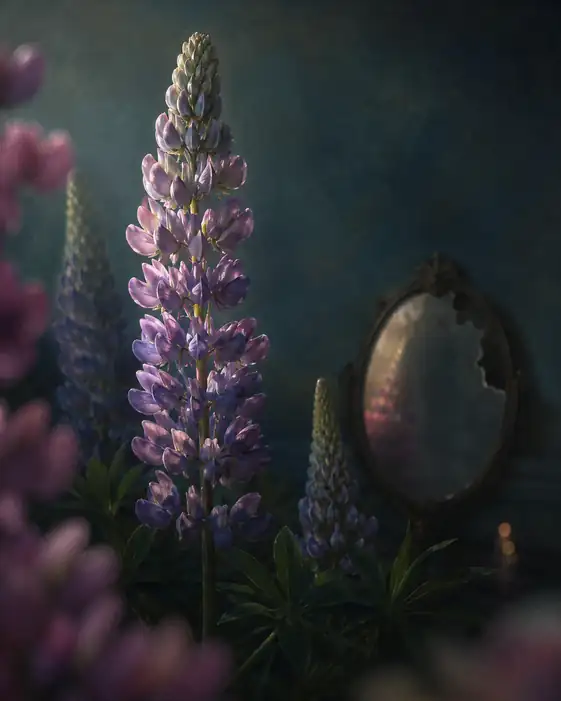 Purple Lupine beside the Antiquated Mirror
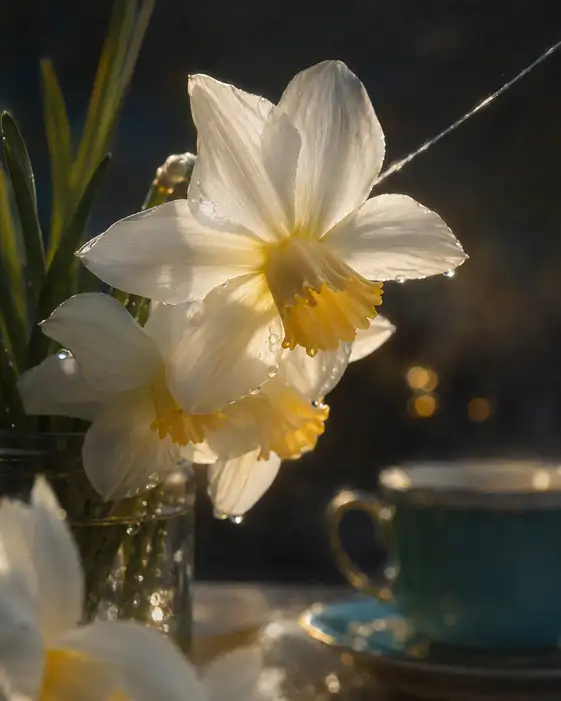 Morning Tea and Daffodils by the Window
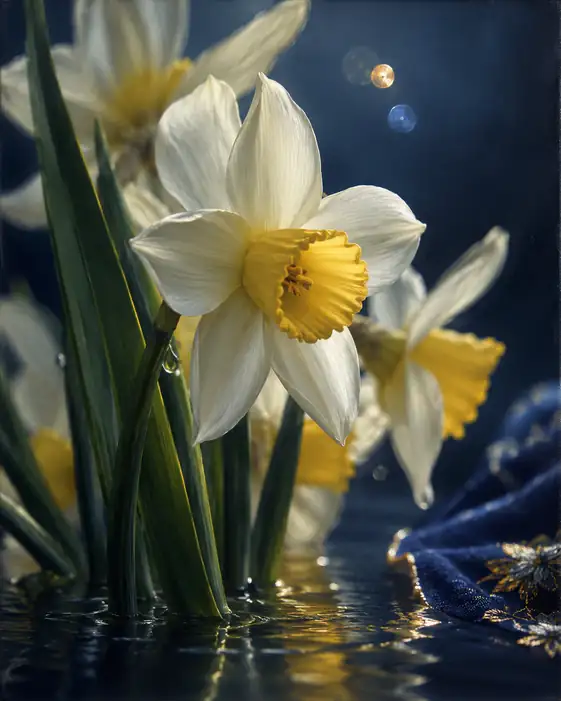 Daffodils over the Gold-Woven Silk
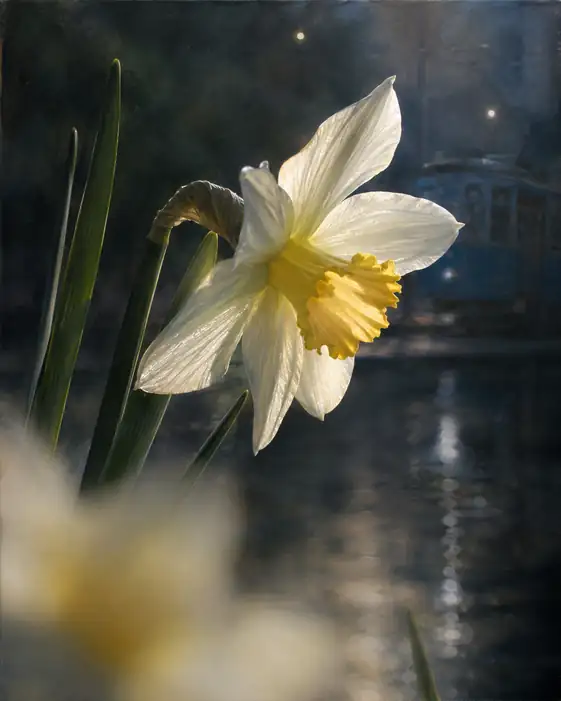 Daffodil along the Night Rails
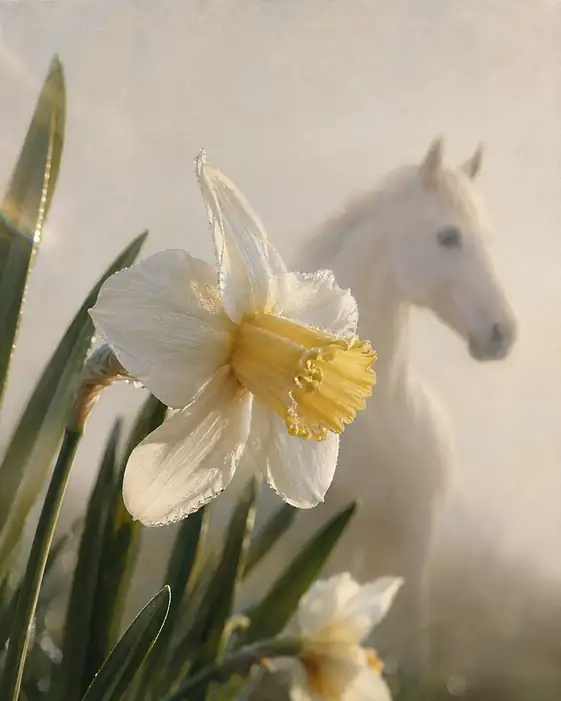 Daffodil and the White Steed in Morning Mist