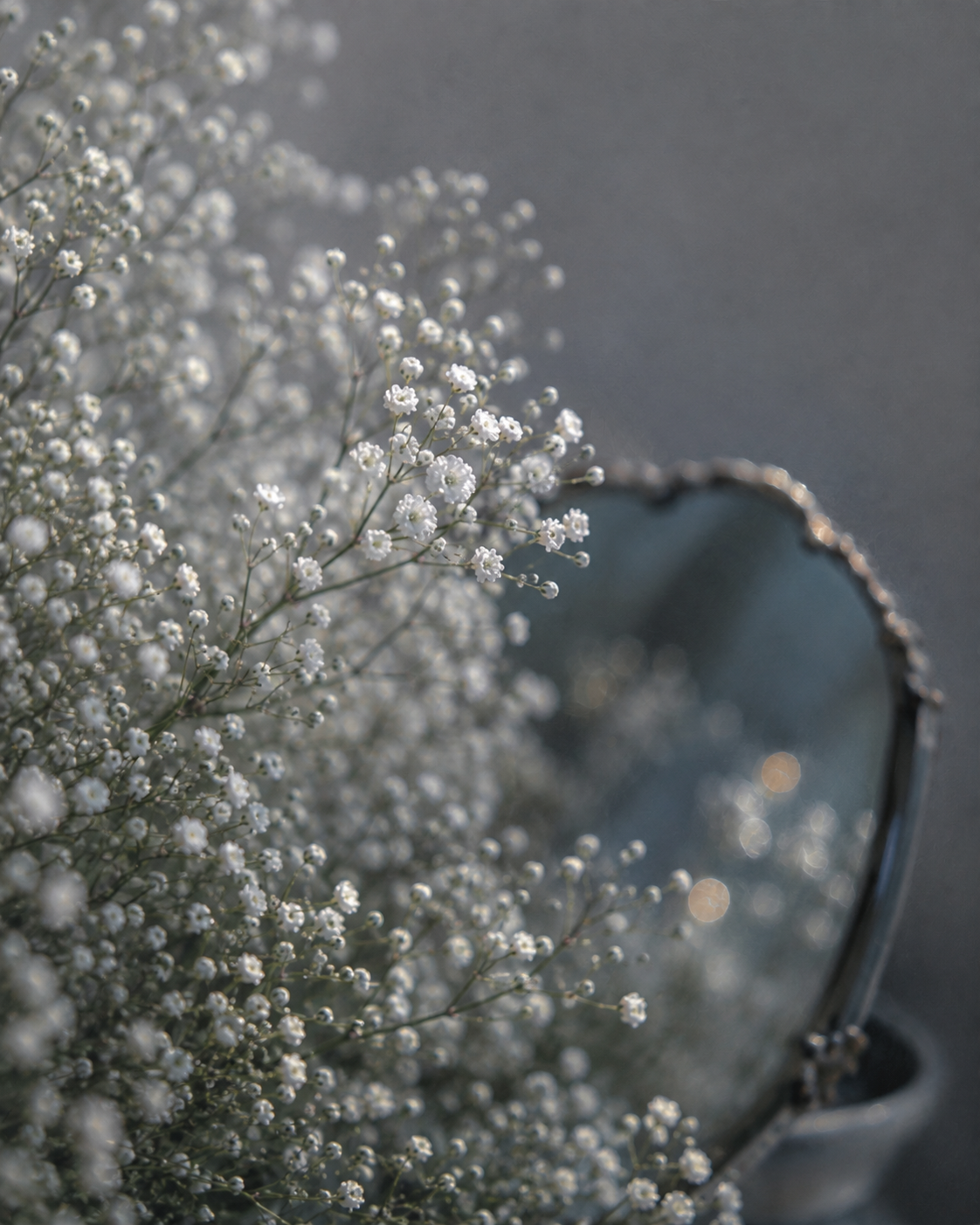
Starlit Baby's Breath and the Antique Mirror
Critique
Introduction This painting gives baby's breath, often a supporting flower, a field of its own. An antique mirror complicates that abundance with reflection, absence, and memory. Description White baby's breath fills the left and center. Tiny flowers mingle with round buds on branching stems, with selected clusters sharply focused. At right stands an oval mirror in a dark, warm-edged frame. Its soft surface reflects more blossoms and subdued light against cool gray-blue. Analysis The work is organized through accumulation rather than a single dominant bloom. Repeated white dots form shifting constellations whose density changes across the shallow space. The mirror's firm oval supplies a stable counterform to the irregular branching stems. Cool background tones allow the whites to remain luminous without becoming harsh, while restrained bronze highlights on the frame prevent the palette from feeling sterile. Focus moves selectively among flowers, making perception itself seem partial and mobile. Interpretation and Evaluation Because the mirror offers no human face, it becomes less an instrument of self-regard than a chamber for what is absent. It doubles flowers that are already numerous, yet the blurred reflection makes the abundance feel remembered rather than simply repeated. Baby's breath traditionally occupies the margins of bouquets; granting it this scale honors modest, collective beauty. The painting succeeds by keeping these associations suggestive. Its quiet symbolism emerges from repetition, framing, and withheld clarity. Conclusion The image transforms small blossoms into a spacious meditation on how beauty is gathered and recalled. Its balance of organic scatter and geometric enclosure is refined, and the empty mirror preserves a gentle mystery at the heart of an otherwise generous floral display.
Same Subcategory
 Purple Lupine Reaching the Clear Stream
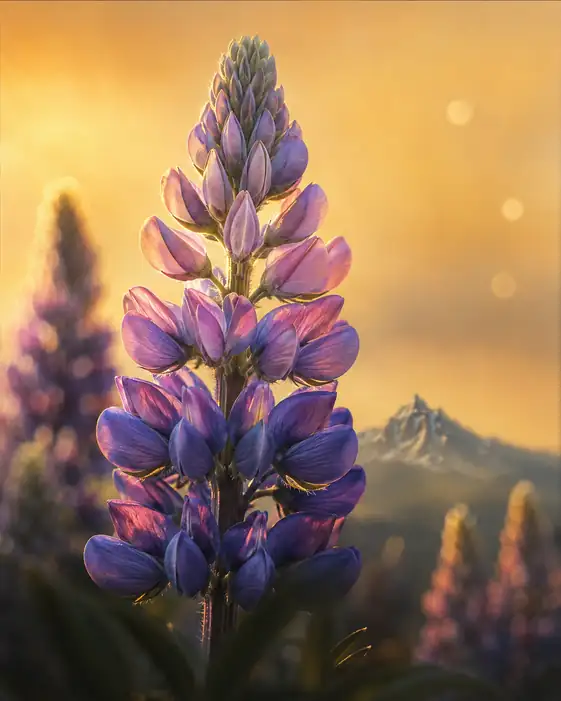 Lupine Reaching the Golden Mountain Ridge
Similar Artworks
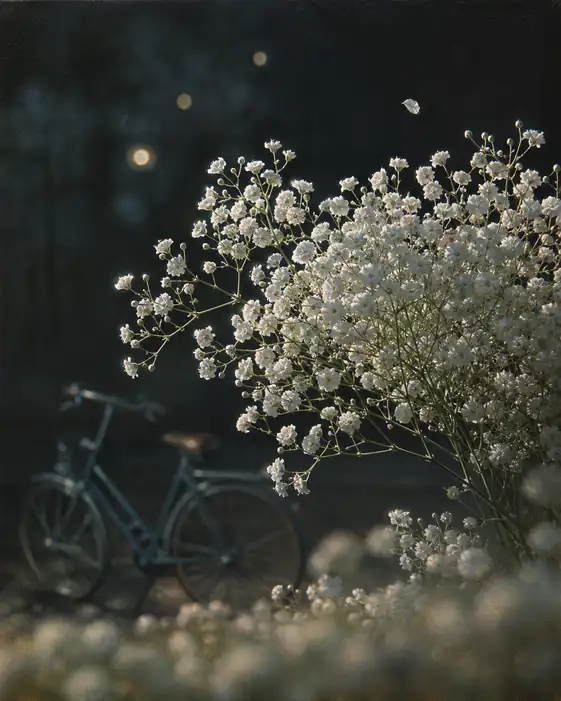 Baby's Breath in Night Mist and the Bicycle
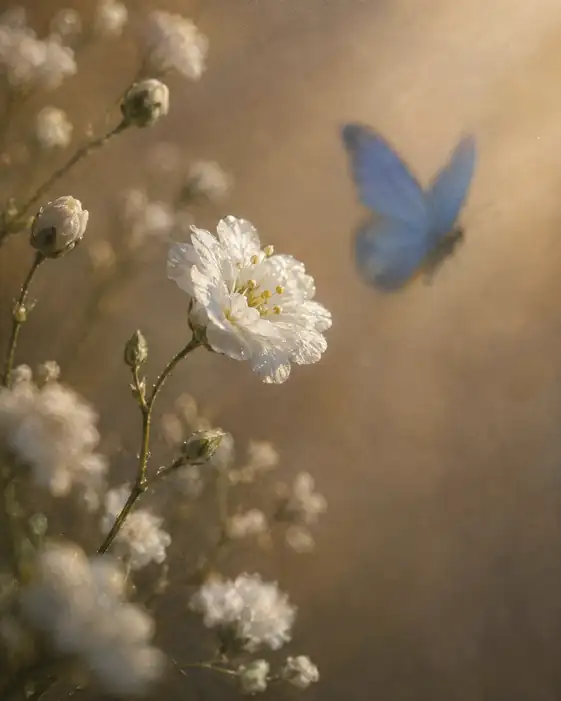 Sunlit Baby's Breath and the Blue Butterfly
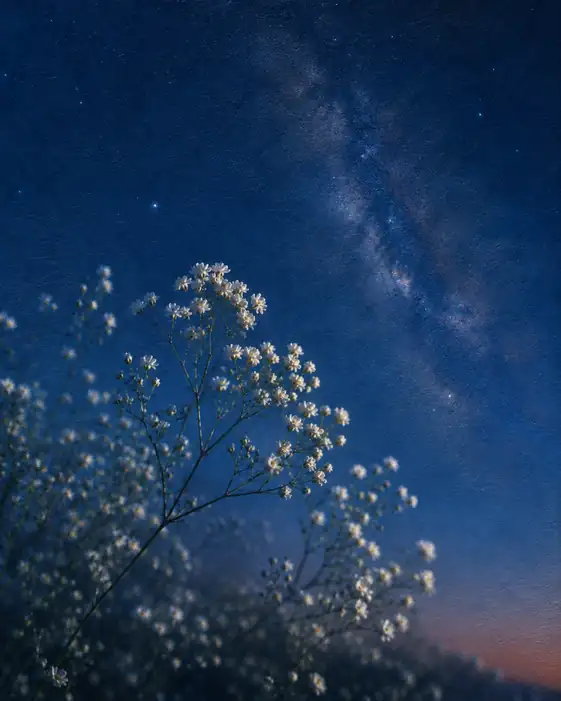 White Baby's Breath and the Milky Way
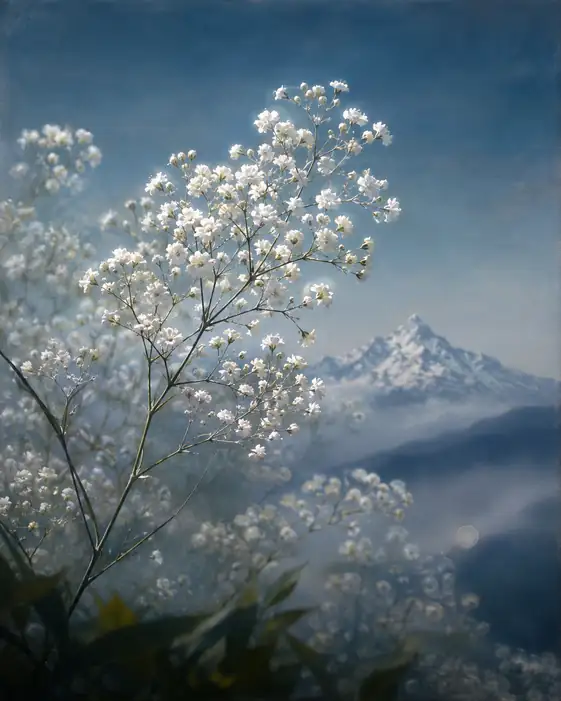 White Baby's Breath Facing the Snowy Peak
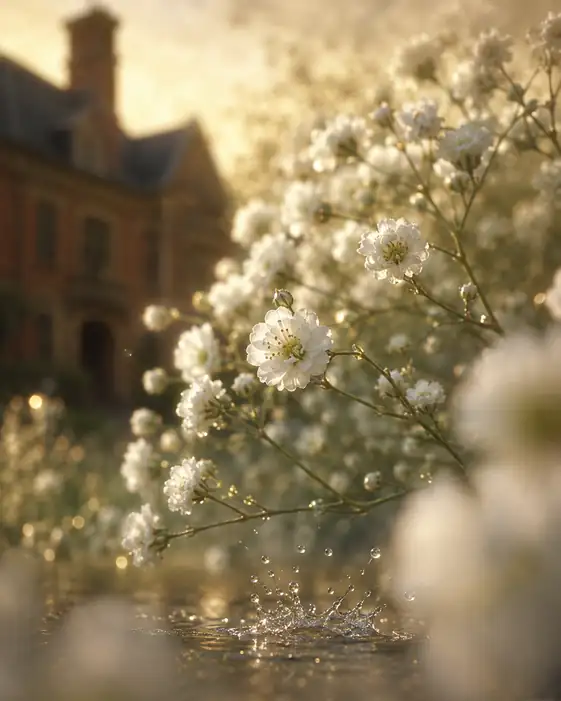 Sunlit Garden and the Water Crown
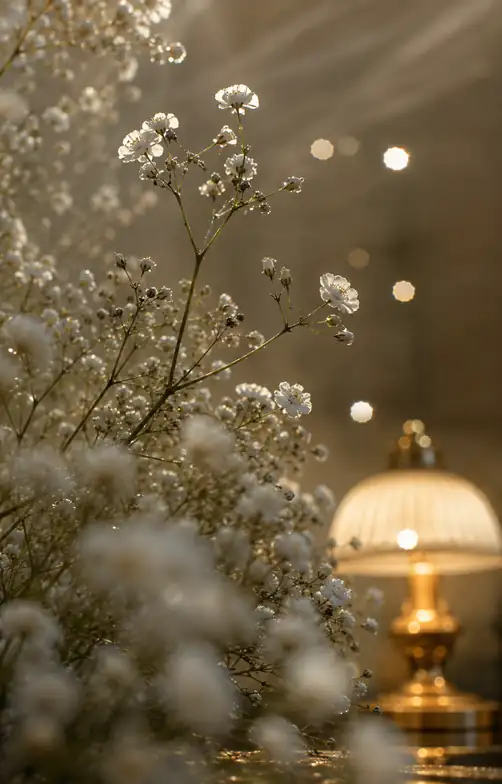 Amber Lamp and the Whispering Blooms
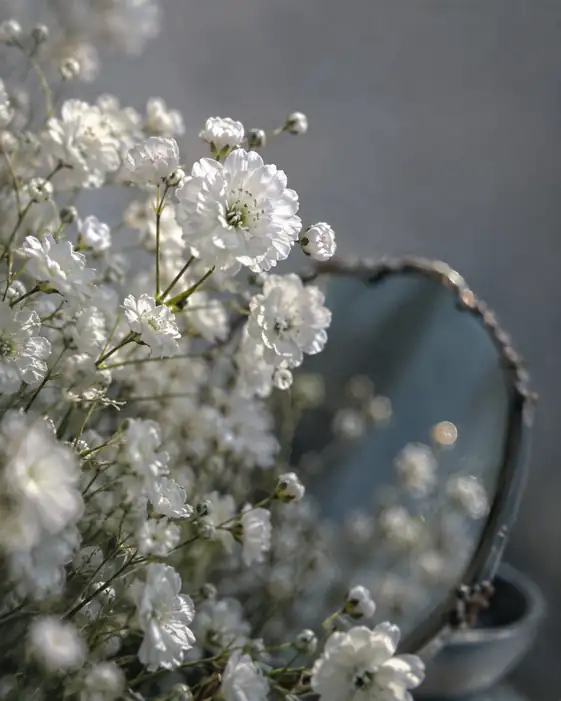 White Baby's Breath and the Mirror's Echo
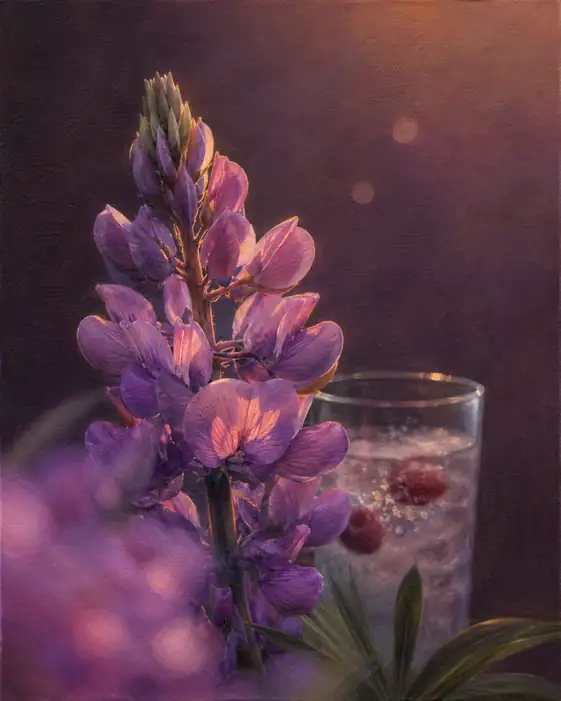 Evening Toast and the Purple Lupine
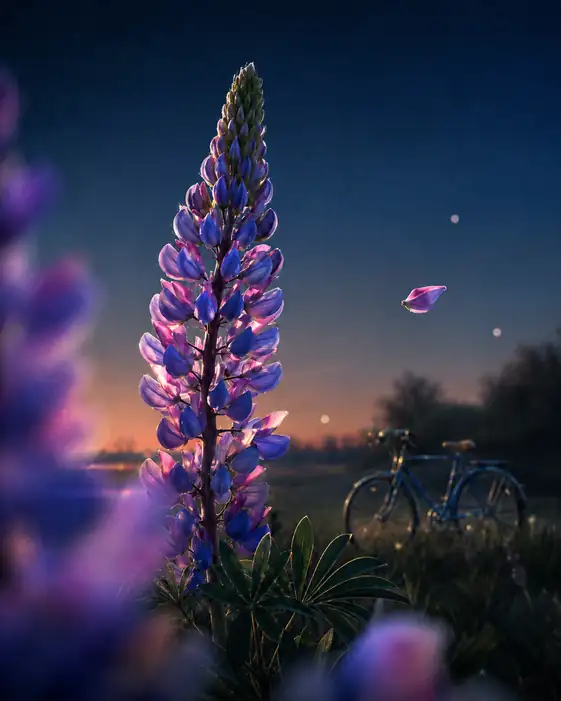 Floating Petal and the Twilight Bicycle
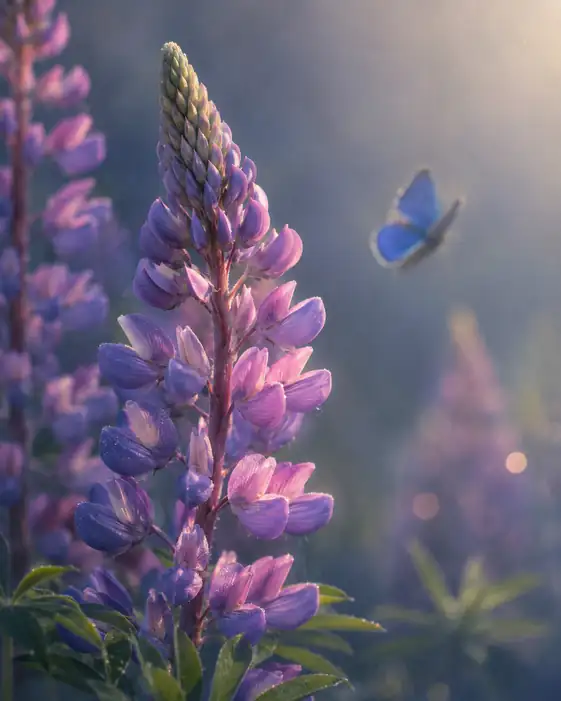 Purple Lupine and the Azure Butterfly