
Purple Lupine beneath the Brass Lamp
Critique
Introduction This painting sets wet purple lupines before a brass desk lamp across a dark tabletop. Garden growth and artificial light meet in an interior charged with quiet attention. Description A lupine spike rises through center, tapering from open violet-blue flowers to green-purple buds. Droplets cover a frontal blossom, and fallen flowers rest on the wet surface. Purple reflection extends among gold highlights. At right, a curved brass lamp appears softly focused, casting warm light behind. Dark flower masses fill left, while a pale beam descends above. Analysis The lupine’s vertical taper and the lamp’s curved support form complementary upward structures. Cool purple dominates the foreground; concentrated gold counterbalances it at right and in reflection. Sharp droplets, soft lamp, and blurred background establish layered depth. Repetition within the flower spike produces an ascending rhythm, while fallen blossoms and liquid reflections spread horizontally below. The overhead beam unites natural and artificial illumination without erasing their different temperatures. Interpretation and Evaluation The lamp suggests study, vigilance, or a private pool of attention. Beside it, the lupine becomes an object not merely displayed but closely observed. Open flowers, buds, and fallen petals show growth, possibility, and decline simultaneously. The wet surface records these stages as unstable images, adding memory to presence. The work succeeds by making artificial light hospitable rather than controlling: it reveals the plant’s vulnerability while allowing its cool color to remain sovereign. Conclusion By bringing a flowering spire into the warm orbit of a desk lamp, the painting makes observation feel like care. Purple growth, golden metal, water, and reflection form a quiet interior where knowledge begins in sustained attention to change.
Same Subcategory
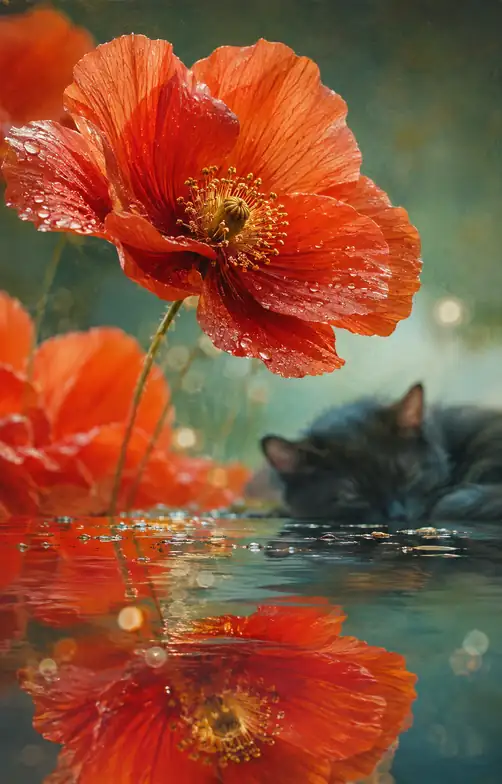 Poppy's Reflection and the Sleeping Cat
 Poppies over the Night Sea and Skiff
Similar Artworks
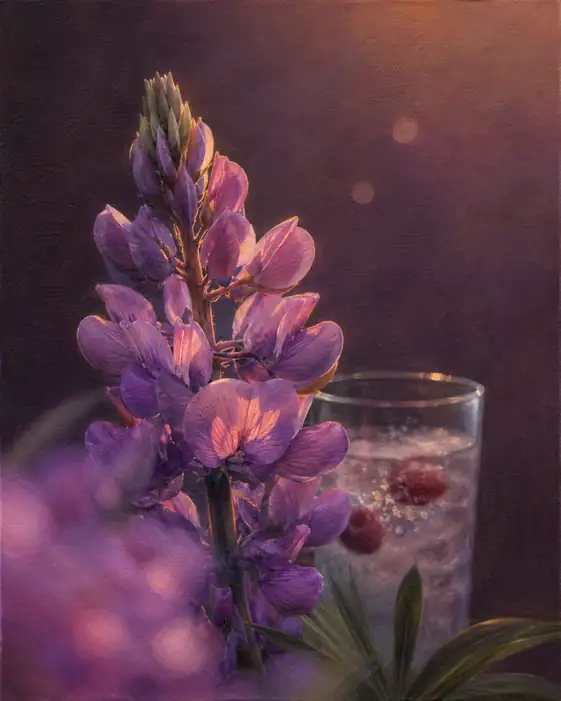 Evening Toast and the Purple Lupine
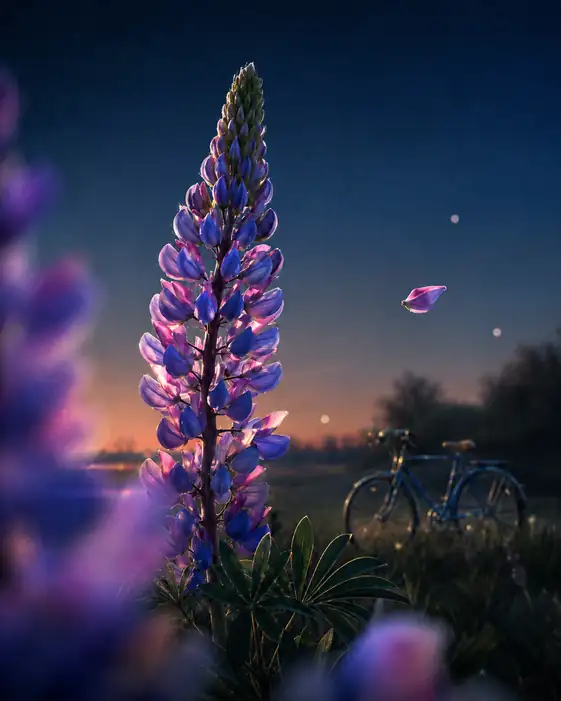 Floating Petal and the Twilight Bicycle
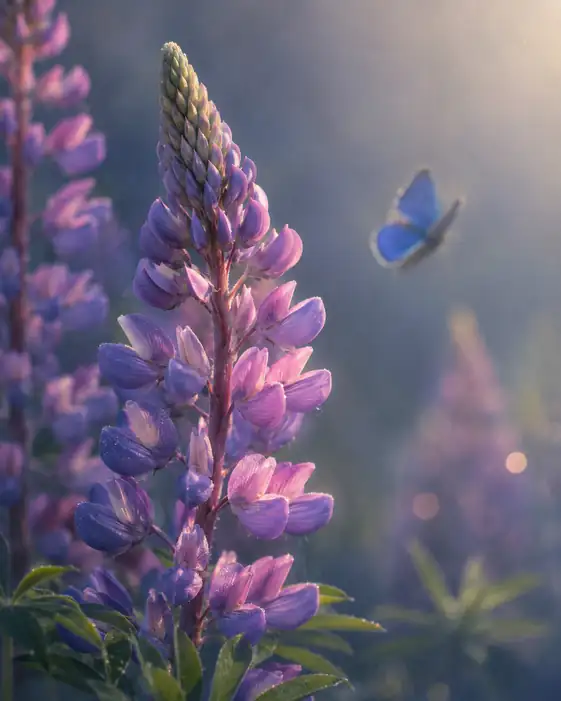 Purple Lupine and the Azure Butterfly
 Lupine Reaching the Golden Mountain Ridge
 Purple Lupine Reaching the Clear Stream
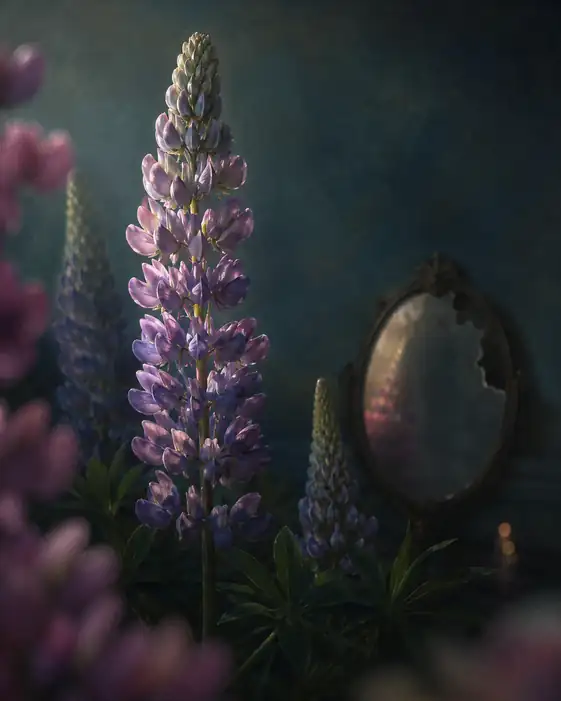 Purple Lupine beside the Antiquated Mirror
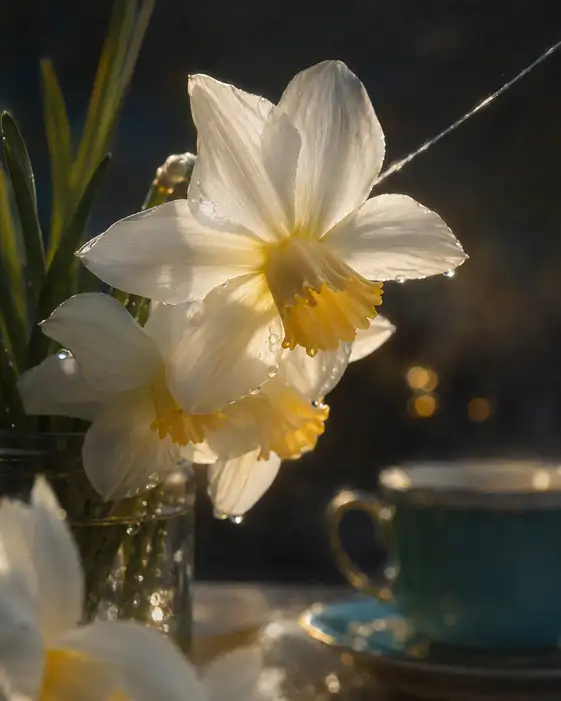 Morning Tea and Daffodils by the Window
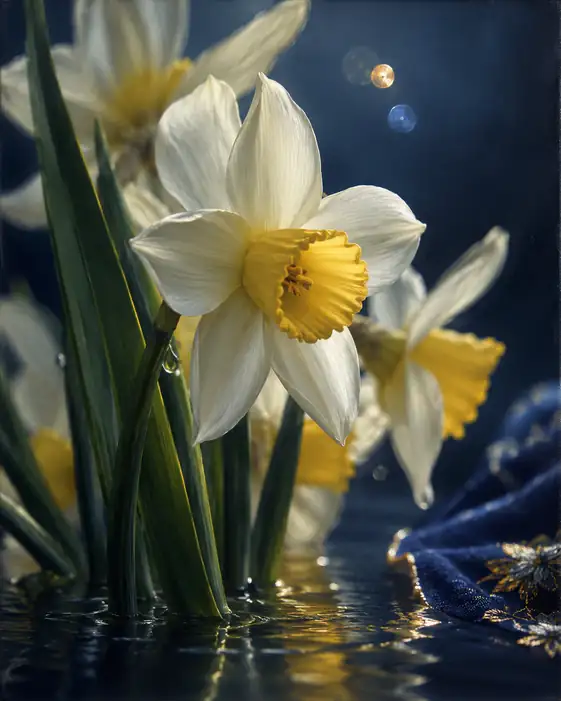 Daffodils over the Gold-Woven Silk
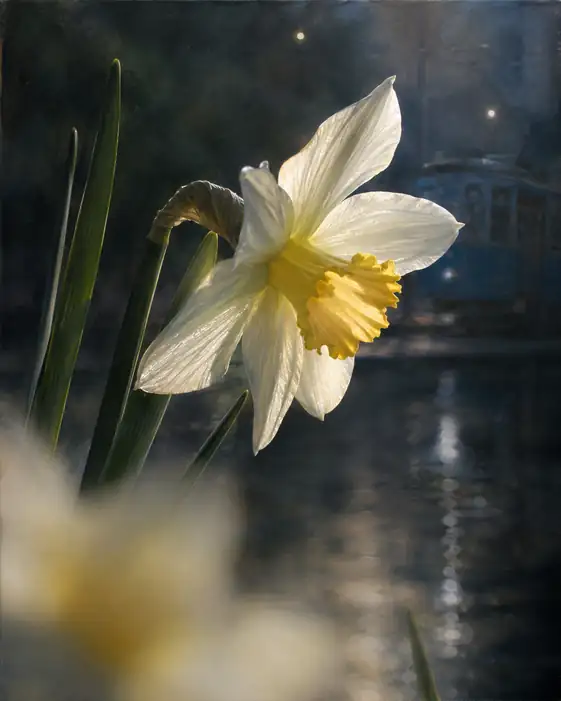 Daffodil along the Night Rails
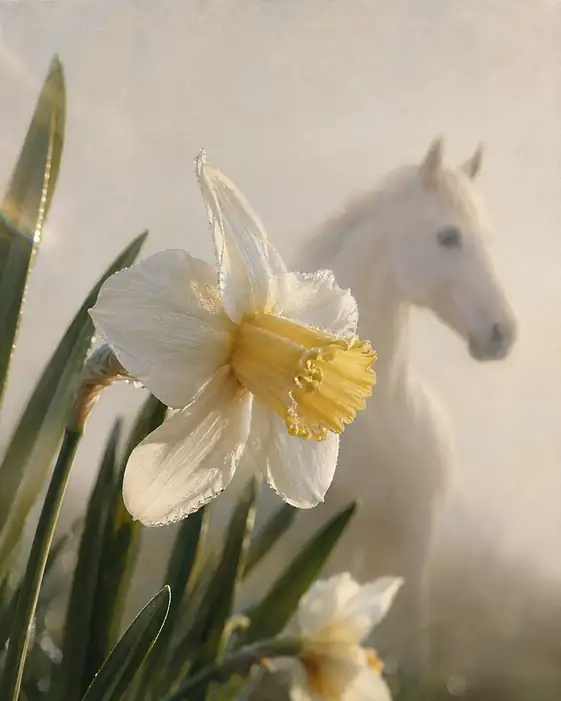 Daffodil and the White Steed in Morning Mist