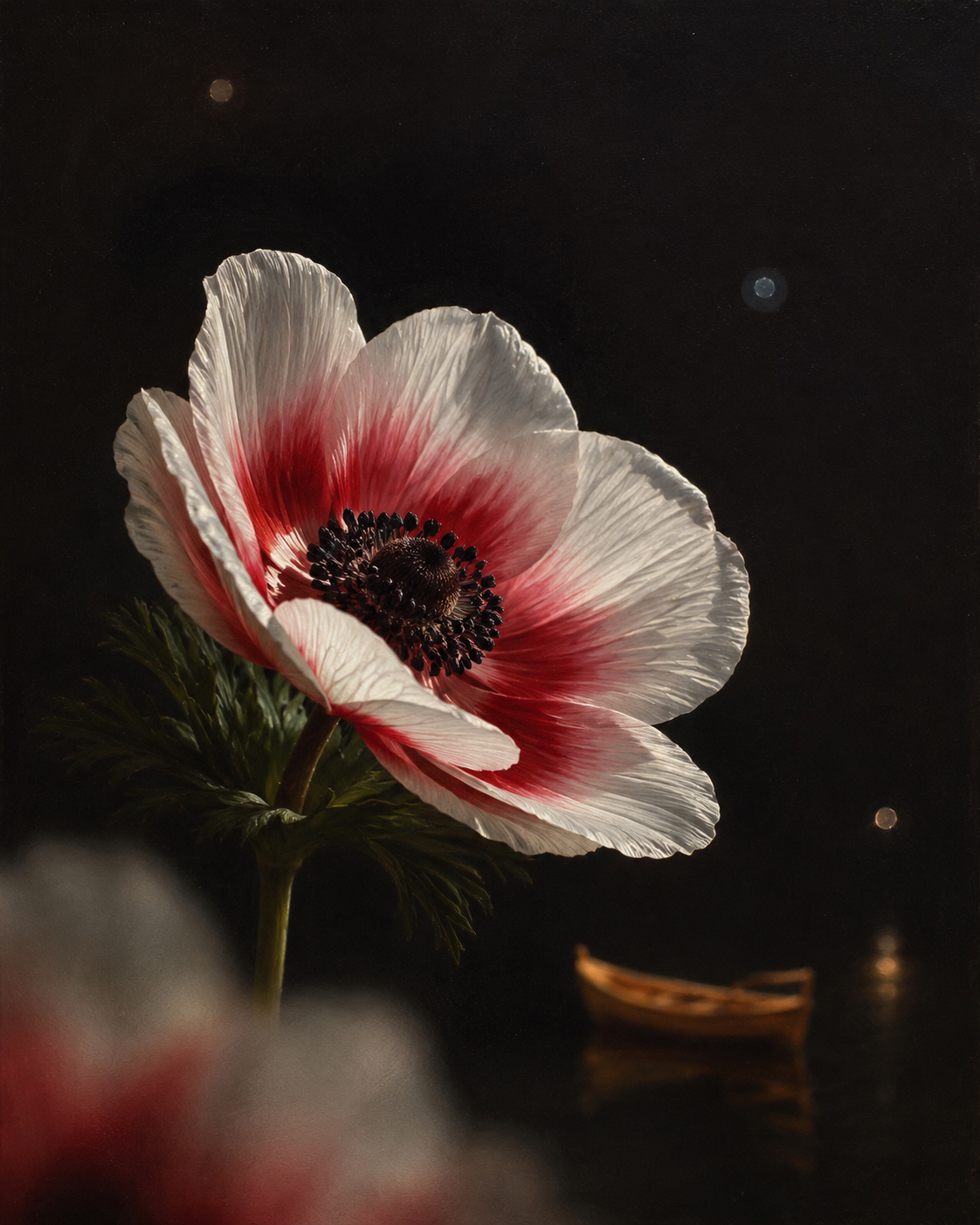
Crimson Anemone and the Lone Skiff
Critique
Introduction This painting places a white-red anemone before dark water, where a wooden boat waits. Improbable scale turns flower study into a voyage through contrast, solitude, and memory. Description The anemone fills left-center, white petals brushed crimson near black stamens and dark core. Edge light reveals fine pleats. Green divided leaves descend into shadow. A blurred flower crosses the foreground. At lower right, a warm-brown boat floats on black water with faint reflection and isolated lights. The upper field remains empty. Analysis The flower’s large pale mass is balanced by the boat’s small horizontal silhouette and broad negative space. Red markings draw attention inward toward the dark center, while white edges separate the bloom from black. Shallow focus produces a strong hierarchy: tactile petals, hazy vessel, distant circles. The boat’s curve echoes the cupped lower petals. Sparse lights guide the eye across darkness without filling it, preserving emotional distance. Interpretation and Evaluation The empty boat may suggest passage, waiting, or a traveler absent from view. Beside the monumental flower, it appears to navigate an inward landscape rather than ordinary water. The anemone’s dark center can resemble an eye or destination, but its physical detail prevents a fixed symbol. The painting’s restraint is effective: the vessel is small enough to invite projection, while the luminous flower offers a vivid present against which memory can recede. Conclusion By opposing an immense open bloom with a tiny empty boat, the work makes scale narrate loneliness and possibility. Red, white, and black create austere beauty, while the distant vessel leaves a warm, navigable path through the surrounding night.
Same Subcategory
Similar Artworks
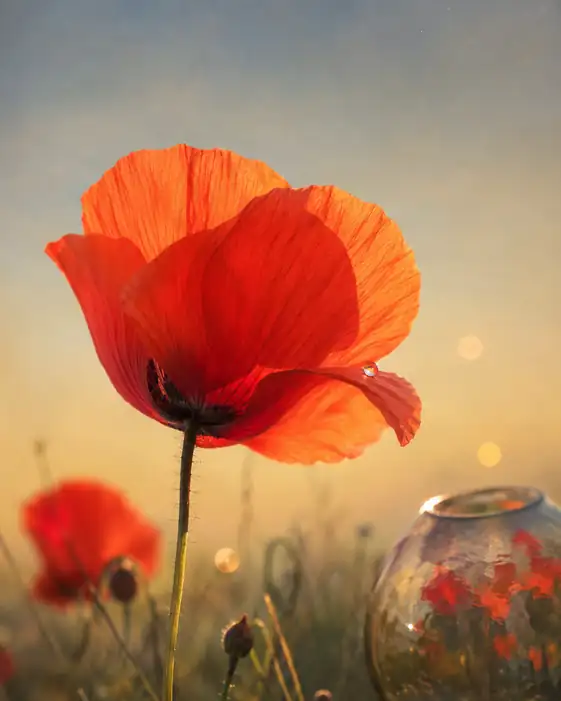 Morning Dewdrop and the Glass Sphere
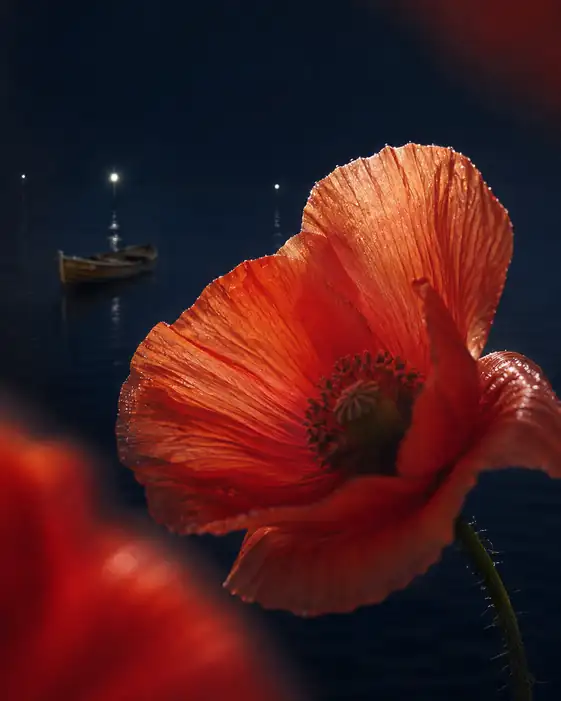 Poppies over the Night Sea and Skiff
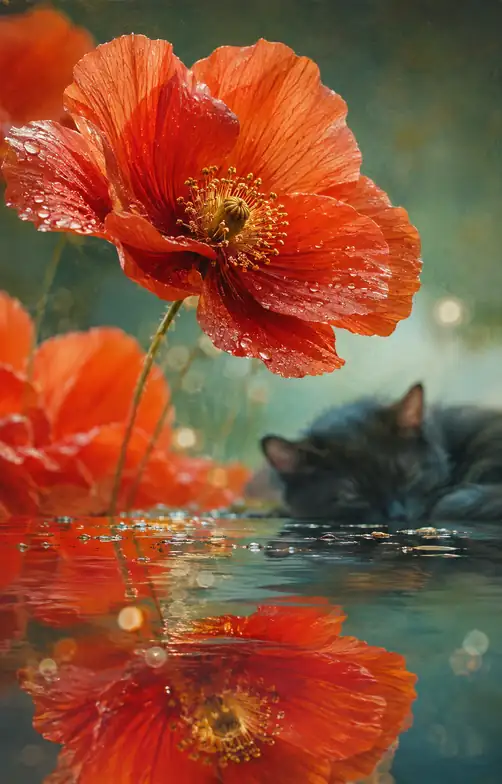 Poppy's Reflection and the Sleeping Cat
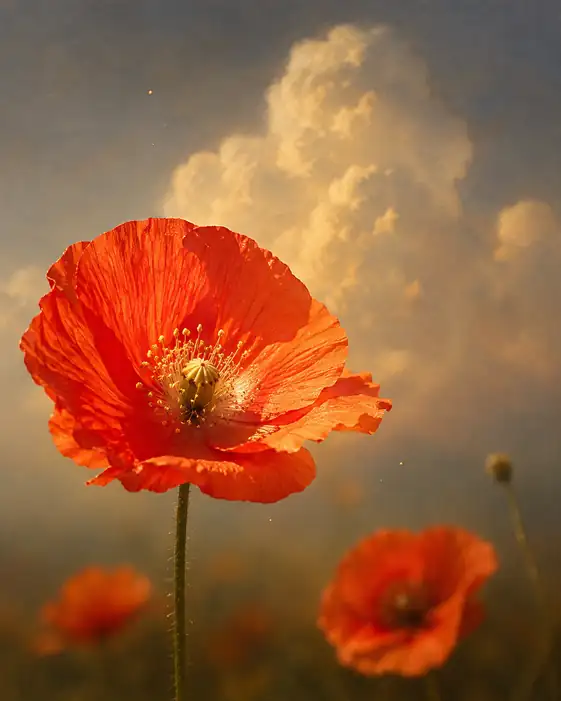 Scarlet Poppy beneath the Cumulus Cloud
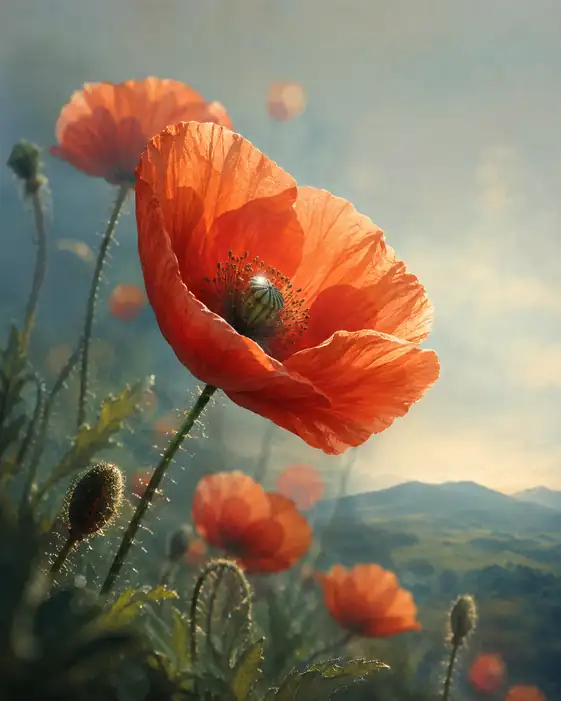 Sunlit Poppies on the Morning Ridge
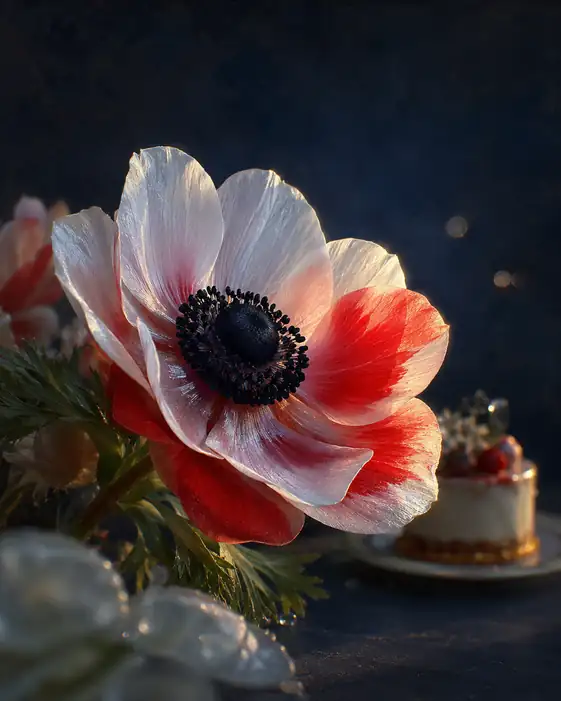 Bicolor Anemone and the Sweet Celebration
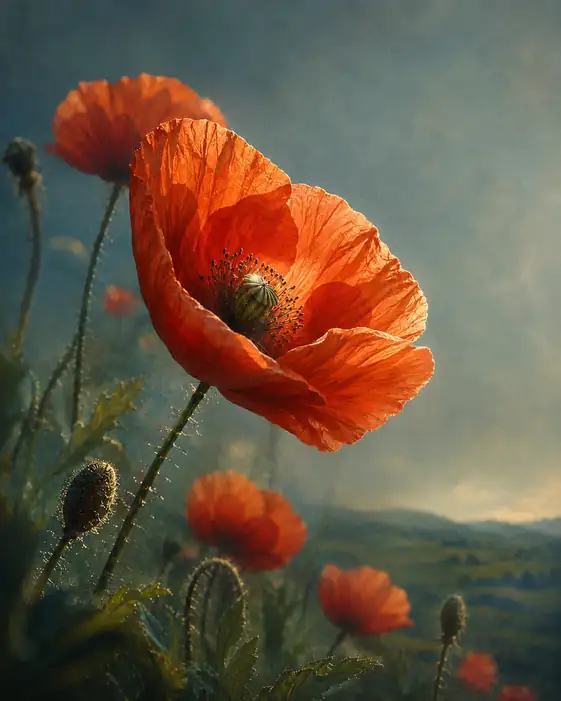 Scarlet Poppies in the Morning Breeze
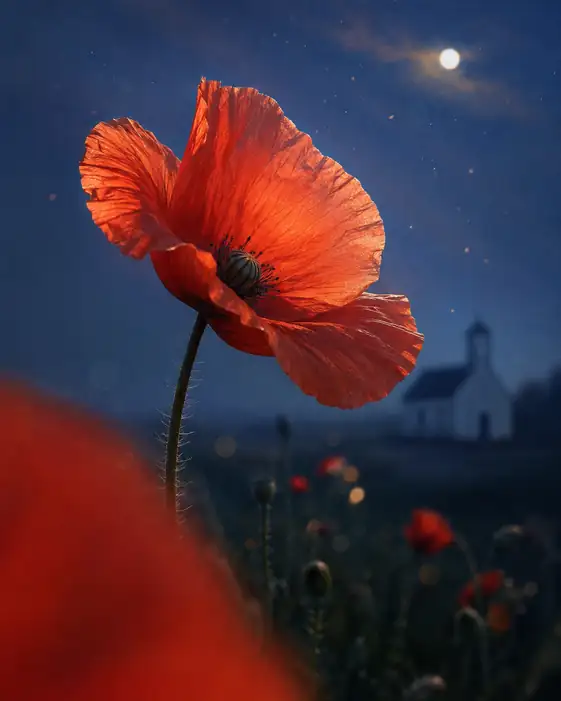 Scarlet Prayer on the Moonlit Hill
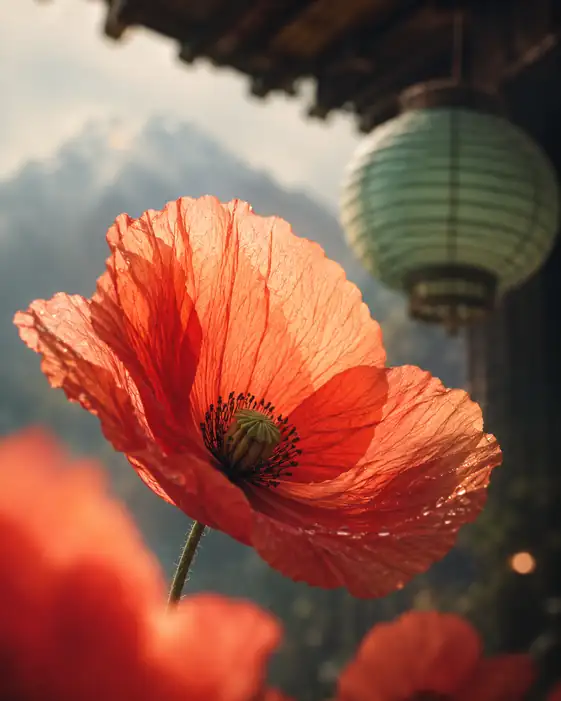 Poppies in Sunlight beneath the Lantern
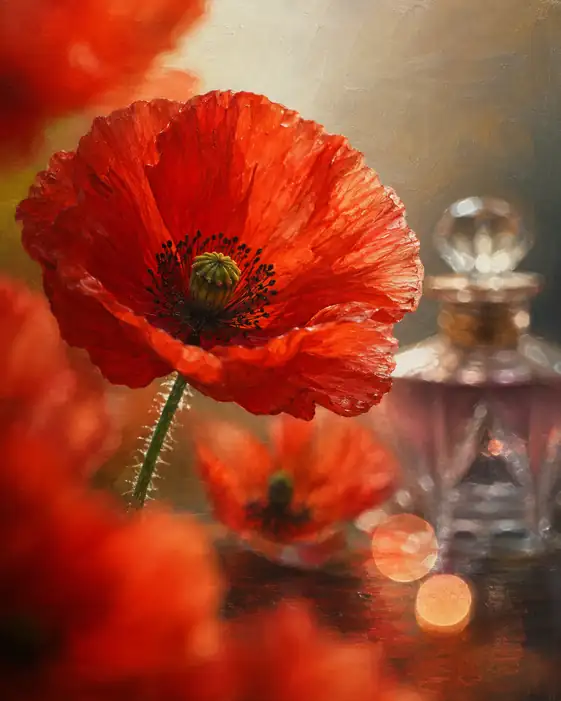 Scarlet Passion and the Crystal Bottle