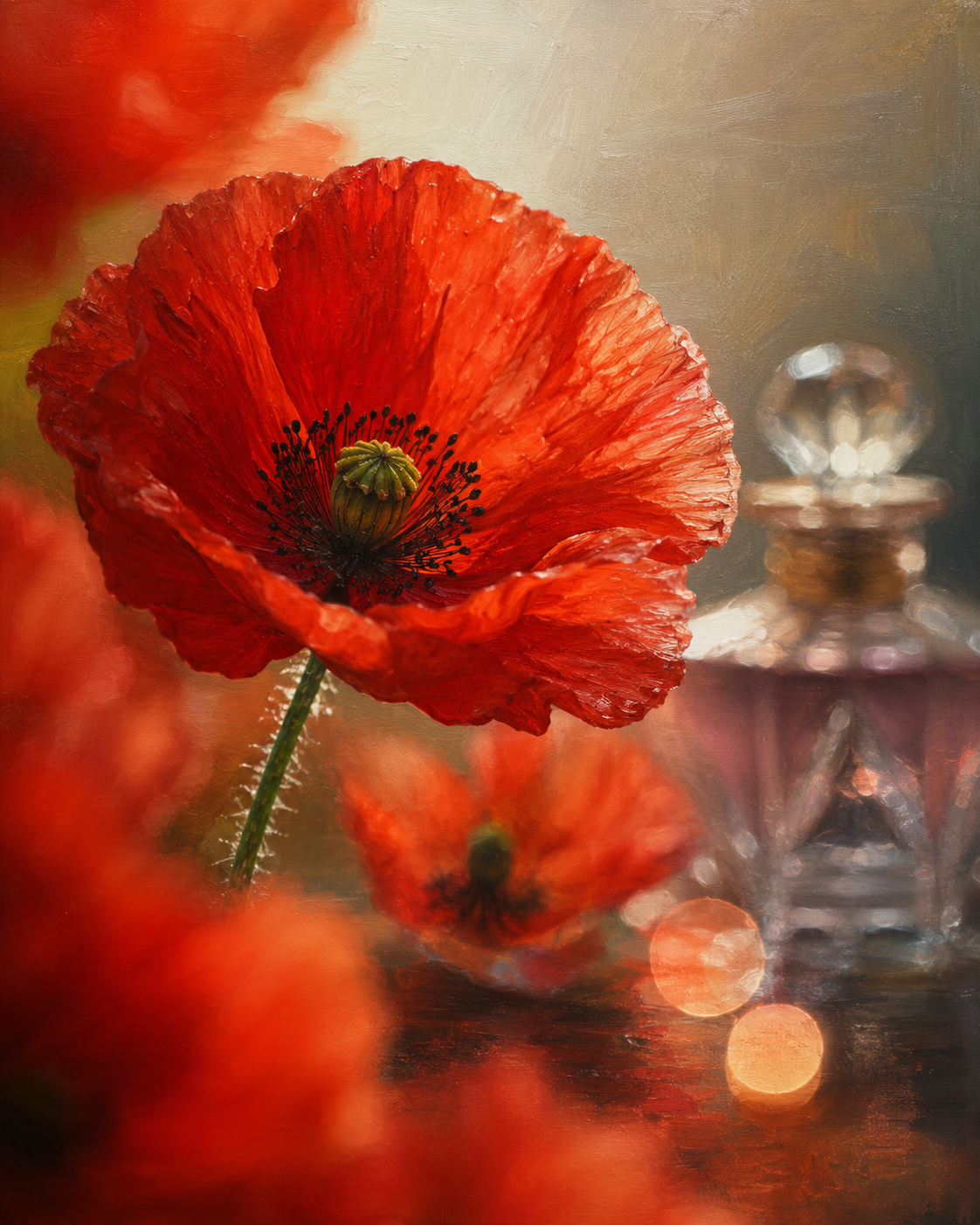
Scarlet Passion and the Crystal Bottle
Critique
Introduction This warm interior sets a red poppy before a crystal-stoppered perfume bottle. Open flower and polished vessel create a sensuous reflection on presence, fragrance, and preservation. Description The poppy fills left and center, scarlet petals folding around black stamens and a green capsule. Backlight brightens edges to orange and reveals texture. Its hairy stem descends diagonally. A second poppy softens behind, while red flowers blur across foreground. At right, a transparent bottle with pink liquid and faceted stopper appears softly focused. Warm circles glow against cream-gray. Analysis The poppy’s sharp organic detail dominates, while the bottle provides a softened geometric counterform. Scarlet advances from the pale neutral field, and glass reflections distribute subdued rose, gold, and white. Flower center and stopper establish a diagonal pair of compact structures. Shallow focus separates present sensation from distant object. Repeated circular forms—the capsule, stopper, bottle shoulders, and bokeh—stabilize the petal’s irregular waves. Interpretation and Evaluation The perfume bottle suggests an attempt to contain scent and make a passing experience repeatable. The poppy resists containment through scale, asymmetry, and its already visible capsule, which points toward transformation after flowering. The blurred bottle feels like a recollection forming behind immediate vision. This hierarchy is effective: crafted luxury remains attractive but secondary to the living flower. Warm light treats both generously, avoiding a simplistic rejection of artifice. Conclusion By contrasting an open poppy with a sealed fragrant vessel, the work explores what can and cannot be preserved. Its radiant red and soft glass light celebrate sensory pleasure, while the flower’s changing body keeps that pleasure inseparable from time.
Same Subcategory
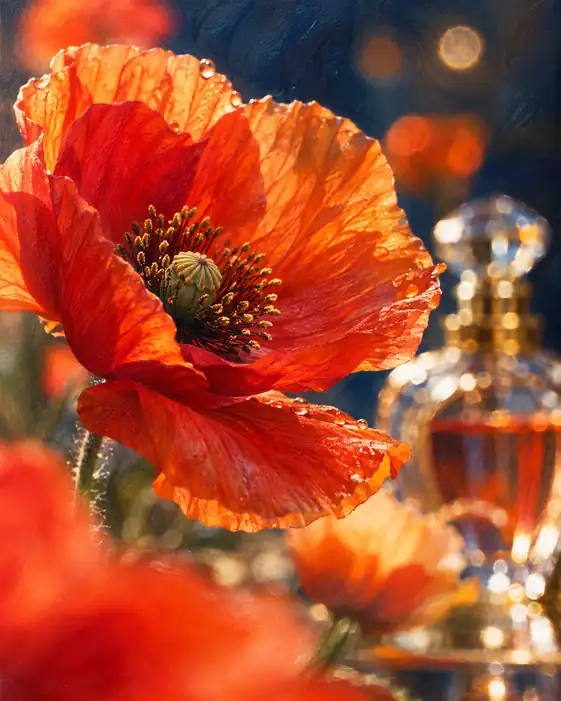 Whispers of Scarlet and Amber
Similar Artworks
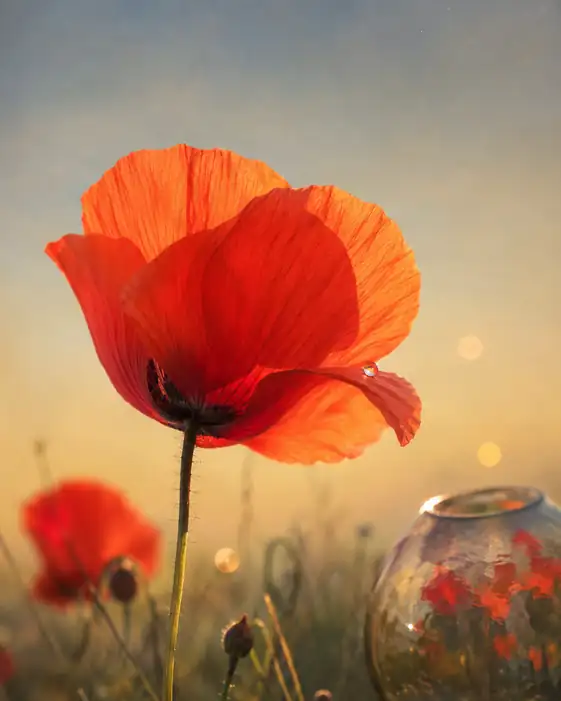 Morning Dewdrop and the Glass Sphere
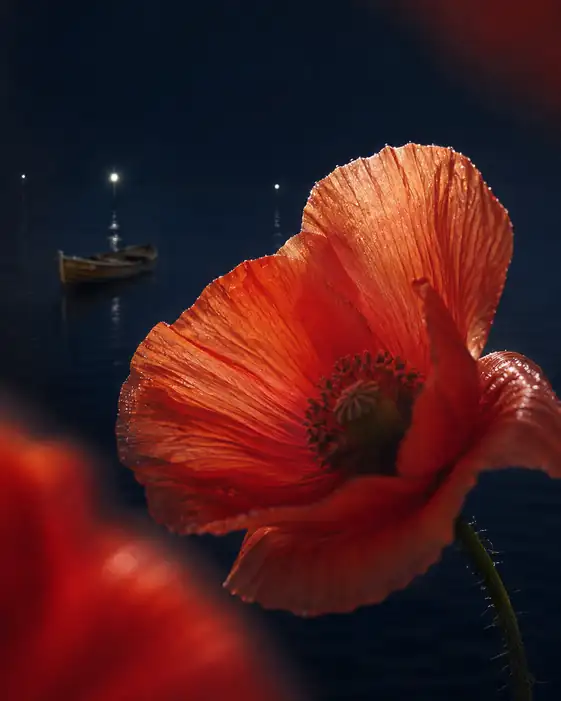 Poppies over the Night Sea and Skiff
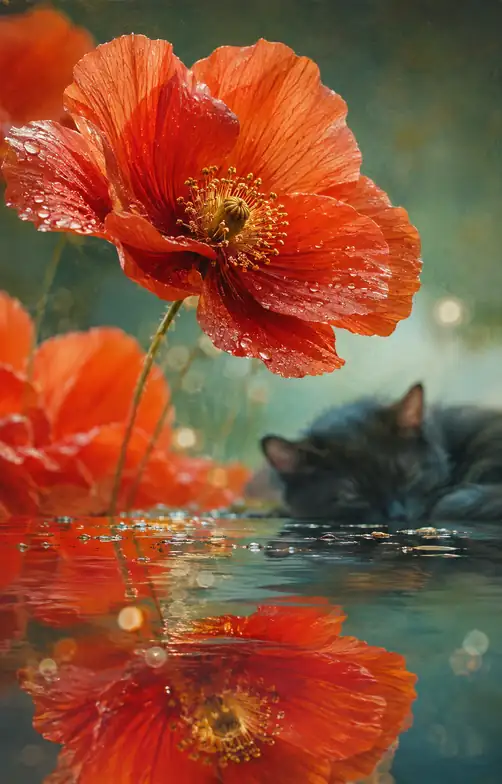 Poppy's Reflection and the Sleeping Cat
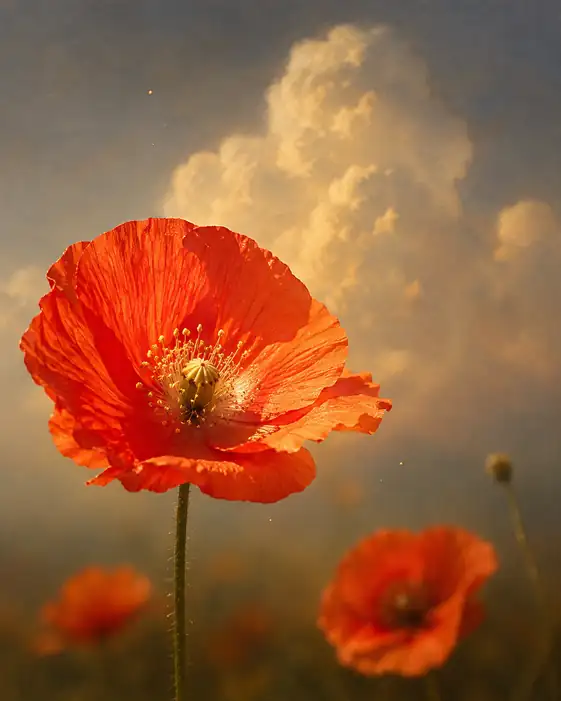 Scarlet Poppy beneath the Cumulus Cloud
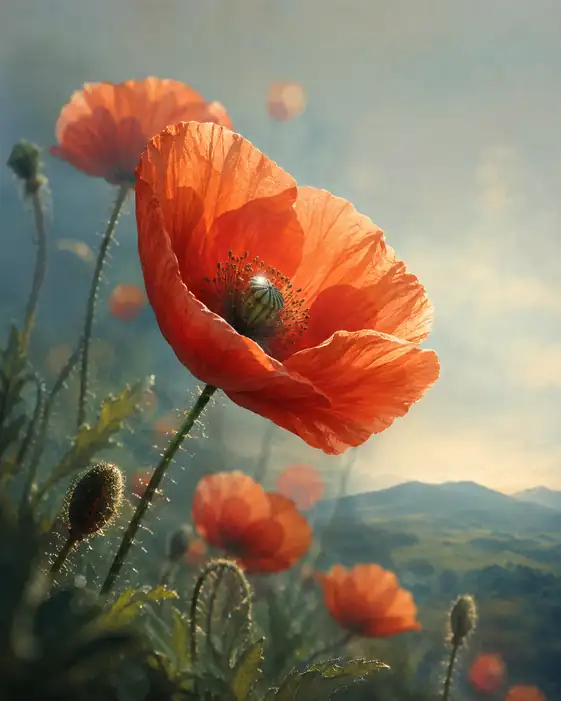 Sunlit Poppies on the Morning Ridge
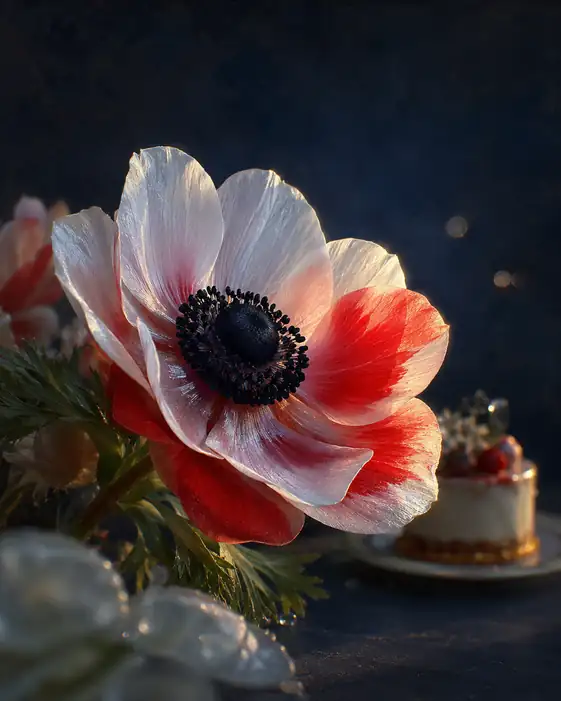 Bicolor Anemone and the Sweet Celebration
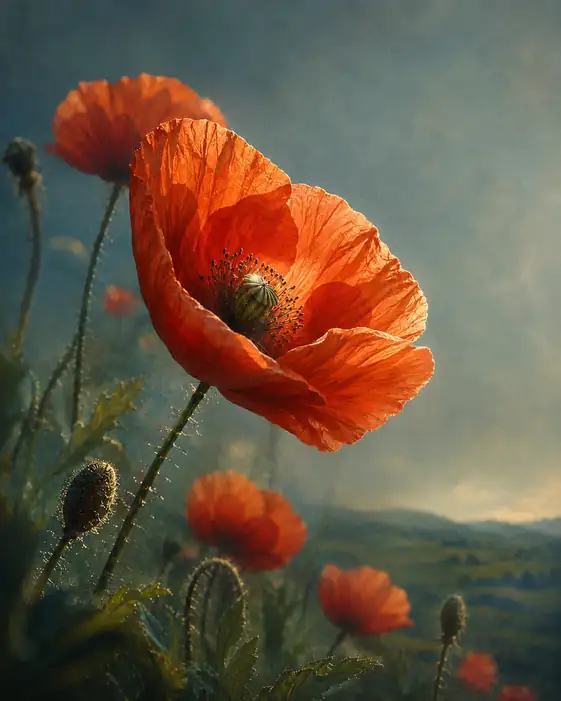 Scarlet Poppies in the Morning Breeze
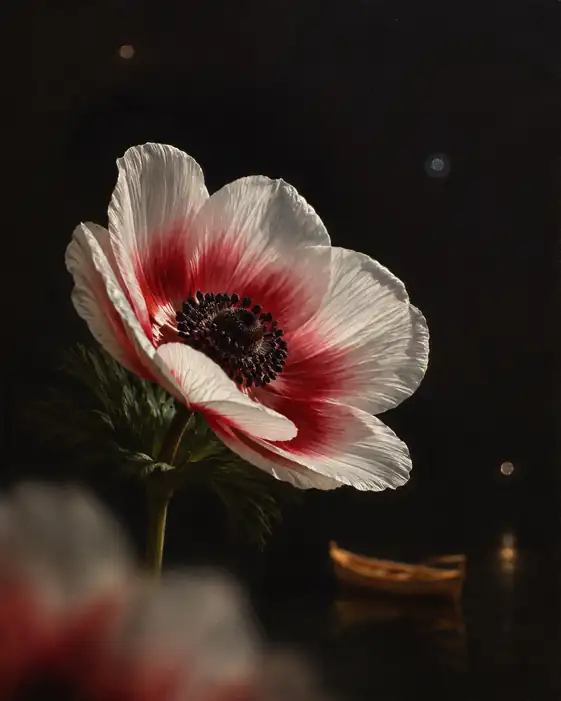 Crimson Anemone and the Lone Skiff
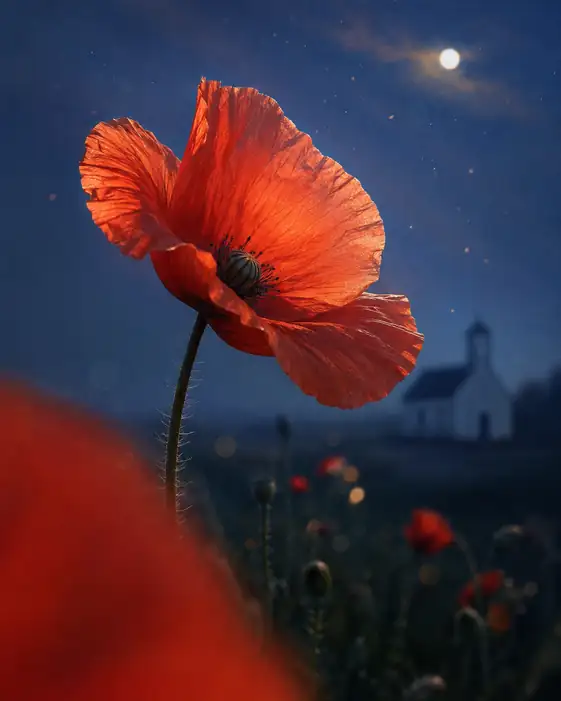 Scarlet Prayer on the Moonlit Hill
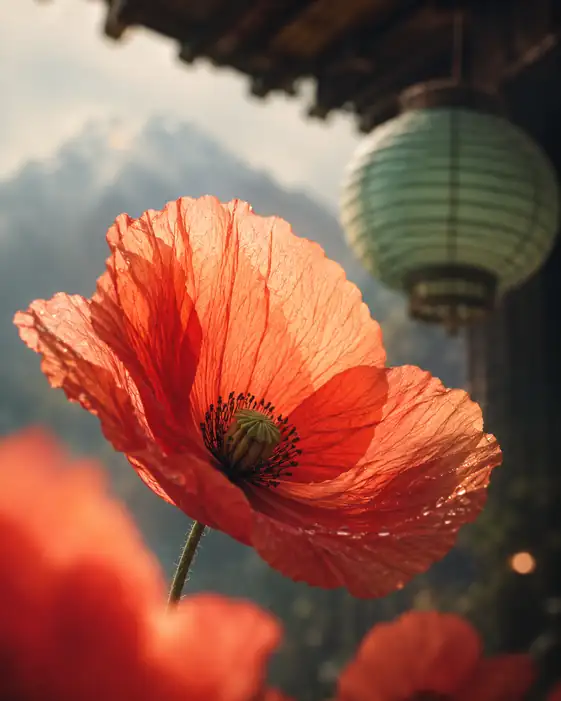 Poppies in Sunlight beneath the Lantern