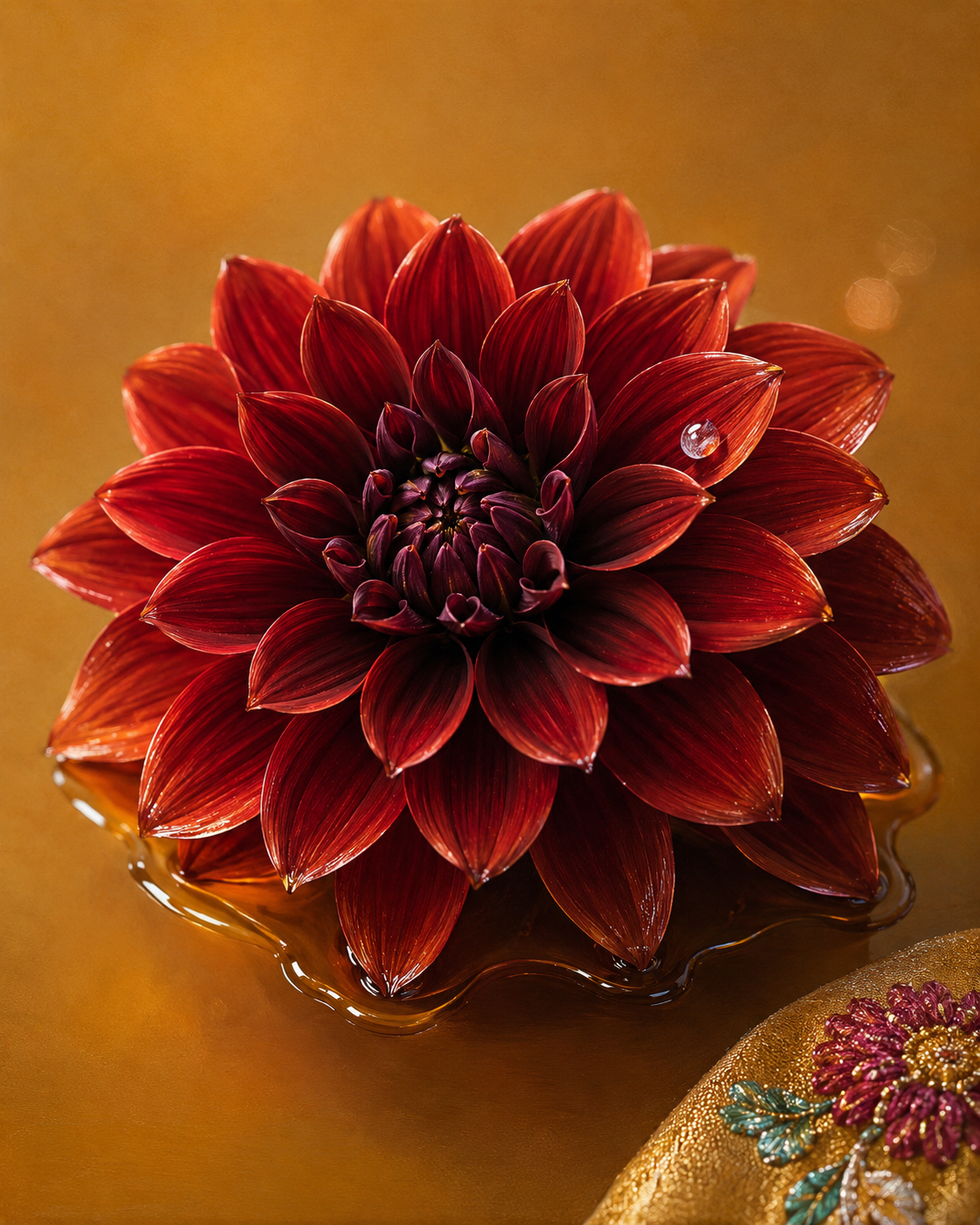
Crimson Mandala on the Gilded Basin
Critique
Introduction This top-down still life presents a red dahlia as radial structure on gold. A clear droplet and embroidered textile temper symmetry with touch, luxury, and transience. Description The dahlia occupies center, pointed petals progressing from plum curls to broad crimson blades. Fibers and highlights model each surface. A large droplet rests upper right. A shallow pool surrounds lower petals on the ochre-gold table. At lower right, cropped gold textile carries a jeweled floral motif in magenta, green, and pearl-like beads. Two faint circles hover behind. Analysis The overhead viewpoint suppresses stem and depth, emphasizing geometry. Petals repeat outward in ordered rings, but subtle variations in angle prevent mechanical rigidity. Red and gold create a rich analogous warmth, while plum shadows hold the center. The solitary droplet becomes an asymmetrical counterpoint and focal interruption. The puddle echoes the flower’s circumference with a wavering border, and the embroidered motif offers a smaller, artificial version of floral pattern. Interpretation and Evaluation The comparison between living flower and crafted ornament invites reflection on natural and manufactured splendor. The dahlia exceeds the textile in scale and complexity, yet water reveals its vulnerability. Symmetry suggests completeness, while the droplet and pool introduce time, gravity, and eventual change. The painting’s strength is this balance: opulence never becomes static because wetness makes the perfect arrangement precarious and immediate. Conclusion By combining radial order with one unstable bead, the work turns decorative abundance into a meditation on temporary perfection. The golden field celebrates the flower, while water and the cropped textile remind us that beauty can be framed and imitated but not held unchanged.
Same Subcategory
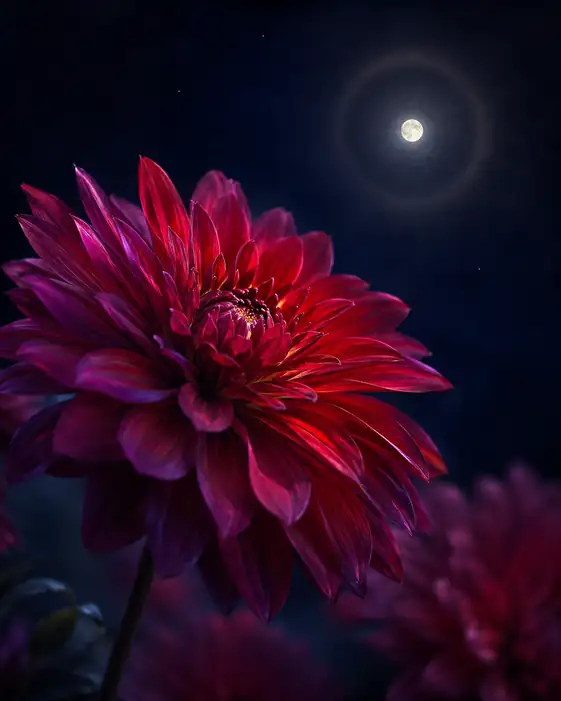 Crimson Dahlia Beneath the Moon's Halo
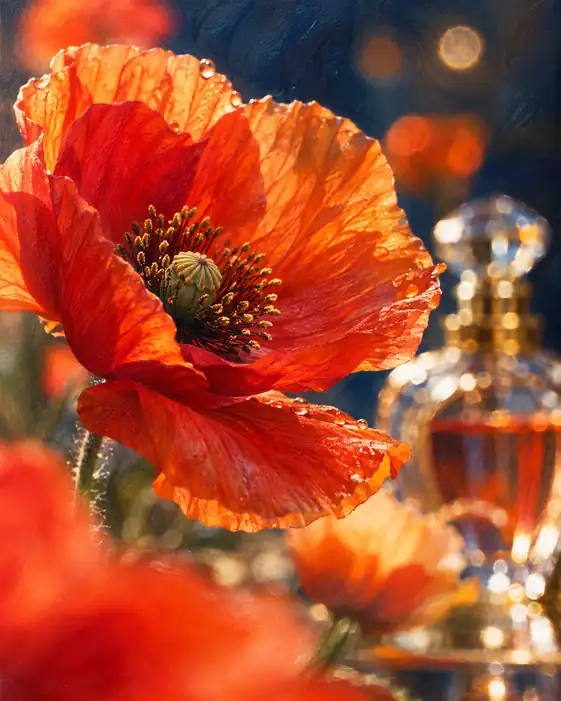 Whispers of Scarlet and Amber
Similar Artworks
 Morning Dewdrop and the Glass Sphere
 Poppies over the Night Sea and Skiff
 Poppy's Reflection and the Sleeping Cat
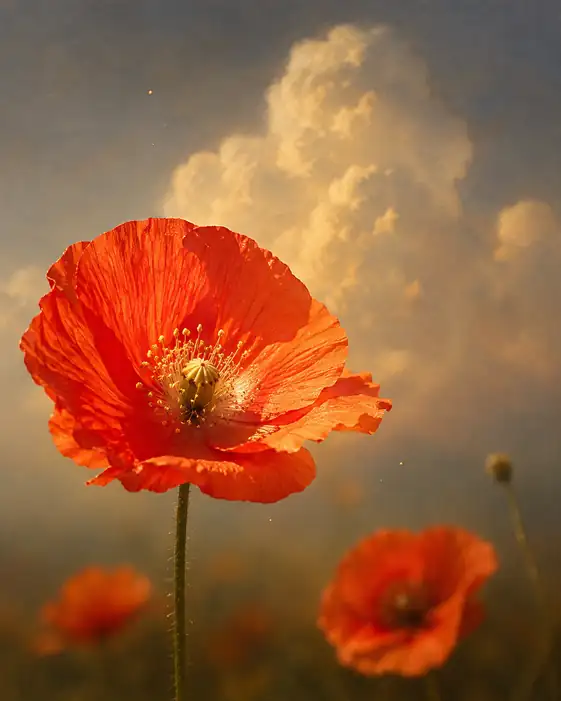 Scarlet Poppy beneath the Cumulus Cloud
 Sunlit Poppies on the Morning Ridge
 Bicolor Anemone and the Sweet Celebration
 Scarlet Poppies in the Morning Breeze
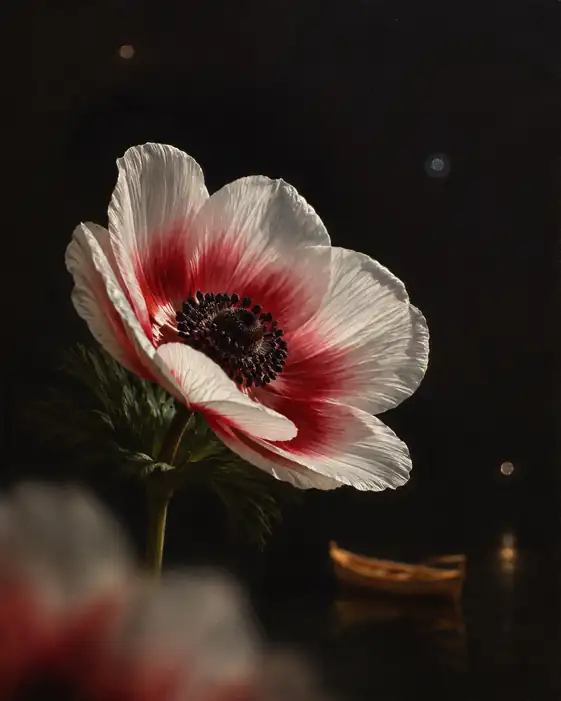 Crimson Anemone and the Lone Skiff
 Scarlet Prayer on the Moonlit Hill
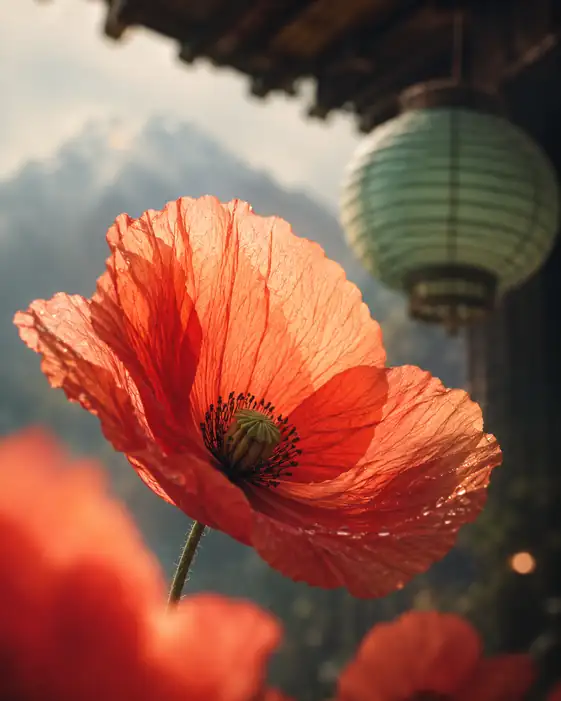 Poppies in Sunlight beneath the Lantern