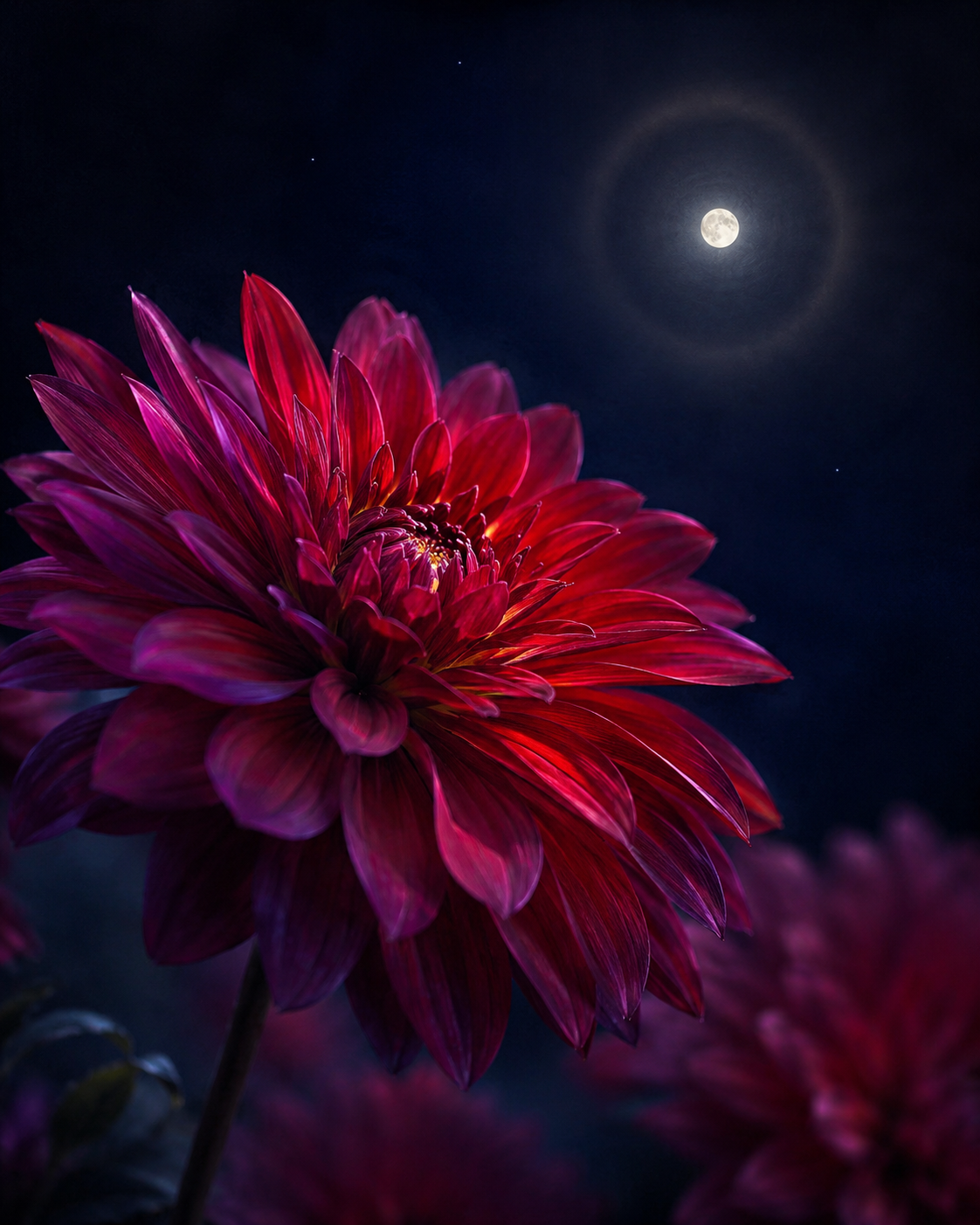
Crimson Dahlia Beneath the Moon's Halo
Critique
Introduction This nocturnal painting brings crimson dahlia beneath a haloed full moon. Layered intensity and cool distance create a controlled dialogue between earthly fullness and celestial recurrence. Description The dahlia dominates the left and lower frame, its pointed petals shifting through burgundy, magenta, scarlet, and narrow orange highlights. Tightly curled inner petals surround a small glint of yellow. A dark stem descends below, with one shadowed leaf at left. In the upper right, a bright cream moon sits within broad concentric haze against deep navy. Few stars punctuate the sky. Blurred red flowers occupy the lower and right edges. Analysis Two luminous centers—the enormous bloom and small moon—balance diagonally across ample darkness. Petal layers radiate irregularly, while the halo forms an ordered circle, creating productive formal contrast. Saturated red advances forcefully from cool blue-black. Thin highlights articulate individual petals without flattening deep internal shadows. Sparse stars preserve negative space, and foreground blur extends the floral field while keeping attention on the central bloom. Interpretation and Evaluation The dahlia may suggest abundance at its peak, whereas the moon evokes cyclical return and duration. Their relation makes the flower appear temporarily cosmic, but its dense physical folds resist becoming a mere symbol. The halo can read as a distant echo of petals gathered around a center. The painting succeeds through restraint: despite intense color and scale, uncluttered sky provides silence, allowing spectacle to become contemplation. Conclusion By setting saturated floral fullness against a small haloed moon, the work measures a brief earthly climax against recurring night. Warm nearness and cool distance remain distinct yet mutually magnifying, producing an image of grandeur tempered by solitude.
Same Subcategory
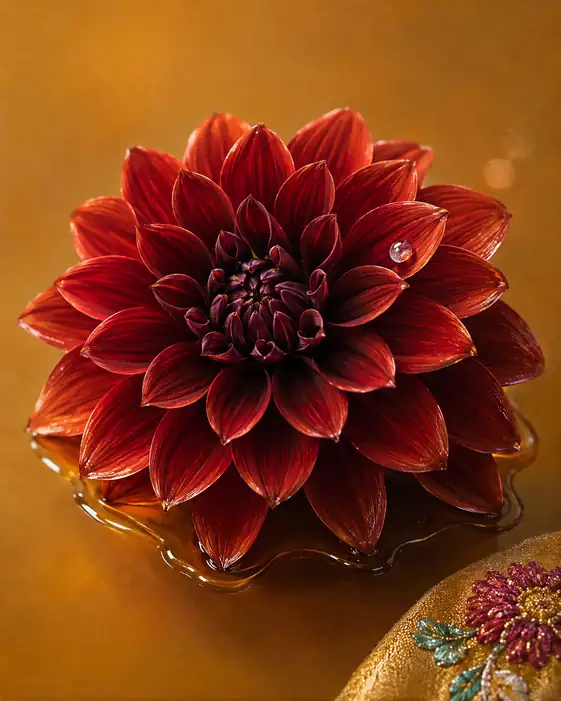 Crimson Mandala on the Gilded Basin
Similar Artworks
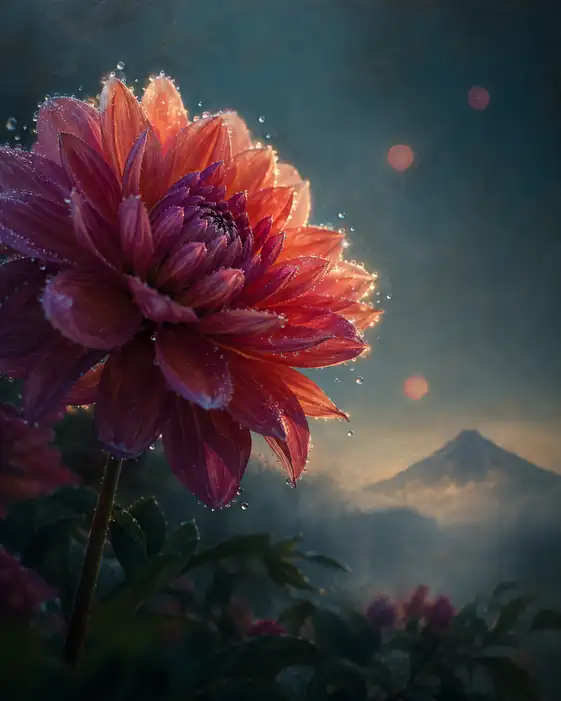 Crimson Dahlia Overlooking the Misty Peak
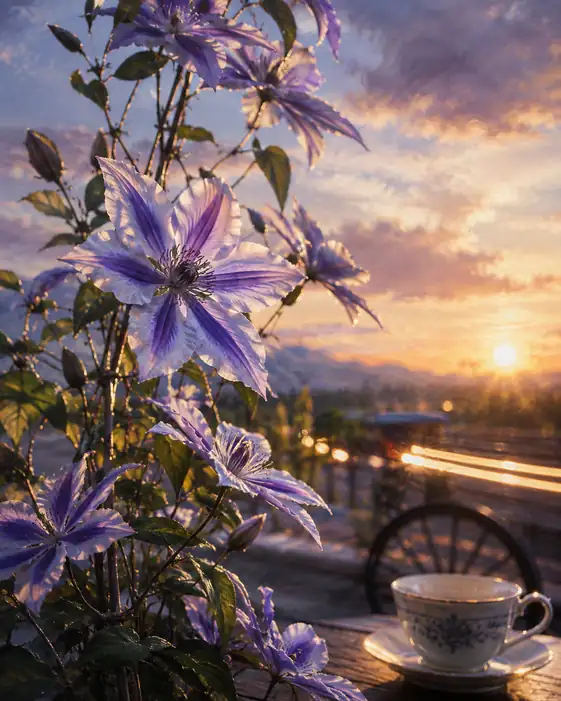 Sunset Tea and the Gilded Rails
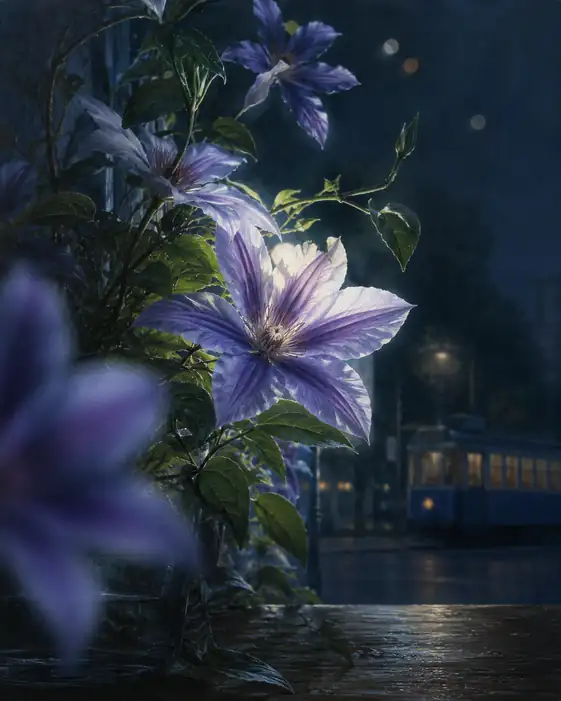 Rainy Rails and the Window Clematis
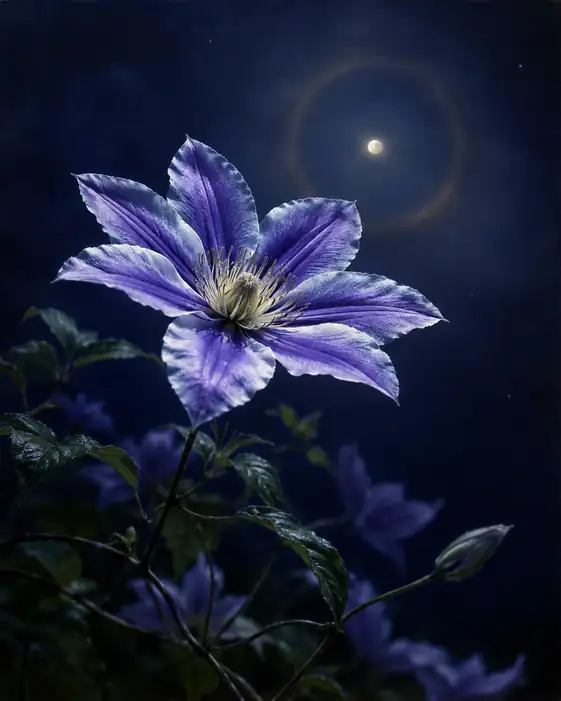 Violet Bloom Beneath the Lunar Halo
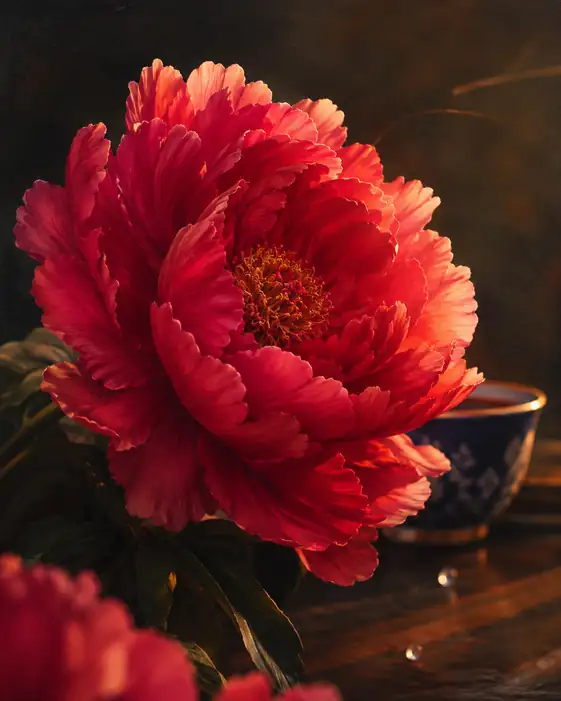 Crimson Banquet in the Evening Glow
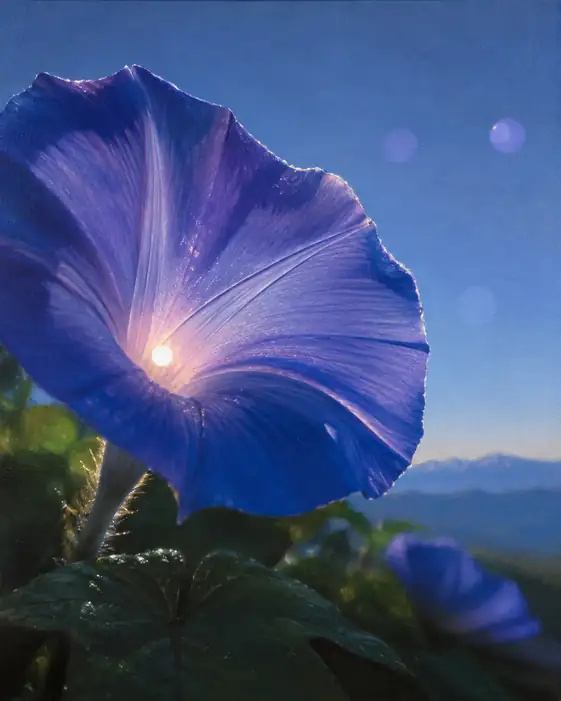 Azure Bloom Cradling the Morning Light
 Mirage on the Still Water
 Dawn Prayer and the Azure Corona
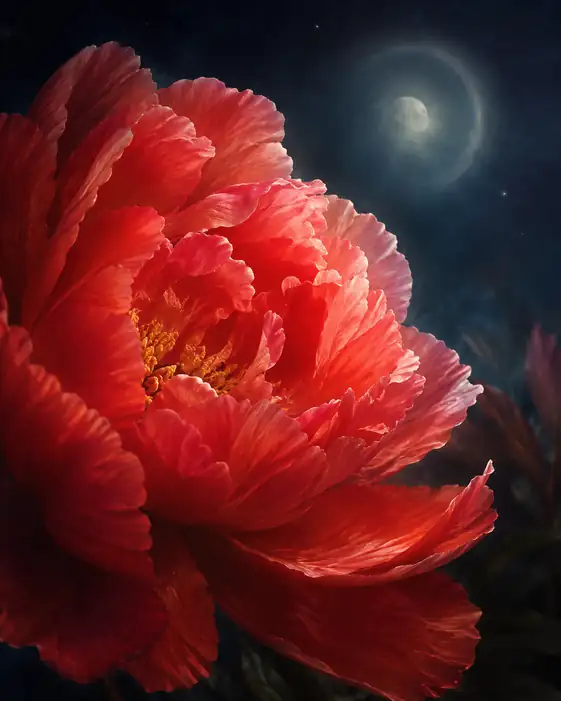 Crimson Bloom Beneath the Haloed Moon
 Lantern's Glow over Morning Dew