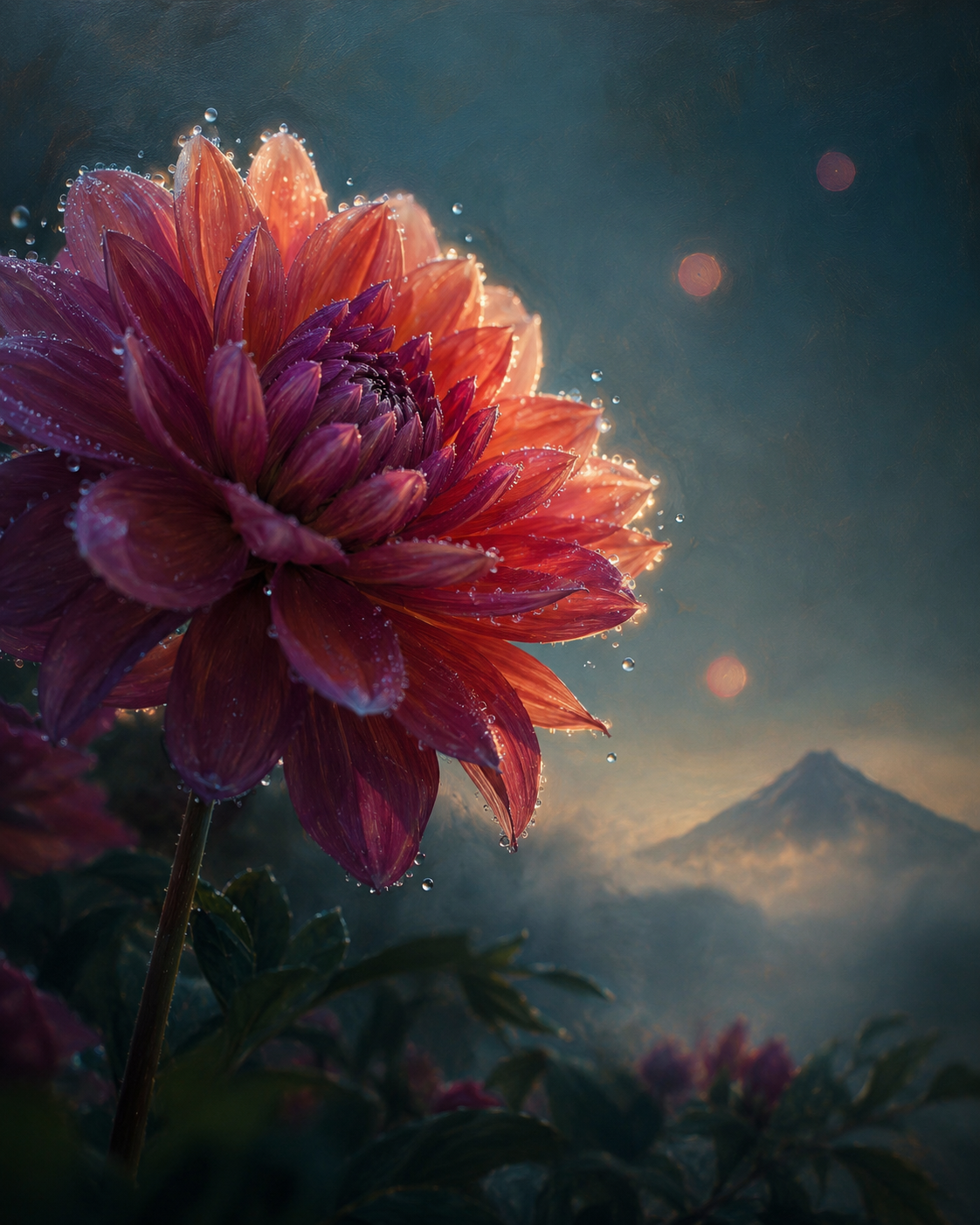
Crimson Dahlia Overlooking the Misty Peak
Critique
Introduction This painting places a rain-covered dahlia before a mountain, confronting botanical abundance with landscape scale. Suspended droplets and mist suggest flower and peak emerging from the same weather. Description The dahlia fills the left half, pointed petals shifting from dark magenta to backlit coral. Water beads trace every edge, and droplets float beyond. Dark leaves descend below. At lower right, a mountain rises through blue-gray mist beneath a warm horizon. Three reddish lights hover in teal sky, while smaller flowers blur along the bottom. Analysis The flower’s expanding radial mass is balanced by the mountain’s compact triangle and broad open sky. Strong warm-cool contrast separates coral petals from teal atmosphere. Repeated pointed forms connect petal tips to the peak, while droplets and distant circular lights echo one another at different scales. Sharp moisture in the foreground gives way to softened mountain and haze, producing depth. The bloom’s diagonal lean directs attention toward the landscape. Interpretation and Evaluation Flower and mountain embody different durations: one unfolds rapidly, the other appears enduring. Yet rain and mist place both within change, weakening any simple opposition between fragile life and permanent rock. The airborne droplets make weather visible as a shared medium. This is the painting’s strongest idea. It grants the dahlia monumentality without making the mountain decorative, and preserves tactile credibility within an improbable scale relation. Conclusion Through pointed echoes, complementary color, and water suspended between foreground and distance, the work joins bloom and peak in one atmospheric event. The dahlia feels both vulnerable and immense, briefly holding the same visual authority as the mountain beyond it.
Same Subcategory
Similar Artworks
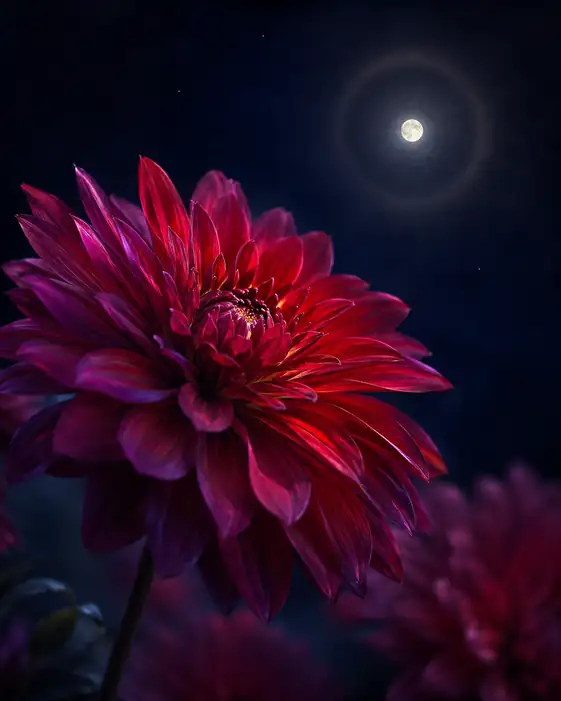 Crimson Dahlia Beneath the Moon's Halo
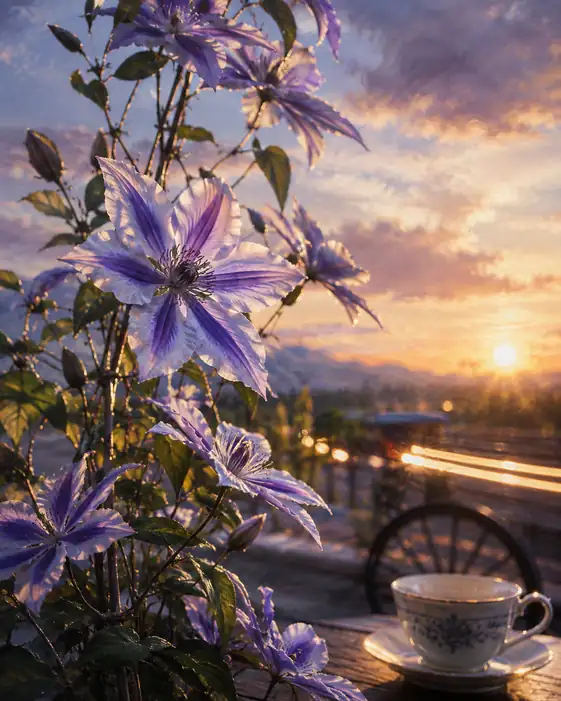 Sunset Tea and the Gilded Rails
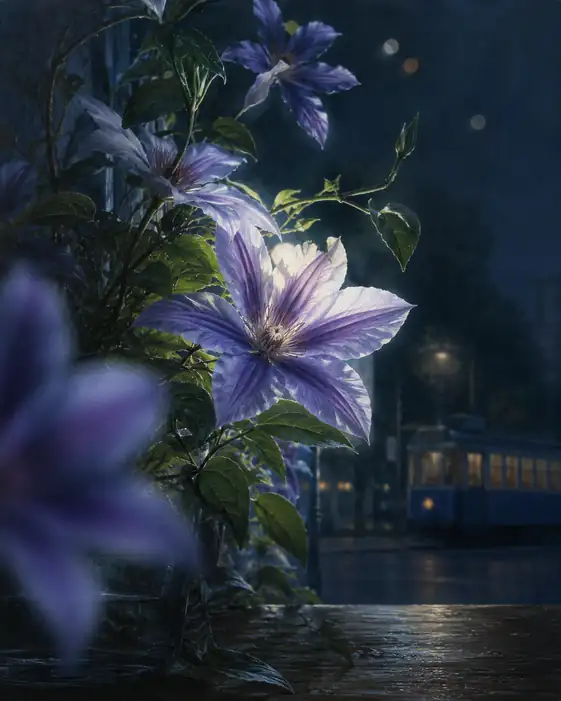 Rainy Rails and the Window Clematis
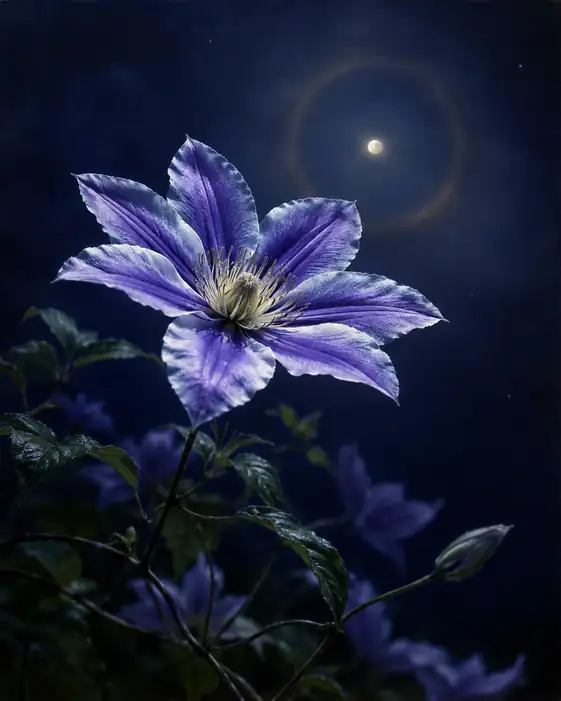 Violet Bloom Beneath the Lunar Halo
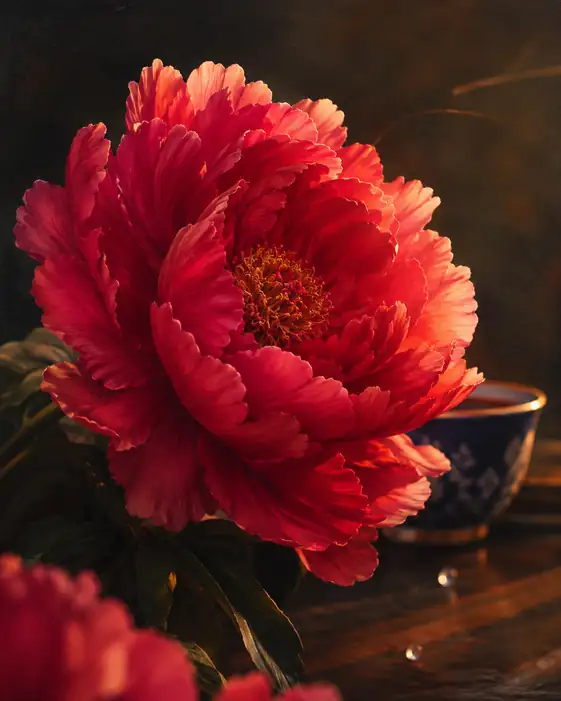 Crimson Banquet in the Evening Glow
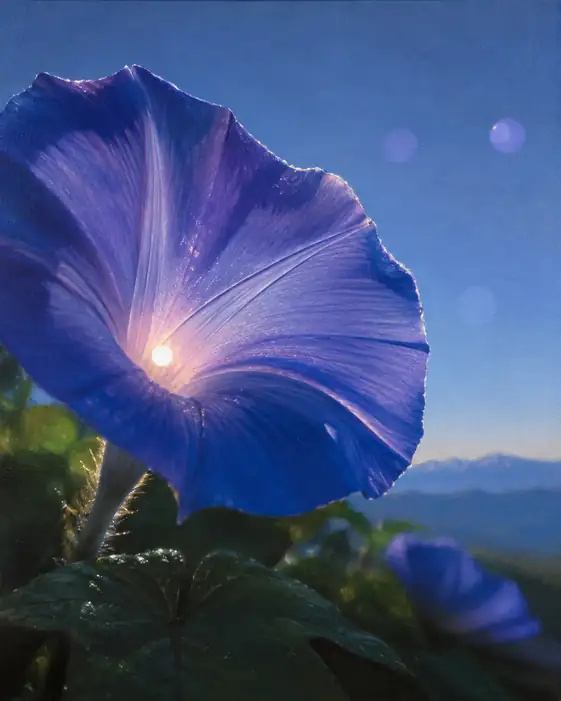 Azure Bloom Cradling the Morning Light
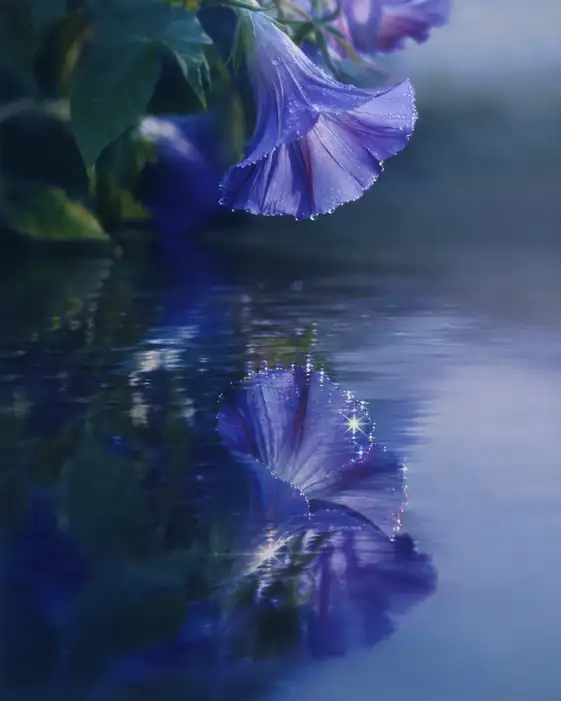 Mirage on the Still Water
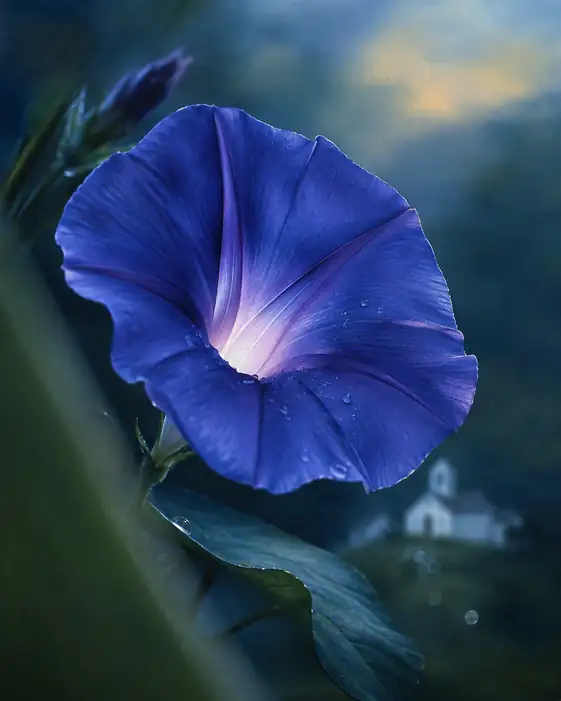 Dawn Prayer and the Azure Corona
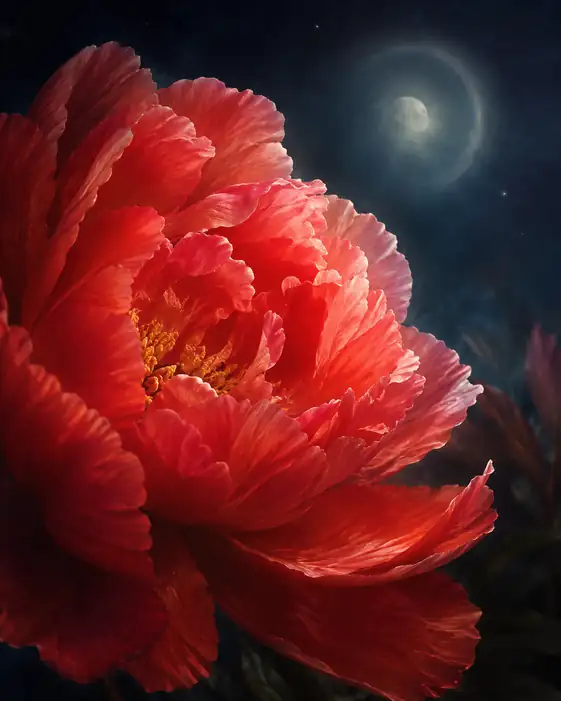 Crimson Bloom Beneath the Haloed Moon
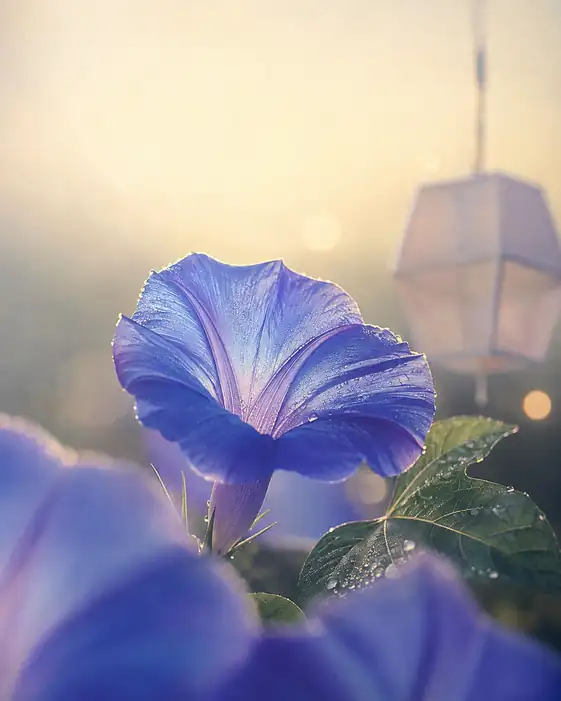 Lantern's Glow over Morning Dew