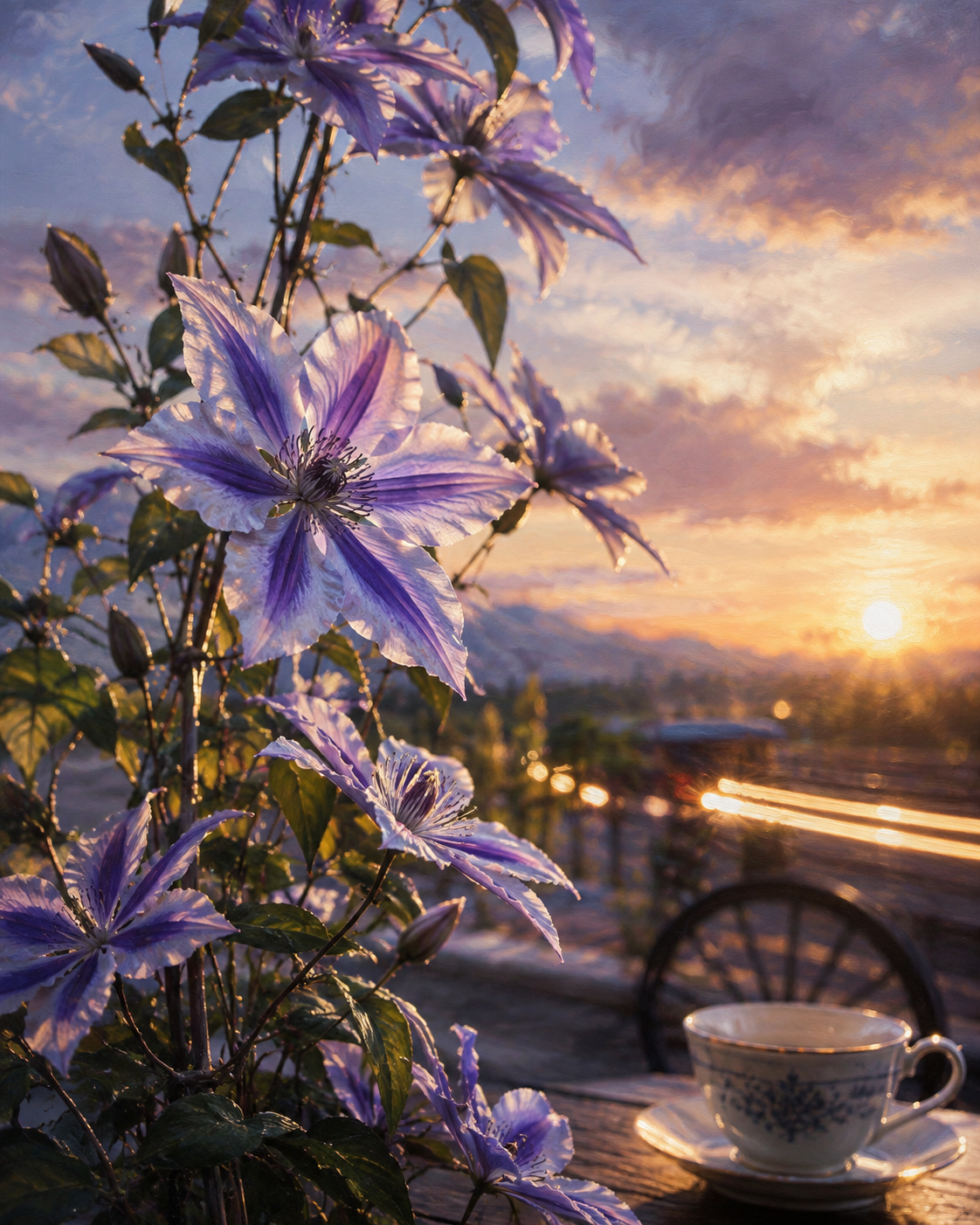
Sunset Tea and the Gilded Rails
Critique
Introduction This sunset still life combines dewy clematis, a teacup, and blurred urban motion. Table and glowing sky create a pause where nature, private ritual, and city coexist. Description Violet flowers and buds climb the left, translucent petals edged by warm backlight. The largest faces forward, with others receding among wet leaves. At lower right, a cobalt-decorated cup rests on a saucer and wooden table. A dark circular chair back rises behind. Gold light streaks cross the city beneath low sun and pink-lavender clouds. Analysis The vine’s vertical growth is balanced by the cup’s low horizontal placement and distant bands of traffic light. Sharp petals dominate, while the cup, city, and horizon soften progressively. Violet and green receive complementary orange-gold illumination, unifying foreground and sunset. Curved petals, cup rim, and dark wheel repeat circular forms. The open sky on the right counterbalances dense foliage and lets the sinking sun remain a secondary focal point. Interpretation and Evaluation The cup suggests rest, conversation, or a private interval, whereas light trails imply ongoing collective movement. Clematis flowers occupy the threshold: rooted beside the table yet reaching into the open sky. Dew and sunset both mark temporary conditions, intensifying awareness of the present. The painting avoids nostalgia becoming heavy through its luminous palette. Its strongest quality is the coexistence of speeds—still cup, slow opening flowers, rapid traffic, and descending sun. Conclusion By framing a quiet tea setting with radiant vines and a moving city, the work celebrates deliberate attention amid acceleration. Warm evening light connects domestic ritual to the wider world, allowing repose to feel engaged with life rather than withdrawn from it.
Same Subcategory
Similar Artworks
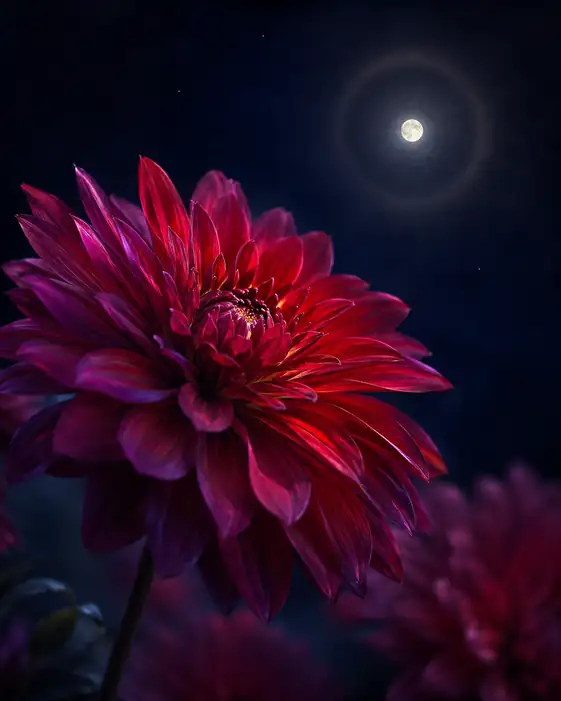 Crimson Dahlia Beneath the Moon's Halo
 Crimson Dahlia Overlooking the Misty Peak
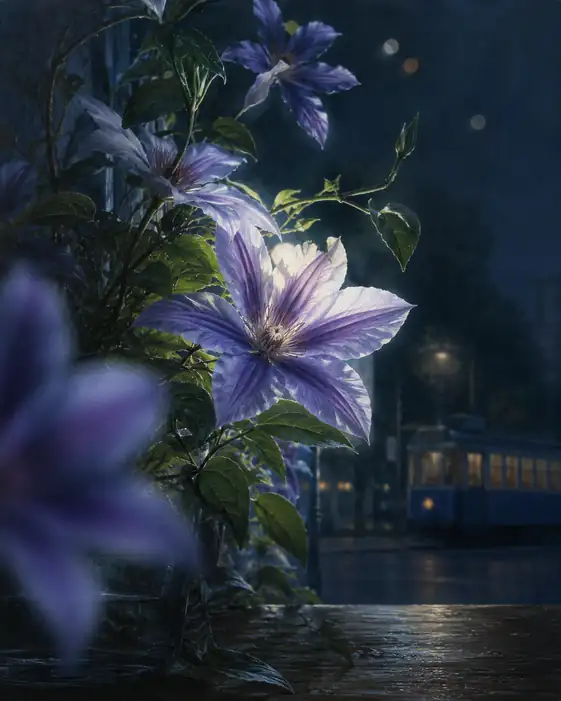 Rainy Rails and the Window Clematis
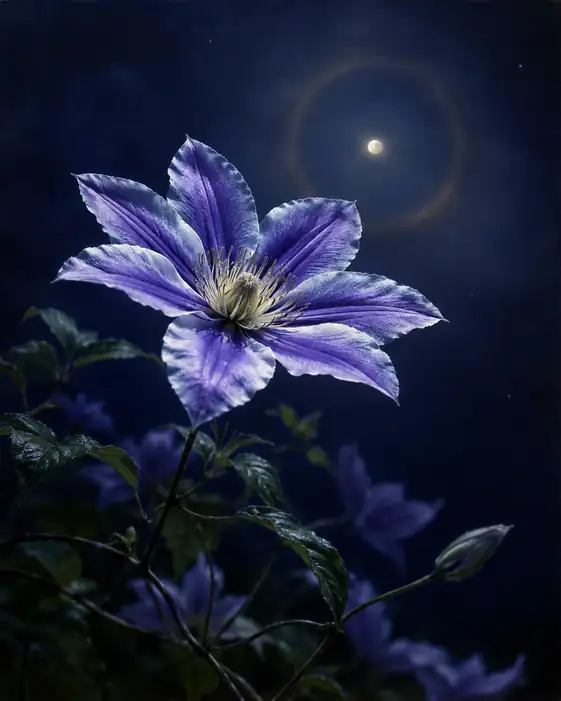 Violet Bloom Beneath the Lunar Halo
 Crimson Banquet in the Evening Glow
 Azure Bloom Cradling the Morning Light
 Mirage on the Still Water
 Dawn Prayer and the Azure Corona
 Crimson Bloom Beneath the Haloed Moon
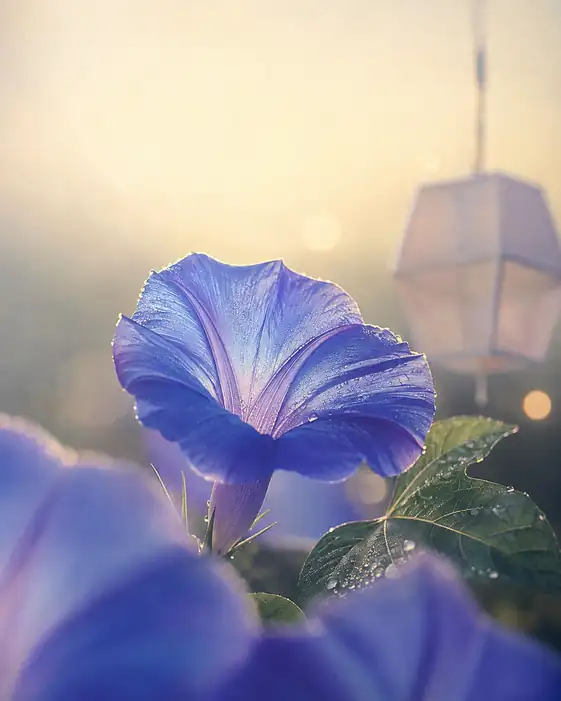 Lantern's Glow over Morning Dew