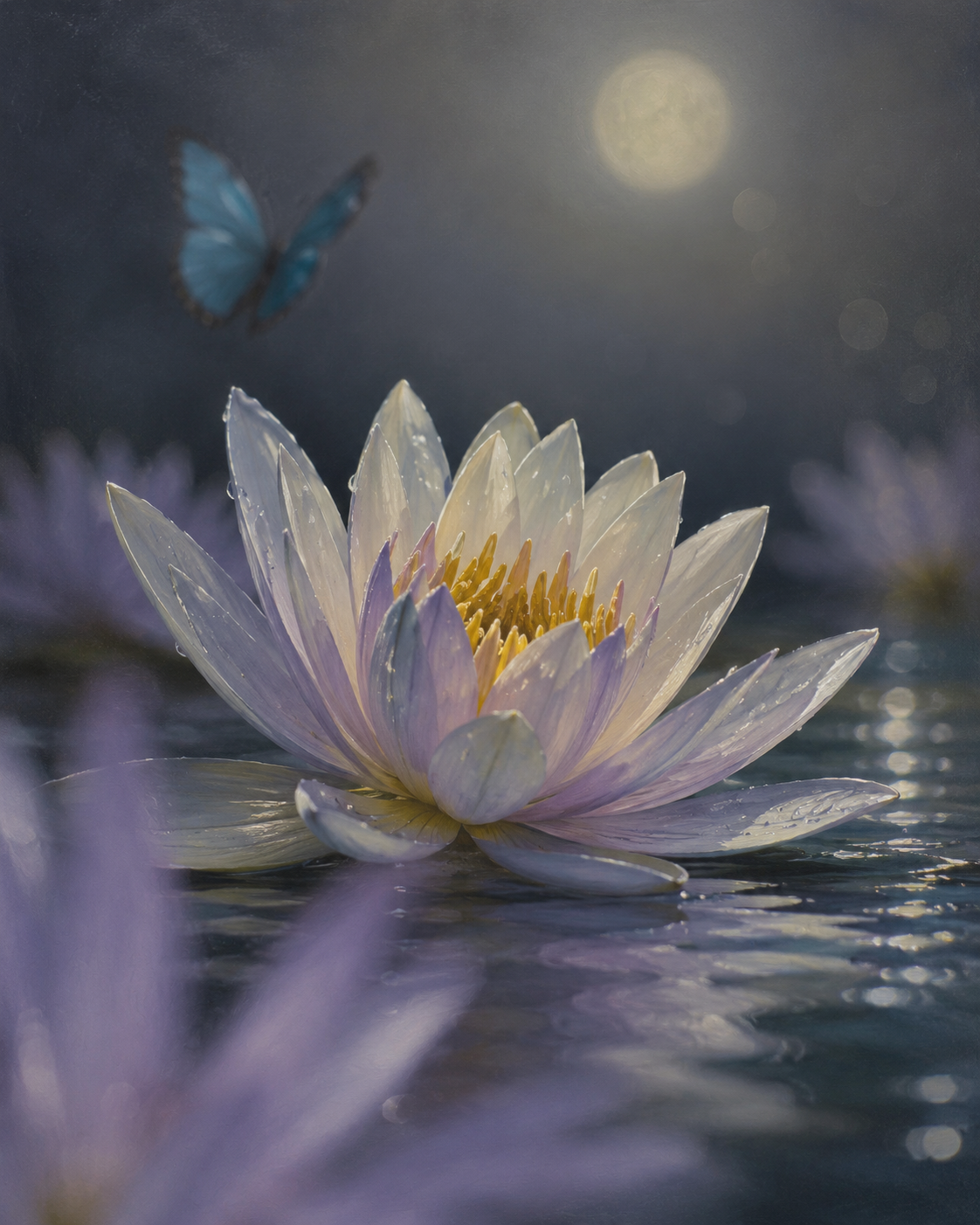
Hazy Moon, Water Lily, and the Blue Butterfly
Critique
Introduction This night pond brings together wet lily, blue butterfly, and hazy moon. Their triangle meditates on attraction, distance, and forms in light. Description The main lily opens across the lower center, its ivory petals washed with lavender and covered by fine droplets. Golden stamens rise within. Dark water reflects broken silver and violet highlights, while blurred blossoms fill the foreground and both sides. A soft blue butterfly hovers in the upper left with spread wings. Near the upper center, a large cream moon glows through gray-blue haze. Faint circular lights descend along the right. Analysis Flower, butterfly, and moon form three visual anchors around a spacious dark field. The sharp lily occupies the nearest plane; the softened insect and moon recede at different degrees. Cool violet-blue unifies living forms and water, while gold and cream supply warmth. Pointed petals radiate upward toward the butterfly and moon. Reflected sparkles and bokeh repeat the moon’s circle in miniature, distributing light through the darkness. Interpretation and Evaluation The butterfly may be drawn toward either flower or moon, leaving its destination unresolved. Its brief life parallels the bloom, while the moon suggests recurring time beyond both. Yet the scene does not reduce them to fixed symbols. Moist petal texture and wavering water preserve sensory immediacy. The painting’s most effective choice is its soft hierarchy: the flower is clear, but the distant forms remain dreamlike enough to express longing rather than literal action. Conclusion Through a balanced triangle of bloom, wing, and moon, the work transforms a pond into a field of quiet desire. Light connects the three without closing their distances, allowing transience, recurrence, and beauty to coexist in a calm nocturnal suspension.
Same Subcategory
Similar Artworks
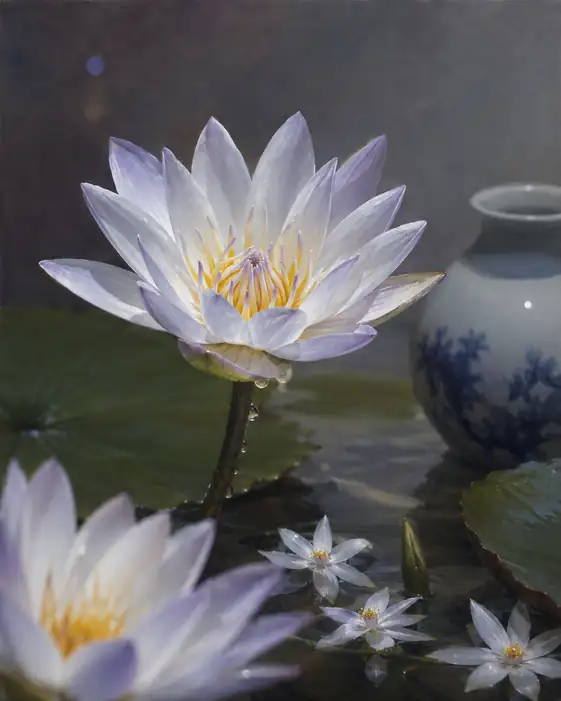 Water Lily and the Cobalt Porcelain
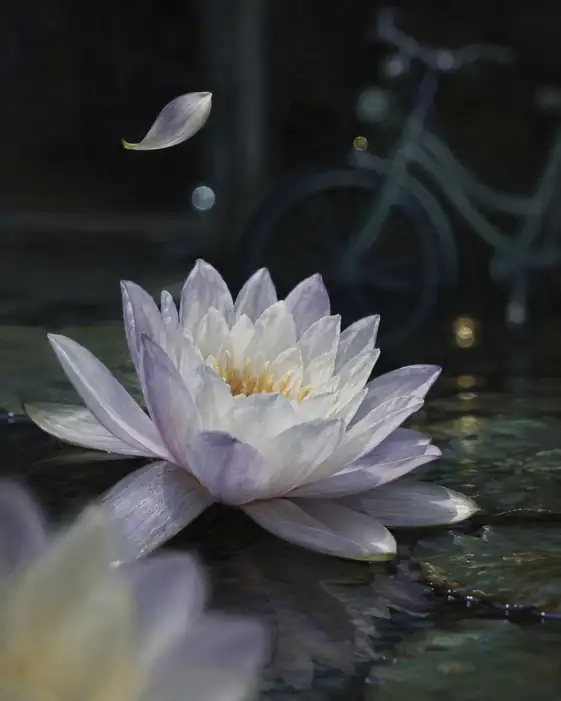 Floating Petal over the Night Pool
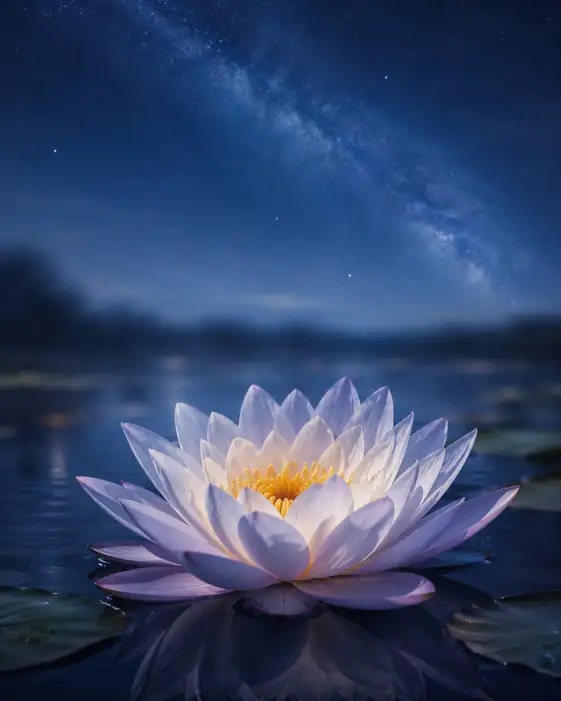 Lotus Blossoming in the Starry Night
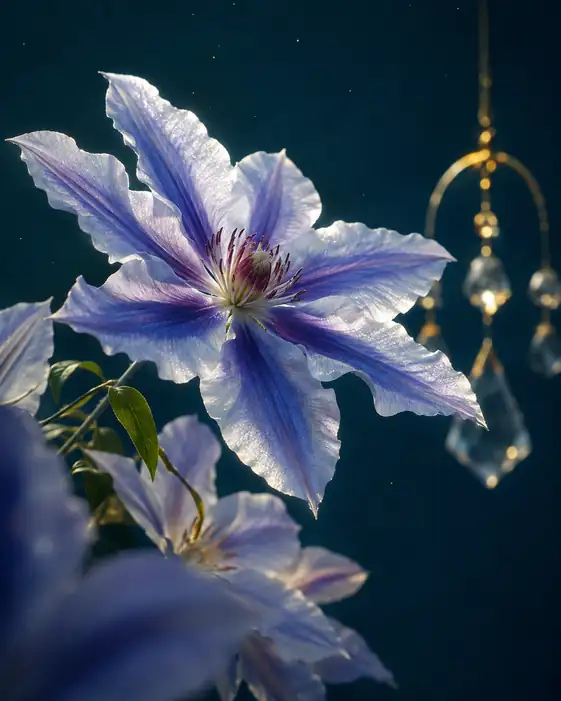 Violet Clematis and the Crystal Pendant
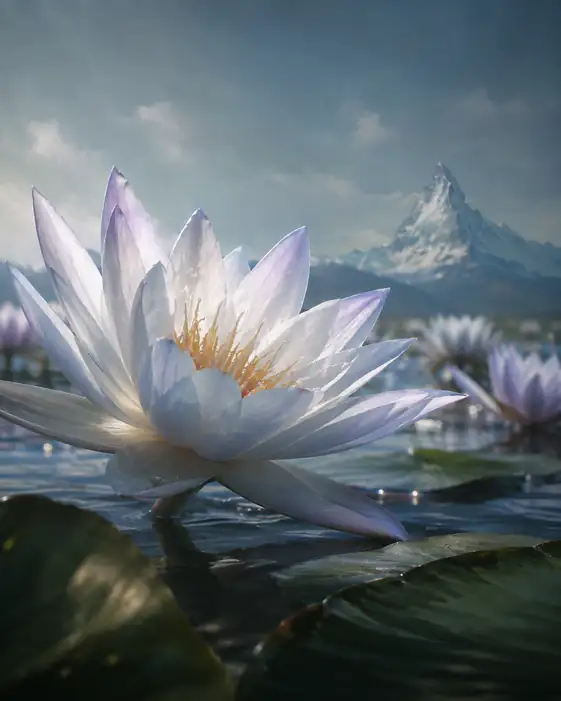 White Lotus Beneath the Alpine Peak
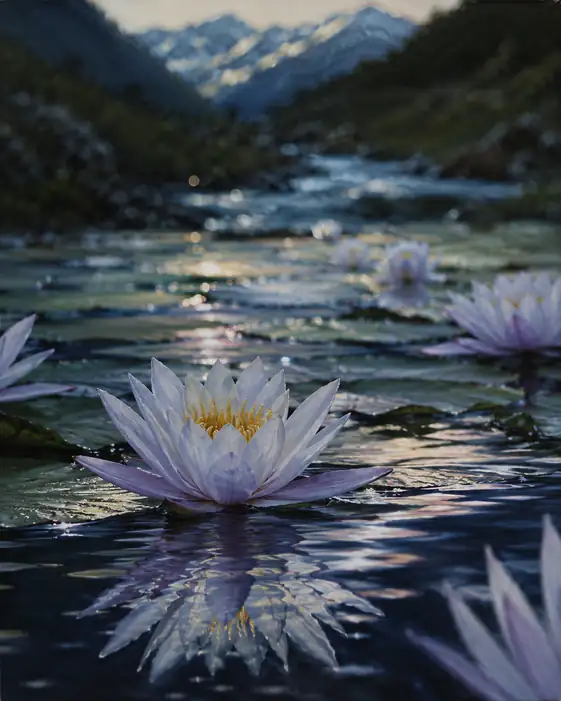 Water Lilies on the Alpine Stream
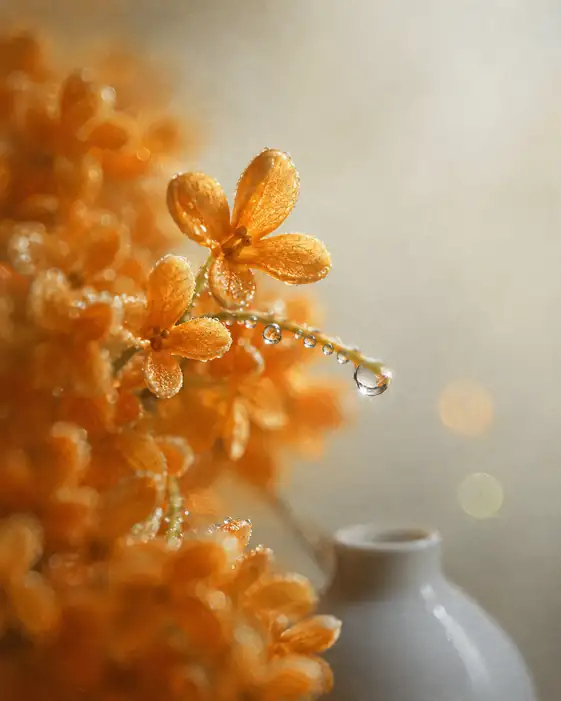 Luminescent Dew on the Amber Bough
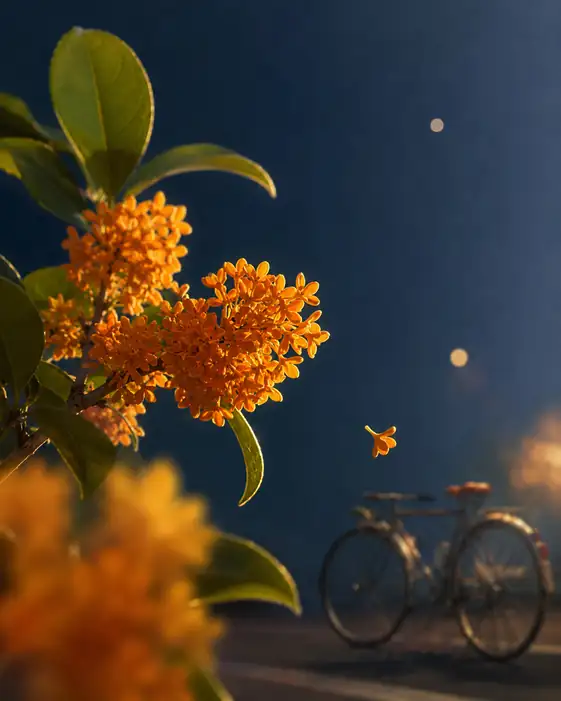 Falling Blossom on the Twilight Road
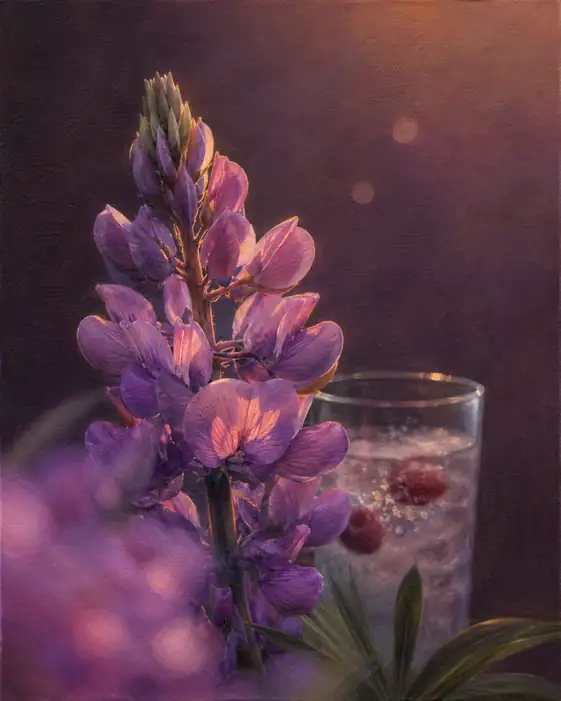 Evening Toast and the Purple Lupine
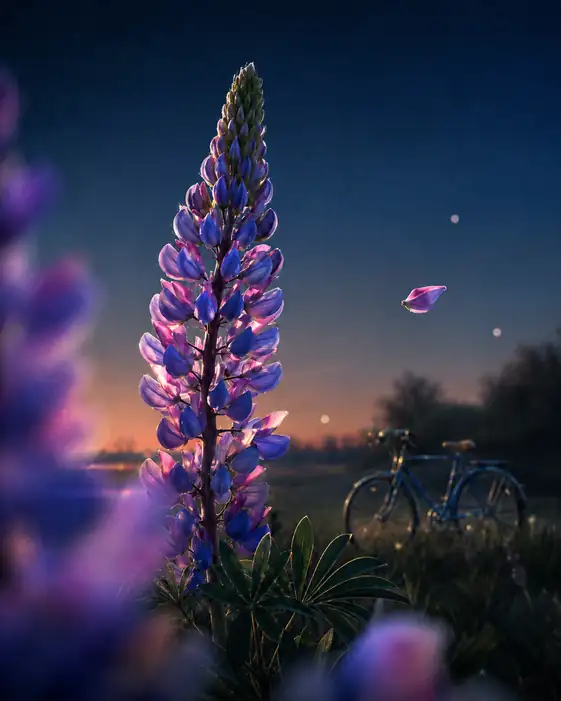 Floating Petal and the Twilight Bicycle