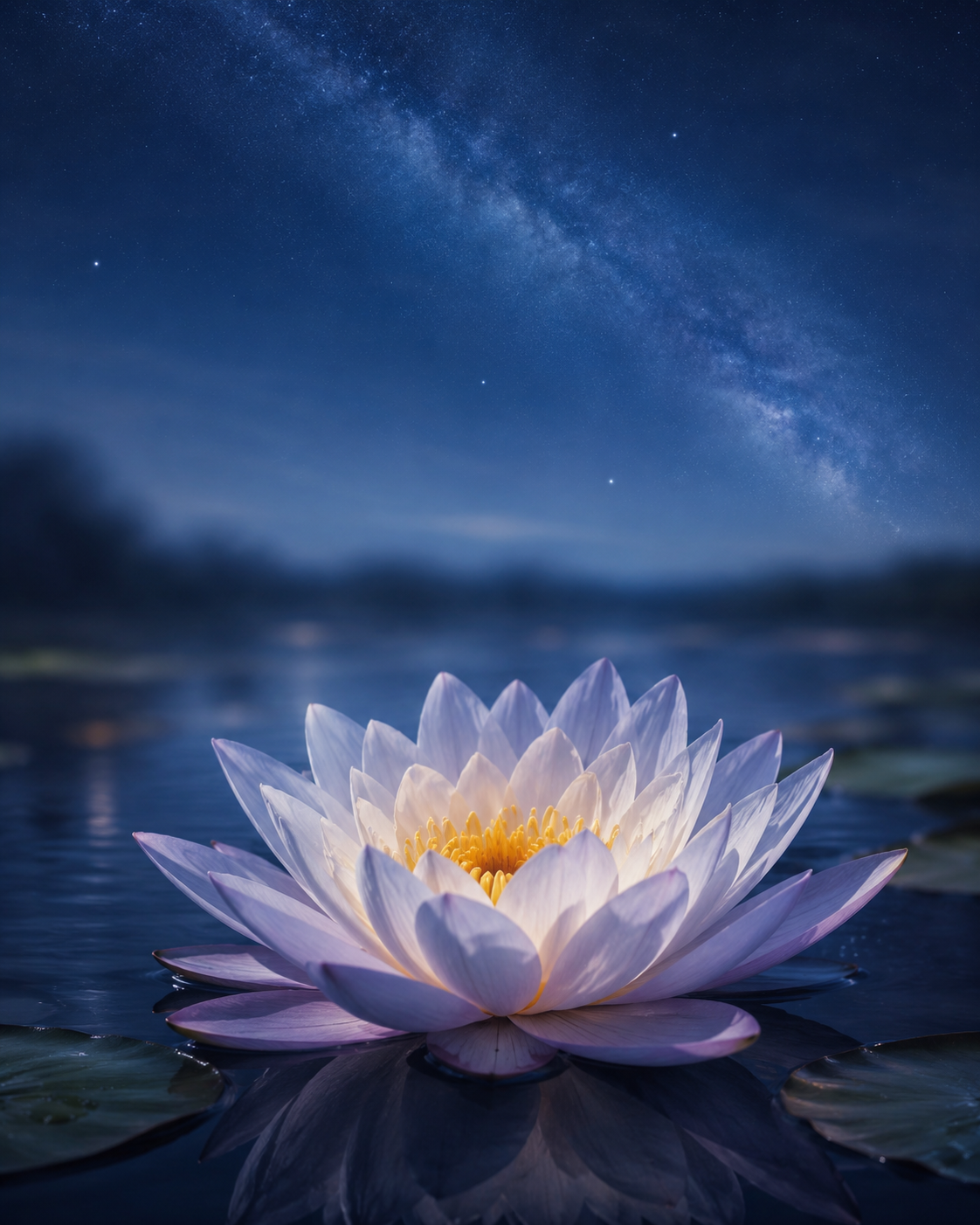
Lotus Blossoming in the Starry Night
Critique
Introduction This painting sets a luminous water lily beneath the Milky Way, relating a quiet pond to the galaxy. The layered flower becomes an earthly counterpart to the band of stars. Description The lavender-white lily occupies lower center, pointed petals surrounding a golden core. It rests on dark water among pads, with a soft reflection below. Pond and shoreline dissolve into haze. Above, a milky star band sweeps diagonally toward the right horizon beside isolated stars. The flower seems illuminated within. Analysis The low central bloom and high diagonal galaxy create complementary movements: one radiates outward, the other crosses the frame. Cool blue unifies water, horizon, and sky, while lavender separates the petals and gold concentrates the focal point. The flower’s layered arcs echo the galaxy’s granular density at another scale. A soft horizon leaves no abrupt division between water and sky. Subtle reflection anchors the celestial comparison in physical surface. Interpretation and Evaluation The juxtaposition suggests that an individual flowering can mirror cosmic creation without becoming merely symbolic. Both structures gather countless small elements into luminous order: petals around stamens, stars within a galactic band. Their timescales differ radically, making the shared form moving rather than literal. The painting maintains restraint through its dark palette and sparse landscape. It offers wonder without theatrical excess, allowing the lily’s calm presence to balance the immeasurable sky. Conclusion By placing a warm-centered flower beneath a river of stars, the work makes scale a source of kinship rather than insignificance. The pond, reflection, and galaxy form a serene vertical continuum in which brief earthly beauty participates in a much larger radiance.
Same Subcategory
Similar Artworks
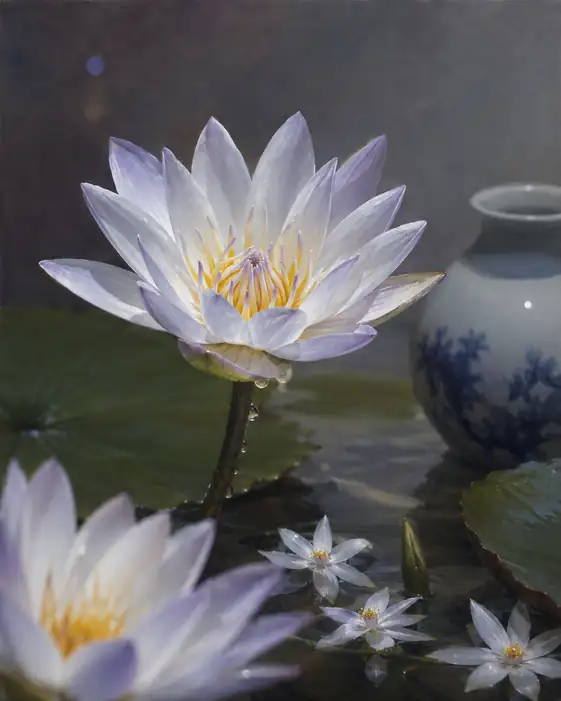 Water Lily and the Cobalt Porcelain
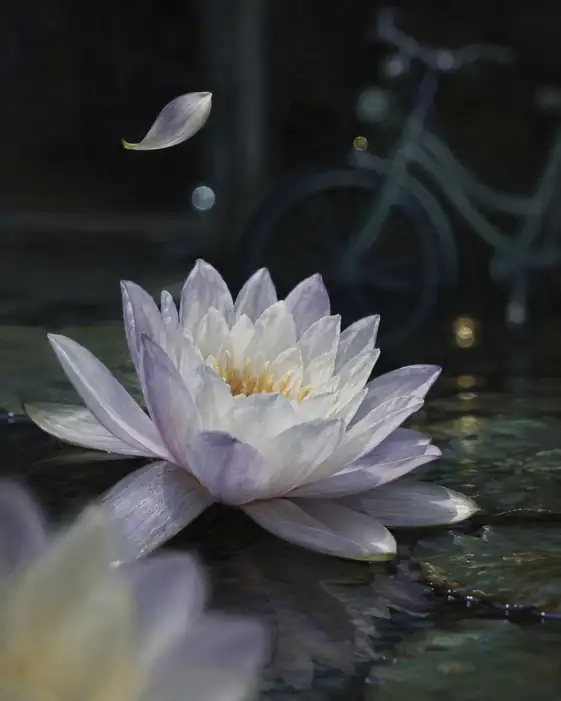 Floating Petal over the Night Pool
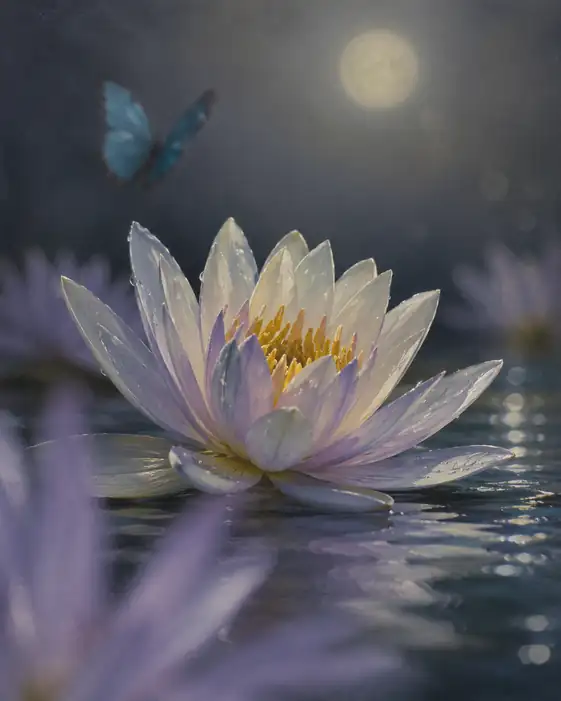 Hazy Moon, Water Lily, and the Blue Butterfly
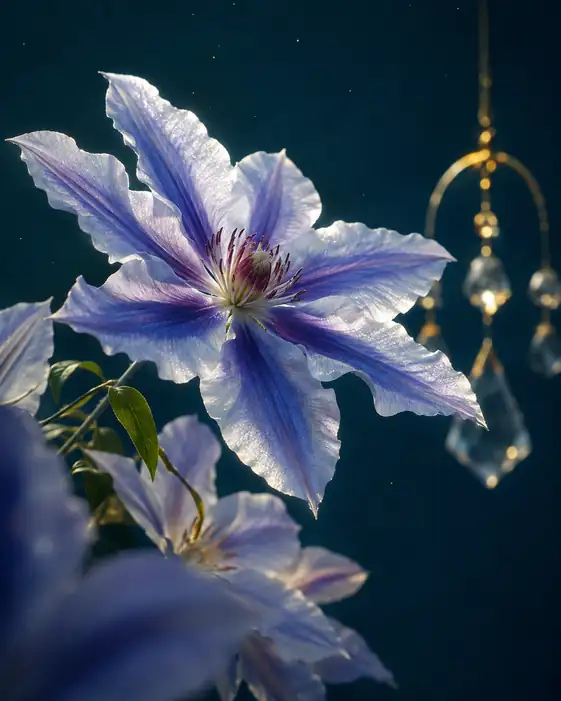 Violet Clematis and the Crystal Pendant
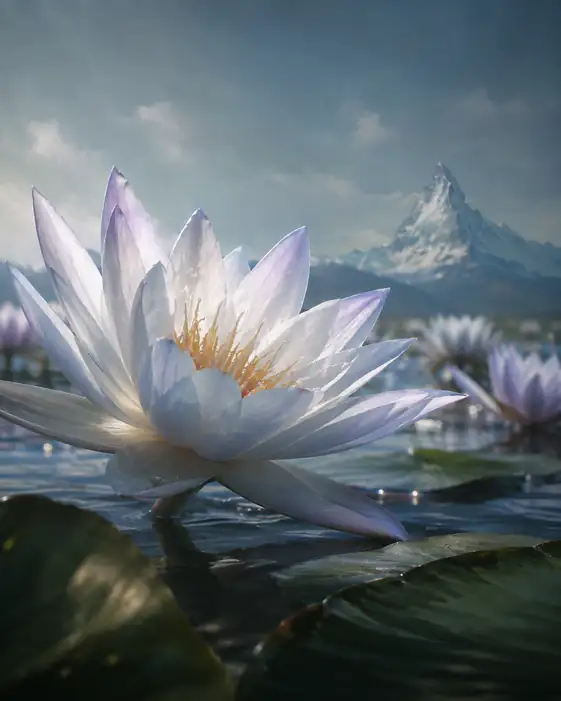 White Lotus Beneath the Alpine Peak
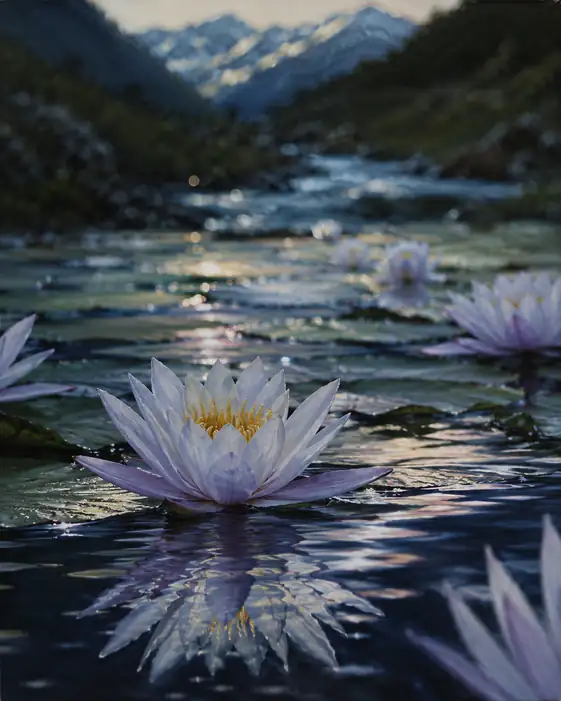 Water Lilies on the Alpine Stream
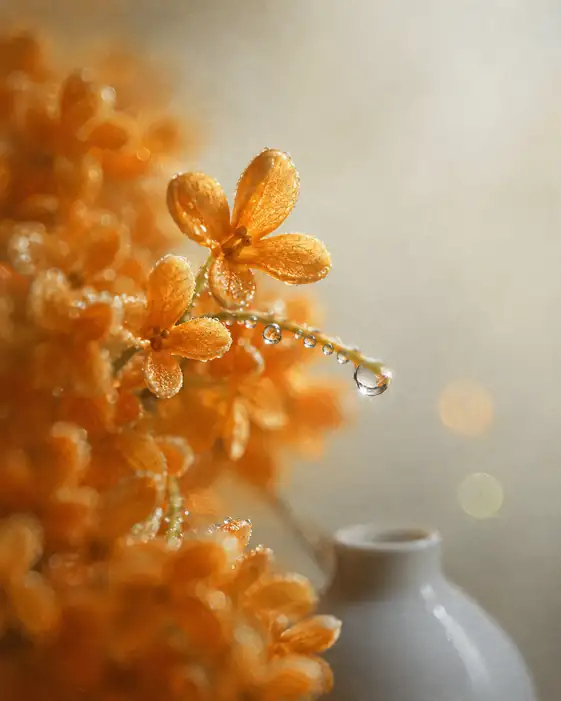 Luminescent Dew on the Amber Bough
 Falling Blossom on the Twilight Road
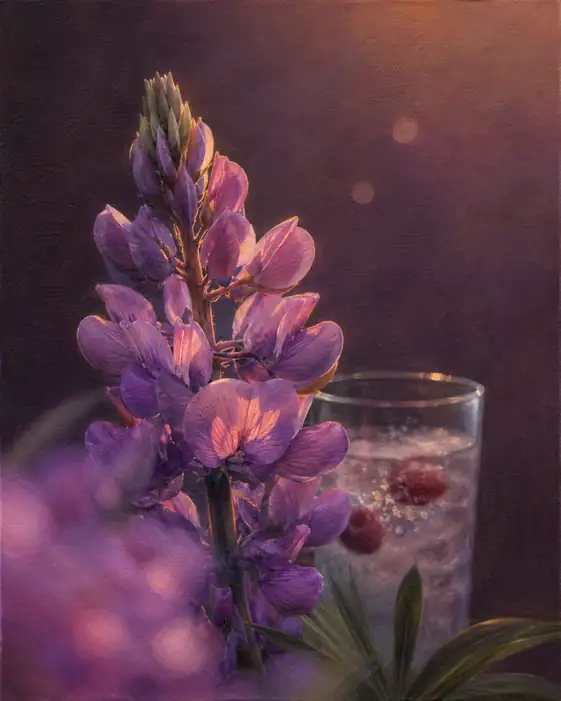 Evening Toast and the Purple Lupine
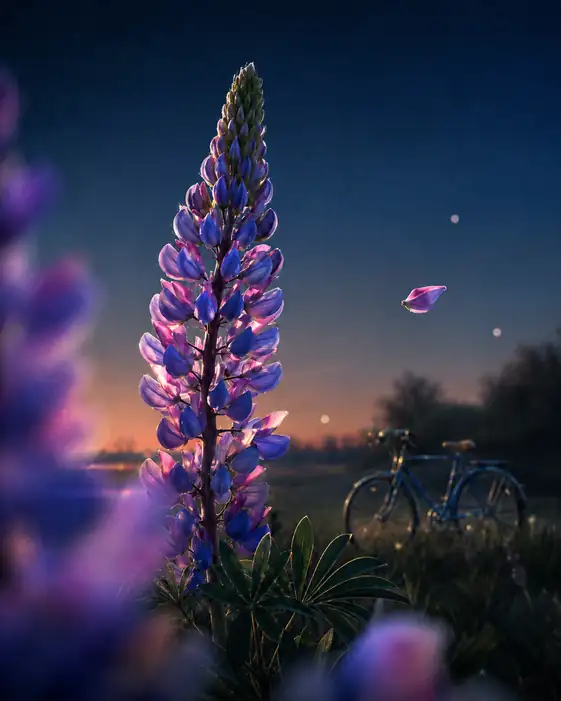 Floating Petal and the Twilight Bicycle